Show care
A friend sits quietly in the corner, head bowed. Noticing it, understanding what it means and knowing what to do are three separate steps, and none of them is obvious to everyone. The pictures below show what care can look like.
 ♂
♂Show care
An adult and a child with a heart between them
About this visual support
Reading another person's feeling comes fast for some and slowly for others. The signs that someone is sad, a slumped posture, a turned-away gaze, a quiet voice, are not always easy to catch in the middle of play. And even when you notice, the step from seeing to doing can feel unclear: should you say something, sit close, fetch help?
Here pictures make an invisible skill concrete. By showing the small steps, notice your friend is sad, go over, ask how they are, offer a hug or company, care becomes something you can practise like any other skill. The pattern is laid out instead of being a feeling you are simply expected to have.
One concrete tip: pair each picture with a simple thing to say, for example how are you doing, so the child has a ready sentence and need not find the words on the spot. That lowers the threshold for actually stepping forward. If you want to practise the exchange at home, you can build the steps as a sequence in the Routined app.
Use this image in a schedule
Build your own visual schedule with this image and download it as a print-ready PDF. Completely free.

More similar visual supports
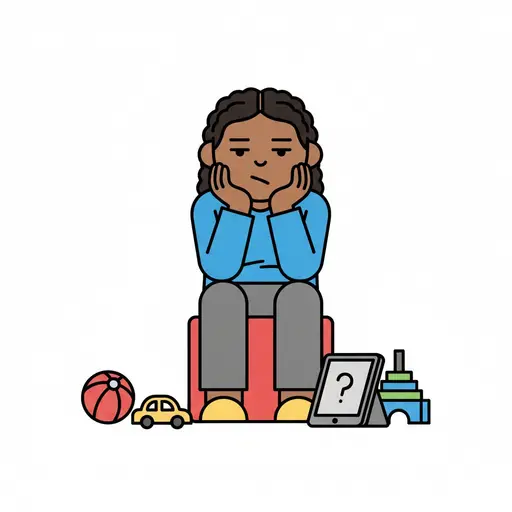
Bored
A child with a bored expression sits with their chin in their hands on a red sto...

Stop playing
A child sits among toys inside a red prohibition circle.

Settle into chair
A person sits upright on a wooden chair, facing forward with a smile.
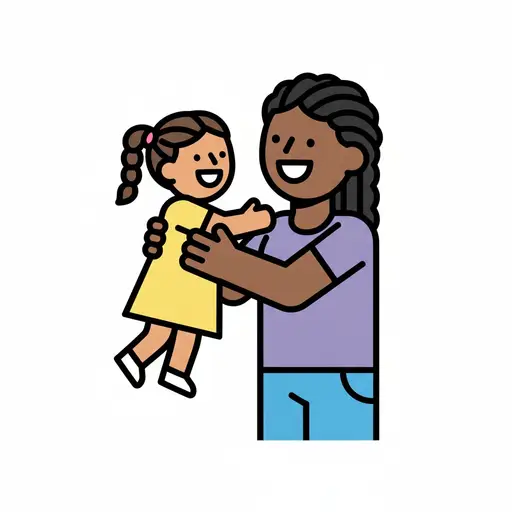
A parent picks up the child
An adult happily lifts a child up in their arms.
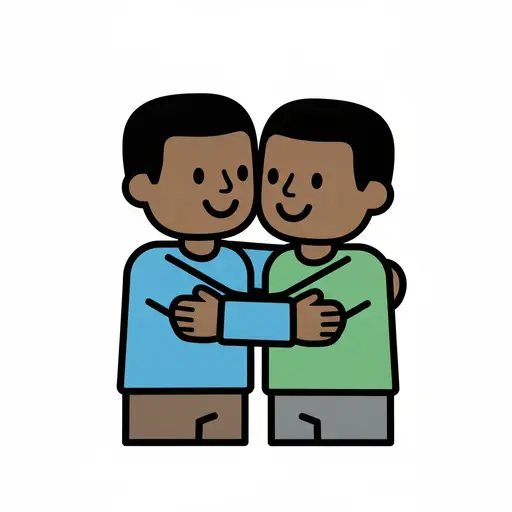
Be kind to your brother
Two boys stand close together with an arm around each other, sharing a blue item...
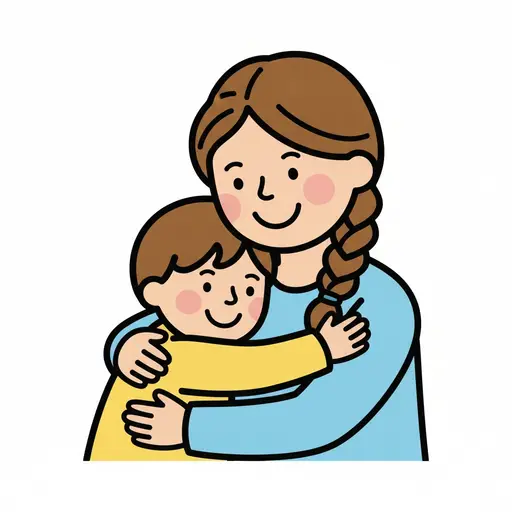
Cuddle with mom
A mother and child hug each other closely.

Dad and kids
A dad holds hands with his two children while everyone smiles.
Get picked up
A happy child with raised arms is lifted up by two large hands.
Take the visual supports with you
In Routined you build schedules from these pictures, add timers and voice instructions, and your child follows the day on their own.


* 14-day free trial included for new users.