Watch tablet
A tablet quickly turns into a bubble outside of time. Visual support lets the child see where the end will sit before the screen even lights up. The pictures are below.
 ♂
♂Watch tablet
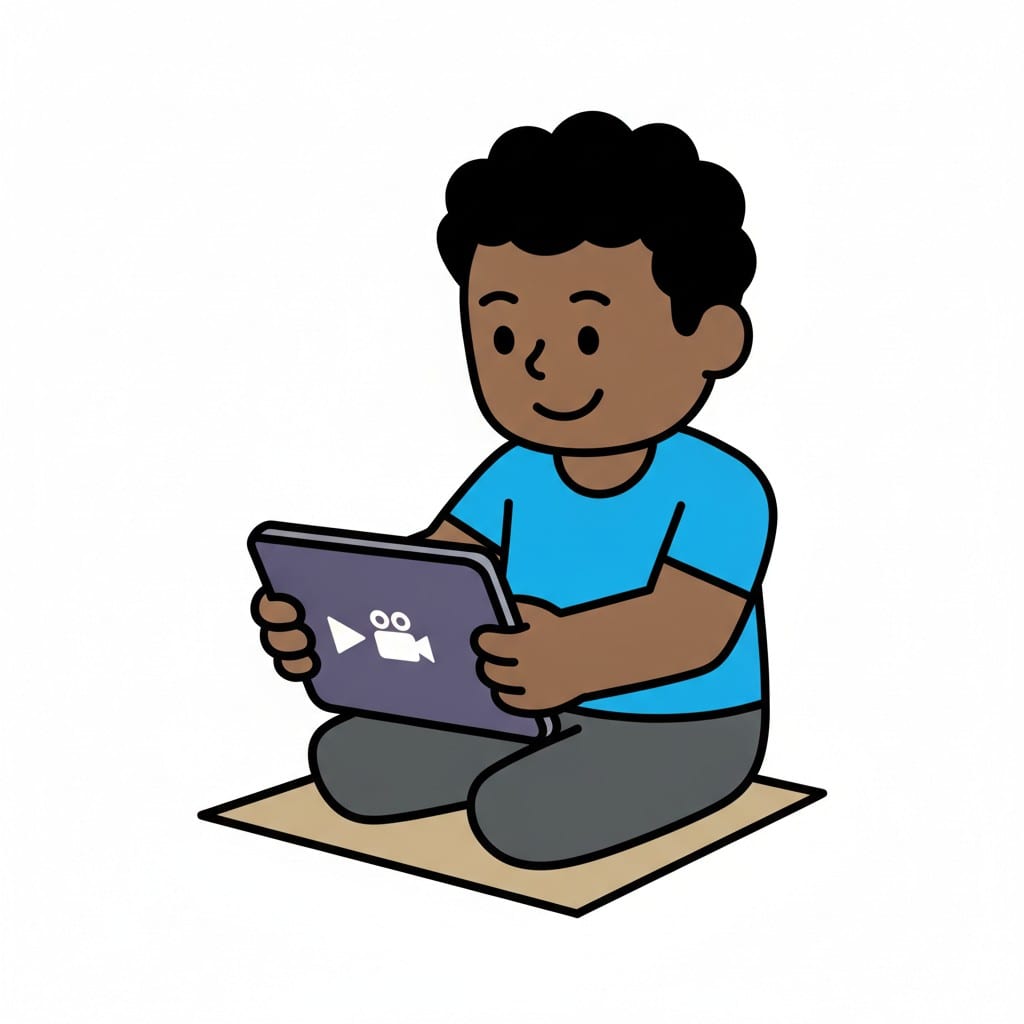
A happy boy holds a tablet with a play button on the screen.
 ♂
♂Boy watching tablet
A boy sits on a mat watching a video on a tablet.
 ♂
♂Looking at the tablet
A boy sits cross-legged holding a tablet.
 ♂
♂Screen time on tablet
A boy sits holding a tablet that is playing a video.
 ♀
♀Watching a video
A happy woman with curly hair holds a tablet with a film camera icon on the screen.
About this visual support
Tablet time does something odd to a child’s sense of how long things last. Ten minutes feels like two, half an hour feels like nothing at all, and when an adult announces that it’s time to stop, the cut is sharp – not because the child is being difficult, but because the body is still tuned to the screen’s rhythm.
That’s why the frame around the screen time needs to be visible, more than the content itself. A short picture sequence can mark fetching the tablet, choosing what to watch, a middle pause where the eyes look up, and a defined end where the tablet returns to a specific spot. When the pictures are laid out before the session starts, the ending has already been seen and isn’t a sudden interruption.
One small trick: place the picture of the tablet on its end-spot next to something the body actually wants next – a snack, going outside, time with a pet – rather than a chore. The transition becomes a switch, not a stop.
To combine the picture sequence with a visual pause timer, the same flow exists inside Routined.
Use this image in a schedule
Build your own visual schedule with this image and download it as a print-ready PDF. Completely free.
More similar visual supports
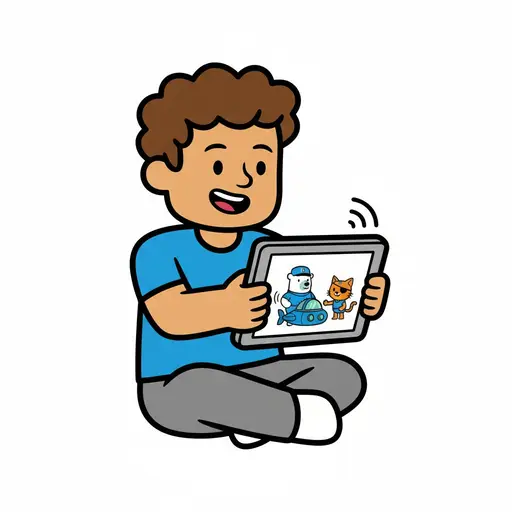
Watch Octonauts
A boy is sitting happily watching an Octonauts series on a tablet.

iPad time
A person smiles while holding and pointing at a grey iPad with media icons.
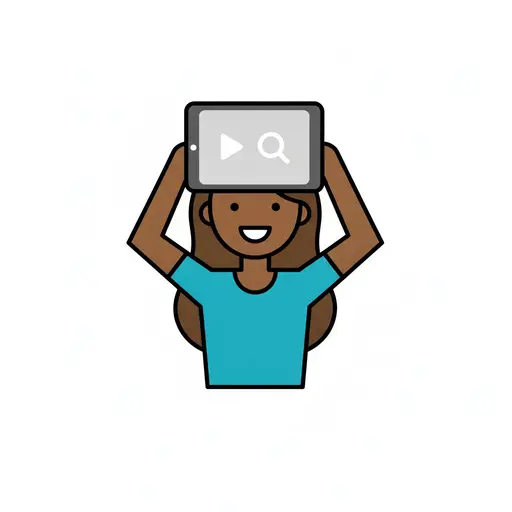
Screen time
A girl holds a tablet showing video and search above her head.
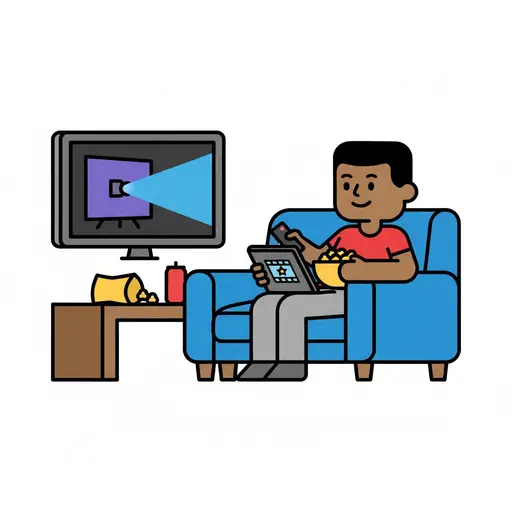
Relax with movie
A boy sits comfortably in a blue armchair, watching a movie on a television scre...
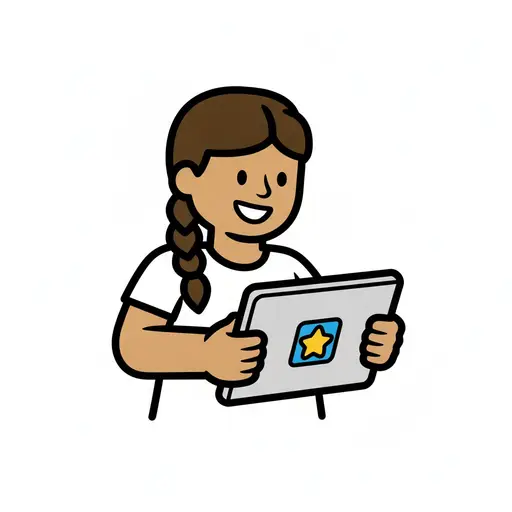
Play on the tablet
A girl with a braid sits at a table and holds a tablet showing a yellow star.

Screen time reward
A girl points at a tablet above a trophy filled with tokens as a reward.
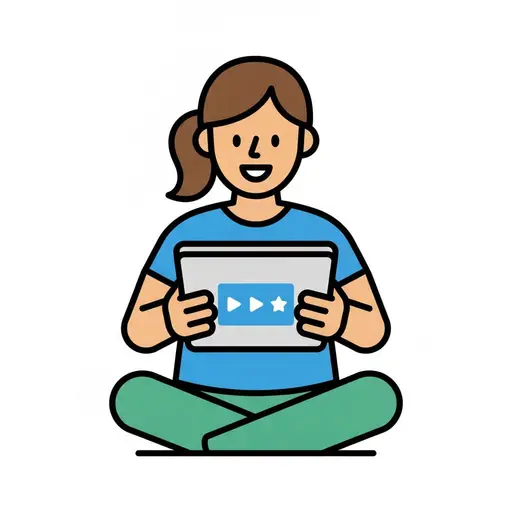
Watch iPad
A girl sits cross-legged watching a video on the tablet.
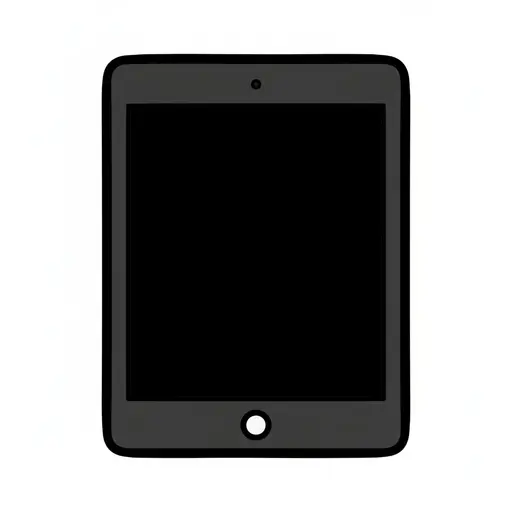
Use iPad
An iPad with a black screen.
This visual support in other languages
Take the visual supports with you
In Routined you build schedules from these pictures, add timers and voice instructions, and your child follows the day on their own.


* 14-day free trial, then $2.39 a month or $20.99 a year (US pricing). Cancel anytime.