Check clothes
Right before your child heads out the door, it is easy to miss that the shirt is on backwards or a zipper is undone. The pictures below show what to actually look for, so the check becomes something your child can manage alone.
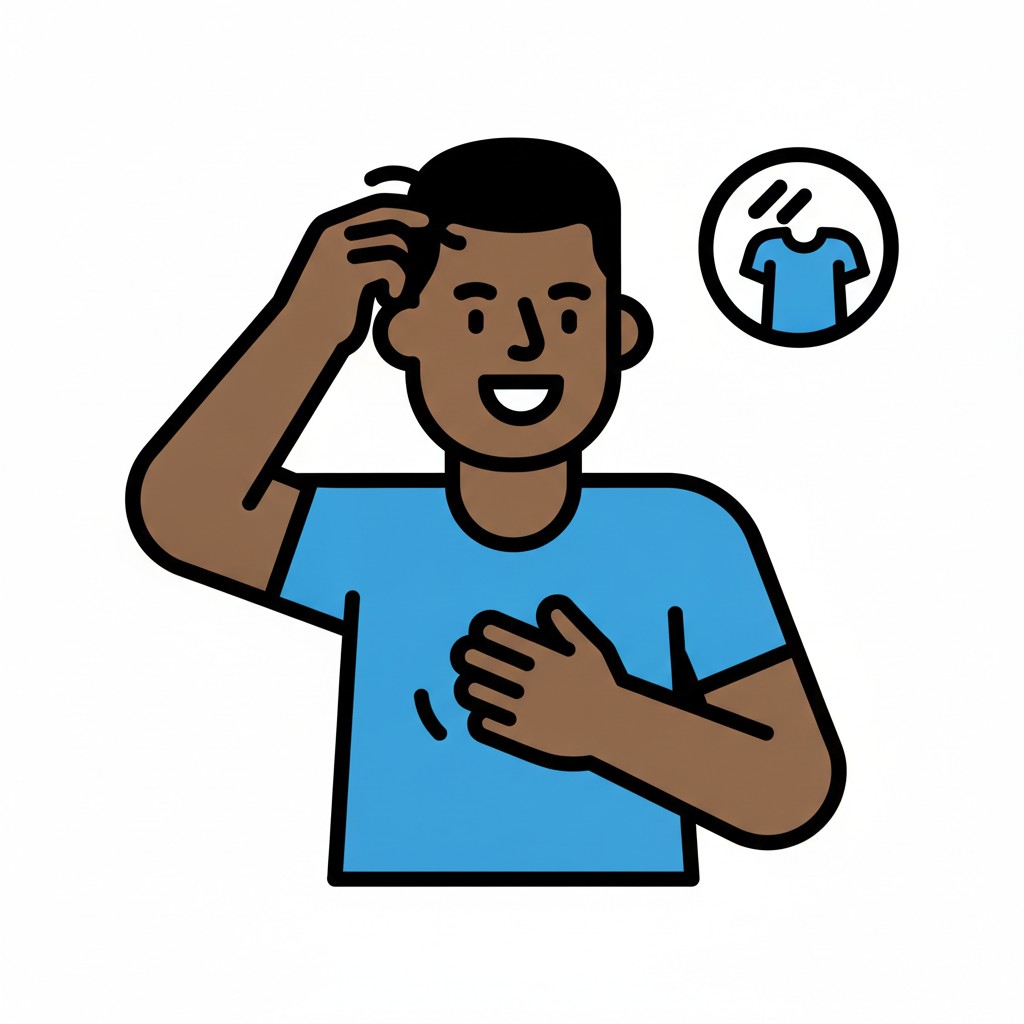 ♂
♂Checking hair and clothes
A boy touches his hair and his shirt.
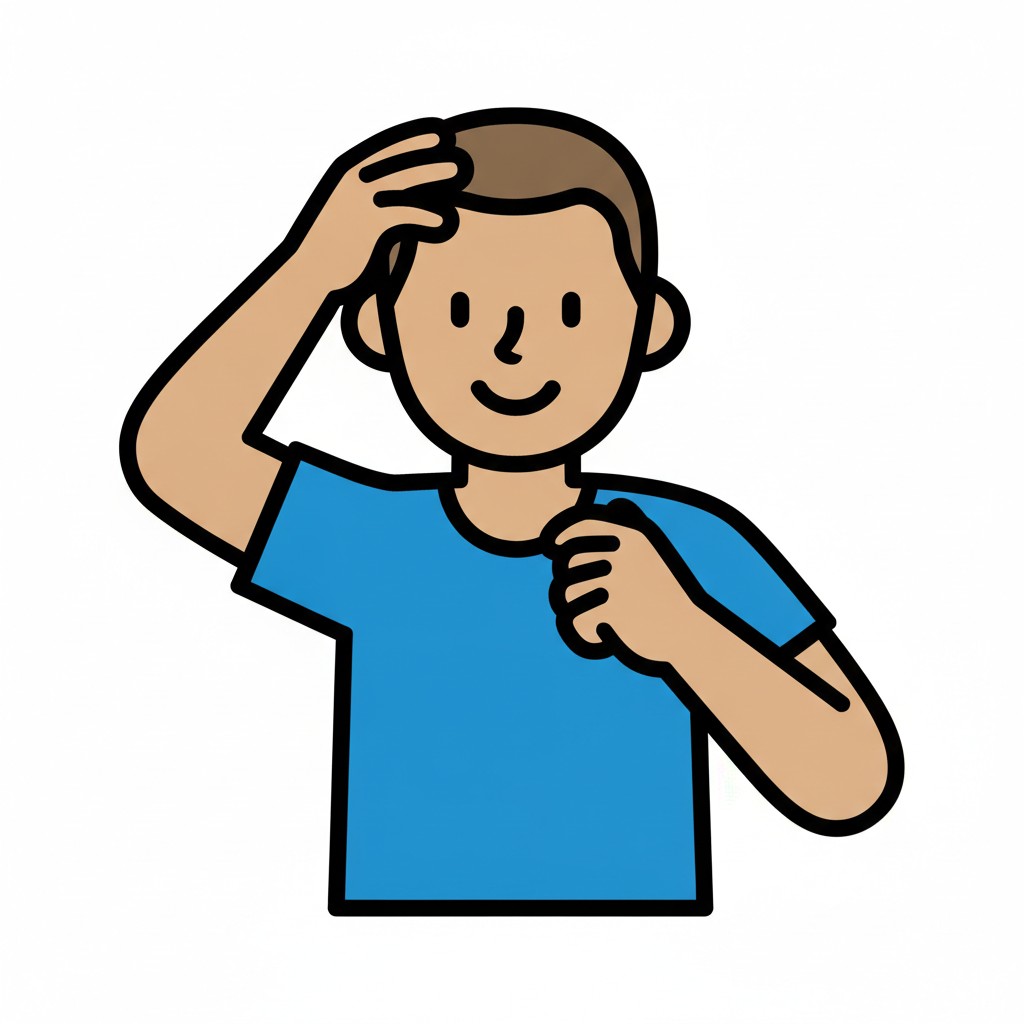 ♂
♂Looking neat
A boy fixes his hair and his collar.
 ♀
♀Check top
A girl points at her blue top to check her clothes.
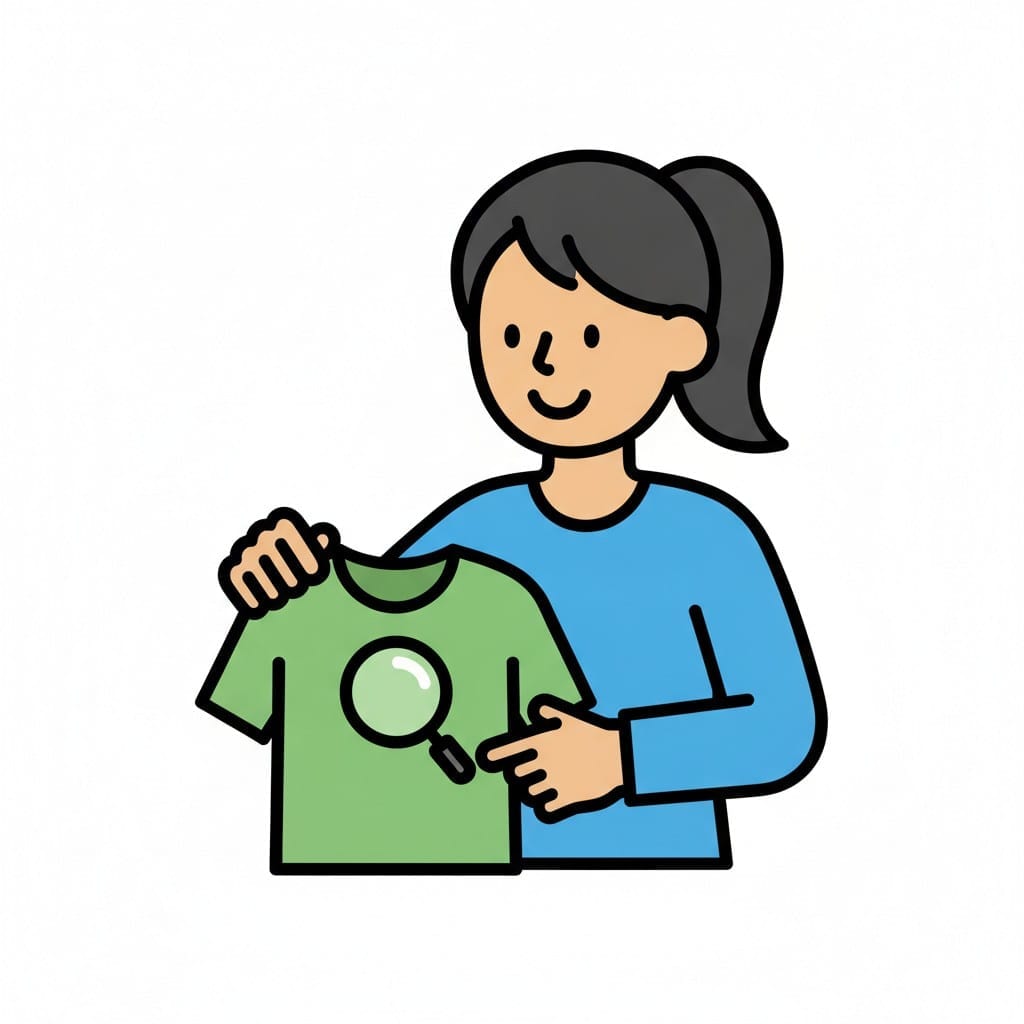 ♀
♀Inspect shirt
A girl holds up a green t-shirt and inspects it with a magnifying glass.
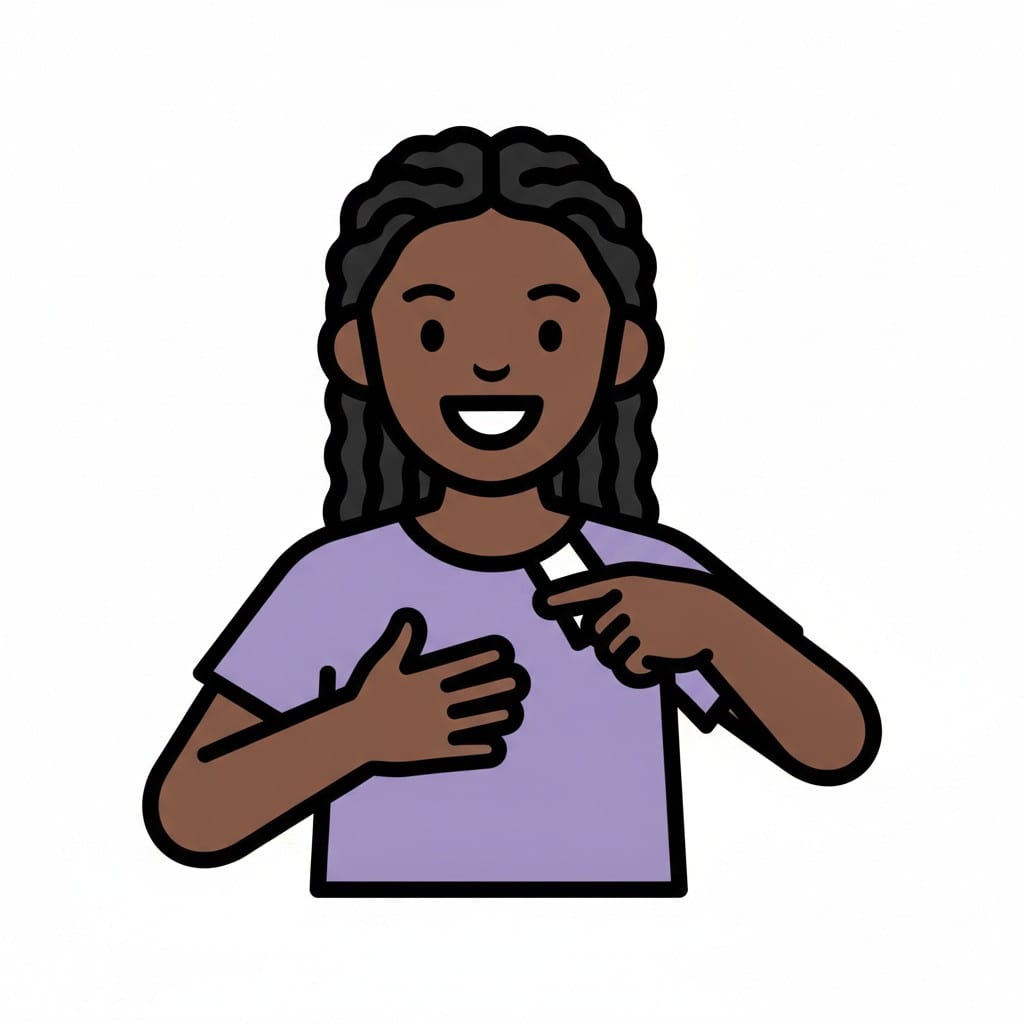 ♀
♀Check collar
A girl points at the collar of her purple top.
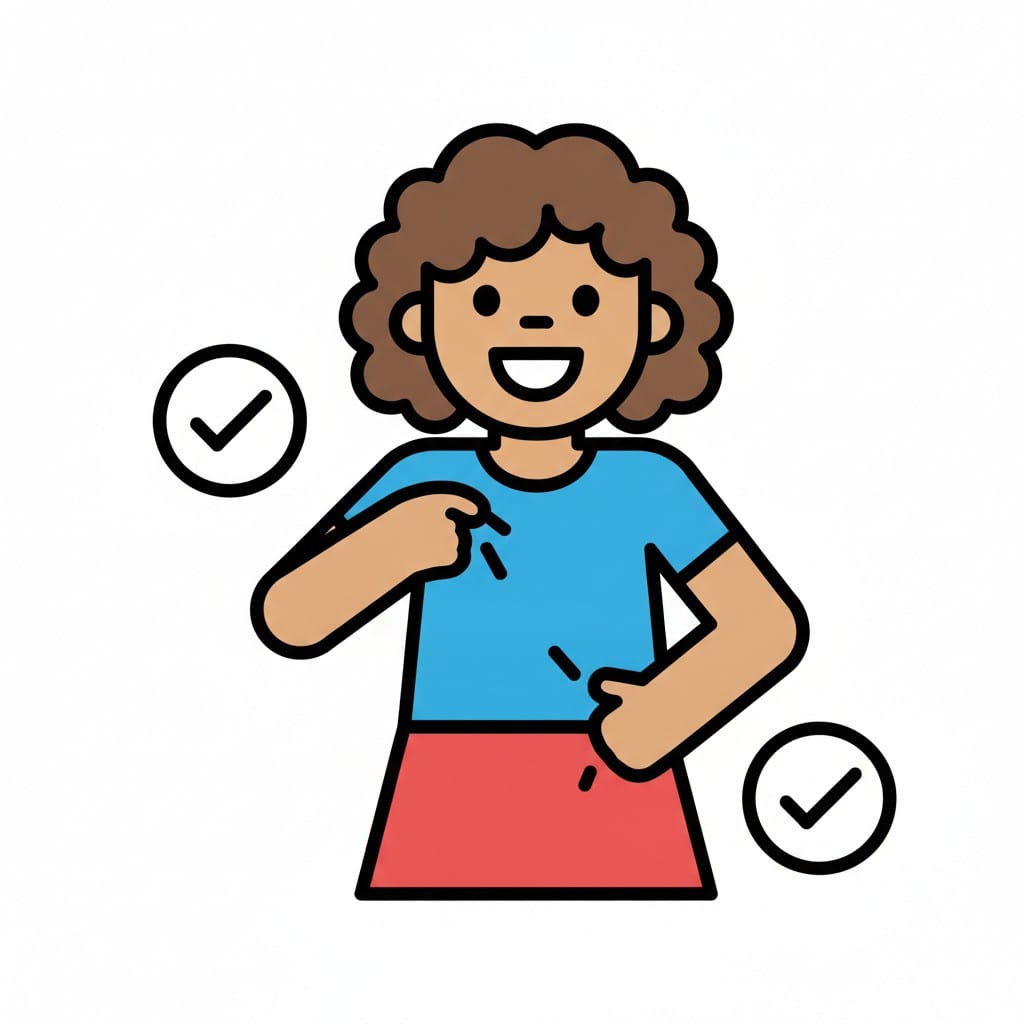 ♀
♀Outfit checked
A girl points at her outfit with check marks showing the clothes are okay.
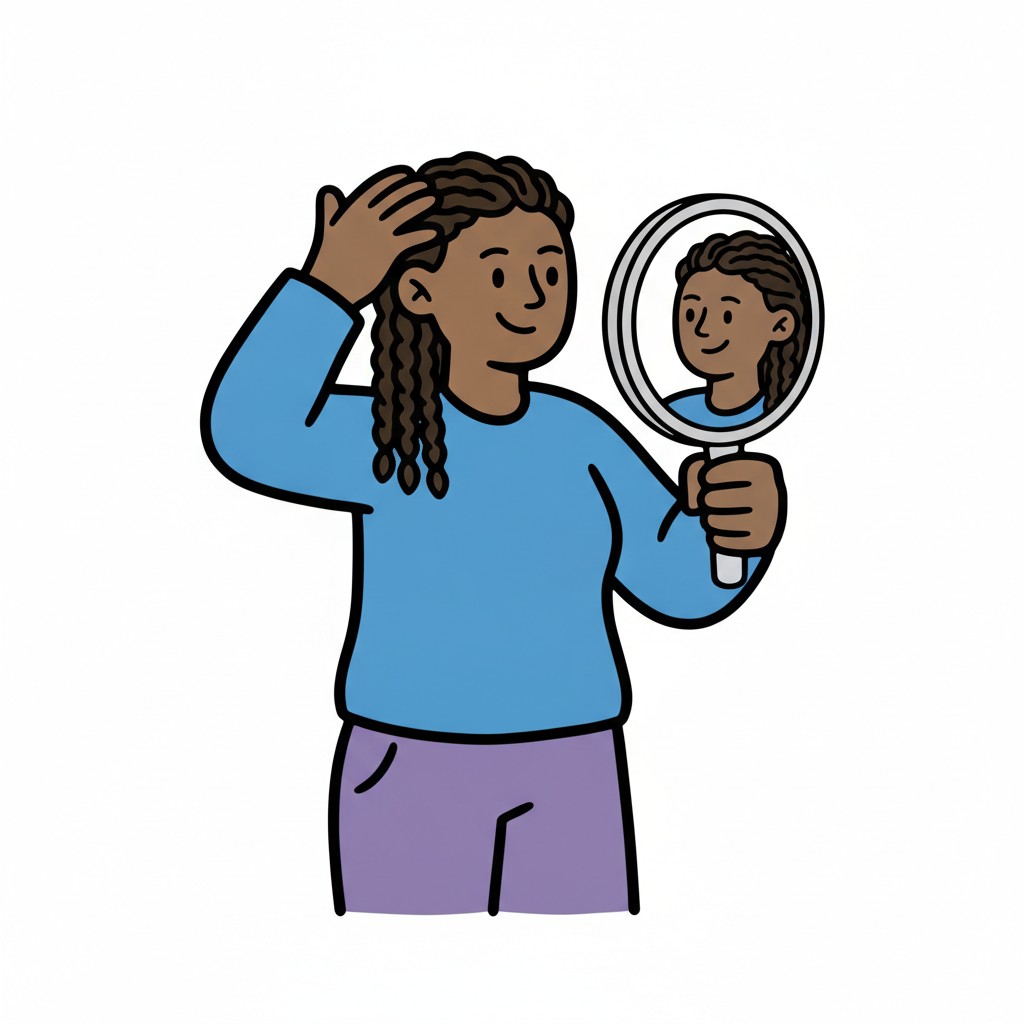 ♀
♀Checking hair in the mirror
A girl touches her hair and looks in a hand mirror.
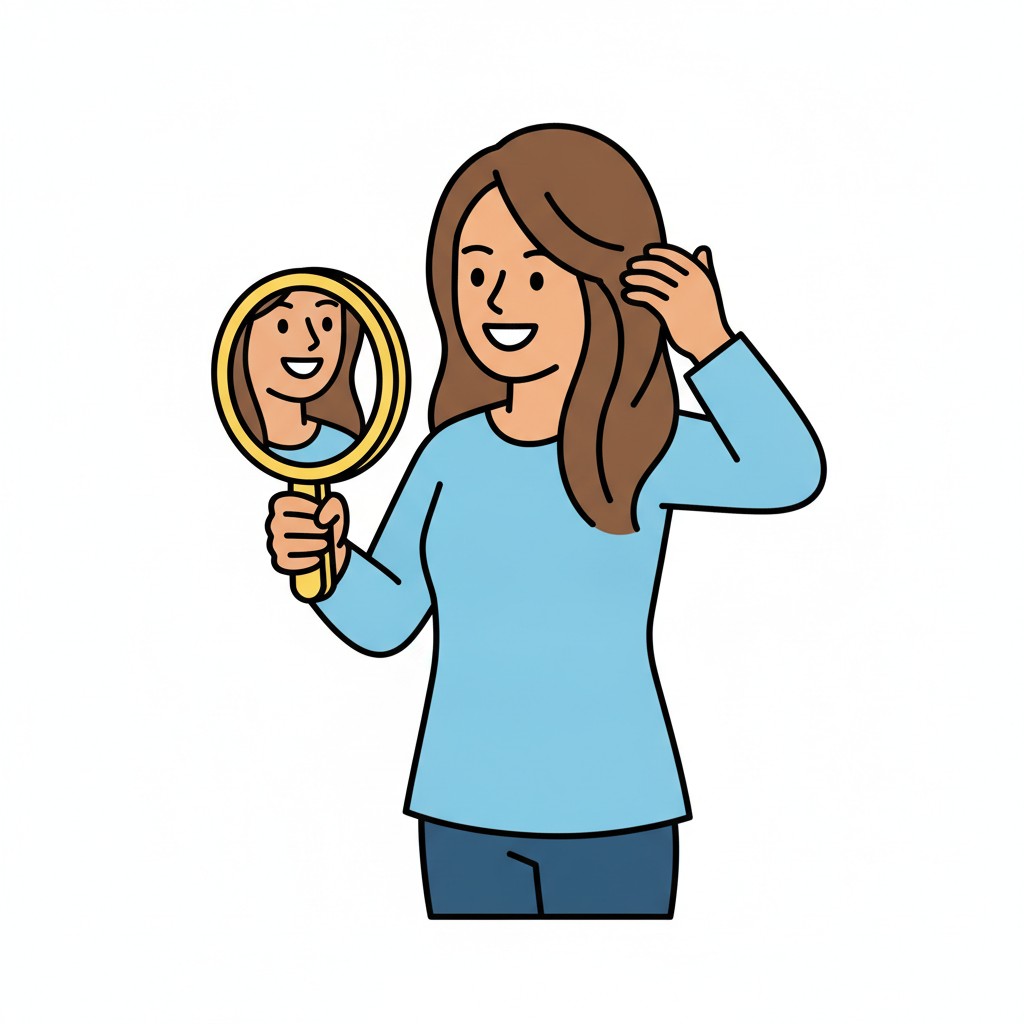 ♀
♀Fixing hair with a mirror
A woman fixes her hair while holding a mirror.
About this visual support
Checking your clothes sounds simple, but it assumes the child knows exactly what to look for. Without that knowledge, a quick glance in the mirror is only a gesture, and your child walks out with the shirt on backwards without noticing. When the check exists as a picture, your child knows which points count instead of guessing.
Visual support turns the self-check into a list to run through: is the shirt facing the right way, is the zipper up, are the shoes on the correct feet, are the trousers turned the right way. A concrete tip is to practise at a mirror calmly in the evening, with no time pressure, so your child can learn what each point means before it matters for real in the morning rush. The routine is then already in place when the door is calling.
The pictures below can go up by the front door or where clothes are put on. To gather the whole dressing sequence in one flow, you can try Routined free for fourteen days.
Use this image in a schedule
Build your own visual schedule with this image and download it as a print-ready PDF. Completely free.

More similar visual supports
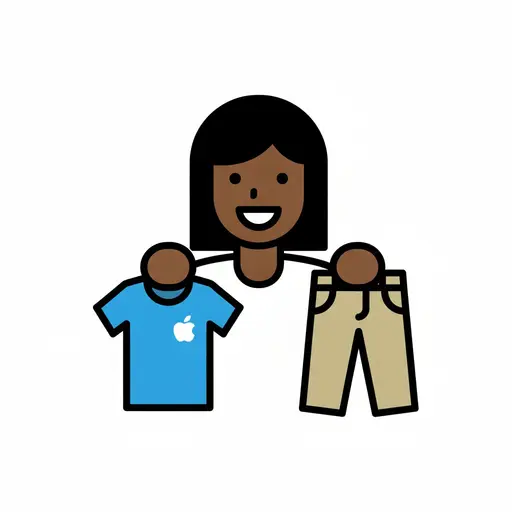
Get school clothes
A girl holds up a blue t-shirt and a pair of trousers for the school day.
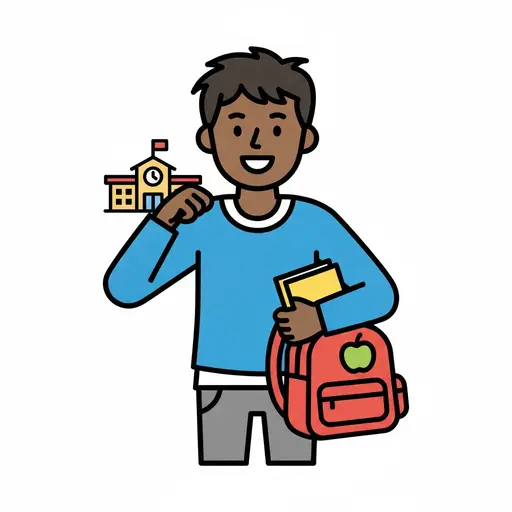
Choose school clothes
A boy with a backpack and a book stands by a school symbol.
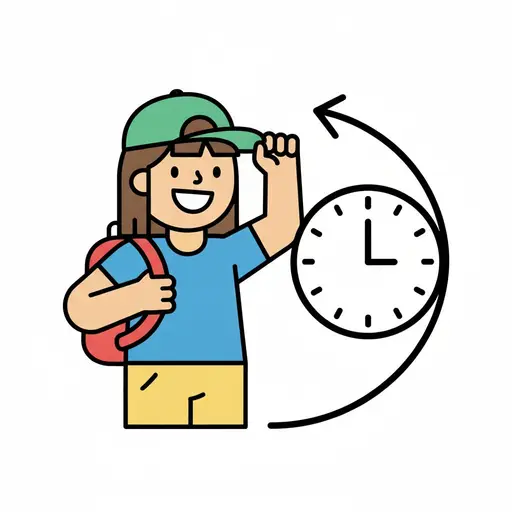
Get ready
A smiling girl adjusts a green cap and carries a red backpack next to a clock wi...
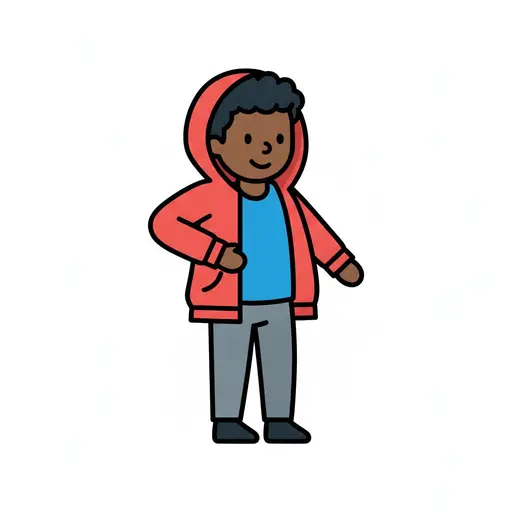
Prepare to go outside
A boy wears a red jacket with the hood up.
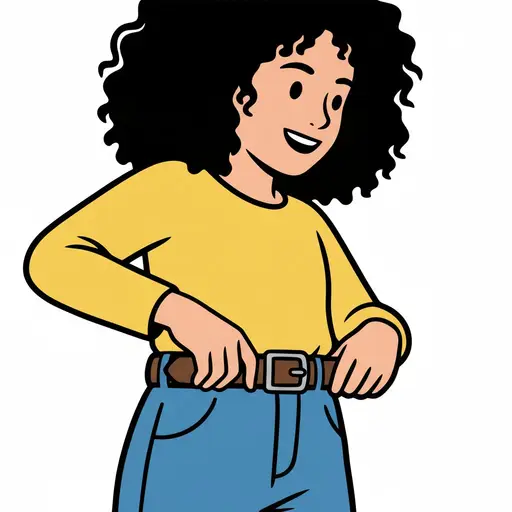
Put on belt
A person putting on a belt around their waist.
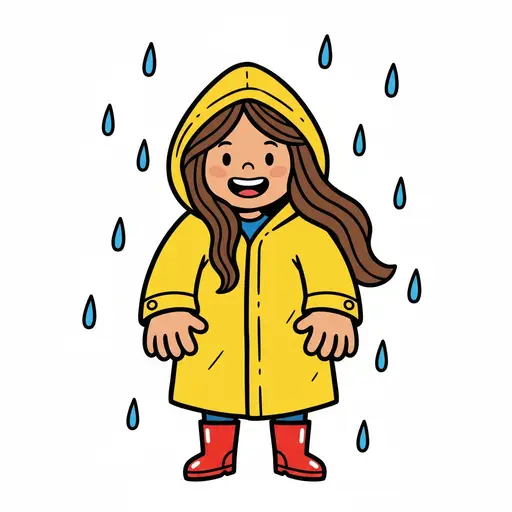
Put on rain clothes
A smiling girl in a yellow raincoat and red rain boots, with raindrops falling a...
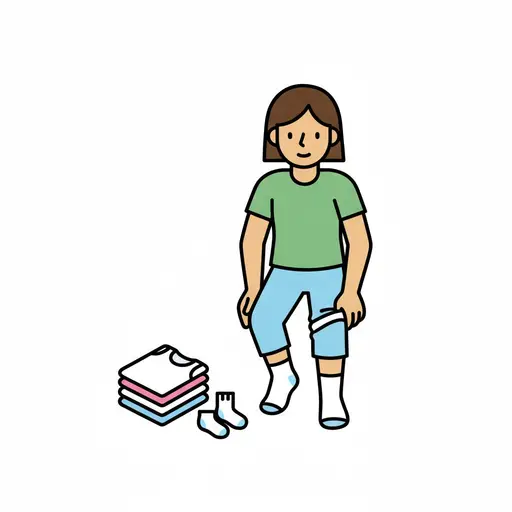
Put on underwear and socks
A person in a green t-shirt and light blue trousers pulls on a white sock, besid...
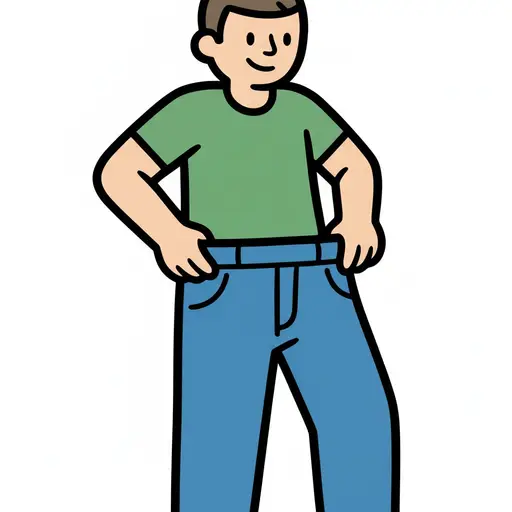
Wear pants
A smiling person pulls up a pair of blue pants with both hands.
Take the visual supports with you
In Routined you build schedules from these pictures, add timers and voice instructions, and your child follows the day on their own.


* 14-day free trial, then $2.39 a month or $20.99 a year (US pricing). Cancel anytime.