carry to car
The parent is already at the car, the child still stands inside with four things to carry. Two hands aren't enough and the tempo is pressing. The pictures below help sort out what goes first, last and what can stay behind.
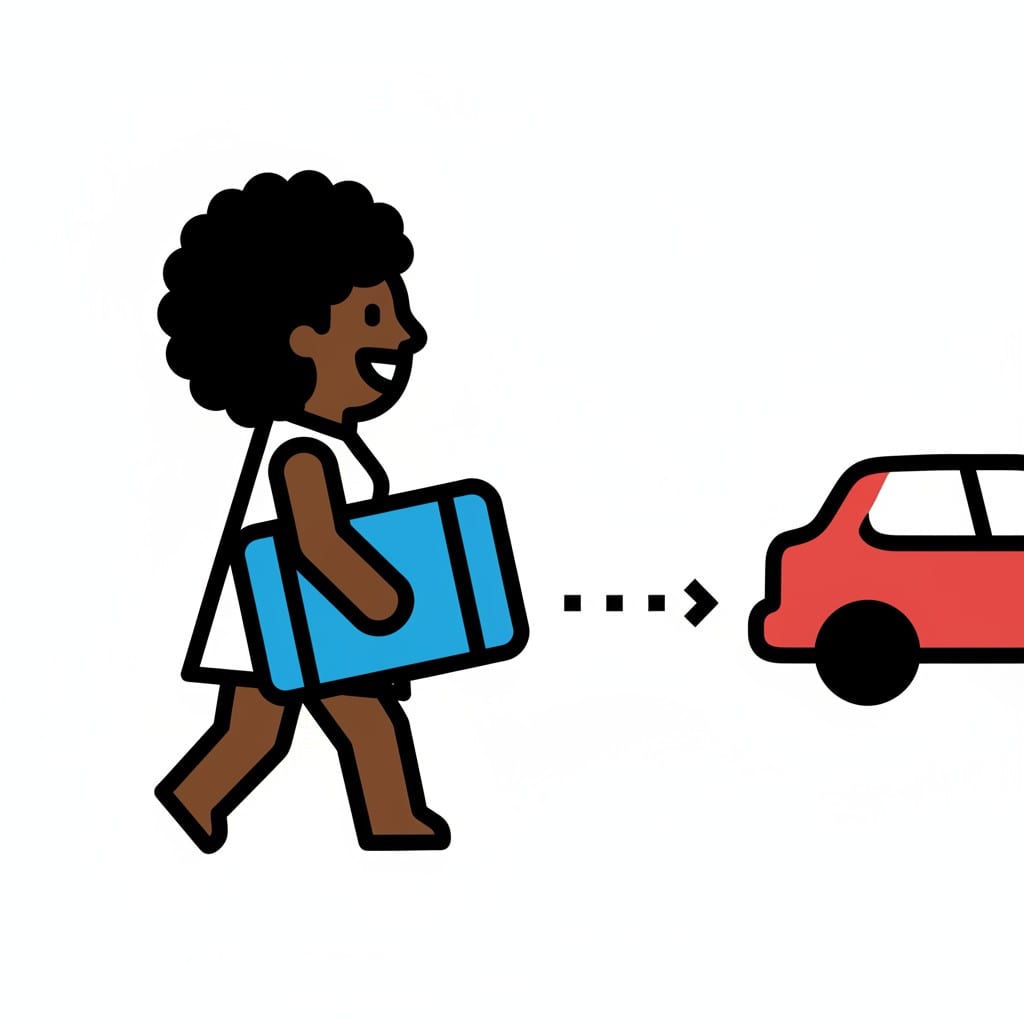 ♀
♀Carry to car
A person carries a blue object towards a red car.
About this visual support
This step looks small but contains two problems at once: a practical one and an emotional one. Practical: the child has to grip several items of different sizes – a backpack, a water bottle, a hat, a stuffed animal – with only two hands. Emotional: the parent has already turned toward the door and the body language is saying now. That combination is why something gets dropped in the hallway, the child turns back, and the whole exit takes longer, not shorter.
Visual support for carrying to the car works when it creates a visible order of priority. One image for what goes over the shoulder (backpack), one for what stays in a hand (water bottle), one for what clips on or goes into a pocket (hat). Anything that doesn't fit in the hands stays behind until you come back – or goes into a basket the parent carries.
A concrete tip: keep a reusable bag or basket by the front door with room for the day's items. The child loads it earlier in the morning, so carrying becomes one thing to lift rather than four. In the Routined app this can be the last step of the morning routine, so it doesn't get forgotten.
Use this image in a schedule
Build your own visual schedule with this image and download it as a print-ready PDF. Completely free.

More similar visual supports
Dad drives
A person is driving a blue car with a steering wheel in their hands. The car has...
Car or e-scooter
A blue car seen from the side with a scooter handlebar rising from the bonnet an...
Drive to school
A person drives a yellow car with backpacks in the back seat up to the school.
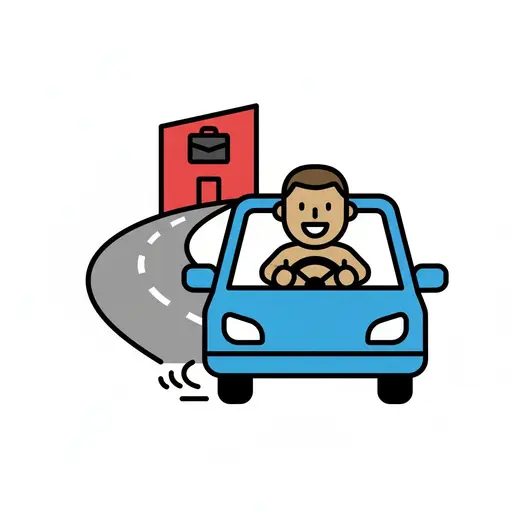
Drive to work
A smiling man driving a blue car along a road that leads to a building marked wi...
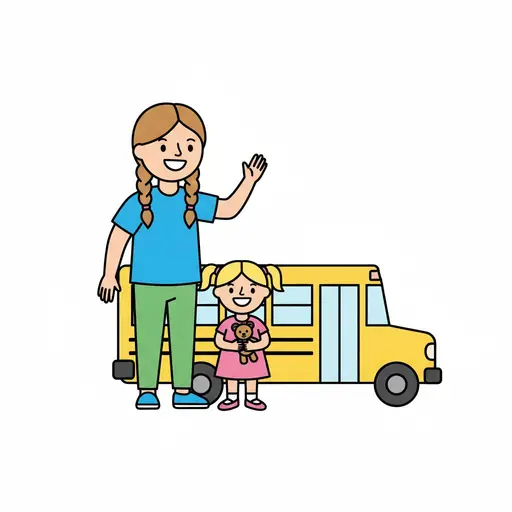
Drop off kids
A smiling adult with braids waves beside a small smiling child holding a teddy b...
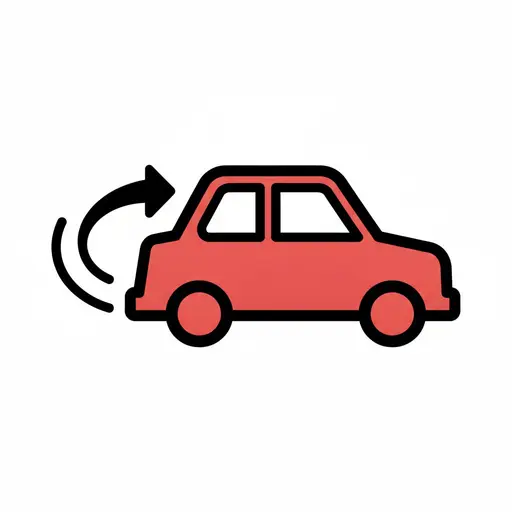
Go by Car
A red car with an arrow showing that it is about to drive off.
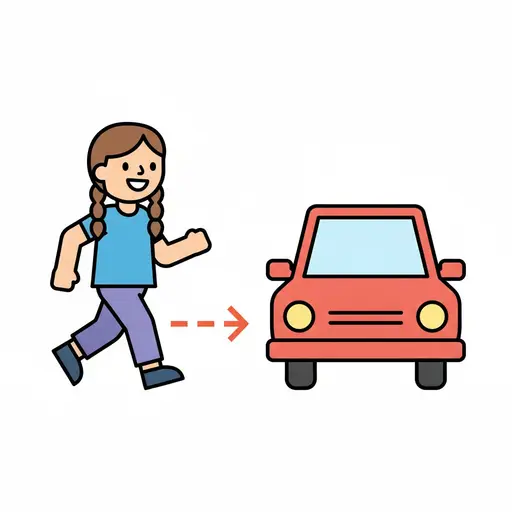
Go to the car
A smiling girl with braids walks towards a red car, with a dashed arrow pointing...
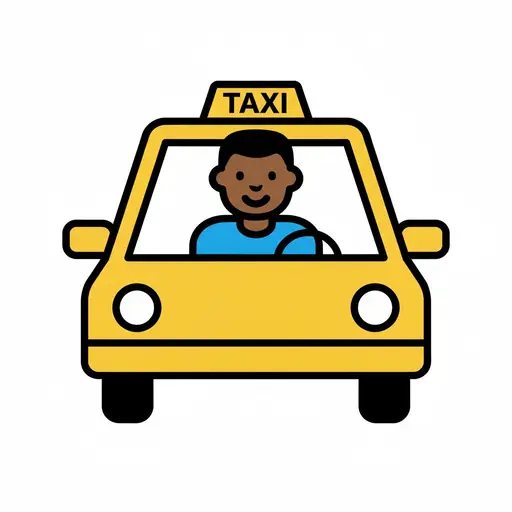
Ride a Taxi
A boy sits in a yellow taxi seen from the front.
Take the visual supports with you
In Routined you build schedules from these pictures, add timers and voice instructions, and your child follows the day on their own.


* 14-day free trial, then $2.39 a month or $20.99 a year (US pricing). Cancel anytime.