Mittens
The thumb never seems to find the right pocket, the wool itches the back of the hand and the fingers suddenly feel clumsy. The visual support below shows each step so the hands can adjust in time.
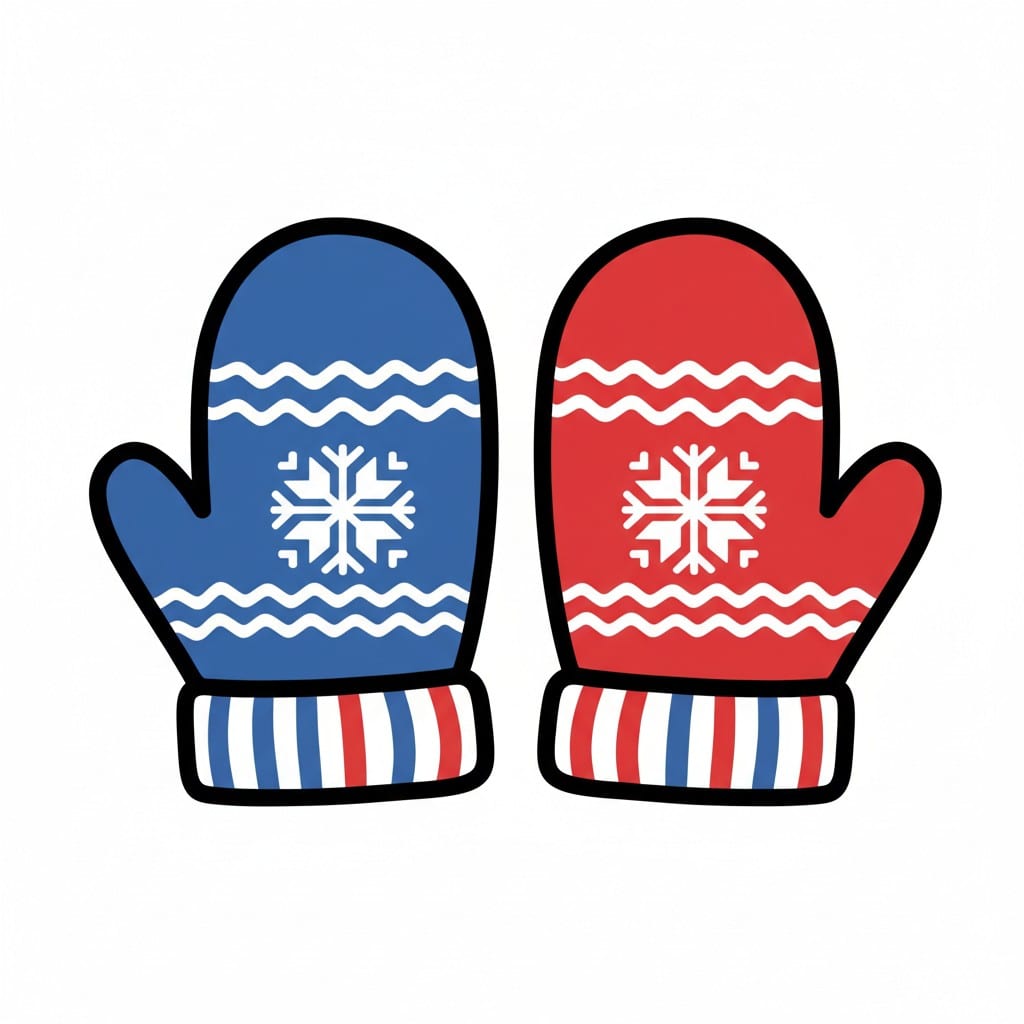
Mittens
A pair of mittens. One blue with white snowflake and wave patterns, and one red with white snowflake and wave patterns. Both have striped cuffs in red, white, and blue.
About this visual support
Mittens look simple to an adult, but for a small hand they are a fine-motor puzzle. The thumb has to find its own pocket, the fingers share another, and the fabric often gives high sensory feedback – wool that prickles, lining that twists, a seam sitting wrong against a knuckle. When the hand is already cold, the awkward part gets even harder, and that is usually when the hallway argument starts.
Preparing the moment with pictures lets the child see where the thumb goes and how the mitten should be turned before the hand even enters. It takes away the guessing game where a mitten ends up upside down and has to start over. The image explains without you having to grip the hand and pull, which is often what triggers the resistance.
A concrete tip: shake the mittens open with the thumb pocket facing outwards before the child begins, so the route for the thumb is already clear. That small detail tends to save a couple of attempts each time. If you want to tie mittens into the morning routine with a signal when outerwear is next, Routined lets the visual support travel from day to day. Try the first 14 days at no cost.
This image is part of these ready-made schedules
Use this image in a schedule
Build your own visual schedule with this image and download it as a print-ready PDF. Completely free.

More similar visual supports
Coat and gloves
A blue winter coat lies next to a pair of red gloves.
Outdoor clothes
A display of outdoor clothing with a blue hooded jacket, green trousers, a red b...
Outerwear
A blue hooded jacket, a beige coat, a yellow hat, a red scarf and a pair of dark...
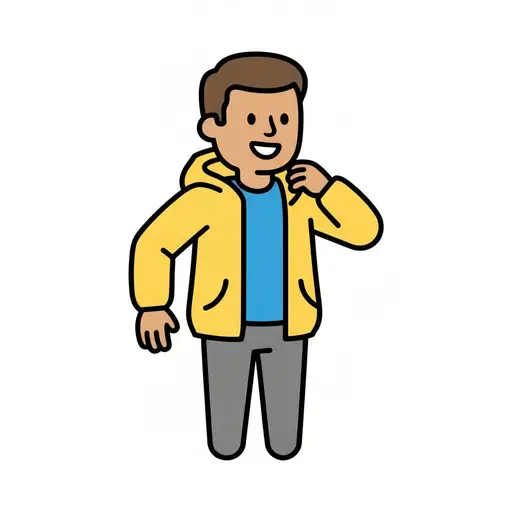
Put on outerwear
A person puts on a yellow jacket over a blue top.
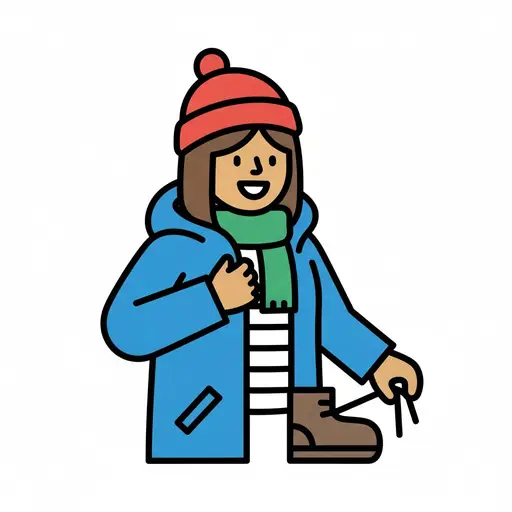
Put on outside clothes
A girl in a blue winter coat, red beanie and green scarf is putting on brown boo...
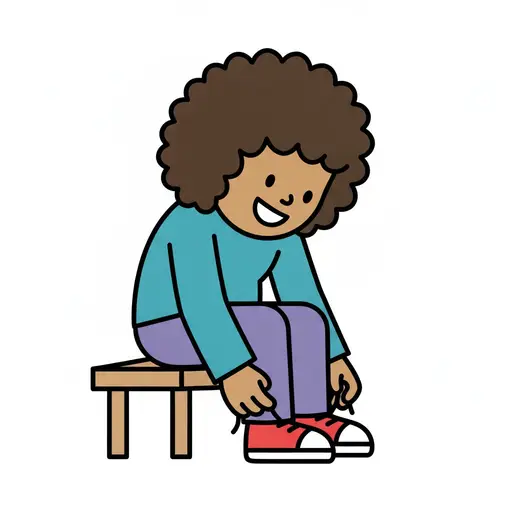
Put on shoes
A person sits on a bench pulling on red shoes.
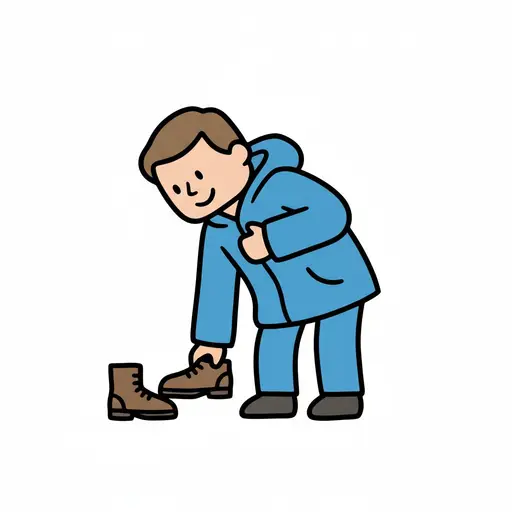
Put on shoes and coat
A boy in a blue jacket bends down to put on a brown shoe.
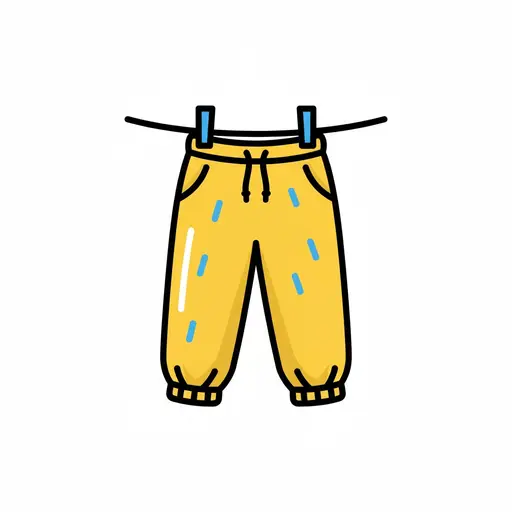
Rain pants
A pair of yellow rain pants with blue dots hangs on a clothesline to dry.
Take the visual supports with you
In Routined you build schedules from these pictures, add timers and voice instructions, and your child follows the day on their own.


* 14-day free trial included for new users.