Put on shoes and coat
At the front door, two things pile on top of each other: shoes and coat. With a parent already holding the keys, the rush starts to show in everyone's voice. The visual support below splits the departure into two calm steps.
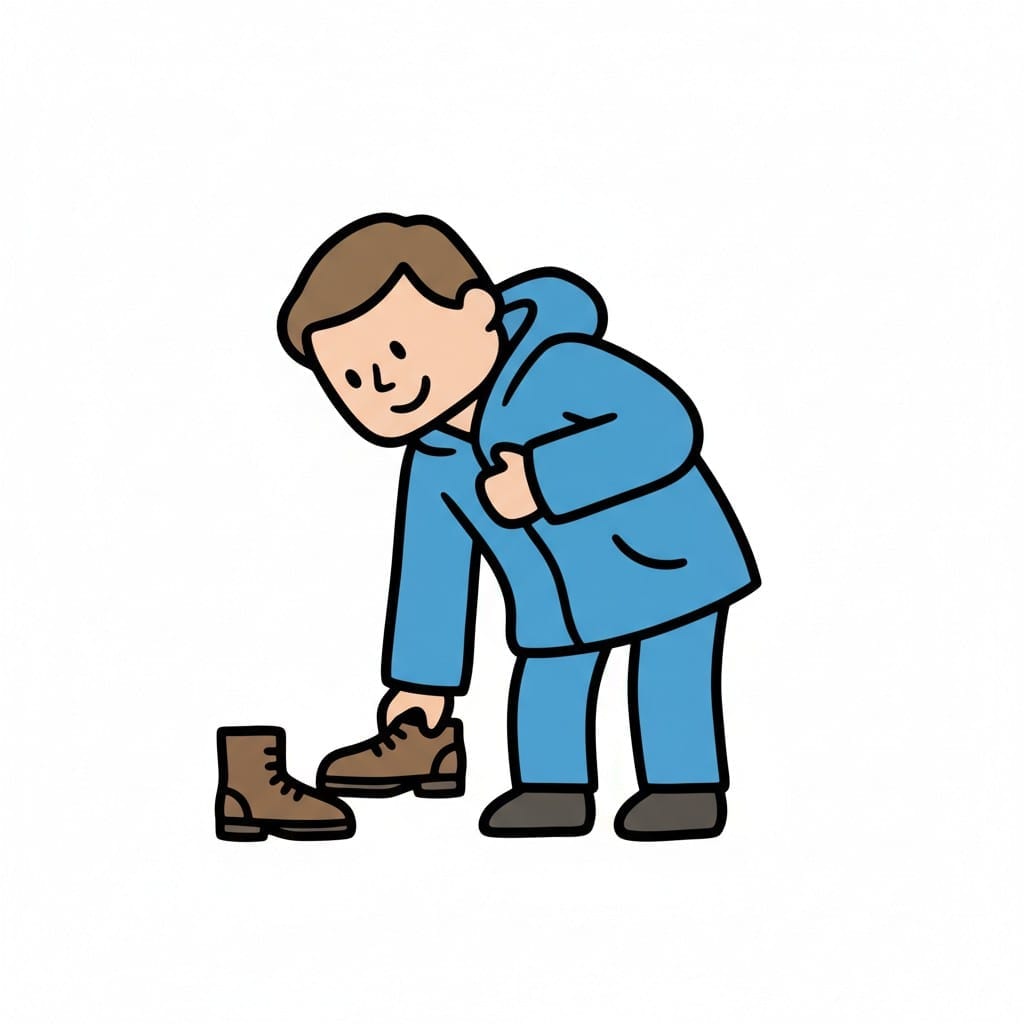 ♂
♂Boy putting on shoe
A boy in a blue jacket bends down to put on a brown shoe.
About this visual support
Leaving the house from the hallway is rarely a single action. It is a chain: shoes go on, coat goes on, maybe a hat, maybe a bag, and all of it happens while someone is already standing with the keys ready. That is where the time pressure enters, and that is where children lose the thread. When the steps are stacked invisibly on top of each other, one of them slips away.
A visual schedule gives the chain a shape you can point at. Shoes first, coat second, two cards in a row, in the same spot every day. Your child can glance back at the second card without you repeating the instruction, and you can stop pushing the next step into the room. Transitions calm down when they are predictable, and the front door is precisely where that predictability tends to break.
One concrete tip: hang the visual support at the child's eye level by the shoe rack, not at adult height. Then it becomes their tool, not your reminder list. Routined offers the same sequence as a digital routine with a built-in countdown if you want to test it, free for the first 14 days.
Use this image in a schedule
Build your own visual schedule with this image and download it as a print-ready PDF. Completely free.

More similar visual supports

Dress for outside
A girl with a ponytail, a striped hat and a yellow scarf fastens her red jacket,...

Put on outerwear
A person puts on a yellow jacket over a blue top.
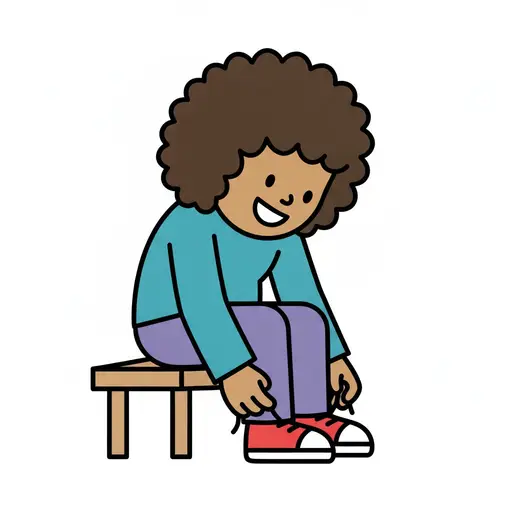
Put on shoes
A person sits on a bench pulling on red shoes.
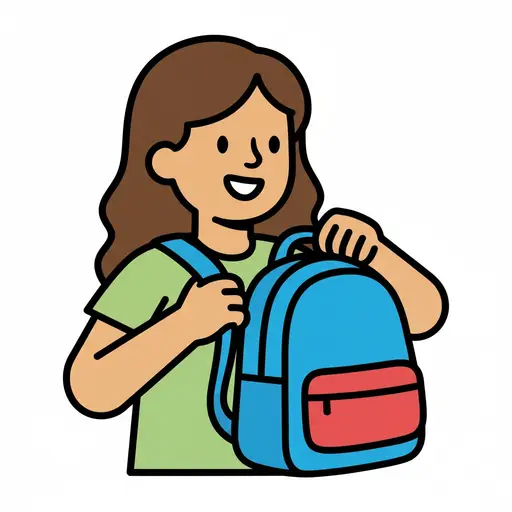
Put on the backpack
A smiling girl puts a blue backpack on over her shoulder.
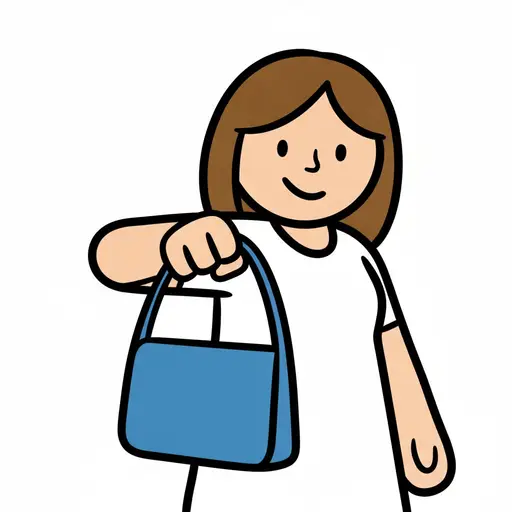
Take the bag
A smiling girl holds a blue bag by its handle.
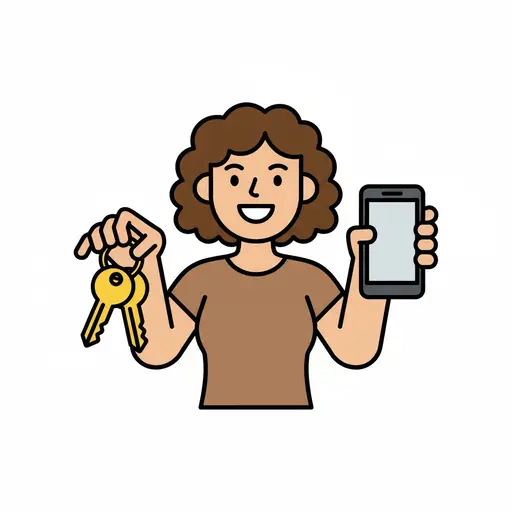
Bring keys and phone
A woman holds a set of keys in one hand and a smartphone in the other.
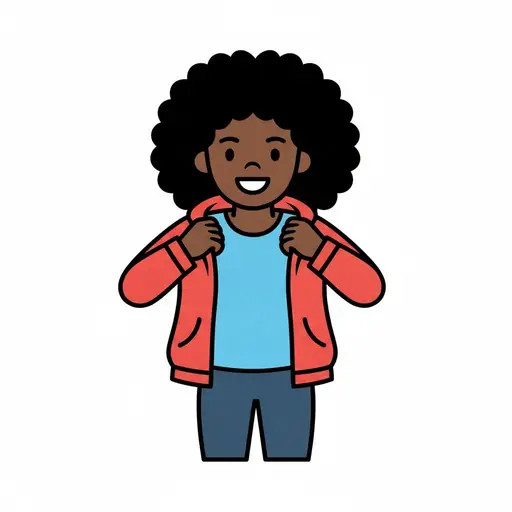
Get jacket on
A person puts on a red jacket over a blue top.
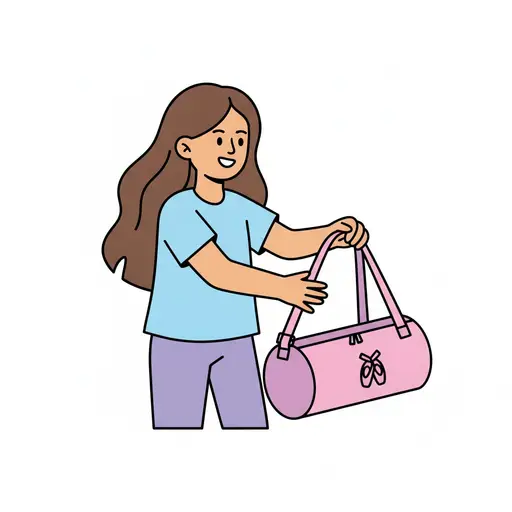
Get the bag
A person picks up a pink bag with a ballet shoe motif.
Take the visual supports with you
In Routined you build schedules from these pictures, add timers and voice instructions, and your child follows the day on their own.


* 14-day free trial included for new users.