Put on watch
A watch takes ten seconds for an adult and can cost an entire morning for a child. Closing a tiny buckle on the wrong hand with the right hand asks for precision that some days simply do not have. The visuals below break it down.
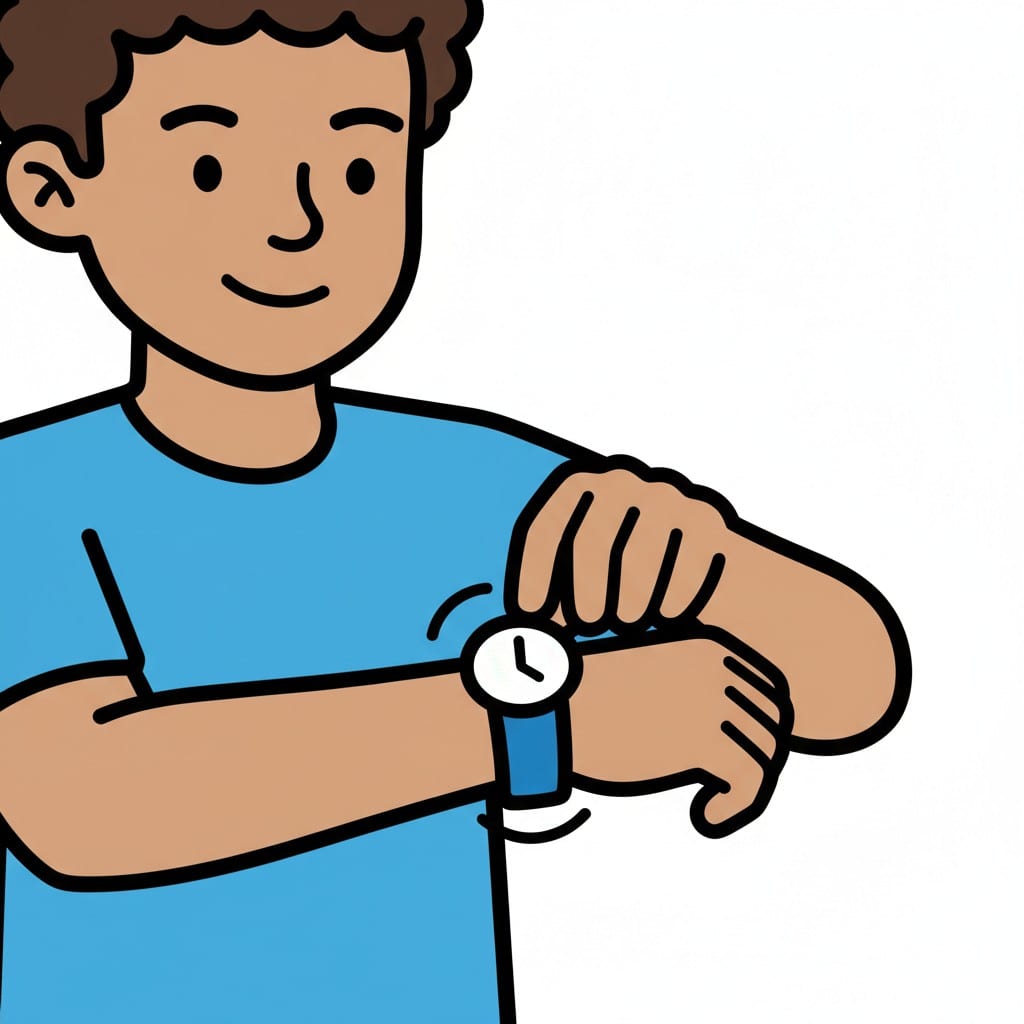 ♂
♂Boy puts on watch
A boy with short hair and a blue t-shirt puts on a white and blue watch on his left wrist.
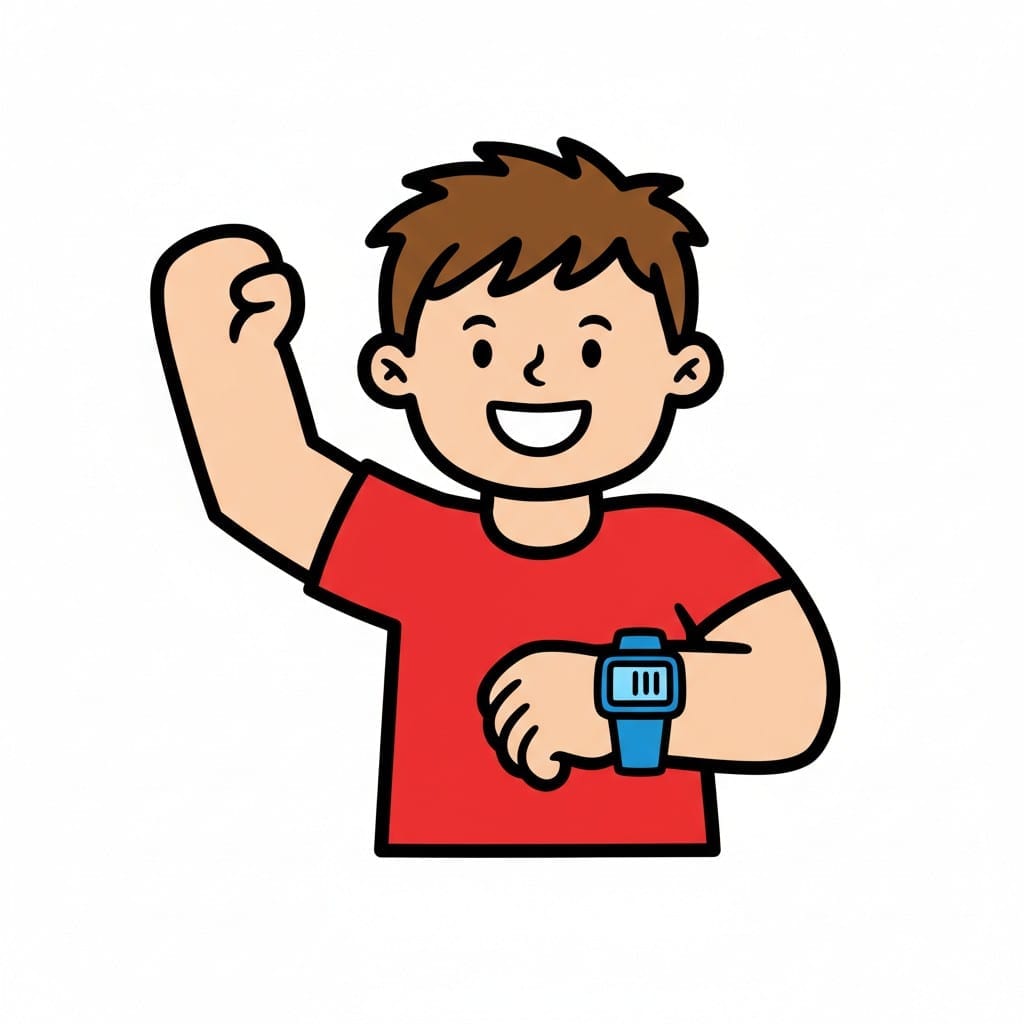 ♂
♂Boy wearing watch
A smiling boy with short hair and a red t-shirt shows off a blue digital watch on his left wrist. His right arm is bent with a closed fist.
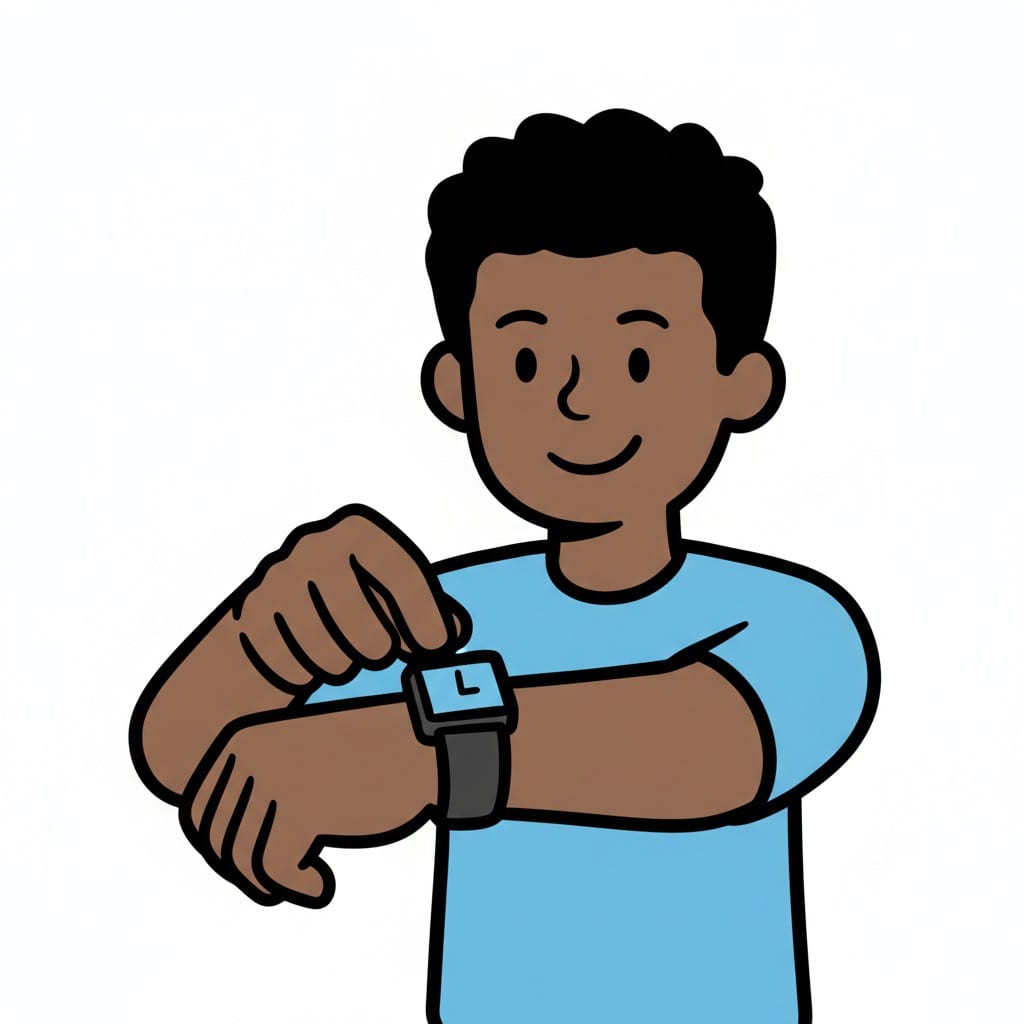 ♂
♂Fasten the watch
A boy in a blue t-shirt fastens a smartwatch with a dark strap around his wrist.
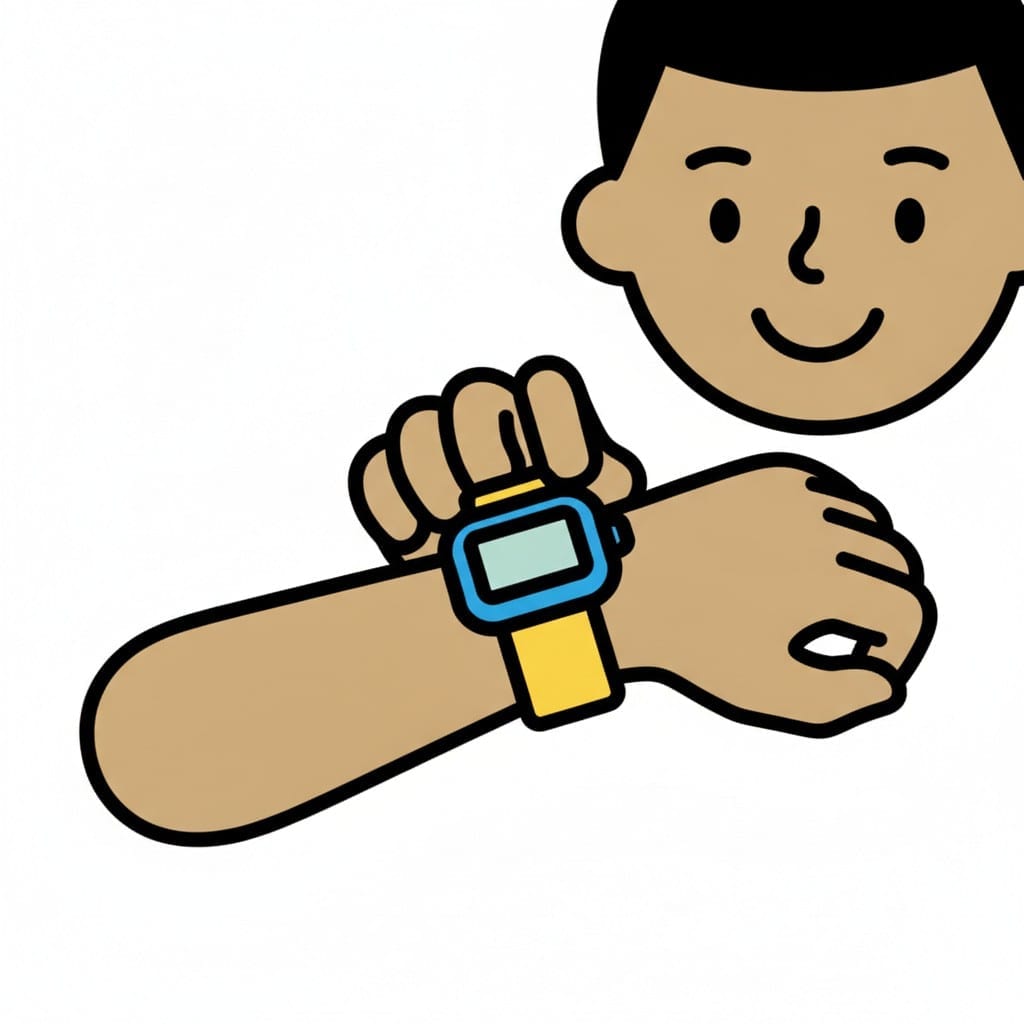 ♂
♂Boy fastening a wristwatch
A boy straps a watch with a yellow band around his wrist.
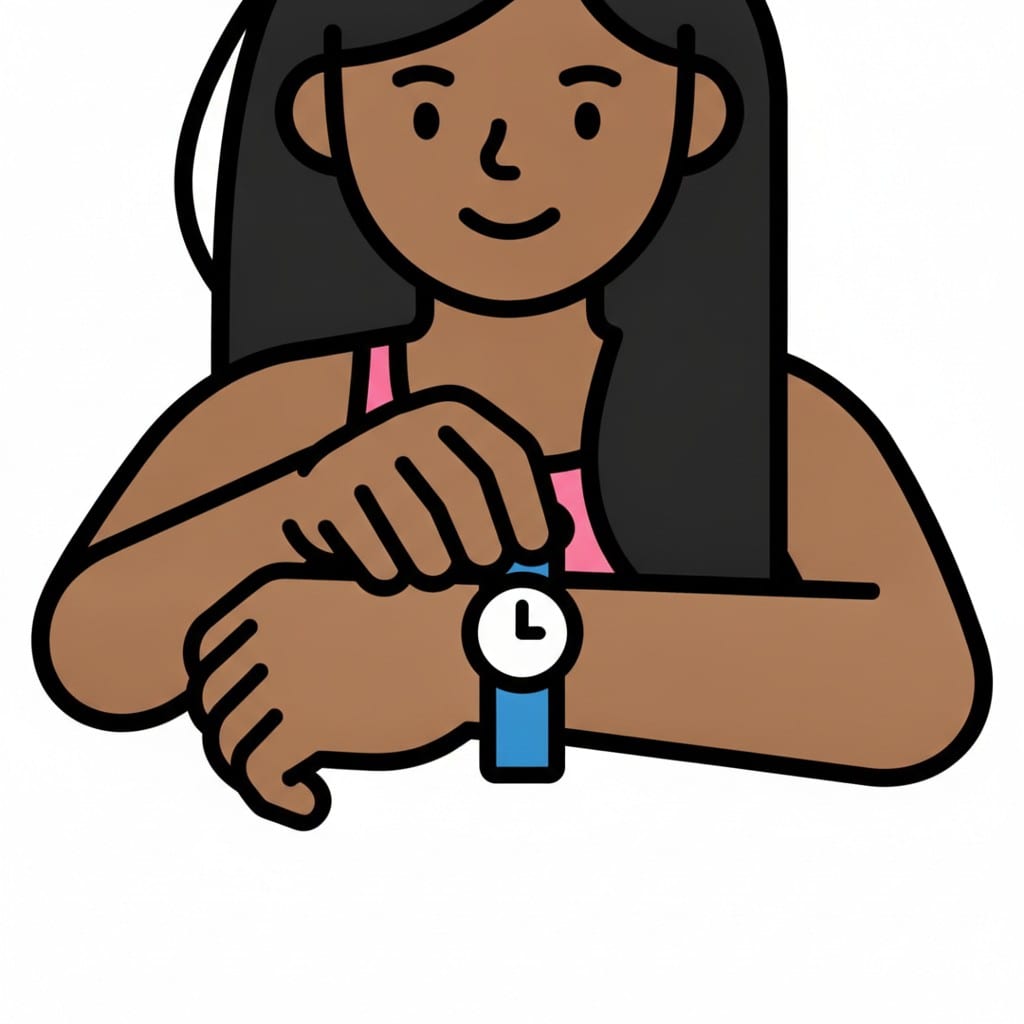 ♀
♀Put on the wristwatch
A girl with long hair puts on a wristwatch with a blue strap and a round white face.
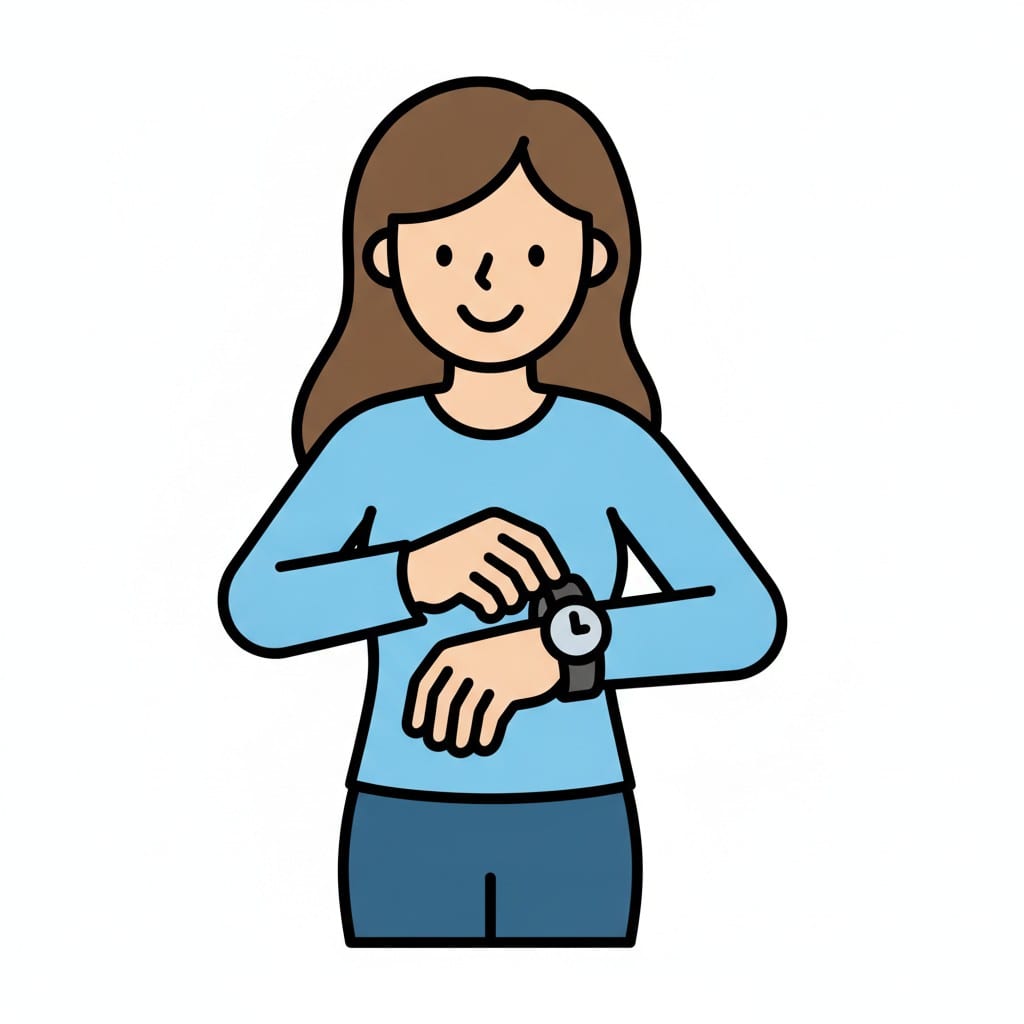 ♀
♀Person fastening a watch
A smiling person fastens a black wristwatch around their wrist.
About this visual support
A watch looks like an obvious final step, but the fine motor work behind it is surprisingly high. The hand that is supposed to fasten the buckle is the same one that has already buttoned shirts, pulled zips and tied shoes all morning, and now it has to operate over a wrist where the geometry is mirrored.
A visual support puts a boundary around the moment. Watch on, strap through the loop, pin into the hole, done. With the steps visible one at a time, it becomes possible to pause, recognise where you are in the sequence, and continue without starting from zero.
A concrete tip: keep a watch with a velcro or magnetic clasp for mornings when fingers are tireder than usual, and save the metal buckle for the weekend. Placing the watch last in the morning deck inside the Routined app turns it into a calm closing step rather than another rush near the door.
Use this image in a schedule
Build your own visual schedule with this image and download it as a print-ready PDF. Completely free.

More similar visual supports
Put on the bracelet
A blue bracelet forms a circle with red, yellow, and green beads spaced along th...
Before work
A woman wearing a yellow hard hat and blue shirt, holding a toolbox and pointing...
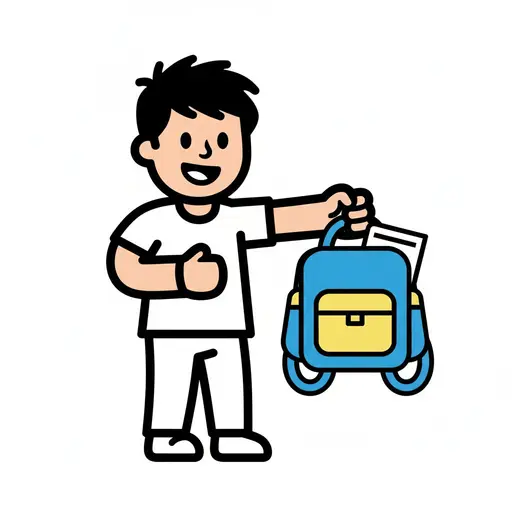
Bring school bag
Illustration of a boy holding a blue and yellow school bag.
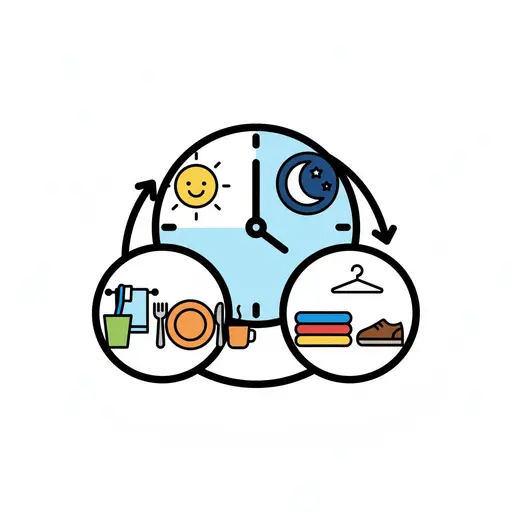
Daily routines
Illustration of a daily routine showing a clock with sun and moon, and symbols f...
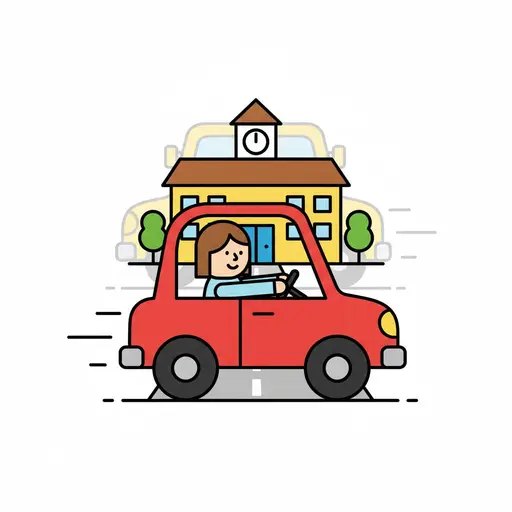
Drive to school
A person drives a car with a school in the background.
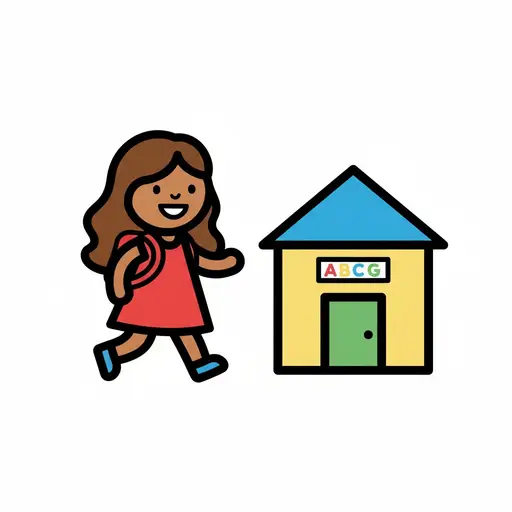
Go to preschool
A girl with a backpack walks towards a building with an ABCG sign.
Levi's day
A cartoon boy holds a calendar and a sun, symbolizing a day's schedule.
Morning routines
While brushing her teeth, a girl with curly hair pictures two thought bubbles: a...
Take the visual supports with you
In Routined you build schedules from these pictures, add timers and voice instructions, and your child follows the day on their own.


* 14-day free trial included for new users.