Thin hat
A thin hat sits close against the brow, feels different from the thick winter one and can itch in ways the child is not braced for. The picture below makes the shift between seasons a little more predictable.

Thin hat
A light blue hat with a white grid pattern.
About this visual support
The thin hat of spring and autumn is not the same garment as the winter one, even if both are called a hat. It sits tighter, lets more sound through and can itch right where the skin is most sensitive. Many children are not protesting against the hat as such, but against the body expecting a completely different feeling.
This is where the picture earns its place. By showing the thin version before you head out, the child has a moment to adjust the expectation. You can also name the difference plainly: this one is thinner, sits closer and can feel prickly at first. When language is put on the sensory part, it becomes easier to tolerate the first minute before the body settles in. A concrete trick: let the child hold the hat against the brow for a moment before pulling it on, so the brain gets a heads-up.
If you want to tie dressing and undressing to a picture sequence, you can build it in Routined and bring it out each time the weather shifts.
This image is part of these ready-made schedules
Use this image in a schedule
Build your own visual schedule with this image and download it as a print-ready PDF. Completely free.

More similar visual supports
Dress for the weather
A child chooses clothes based on the weather, with sun, t-shirt and shorts for w...
Go outside
A girl walks out into the sun.
Mittens
A pair of mittens. One blue with white snowflake and wave patterns, and one red ...
Outdoor clothes
A display of outdoor clothing with a blue hooded jacket, green trousers, a red b...
Outerwear
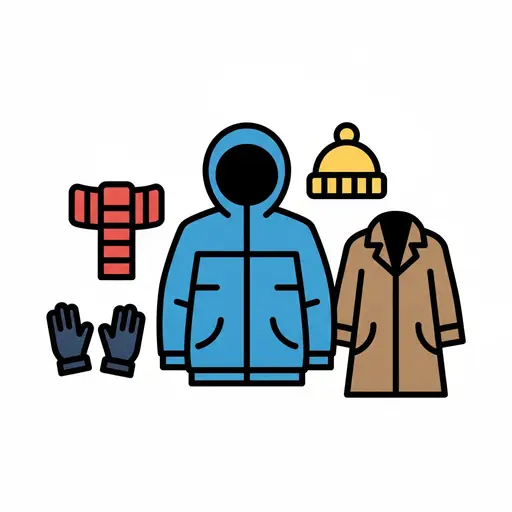
A blue hooded jacket, a beige coat, a yellow hat, a red scarf and a pair of dark...
Prepare for outside
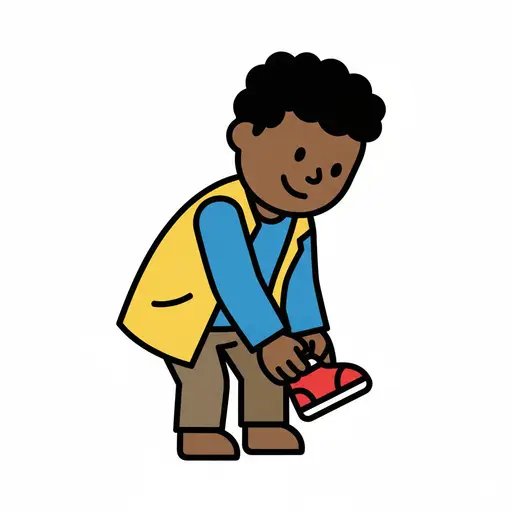
A smiling boy in a yellow jacket bends down and pulls on a red shoe.

Put on outerwear
A person puts on a yellow jacket over a blue top.

Put on rain jacket
A boy closes his yellow raincoat as raindrops fall around him.
Take the visual supports with you
In Routined you build schedules from these pictures, add timers and voice instructions, and your child follows the day on their own.


* 14-day free trial included for new users.