Tie shoes
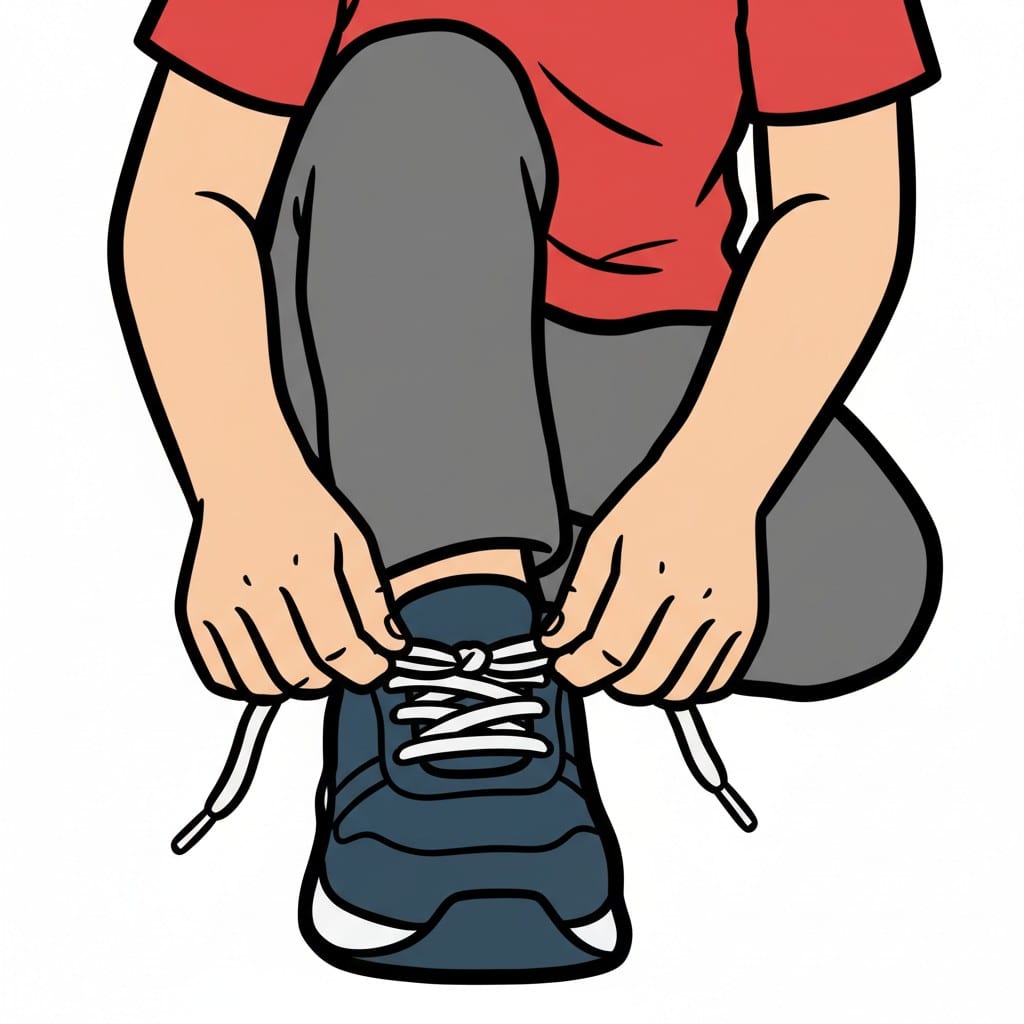
Fingers want to go five different directions at once, and the laces slip just as it should pull tight. The steps below break the tying motion down so a child can follow one finger move at a time.
 ♂
♂Tie shoes
A boy bending down to tie his shoelaces on a blue athletic shoe.
About this visual support
Shoe tying is a fine-motor sequence that looks effortless to an adult and bewildering to a child. The laces must stay tense while thumb and index finger swap grip, the loop has to be shaped and held while the other hand pulls the second lace through, and it all happens in two seconds when you demonstrate. For the child it is a chain of small moves where one slip topples the whole try.
A visual schedule doesn't solve the motor part, but it makes the sequence visible. When the child can pause at picture three and look at what the fingers should do right there, the pressure of holding the whole chain in memory falls away. One tip that often helps: practise with stiff, slightly thicker laces, not thin round ones. The extra friction keeps the loop and knot in shape long enough for the fingers to catch up.
In Routined you can place the tying sequence as a recurring morning station, so the practice has its own spot without stressing the rest of getting dressed.
Use this image in a schedule
Build your own visual schedule with this image and download it as a print-ready PDF. Completely free.
More similar visual supports
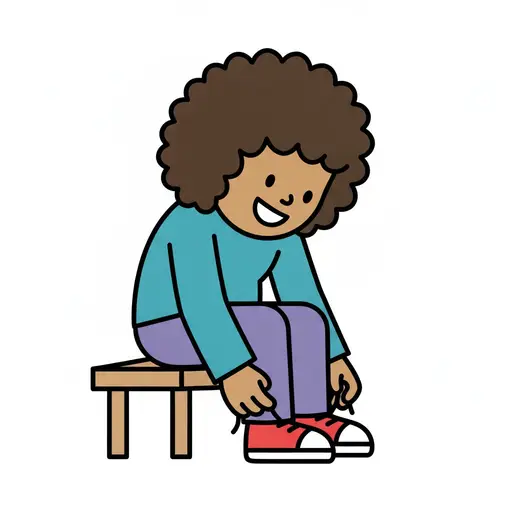
Put on shoes
A person sits on a bench pulling on red shoes.
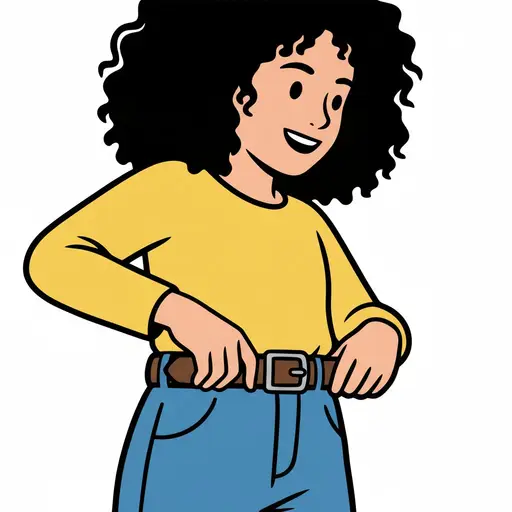
Put on belt
A person putting on a belt around their waist.
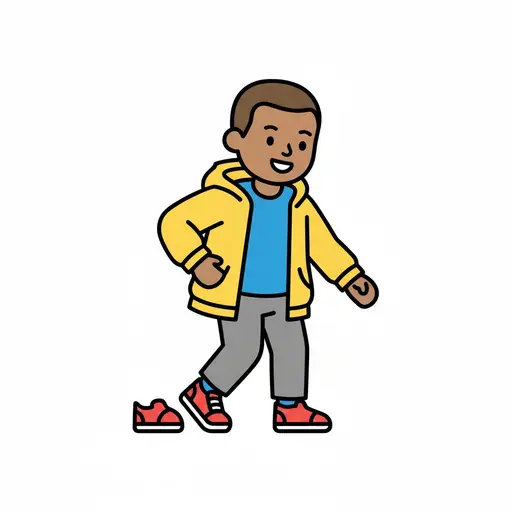
Prepare for outside
A boy in a yellow jacket steps into a pair of red shoes.
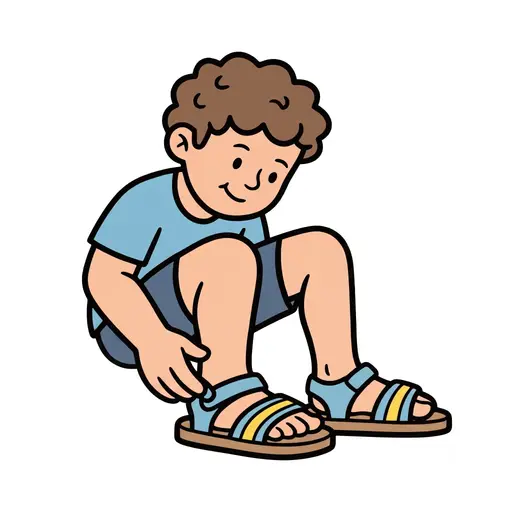
Put on sandals
A boy puts on his sandals.

Put on rain jacket
A boy closes his yellow raincoat as raindrops fall around him.
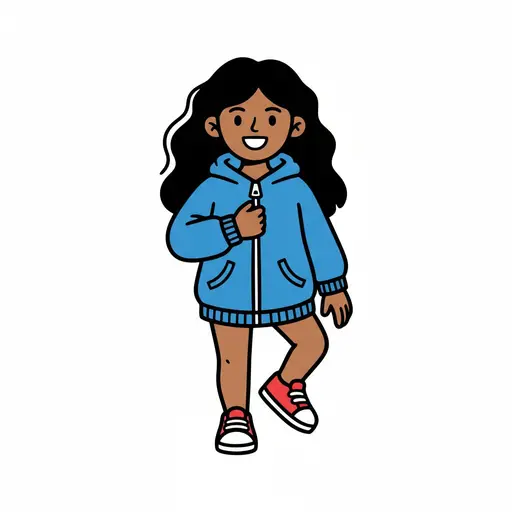
Jacket and shoes
A girl zipping up her blue jacket and wearing red shoes.
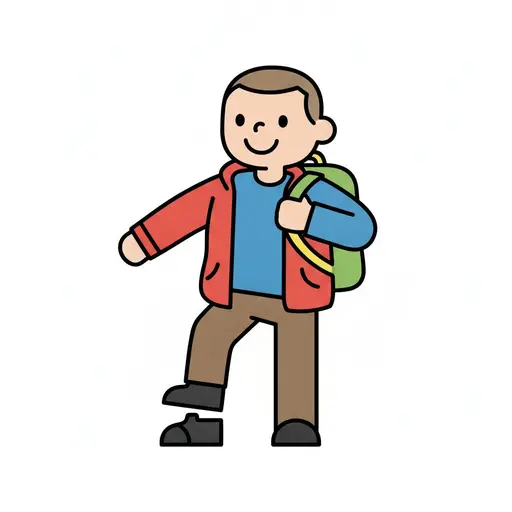
Put on jacket and backpack
A boy wearing a jacket and backpack takes a step.
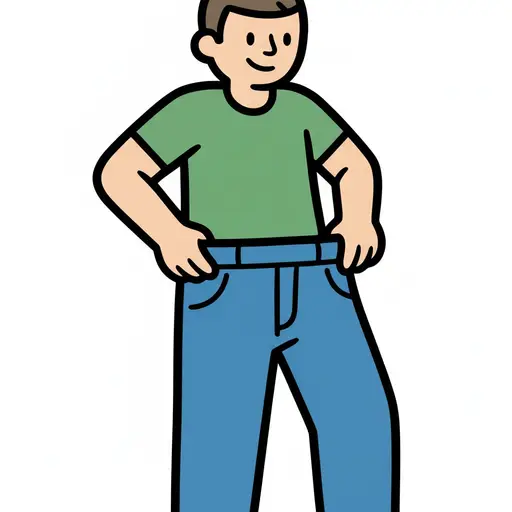
Wear pants
A smiling person pulls up a pair of blue pants with both hands.
This visual support in other languages
Take the visual supports with you
In Routined you build schedules from these pictures, add timers and voice instructions, and your child follows the day on their own.


* 14-day free trial, then $2.39 a month or $20.99 a year (US pricing). Cancel anytime.