Turn off alarm
Between the first beep and the feet touching the floor lies a microsecond where the whole morning is decided. The brain wants back into the dream, the hand fumbles for the wrong button. The visual support below traces the path from sleep mode to day mode.
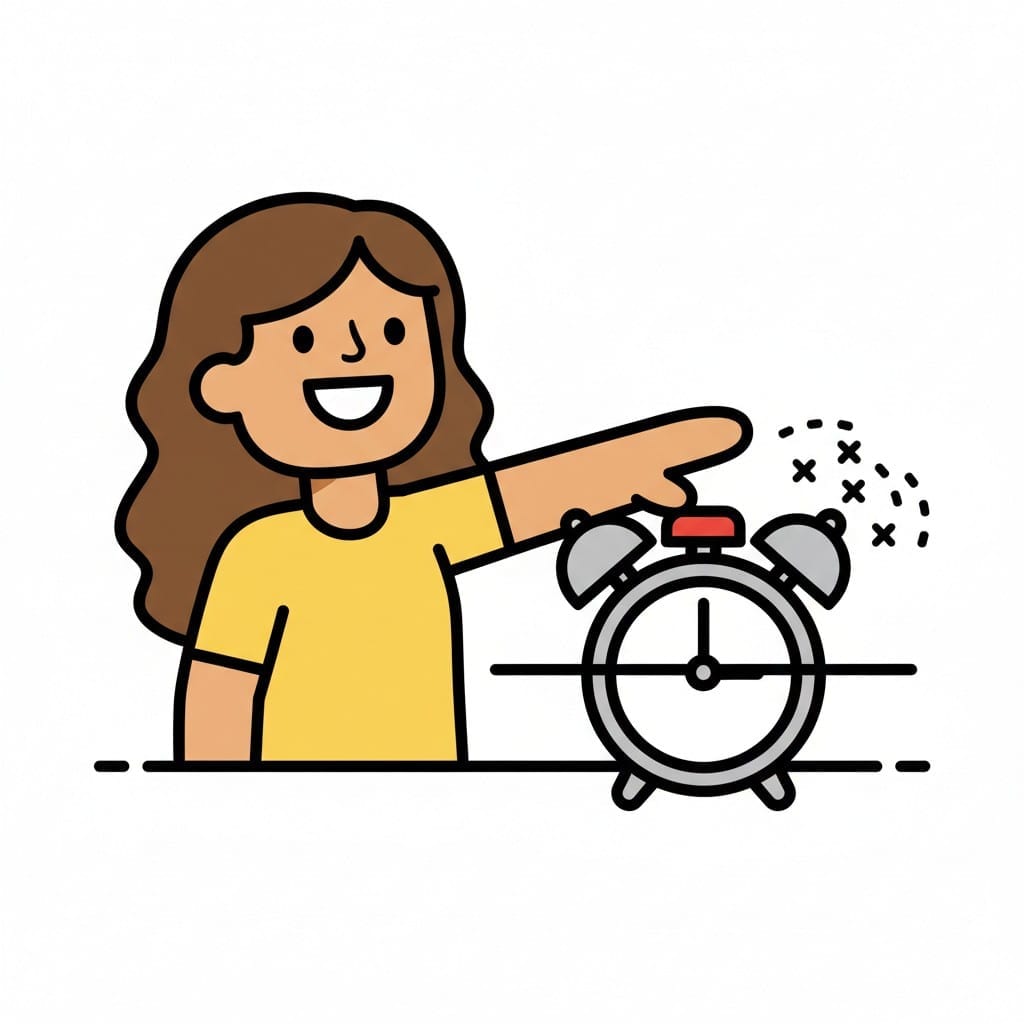 ♀
♀Turn off alarm
A person turning off an alarm clock.
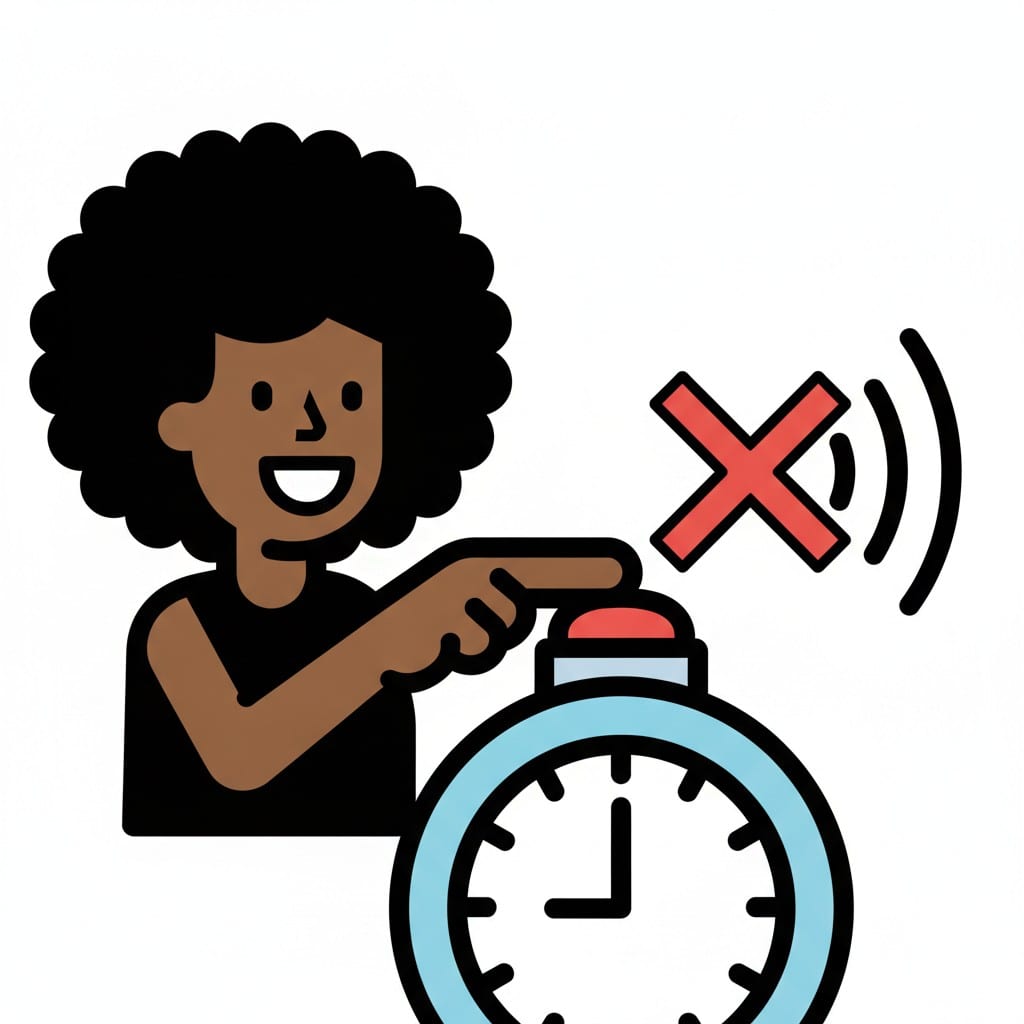 ♀
♀Girl pressing the alarm button
A smiling girl presses the red button on top of an alarm clock while a red cross covers the sound waves.
About this visual support
Moving from sleep to action is not a decision, it is a chain. The brain has to interpret the sound as an alarm and not part of the dream, the eyes have to find the clock in the dark, the fingers have to choose between snooze and stop. For many children the chain breaks at the first link, and ten extra minutes quickly turn into thirty.
A visual support helps precisely because it starts before the eyes are fully open. A first image of the alarm itself, a second of a hand pressing the button, a third of feet on the floor — and the brain has a visible ladder to climb. It is not motivation that is missing, it is order.
A concrete tip: place the clock somewhere the child has to sit up to reach, and keep the visual support next to it. Environment and steps then pull in the same direction. In the Routined app, the alarm routine can sit as the first item on the day's schedule, so turning the alarm off becomes the start of the morning rather than a fight against it.
Use this image in a schedule
Build your own visual schedule with this image and download it as a print-ready PDF. Completely free.

More similar visual supports
Morning routine
A person holds a toothbrush in one hand and a mug in the other, with a sun and a...
Stop the alarm
A smiling child presses the button on top of a ringing alarm clock to turn it of...
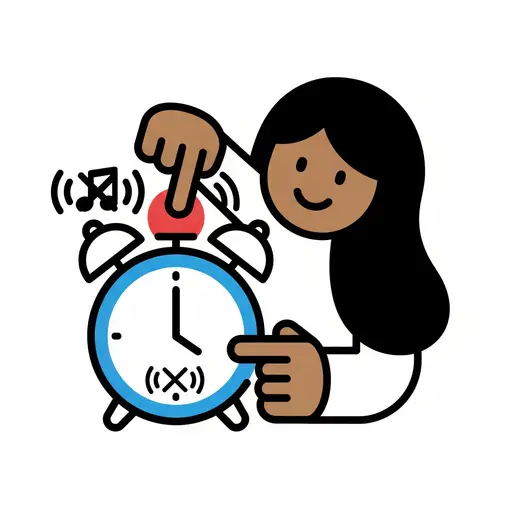
Turn off the alarm
A girl presses the button on top of a ringing blue alarm clock to turn off the s...
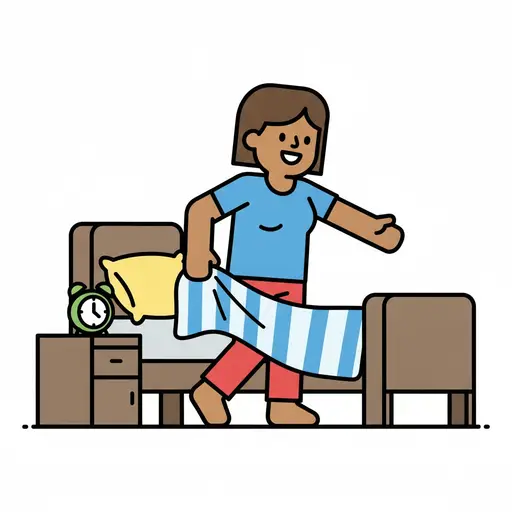
Get out of bed
A smiling person in pyjamas gets out of bed and pulls back a striped duvet, with...
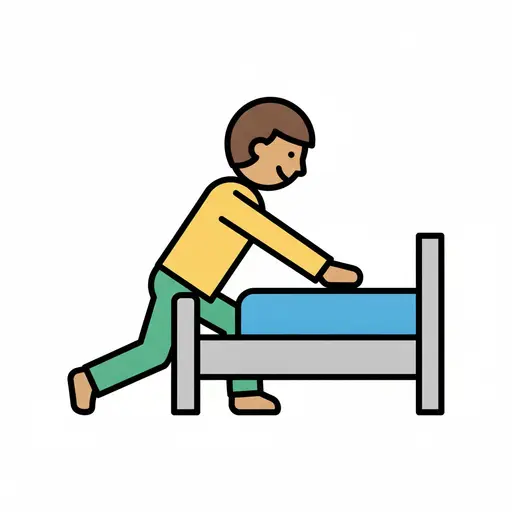
Get up
A child climbs out of bed and puts their feet on the floor.

Good morning
A long haired woman reaches both arms upwards while a yellow sun shines in the c...
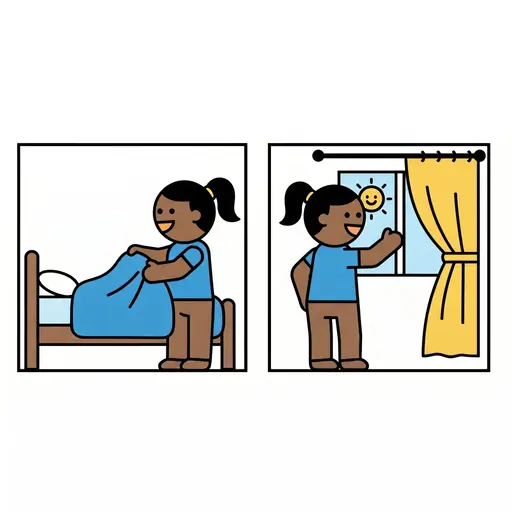
Make bed and open curtains
Two panels showing a girl making her bed and then opening the curtain to the sun...

Morning checklist
A boy holds a tablet with three ticked boxes, with a small sun beside.
Take the visual supports with you
In Routined you build schedules from these pictures, add timers and voice instructions, and your child follows the day on their own.


* 14-day free trial included for new users.