Count
One small interruption is enough to lose your place in the count and have to start over from one. Keeping the numbers in order takes focus, and the visual support below offers a visible row to lean on.
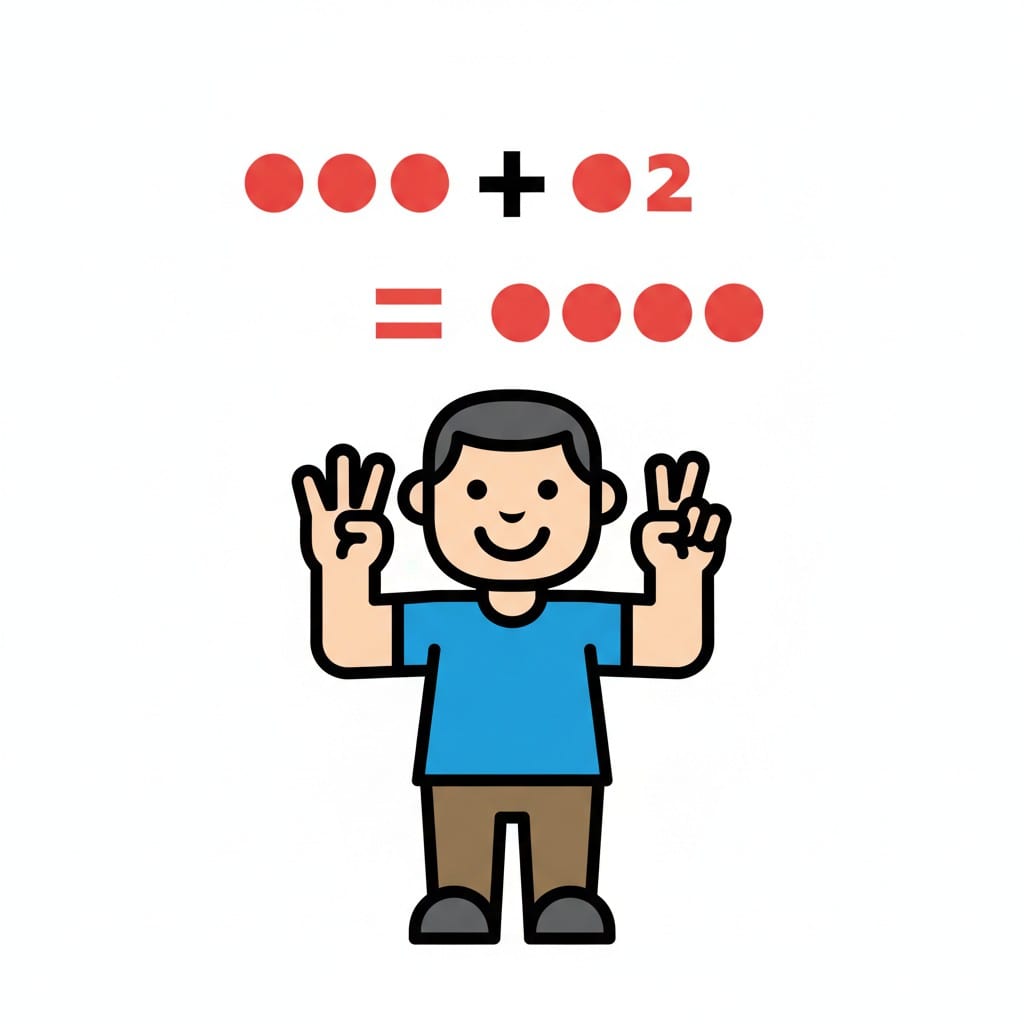 ♂
♂Person counting with fingers and dots
A smiling person holds up fingers on both hands beneath a simple sum made of red dots with a plus sign and an equals sign.
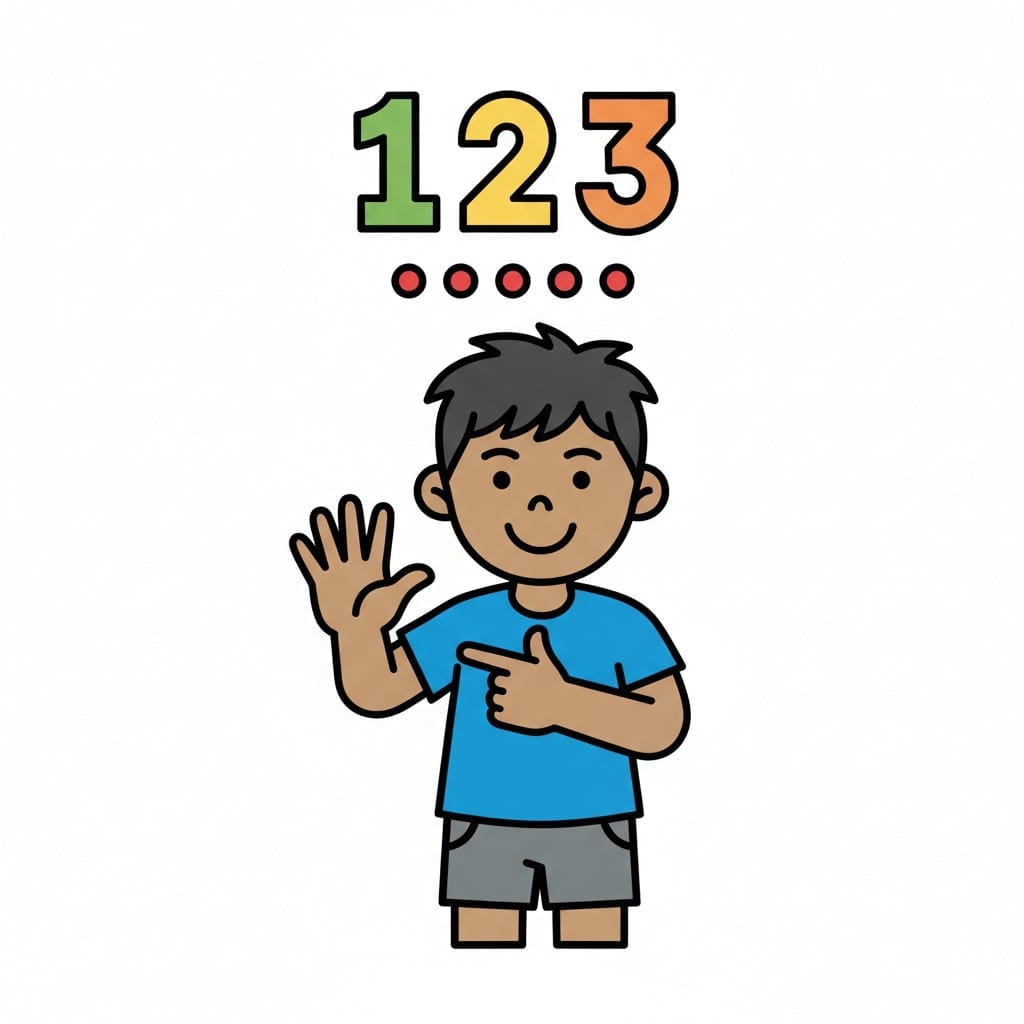 ♂
♂Boy counting under the numbers 1 2 3
A smiling boy holds up an open hand and points with the other, beneath colourful numbers 1, 2 and 3 and a row of red dots.
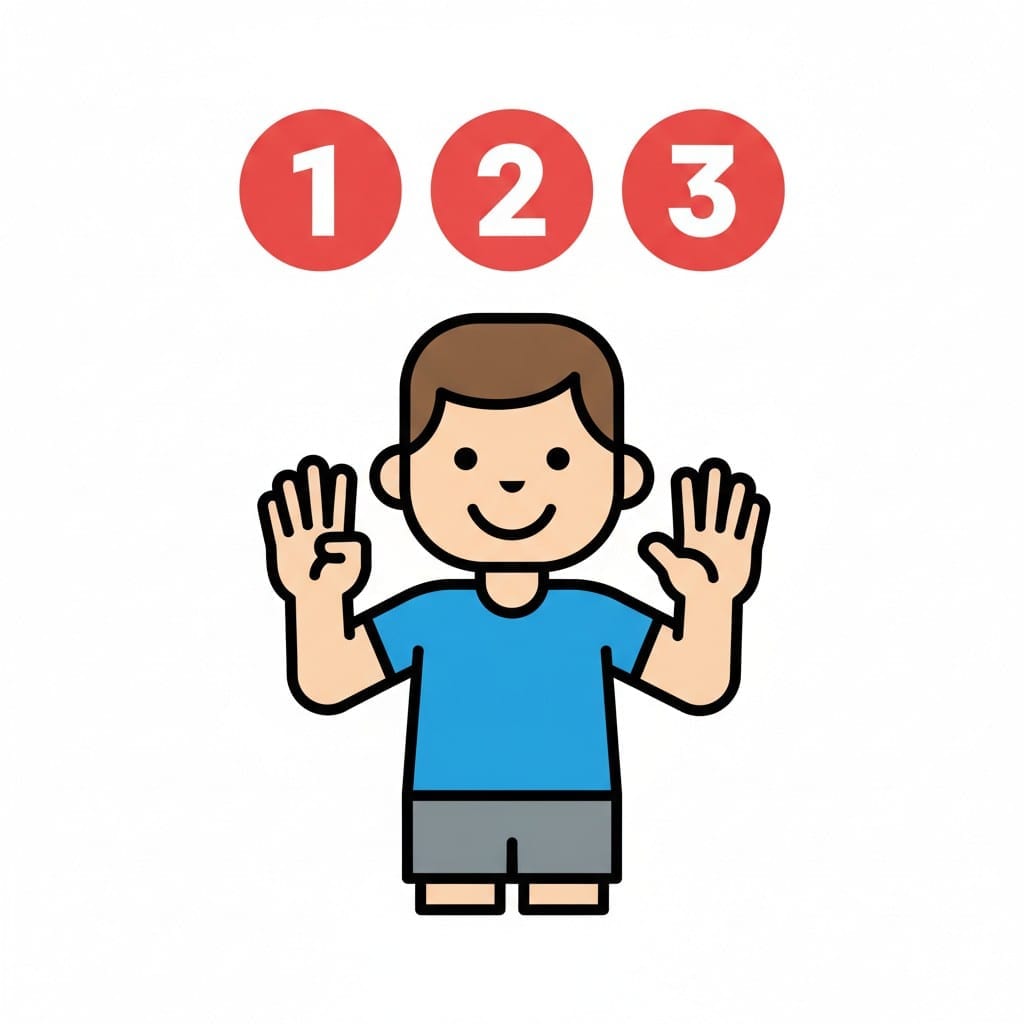 ♂
♂Boy counting under numbered circles
A smiling boy holds up fingers on both hands beneath three red circles with the numbers 1, 2 and 3.
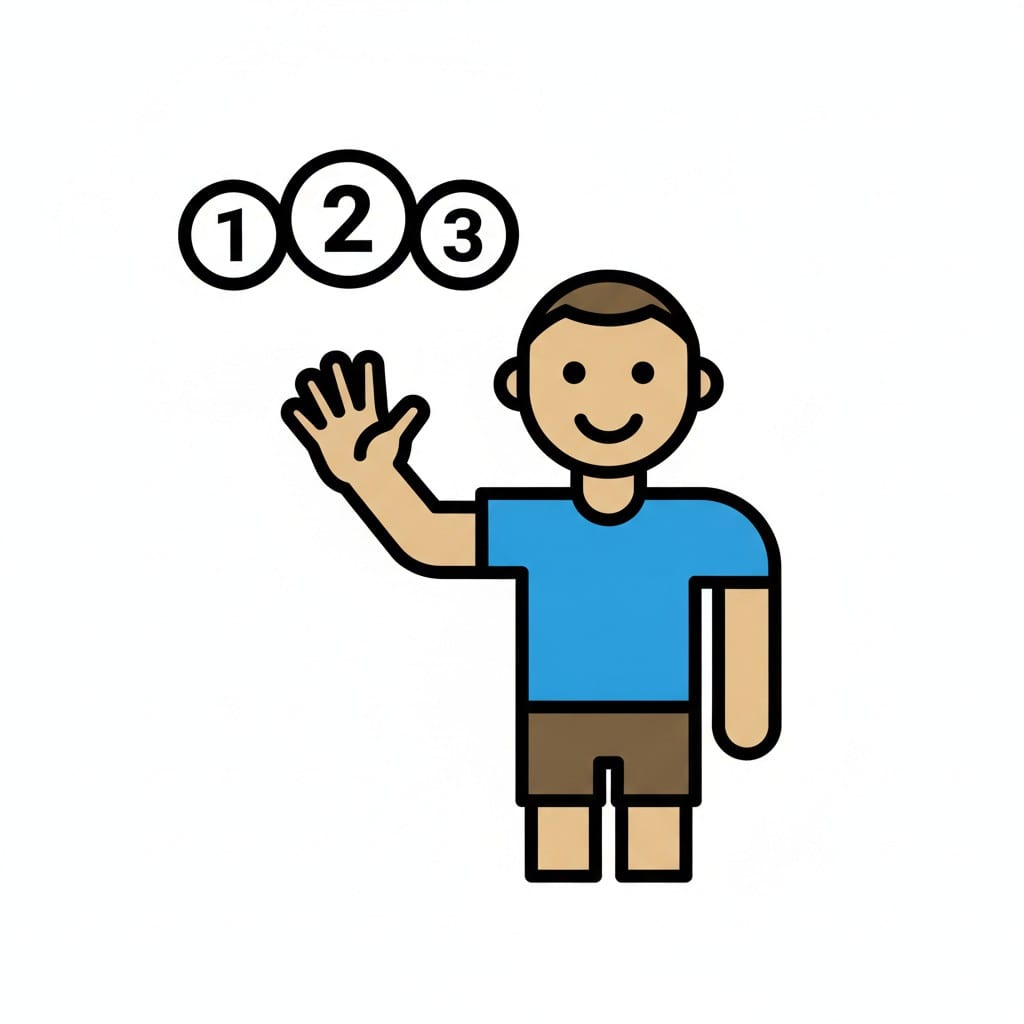 ♂
♂Boy raising a hand under three numbers
A smiling boy holds up an open hand beneath three white rings with the numbers 1, 2 and 3.
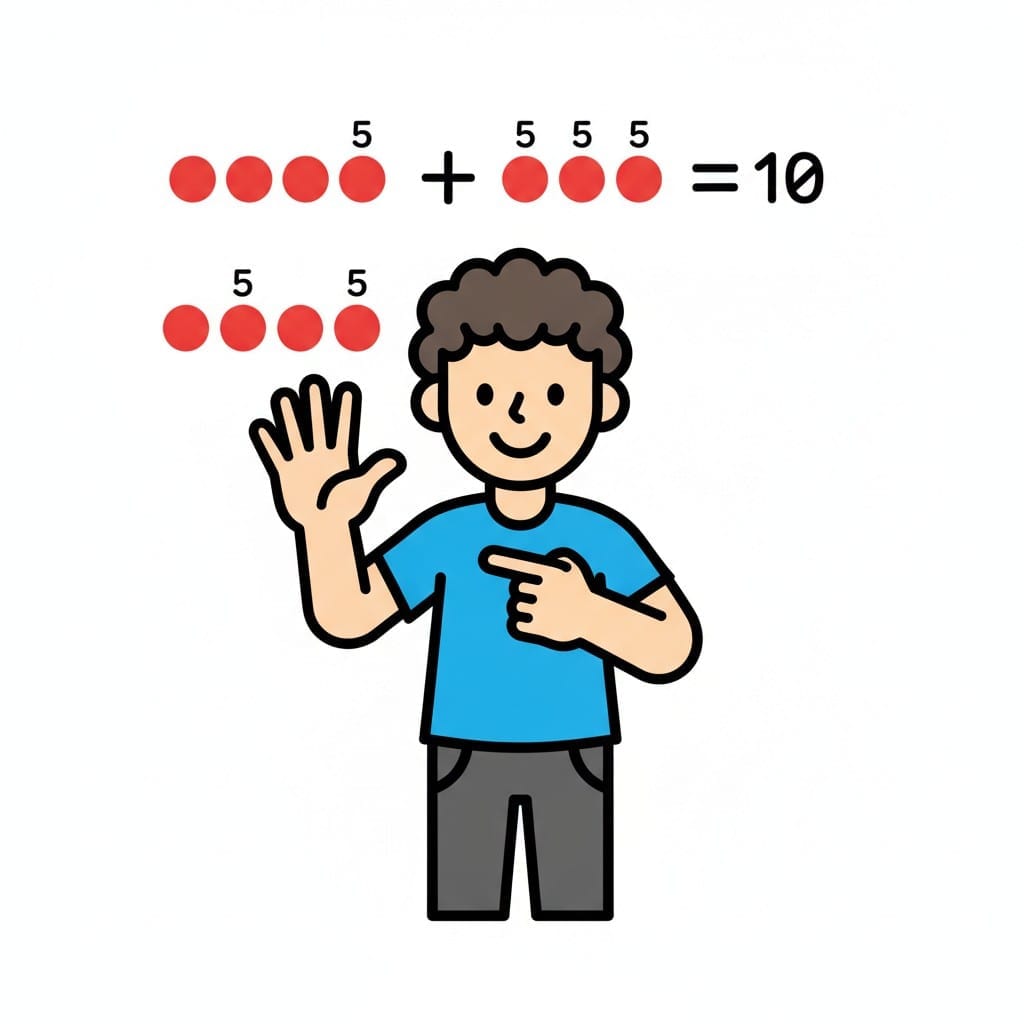 ♂
♂Boy counting dots in an addition sum
A smiling boy holds up an open hand and points with the other beneath rows of red dots forming an addition sum.
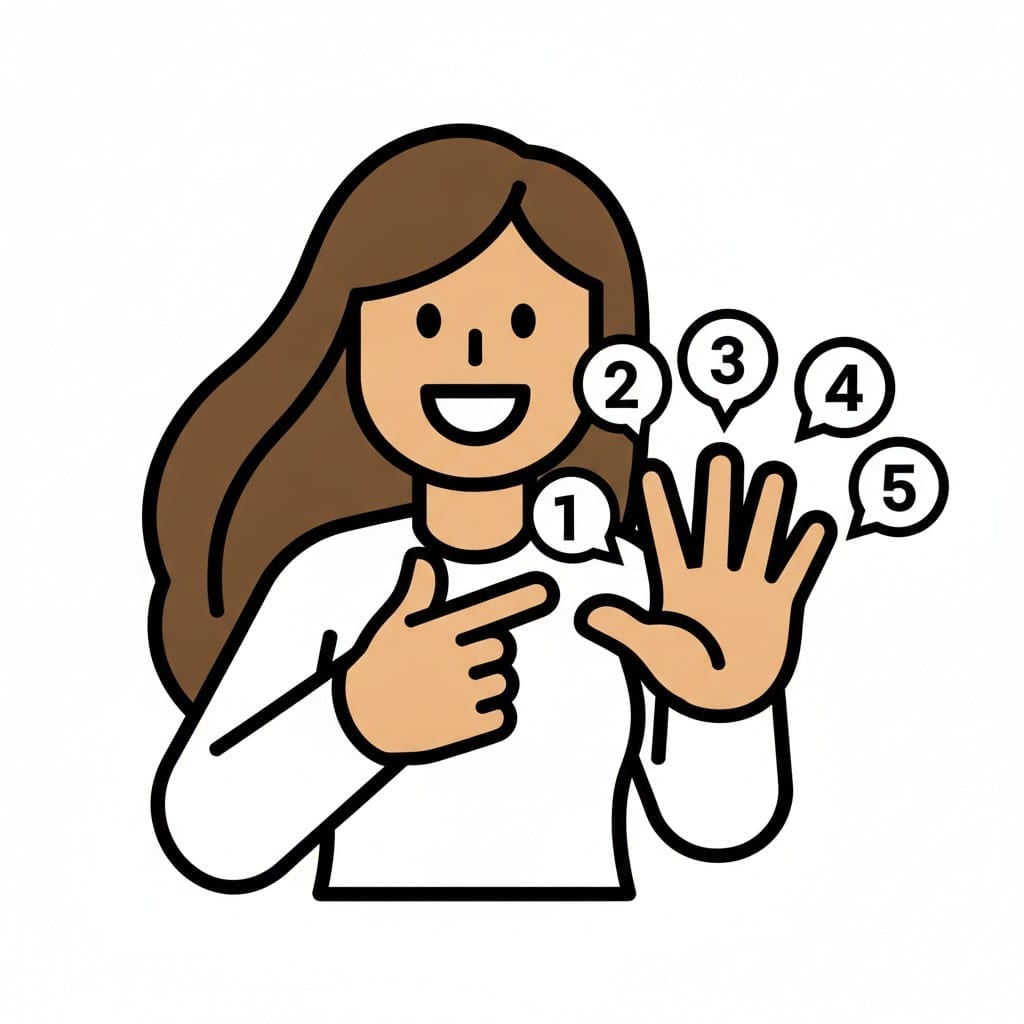 ♀
♀Count on fingers
A happy person counts on their fingers with the numbers one to five next to the hand.
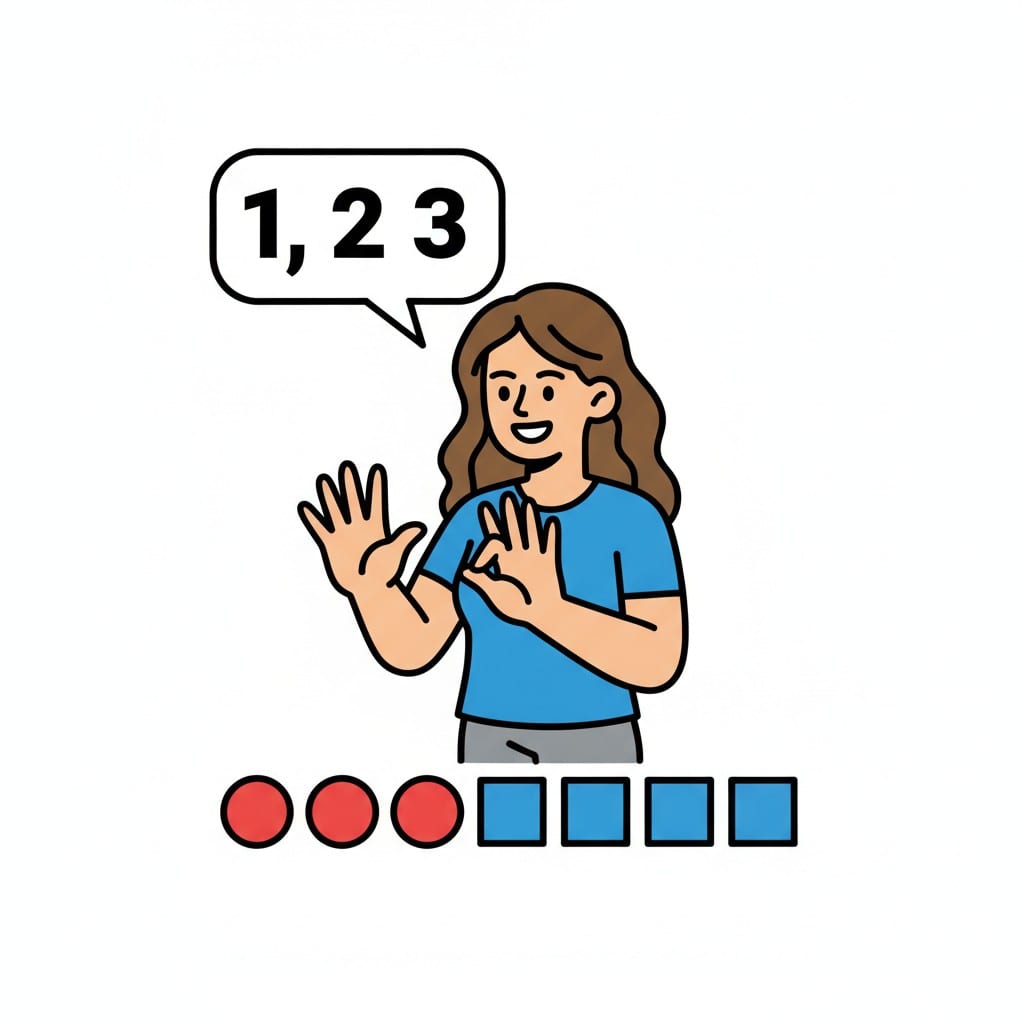 ♀
♀Person counting out loud
A smiling person holds up fingers with a speech bubble showing 1, 2 and 3, and a row of red circles and blue squares below.
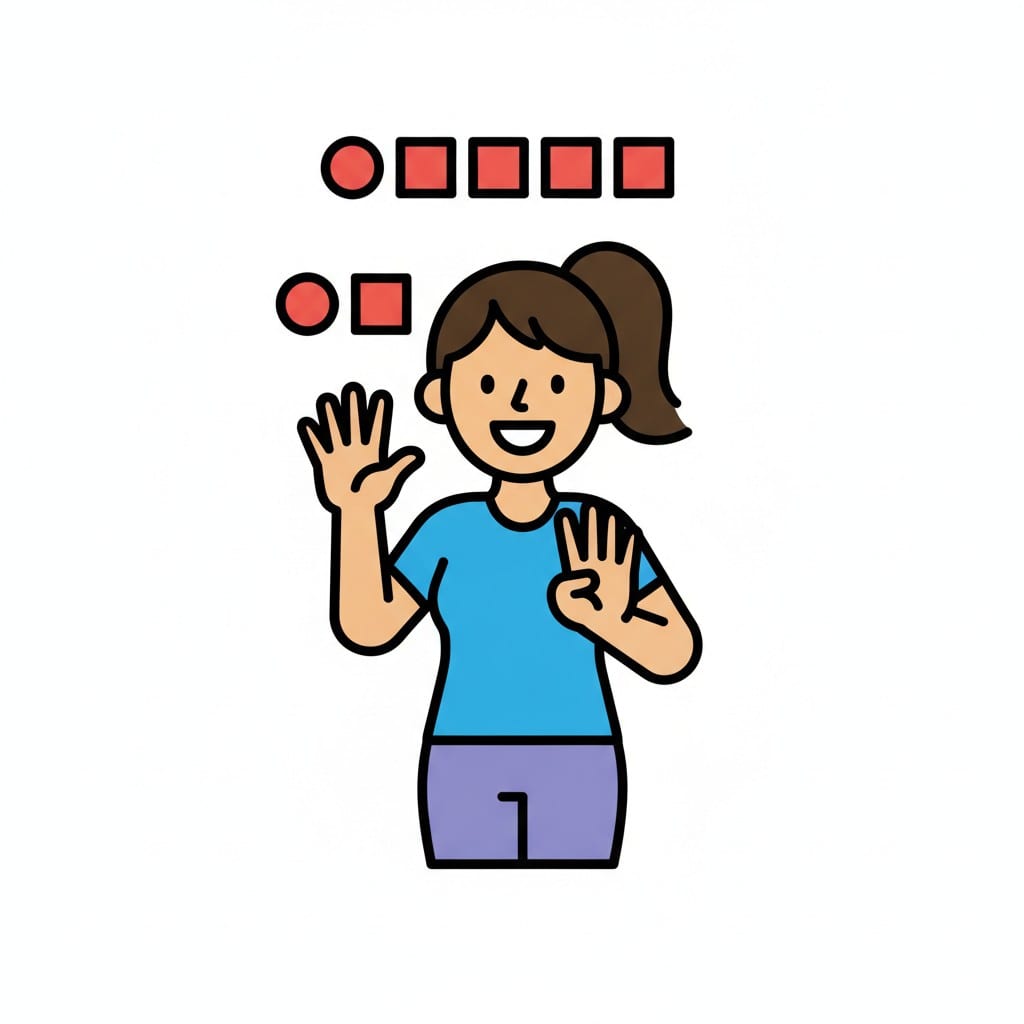 ♀
♀Person counting with shapes above
A smiling person with a ponytail holds up fingers on both hands beneath two rows of red circles and squares.
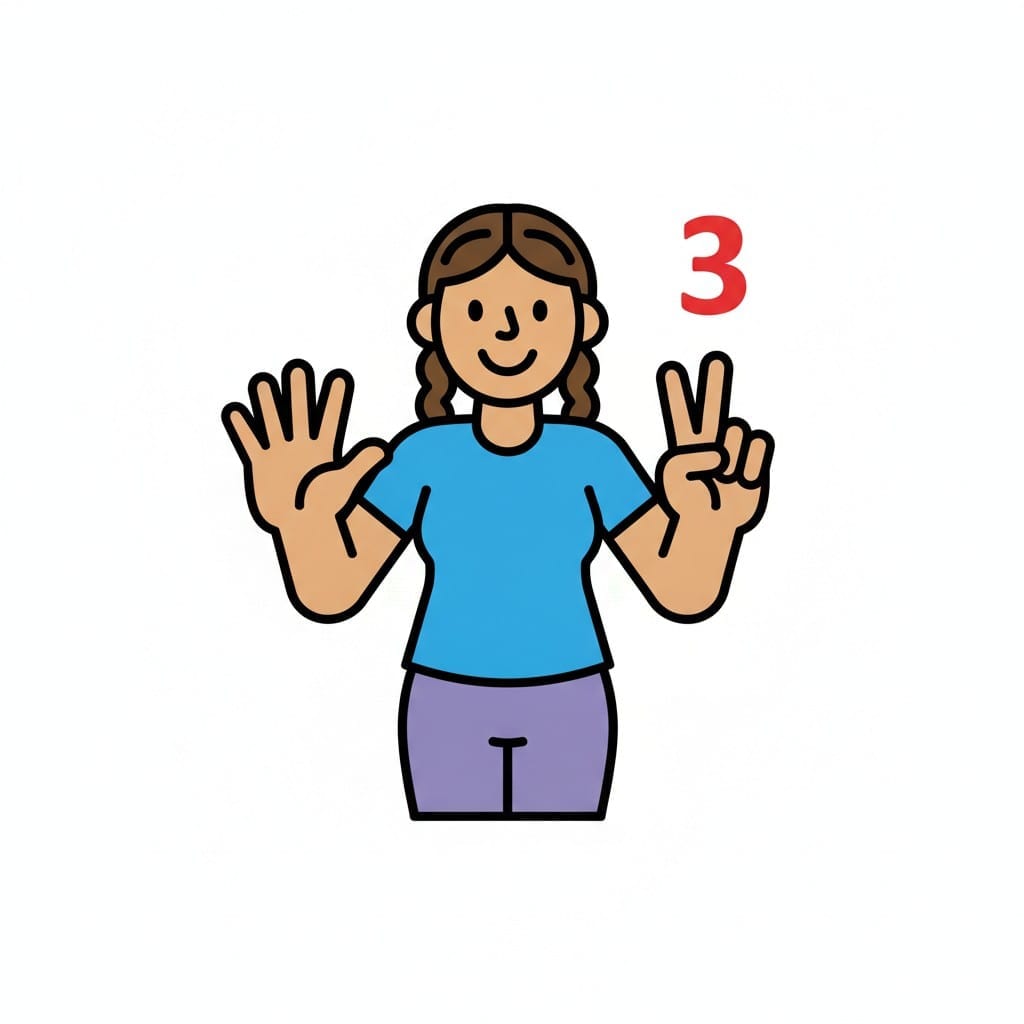 ♀
♀Girl showing five and three fingers
A smiling girl holds up five fingers on one hand and three on the other, beside a red number three.
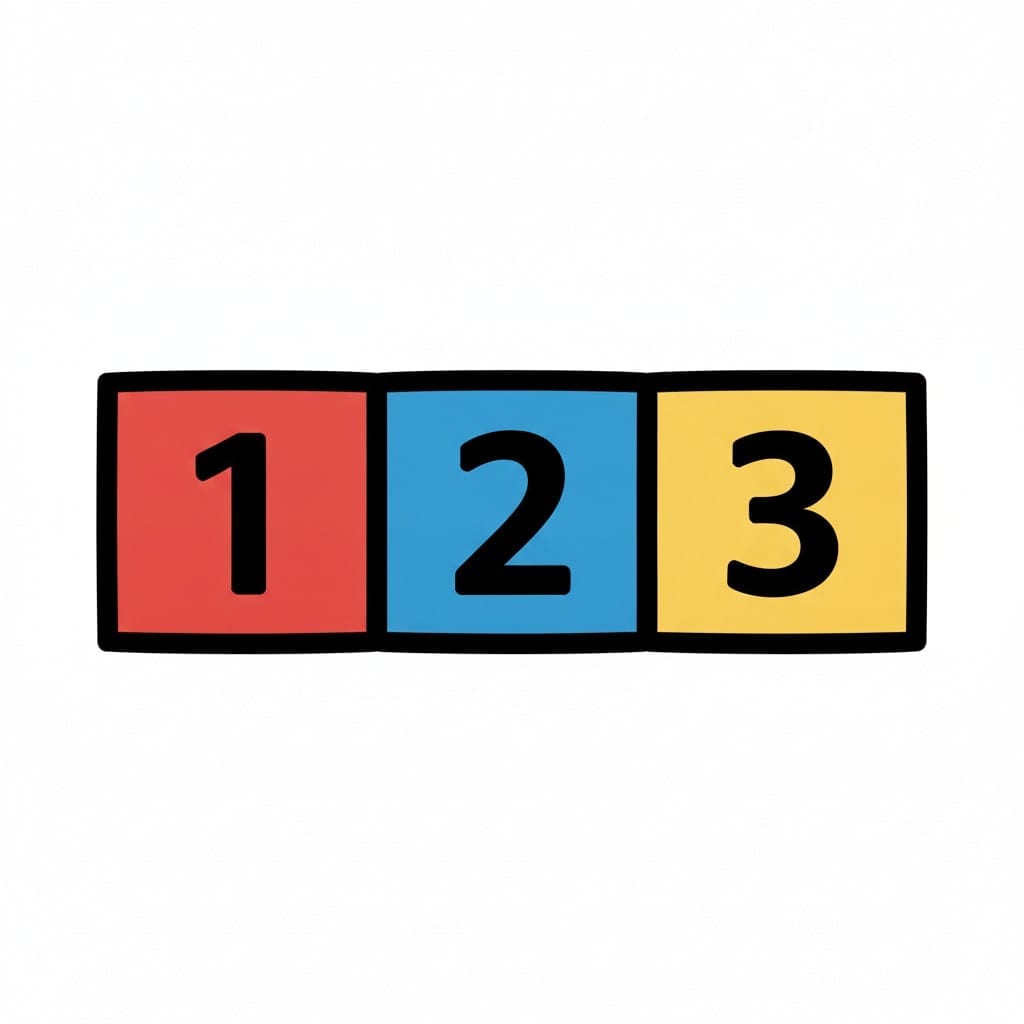
Three coloured number blocks
Three blocks in a row in red, blue and yellow with the numbers 1, 2 and 3.

Number card with 1 2 3
A white card with rounded corners showing the numbers 1, 2 and 3 in blue, green and black.
About this visual support
Counting rests entirely on holding an order in your head, one, two, three, without losing the thread. The trouble is that the order lives in working memory, and the slightest sound, question or stray thought can knock it loose. Suddenly you are unsure whether you said seven or eight, and the whole sequence has to start over.
Visual support moves the order out of the head and onto a surface the child can see. When the numbers or the objects to be counted sit in a row, there is always a place to return to after an interruption. The child can point to where they are right now, which both holds focus and makes it possible to carry on rather than restart.
One concrete tip: have the child touch each thing while counting, one button, one finger, one picture at a time. Pairing the number with a physical touch anchors the count in the body, so an interruption does not erase everything, it just pauses it.
In Routined you can set counting exercises as steps and pair a picture with a quantity. You can try the app for fourteen days at no cost.
Use this image in a schedule
Build your own visual schedule with this image and download it as a print-ready PDF. Completely free.

More similar visual supports
Count to 10
A happy person shows numbers 1 to 10 in a straight line with an arrow indicating...
Math and reading
A child sits at a desk with an open letter book, a calculator and number blocks.
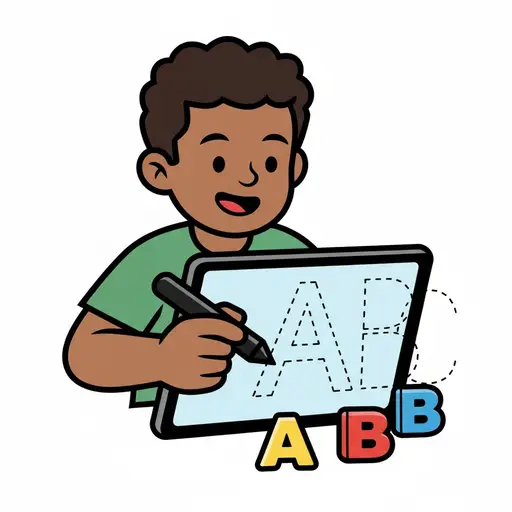
Practice letters
A boy with a pen traces the letters A, B and C on a white board.

Fetch pen and paper
A boy reaches toward a sheet of paper while holding a pen.

Get pen and paper
A person leans forward and writes with a blue pen on a stack of paper.

Grab pen and paper
A smiling boy holds a blue pen and some sheets of paper, ready to write.

Learn words
A boy reads an open book with words and a lightbulb symbolizing new ideas around...
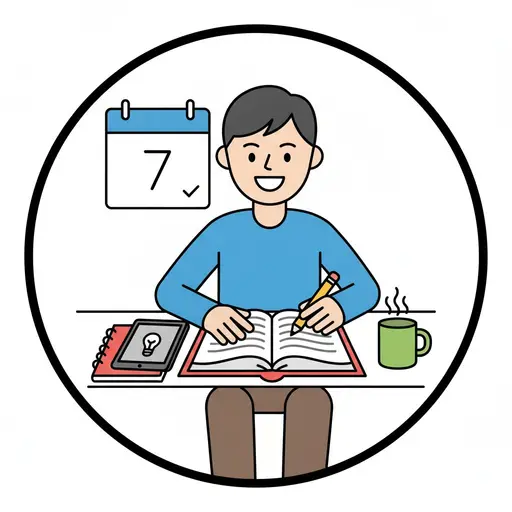
Study
A person sits at a desk writing in a book, with a calendar, a tablet and a mug b...
Take the visual supports with you
In Routined you build schedules from these pictures, add timers and voice instructions, and your child follows the day on their own.


* 14-day free trial included for new users.