Danish
A Danish word can look exactly like a Swedish one on paper and still sound like something else entirely in the ear. That half recognition creates more confusion than an unfamiliar word would. The pictures below let the meaning come first, before spelling and pronunciation.
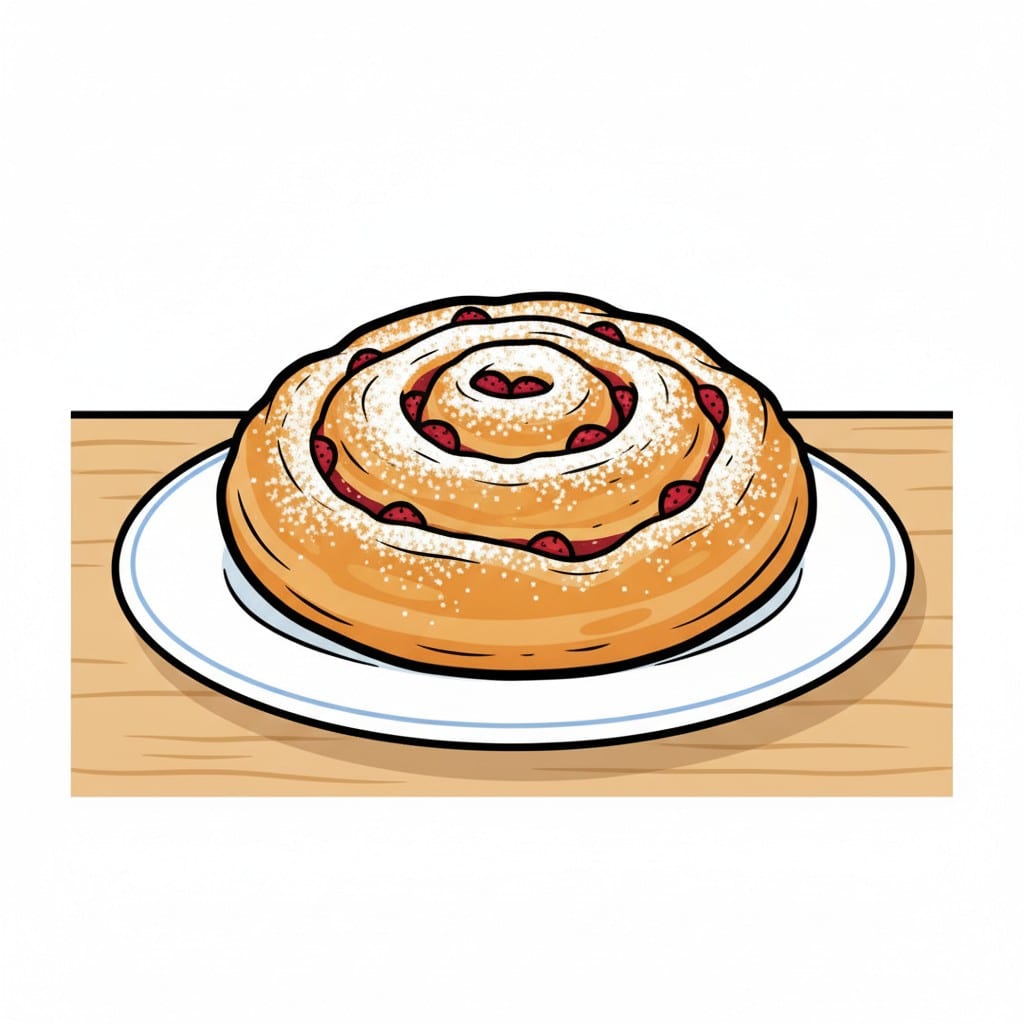
Pastry swirl on a plate
A large round swirled pastry with red filling and icing sugar on a white plate.
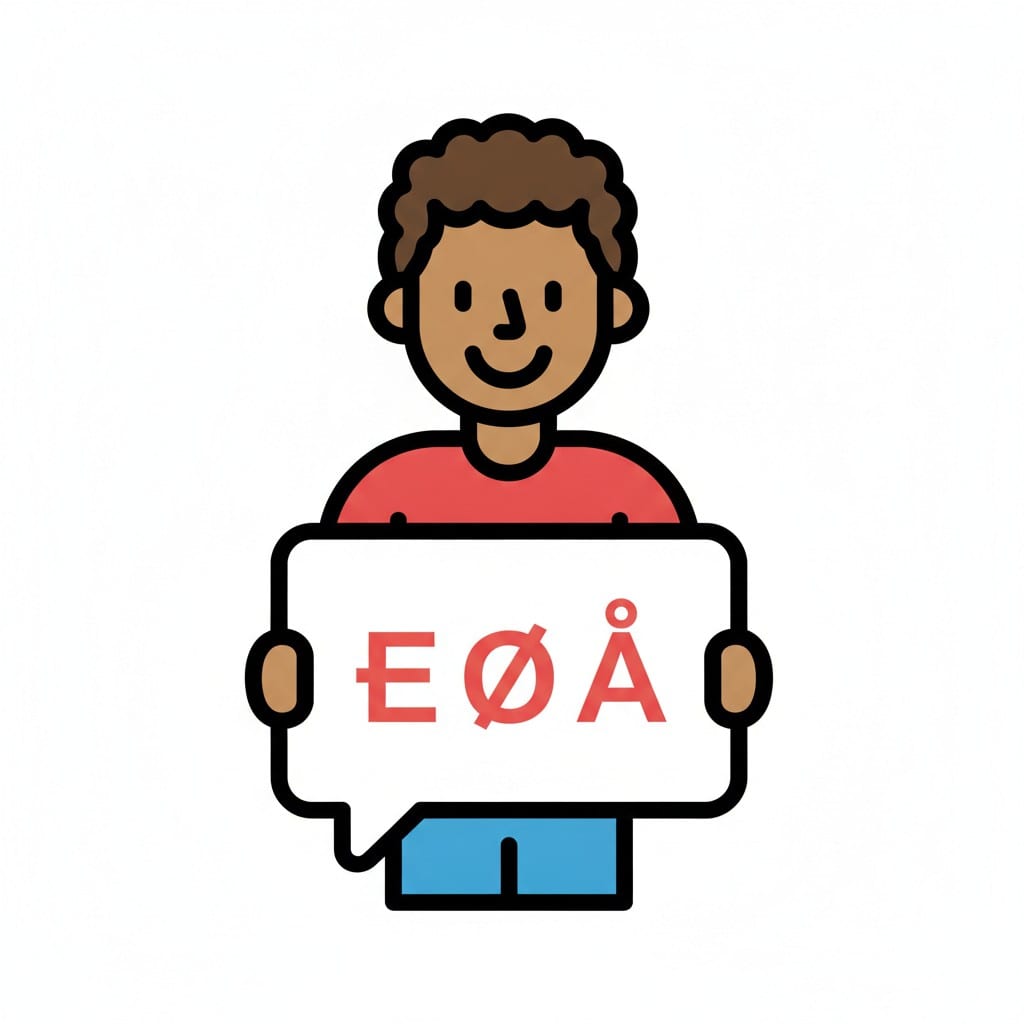 ♂
♂Child holding a sign with the letters Ae Oe Aa
A smiling child in a red top holds up a white sign showing the red letters Æ, Ø and Å.
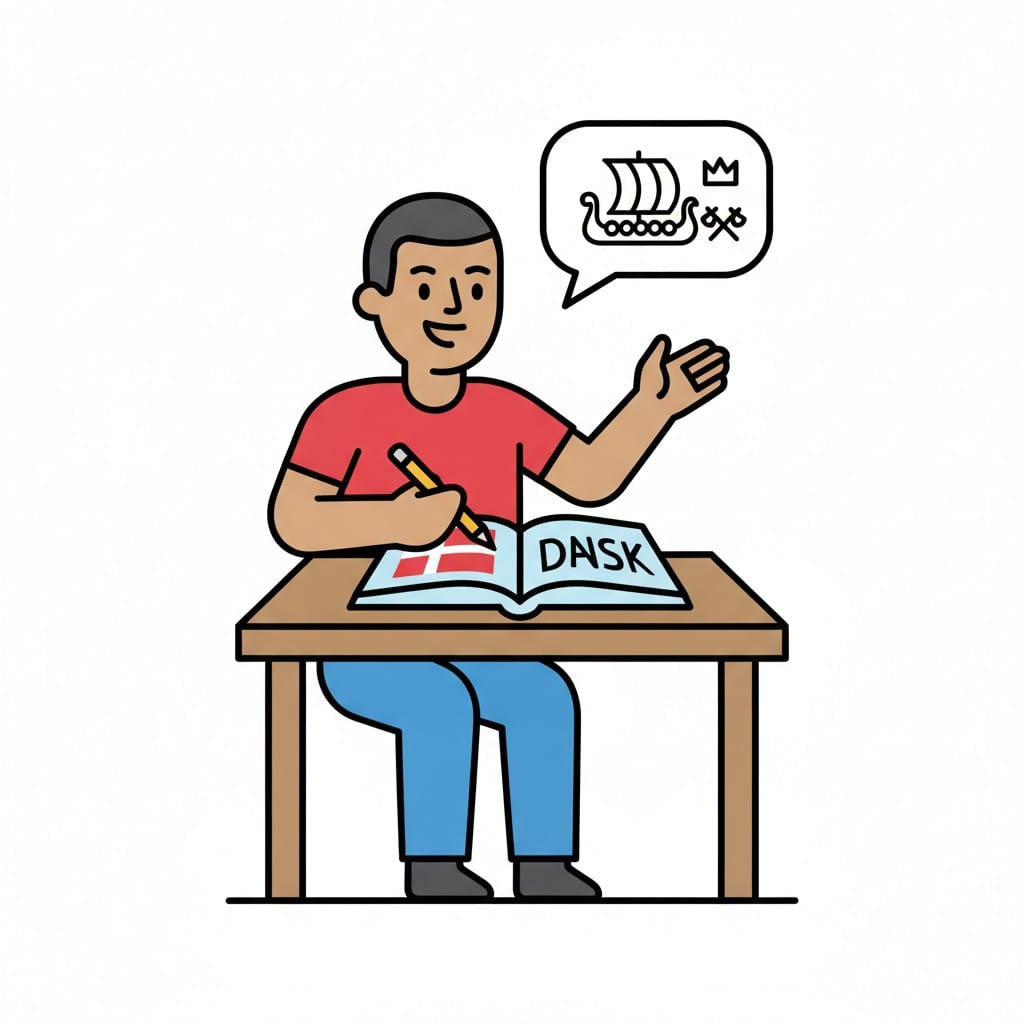 ♂
♂Pupil writing in a Danish workbook
A smiling pupil sits at a wooden table writing with a pencil in an open book showing a Danish flag, with a speech bubble showing a longship and a crown.
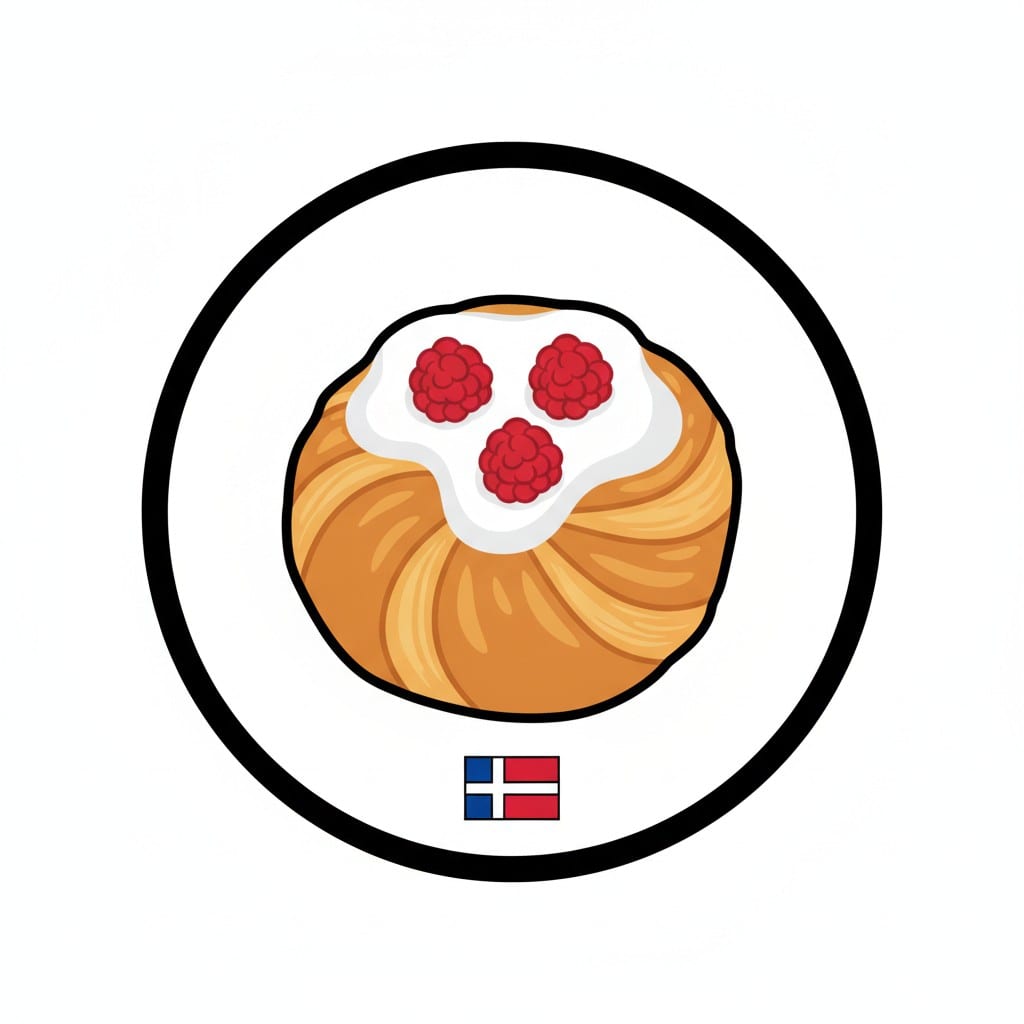
Pastry with cream and berries
A round pastry with white icing and three red berries on a white plate, with a small Danish flag below.

Round pastry icon
A round pastry icon with golden petals, white sprinkles and a red round filling in the middle.
About this visual support
Neighbouring languages carry a built-in difficulty. When a word is completely foreign the brain knows it has to learn something new, but when the word almost registers it tries to read it as something familiar instead. The result is a guess that is often wrong, and it repeats because the spelling keeps pointing down the wrong track. That tires a learner more than ordinary vocabulary does.
Visual support breaks the link by putting meaning first. When a picture stands beside the Danish word, the brain learns the word against the image rather than against a similar-looking word in another language. Pronunciation can be learned separately afterwards, and the two tracks stop merging in the same way.
A concrete tip is to work with ten words at a time and read them aloud once a day for a week. Neighbouring languages settle in the ear more than in the book, and short repetitions beat long sessions. In Routined the language slot can sit as a short block after homework, and the app can be tried for fourteen days at no cost.
Use this image in a schedule
Build your own visual schedule with this image and download it as a print-ready PDF. Completely free.

More similar visual supports
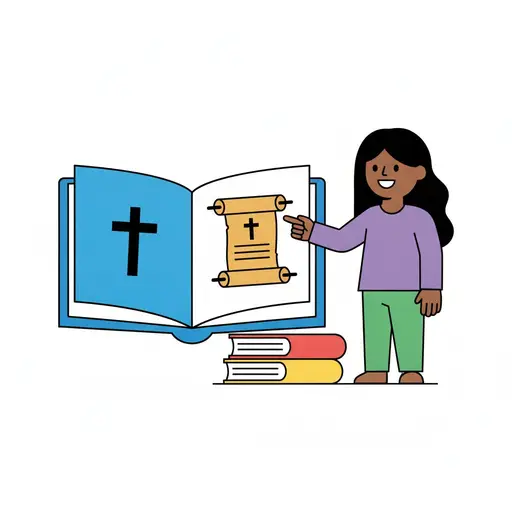
Christian studies
A smiling pupil points at a large open blue book showing a cross and a scroll, b...
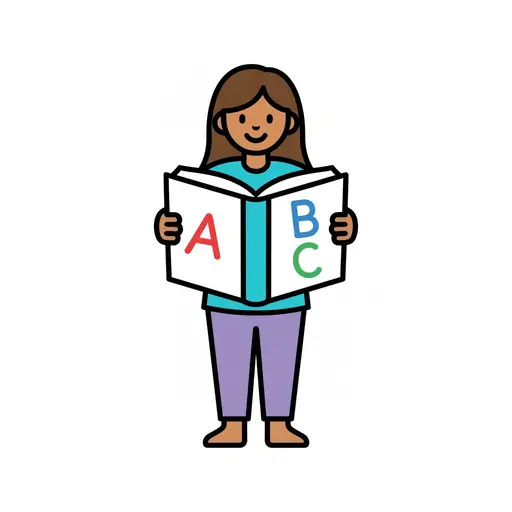
Letters
A smiling child with long hair holds up an open book showing the letters A, B an...
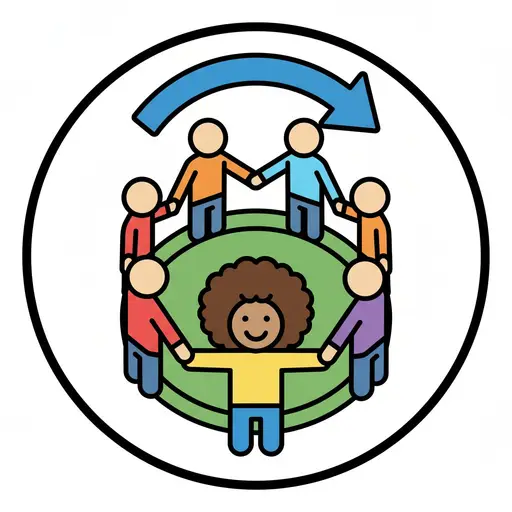
Circle time
A group of people standing in a circle holding hands, with one person in the cen...

Fetch pen and paper
A boy reaches toward a sheet of paper while holding a pen.
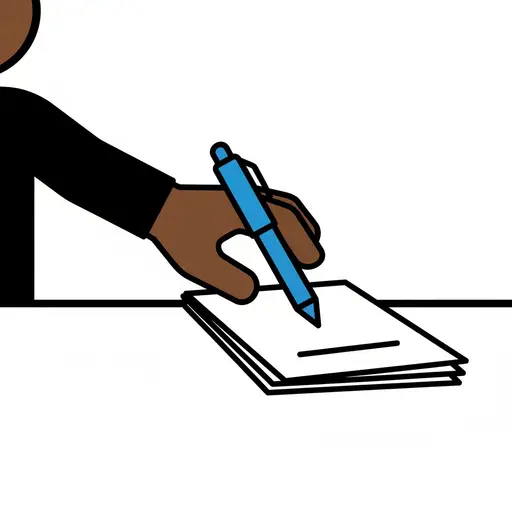
Get pen and paper
A person leans forward and writes with a blue pen on a stack of paper.

Grab pen and paper
A smiling boy holds a blue pen and some sheets of paper, ready to write.

School
An exhibition ground with domes, a ferris wheel, a robot and a clock.
School activities
A boy stands holding an open book surrounded by symbols of a pencil, a globe, a ...
Take the visual supports with you
In Routined you build schedules from these pictures, add timers and voice instructions, and your child follows the day on their own.


* 14-day free trial, then $2.39 a month or $20.99 a year (US pricing). Cancel anytime.