School activities
Between eight and two a school day can change content six or seven times, and every change asks a child to let go of one thing and pick up another. The visual support below lays the parts of the day side by side so the order is easy to see.
 ♂
♂School activities
A boy stands holding an open book surrounded by symbols of a pencil, a globe, a paint palette and a football.
About this visual support
Learning something new is rarely the hardest part of a school day. The hard part is that a lesson ends in the middle of a thought, that the material has to leave the desk, that the body has to move, and that the next subject starts with completely different rules. Reading asks for stillness, art asks for hands, sport asks for changing clothes and a different noise level. A child who spends a lot of energy on the switches has less left for the content.
A row of pictures covering the day makes those switches visible before they happen. A child knows that art is followed by break, and break by maths, and does not have to ask each time. A tip that suits school activities in particular: sort the pictures by what the body will do, sit still, move, talk, be quiet, rather than only by subject name. That makes it clearer what actually changes at each switch.
The pictures are free to download and work both in the classroom and at the kitchen table at home. If you want the order of the day on a phone, Routined can be tried for fourteen days at no cost, activity by activity.
Use this image in a schedule
Build your own visual schedule with this image and download it as a print-ready PDF. Completely free.
More similar visual supports

Weekly events
An icon showing a calendar with symbols for various activities like music, art, ...
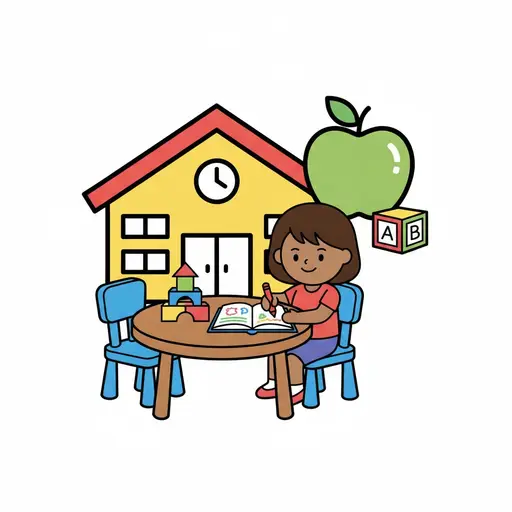
Kindergarten
Three stacked building bricks in red, blue and yellow.
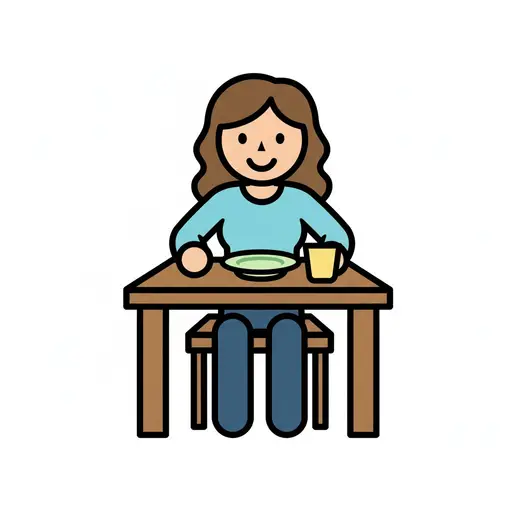
Sit at table
A woman sits at a table with a bowl and a cup.
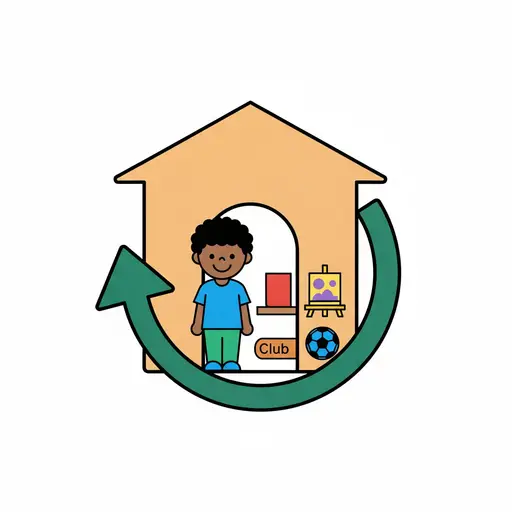
After school club
A boy stands in a club house with a circular arrow around it.
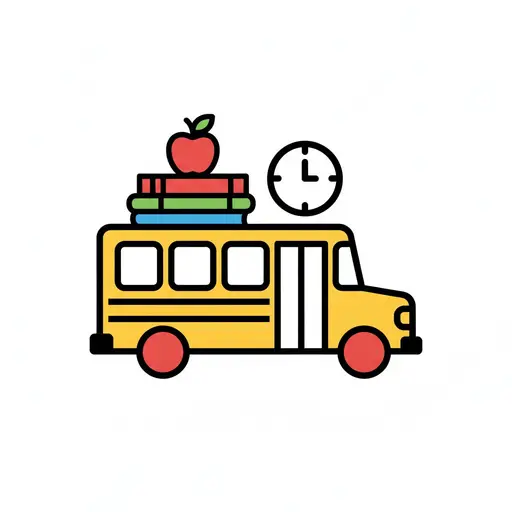
School day
A yellow school bus with a stack of books, an apple and a clock on top.
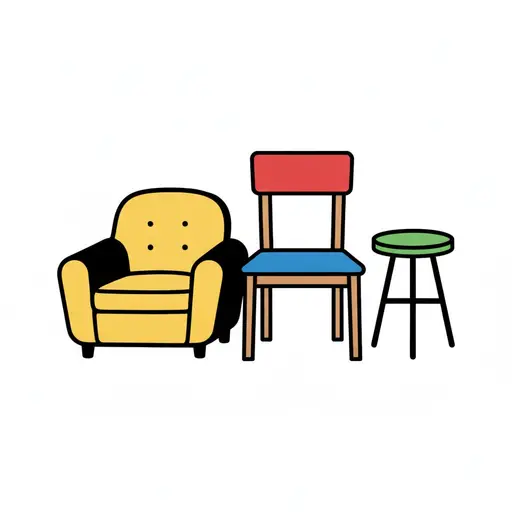
Settle into chair
An armchair, a chair and a stool.

School
An exhibition ground with domes, a ferris wheel, a robot and a clock.

After the school day
A boy with a backpack holds a red book beside a house, a tree, the sun and a rug...
This visual support in other languages
Take the visual supports with you
In Routined you build schedules from these pictures, add timers and voice instructions, and your child follows the day on their own.


* 14-day free trial, then $2.39 a month or $20.99 a year (US pricing). Cancel anytime.