Meltdowns in Children: What to Do in the Moment (and What to Do the Day After)
A meltdown isn't bad behavior — it's a brain that ran out of capacity. The three-phase framework most parents miss: prevent before, low-arousal approach during, repair and adjust the day after. Plus what to never say in the middle of one.

Your six-year-old is on the kitchen floor. She can't tell you what's wrong. She's screaming, but she's also not really there — her eyes look past you. Ten minutes ago she was fine.
This is a meltdown. And it's not a tantrum.
Understanding the difference changes everything you do next.
Tantrum vs. meltdown — and why it matters
A tantrum is goal-directed. The child wants something. If you give it to them, the tantrum stops. They're in control enough to make a strategic choice. Tantrums respond to consistent limits over time.
A meltdown is a nervous system event. The child's brain has hit capacity and the prefrontal cortex — the part that handles reasoning, language, self-regulation — has gone offline. They are not making a choice. They cannot "use their words" because the part of the brain that produces words is unavailable.
Treating a meltdown like a tantrum makes it worse. Demands, consequences and even questions all add load to a system that's already overloaded. The single most important shift in handling meltdowns is recognizing them as a different category of event.
The three-phase framework
Most parenting advice focuses on what to do during a meltdown. But by then, the most important window has already passed. Effective meltdown management has three phases.
Phase 1: Before — Prevention
Meltdowns rarely come from nowhere. They come from accumulated load: sensory input, transitions, hunger, fatigue, emotional weight from earlier in the day. A child who melts down at 5:30 PM was probably already on the edge at 3:00 PM.
The most powerful prevention tools are:
- Predictable structure. A visual schedule removes one major source of cognitive load — having to guess what comes next.
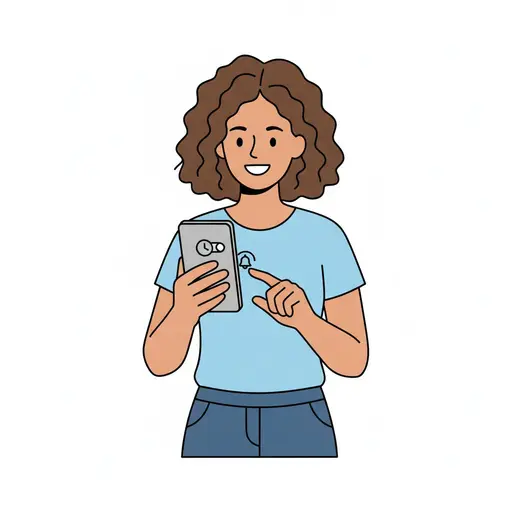
- Smooth transitions. Use a timer the child can see before a transition begins, not after.
- Mood awareness. A simple emoji-based check-in before stressful parts of the day (e.g. homework, dinner, bedtime) tells you who has capacity and who is already running on fumes.
If you can see "amber" before it becomes "red," you can adjust the rest of the day. Skip the errand. Postpone the homework. Move dinner up by twenty minutes. Almost every meltdown looks obvious in hindsight.
Phase 2: During — Low-arousal response
Once a meltdown has started, your job is not to teach, correct, reason or de-escalate with words. Your job is to lower arousal so the brain can come back online.
The Swedish low-affect approach (lågaffektivt bemötande, developed by Bo Hejlskov Elvén) gets this right: in a crisis, your calm is the most important environmental factor. That means:
- Drop your demands to zero. Whatever you were asking for can wait.
- Lower your voice, slow your movements. Your nervous system is contagious.
- Reduce sensory input. Dim lights, turn off TV, ask others to give space.
- Use few or no words. "I'm here. You're safe." That's enough.
- Offer presence without proximity. Some kids want to be held; others need physical space. Watch which one this child is.
What not to do during a meltdown: ask "what's wrong?", offer choices, threaten consequences, count to three, send to a room, or try to make eye contact and explain. Each of these adds cognitive load to a system that has none.
The meltdown will end. Your only job is to keep it from getting worse.
Phase 3: After — Repair and adjust
This is the phase most parents skip, and it's the one that prevents the next meltdown.
When the child is fully calm — sometimes an hour later, sometimes the next day — do two things.
Repair the relationship. A short, warm reconnection. Not a lecture. Not "we need to talk about what happened." Something like: "That was hard. I'm glad we're back together." If the child wants to talk, let them lead. If they don't, drop it.
Adjust the system. This is where you, as the adult, do the work. Look at what happened: What was the trigger? What was the load? What had been building up? Then change something so the same trigger doesn't reload tomorrow. A different time for homework. An earlier dinner. A buffer between school pickup and the next demand.
The repair is about the relationship. The adjustment is about the environment. Both matter; only one of them is about the child.
A meltdown is not a behavior to correct. It's a signal that the system is over capacity. Treat the signal seriously — prevent before, stay low during, repair and adjust after — and over time you'll see fewer of them. Not because the child has learned to suppress feelings, but because the environment has stopped pushing past what they can carry.
Frequently asked questions
Won't they "learn" that meltdowns get them out of demands?
No. Meltdowns aren't strategic — they're capacity events. A child who could "choose" to stop a meltdown to get what they wanted would already have stopped. What kids do learn from repeated calm responses is that big feelings don't break the relationship. That's the actual lesson.
How do I tell the difference between a tantrum and a meltdown in real time?
A few clues: Tantrums usually involve checking on the audience — peeking to see if you're watching. Meltdowns don't. Tantrums escalate when ignored and de-escalate when given attention; meltdowns escalate from any input. Tantrums usually stop instantly if the child gets what they want; meltdowns don't.
What about siblings who see this?
Address it briefly afterward, in age-appropriate language. "Sometimes feelings get really big. We help each other when that happens." Don't make the meltdown child the topic of an extended family conversation — that's its own kind of overload.
My partner doesn't believe in low-arousal. We respond differently.
This is one of the most common sources of escalation. Pick one approach for crisis moments and stick to it for two weeks. Disagreements about strategy belong outside the moment, not in it.