Feelings
Telling different feelings apart and naming them takes a vocabulary that many children are still building. Pictures of different expressions give the words a shape. See how the support works below.
 ♂
♂Feelings
A face surrounded by icons for happiness, sadness, a cloud, a drop and a heart.
About this visual support
Feelings rarely come one at a time. They mix, swap places and can be hard to tell apart even for an adult. For a child still learning that joy, disappointment and anger are different things, it becomes harder still, and without words for what is going on inside, the reaction often comes out as body rather than speech.
Visual support builds exactly that vocabulary. When different feelings each have their own picture, they become possible to point at, compare and talk about: this one looks happy, this one angry, this one sad. Over time the child learns to link the inner experience to a word, and that makes it easier to express themselves before the feeling grows too big.
A tip: talk about feelings even when everything is calm, not only in the middle of an outburst, so the words are in place when they are really needed. Practice in calm moments carries into the hard ones. In the Routined app you can use the feeling pictures in a daily routine, so talking about how you feel becomes a habit rather than an exception.
Use this image in a schedule
Build your own visual schedule with this image and download it as a print-ready PDF. Completely free.

More similar visual supports
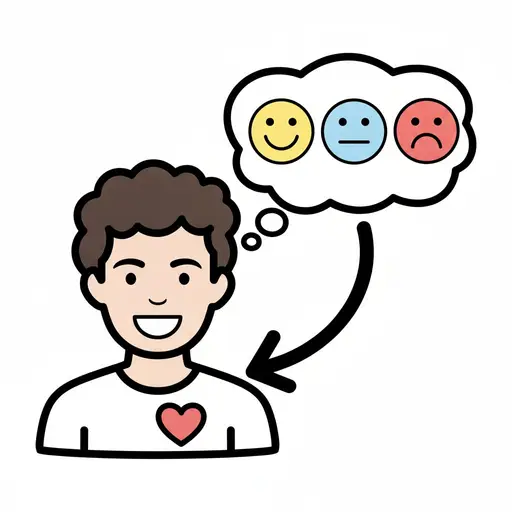
How I feel
A child with a thought bubble showing happy, neutral and sad faces.
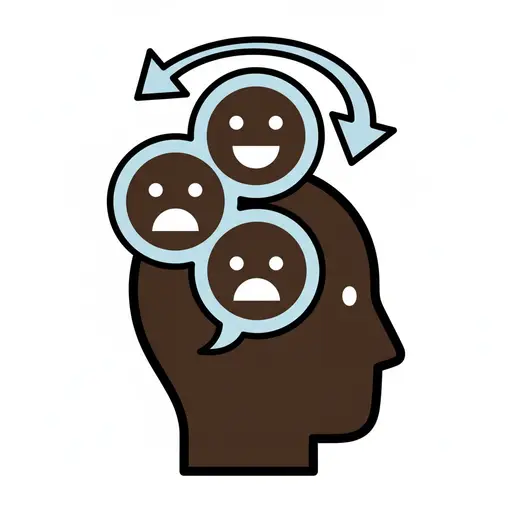
Mood
A head silhouette with three mood faces rotating around it.
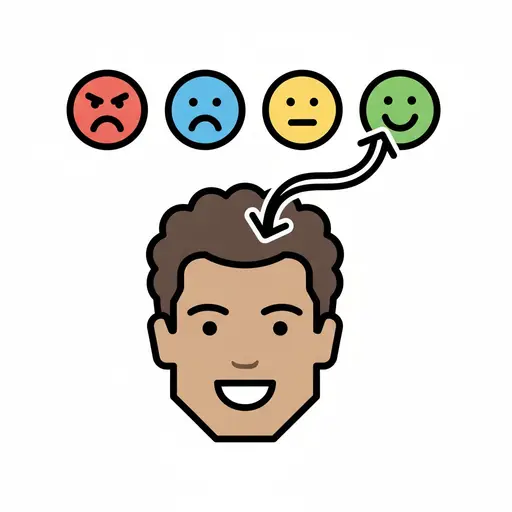
Mood check
A child beneath a scale of four mood faces with an arrow.

Feeling
A happy child with a heart and sound waves above them.

Bedtime stories
An adult reads a bedtime story to a child in bed.
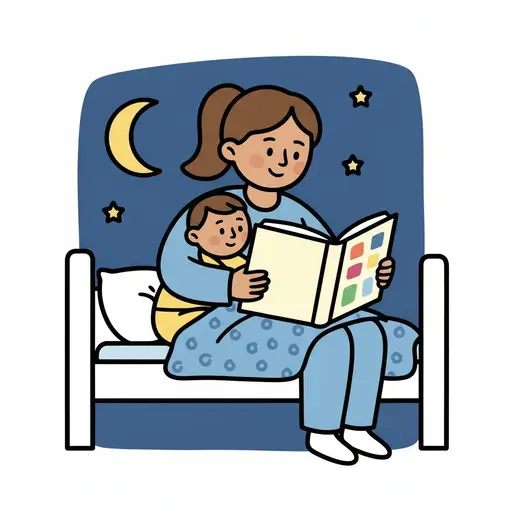
Bedtime Story
A woman with a ponytail sits on the edge of a bed reading a large book while a c...
Calm Activity
A boy sits cross-legged on the floor reading an open book.
Cozy Friday
A person wearing a hoodie, wrapped in a blanket, holds a steaming mug. A calenda...
Take the visual supports with you
In Routined you build schedules from these pictures, add timers and voice instructions, and your child follows the day on their own.


* 14-day free trial included for new users.