Mood
Catching your mood in the moment is hard, and a scale of faces gives a child words that are otherwise missing. A picture makes the inside possible to point at and share. See the support below.
 ♂
♂Mood
A child with a thought bubble of mood faces and an arrow pointing to it.
 ♂
♂Mood
A head silhouette with three mood faces rotating around it.
About this visual support
Mood is fluid and hard to put into words, especially in the middle of it. A child can feel hopeless or upbeat without being able to say why or even what the feeling is called. The question how are you then becomes too open, and the answer is missing or comes out as a reaction instead of words. The inside is there but lacks a way out.
Visual support gives the mood a scale to lean on. When the child can point at a face that fits, from happy to neutral to sad, the inside suddenly becomes something concrete to relate to. The picture gives a shared language, and from there a conversation can grow at the child's own pace without them having to find the right words alone.
A tip: use the mood scale regularly in calm moments, not only when something has gone wrong, so the child gets used to noticing and naming their state. Practice in everyday life carries into the hard moments. In the Routined app you can add a mood check as a recurring step, so it becomes a natural part of the day rather than an interrogation.
Use this image in a schedule
Build your own visual schedule with this image and download it as a print-ready PDF. Completely free.

More similar visual supports

Feelings
A face surrounded by icons for happiness, sadness, a cloud, a drop and a heart.

How I feel
A child with a thought bubble showing happy, neutral and sad faces.
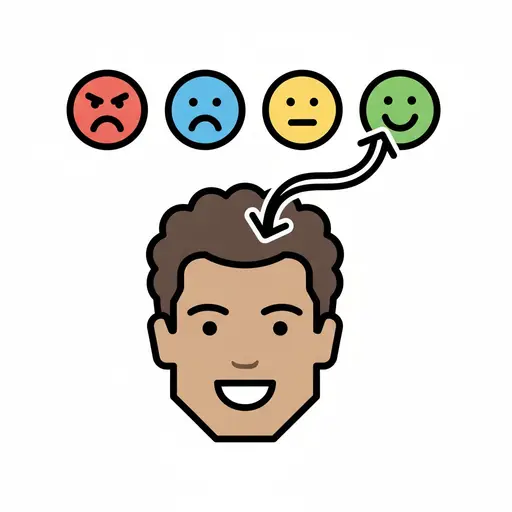
Mood check
A child beneath a scale of four mood faces with an arrow.

Feeling
A happy child with a heart and sound waves above them.

Bedtime stories
An adult reads a bedtime story to a child in bed.

Bedtime Story
A woman with a ponytail sits on the edge of a bed reading a large book while a c...

Calm Activity
A boy sits cross-legged on the floor reading an open book.
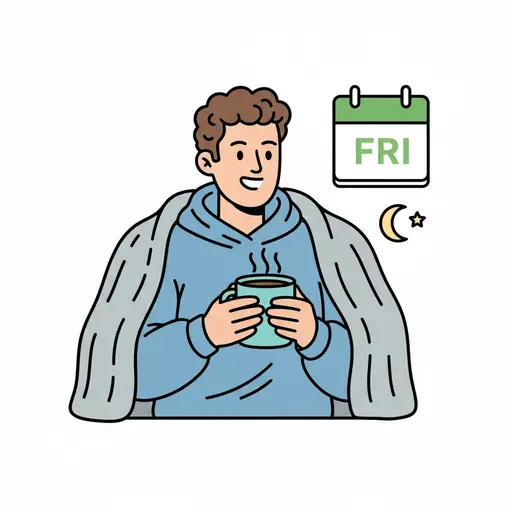
Cozy Friday
A person wearing a hoodie, wrapped in a blanket, holds a steaming mug. A calenda...
Take the visual supports with you
In Routined you build schedules from these pictures, add timers and voice instructions, and your child follows the day on their own.


* 14-day free trial included for new users.