Eat a banana
A banana changes character while it is being eaten: the peel turns sticky, the smell stays on the fingers and the texture is softer than most other fruit. The steps here below cover the whole way from unpeeled fruit to the skin in the bin.
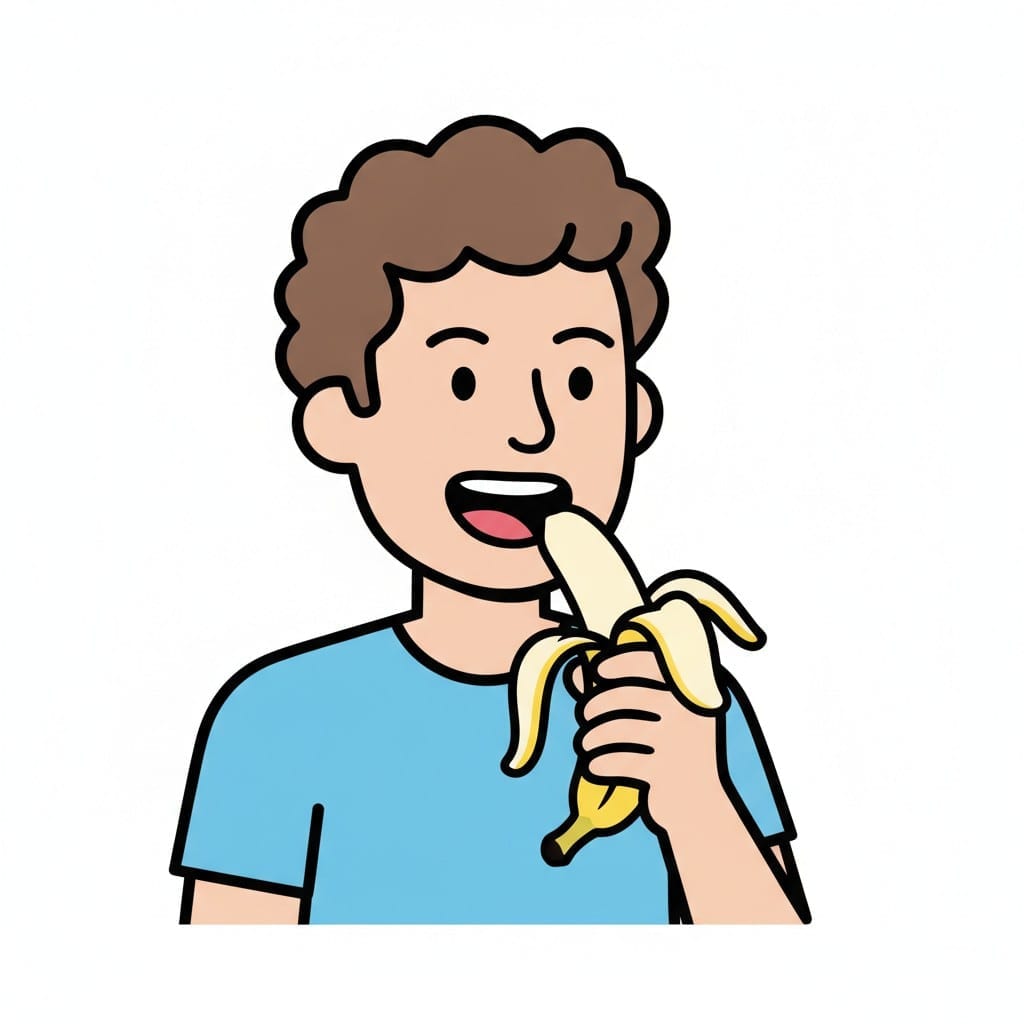 ♂
♂Biting into the banana
A boy in a blue shirt lifts a peeled banana toward his open mouth.
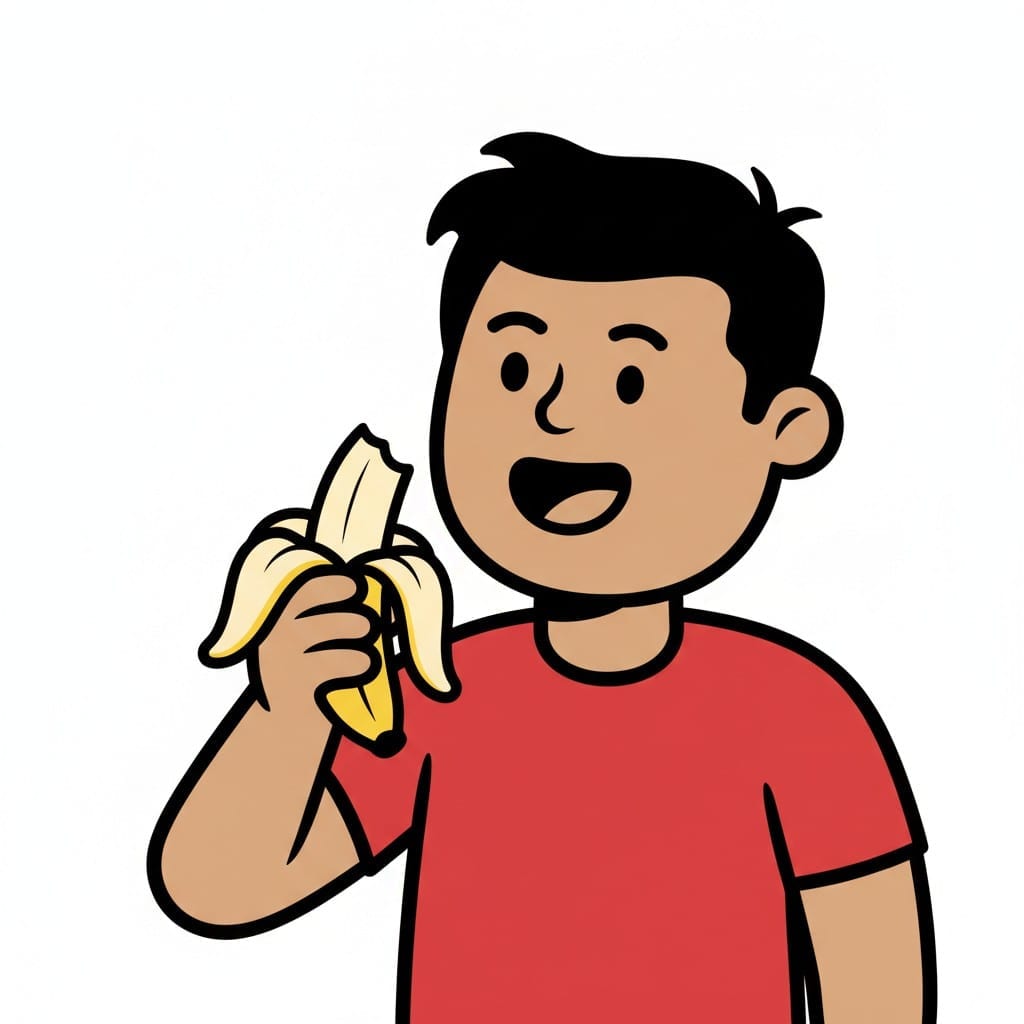 ♂
♂Holding the banana
A boy in a red shirt holds up a banana he has already taken a bite from.
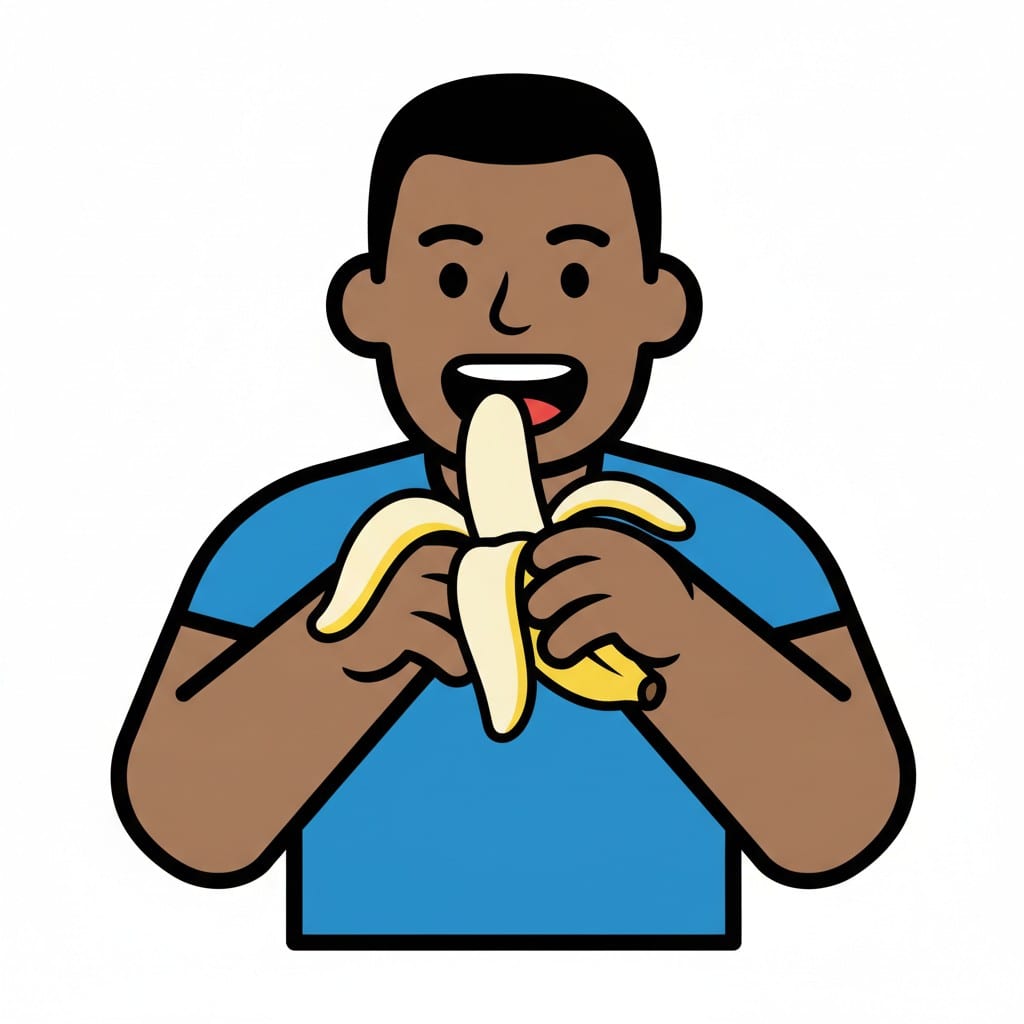 ♂
♂Eating the banana
Holding the peeled banana with both hands, a boy opens his mouth to eat.
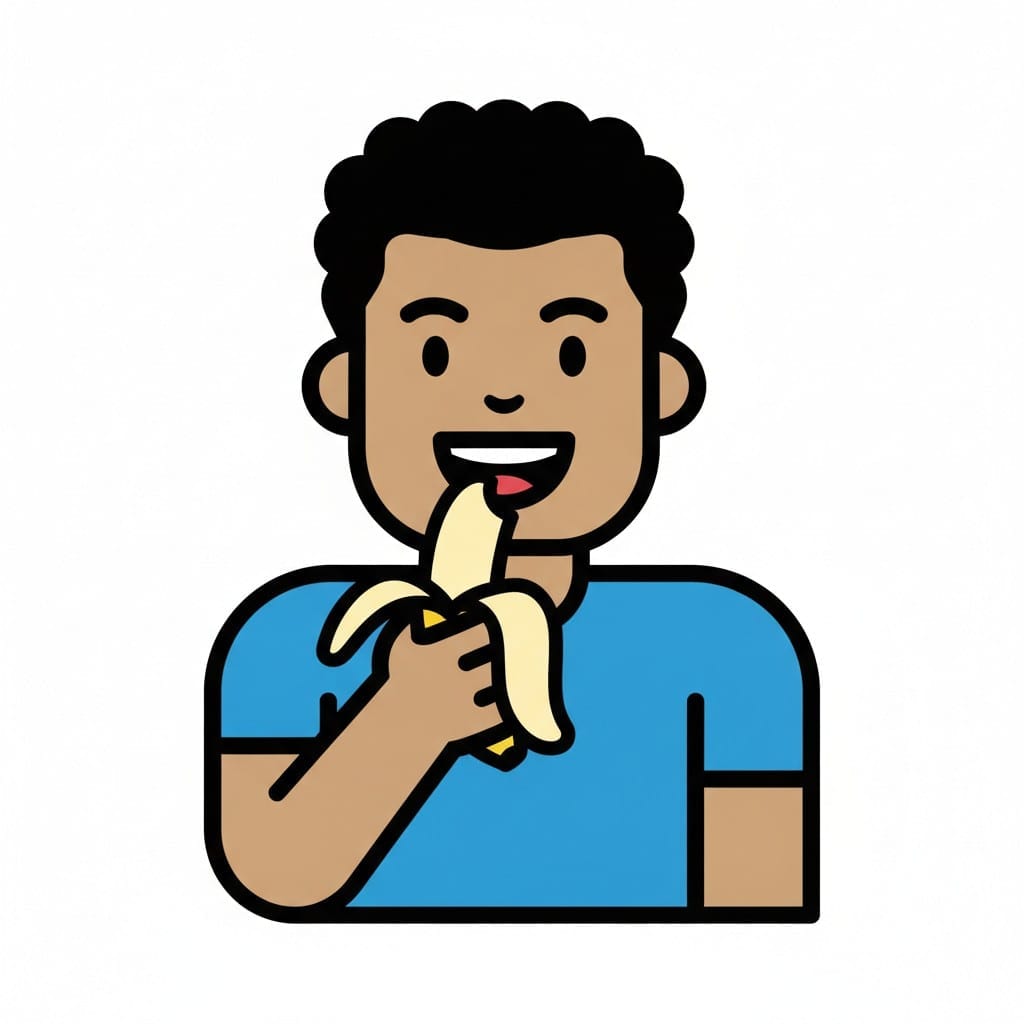 ♂
♂Taking a bite of banana
A boy bites into a banana that is peeled halfway down.
About this visual support
Few fruits change as much in the hand as a banana does. The peel is dry at first and sticky a minute later, the smell stays on the fingers long after the last bite, and the flesh is soft in a way that feels unexpected if you were braced for something to chew. For children with autism it is often that particular mix of smell, stickiness and softness that makes the fruit harder than it looks.
Visual support helps by making each move predictable before it happens. The child sees that the peel is broken at the top, pulled down in strips and set aside, and does not have to discover the stickiness halfway through. One tip: peel all the way down and fold the skin back like a wrapper around the lower half, so the hand never touches the flesh and the difficult part disappears without swapping the banana for something else. A napkin laid out before the peeling starts also saves a sticky hand on the trouser leg.
Routined can show the snack as a short picture sequence, handy when the same fruit is eaten at preschool or on a day out.
Use this image in a schedule
Build your own visual schedule with this image and download it as a print-ready PDF. Completely free.

More similar visual supports
Afternoon snack
A girl eating an orange slice and holding a cracker. Day, night, and clock icons...
Banana
A single yellow banana tilted diagonally upwards, its stem in the upper corner.
Light bite
A banana, a bowl of small round snacks, a red apple, and a green snack bar.
Little snack
A bowl of berries and biscuits sits next to a slice of apple.
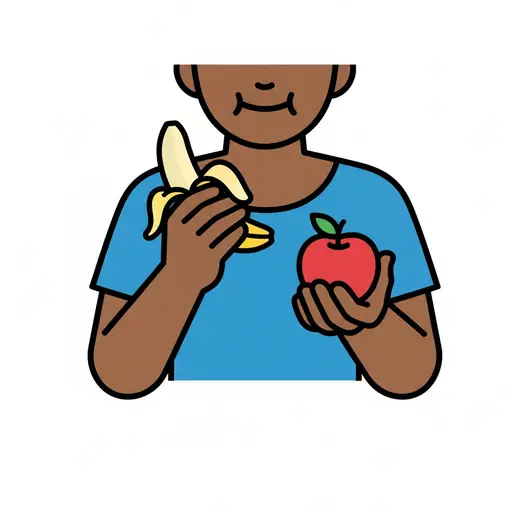
Time for a snack
A person holds a banana and a red apple. The person holds the peeled banana in o...
Apple
A red apple with a green leaf.
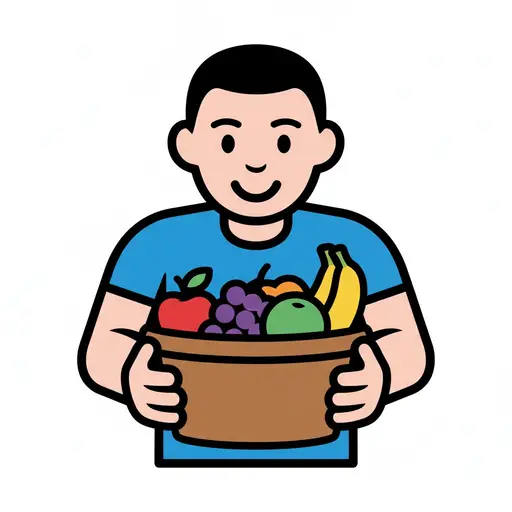
Bring fruit
A cartoon boy holds a bowl filled with various fruits like apples, grapes, and b...
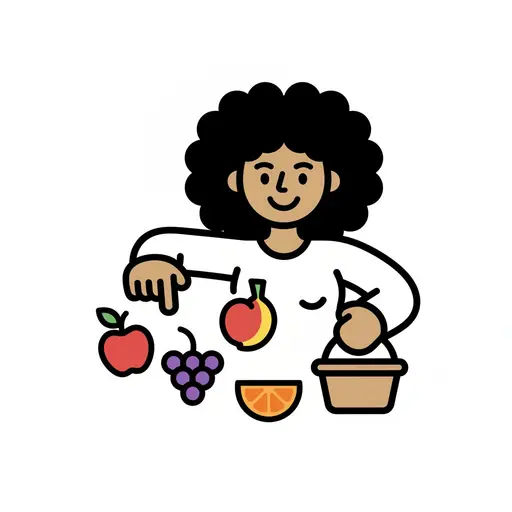
Choose fruit
A girl chooses fruit and places it into a basket.
Take the visual supports with you
In Routined you build schedules from these pictures, add timers and voice instructions, and your child follows the day on their own.


* 14-day free trial included for new users.