Shop
Fluorescent lights, background music and strangers in the aisles turn the store into a sensory wall with no pause. Without a clear end, the unease grows. The visual support below gives the trip a defined start and finish.
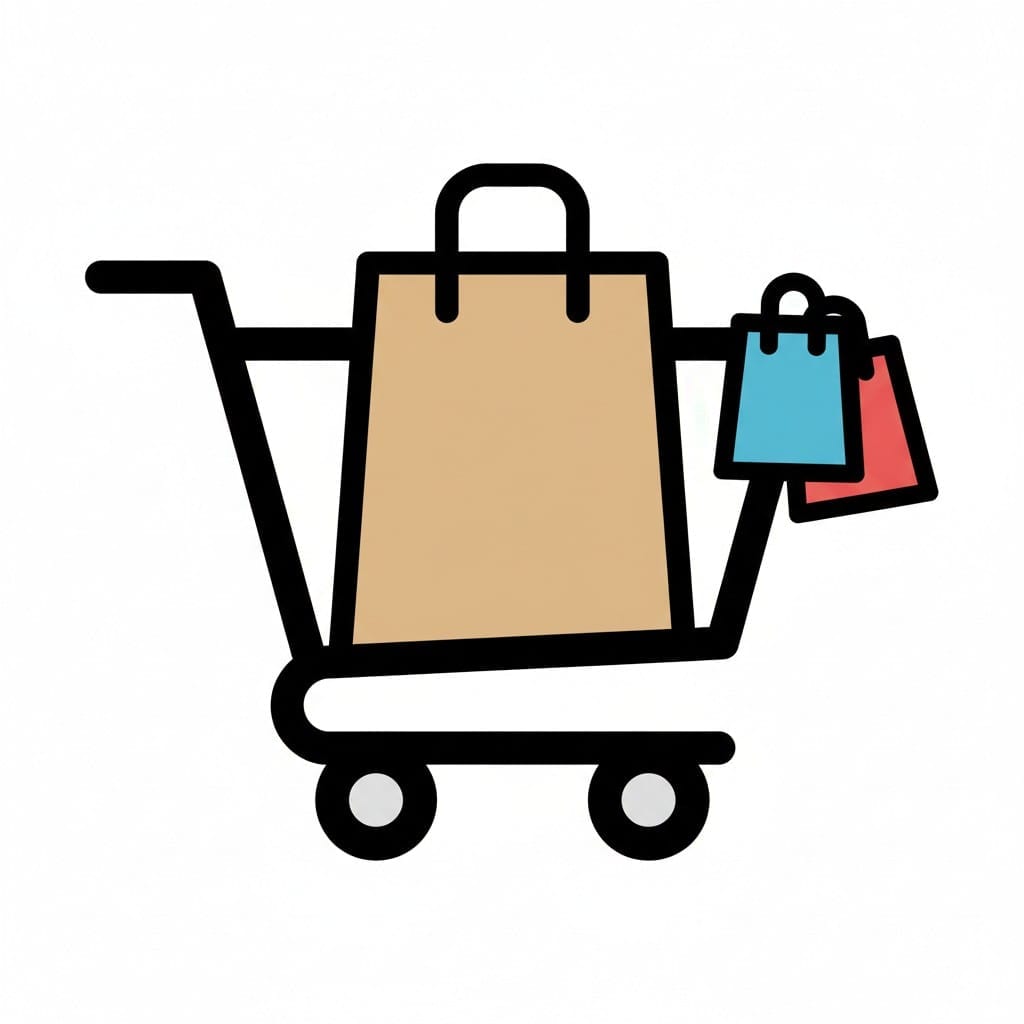
Shopping cart with bags
A shopping cart holding one large brown paper bag and two smaller colorful shopping bags.
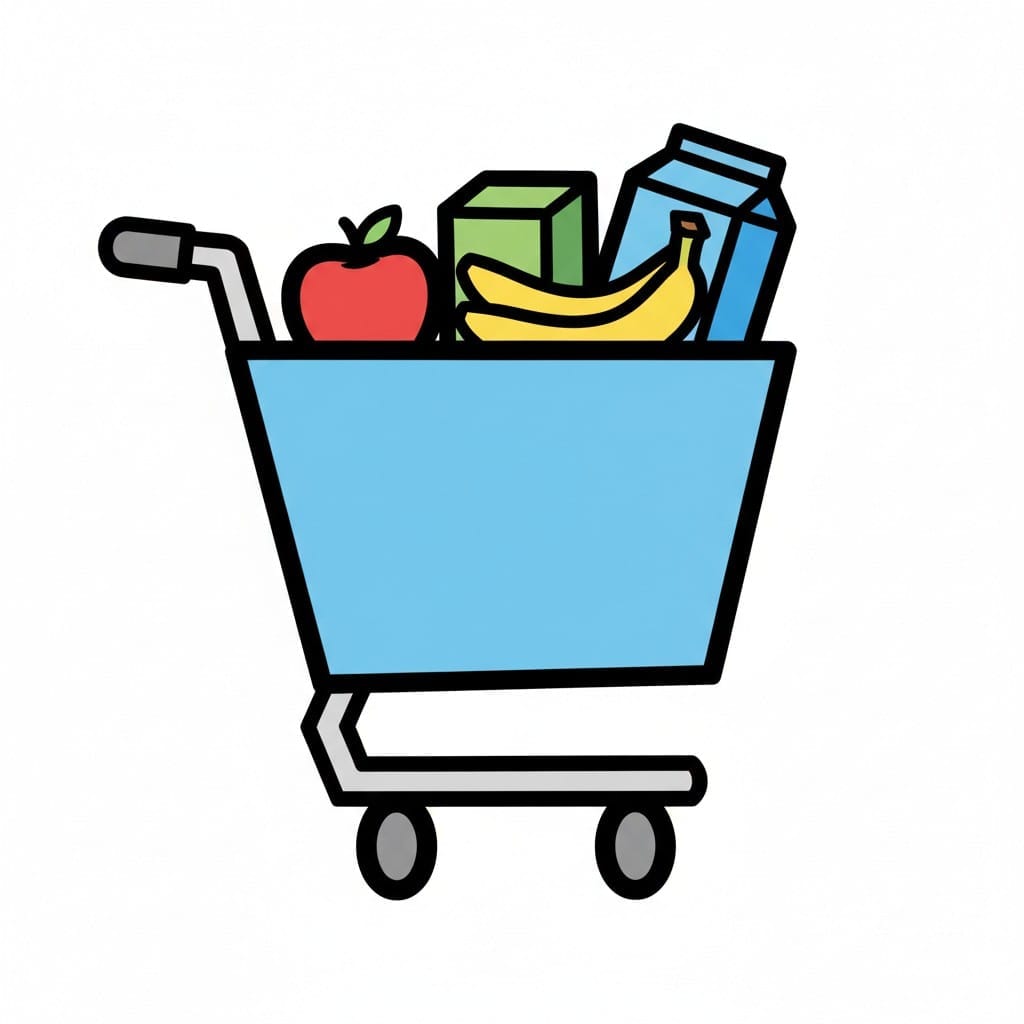
Shopping cart with groceries
A blue shopping cart filled with groceries including a red apple, yellow bananas, a green box, and a milk carton.
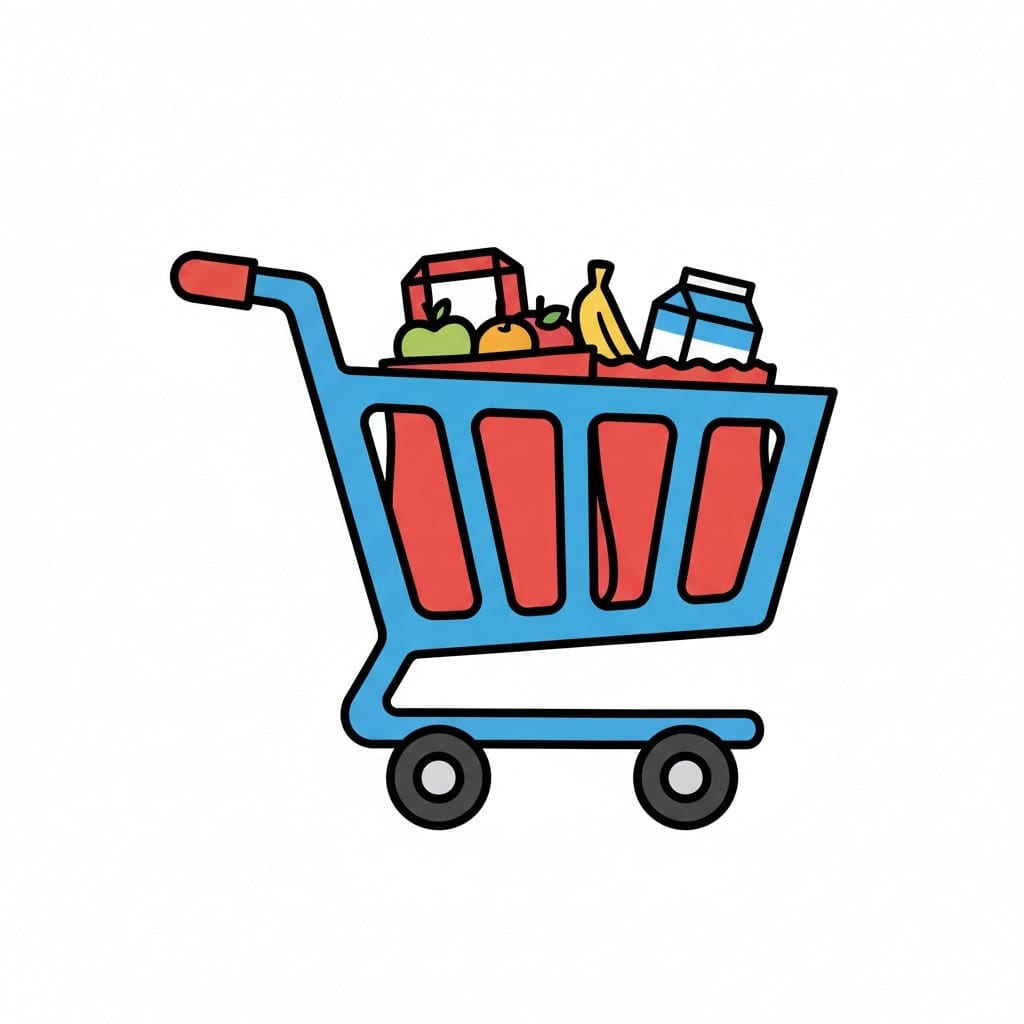
Cart with groceries
A blue shopping cart is loaded with a green apple, an orange, a banana, a milk carton, and a red basket.
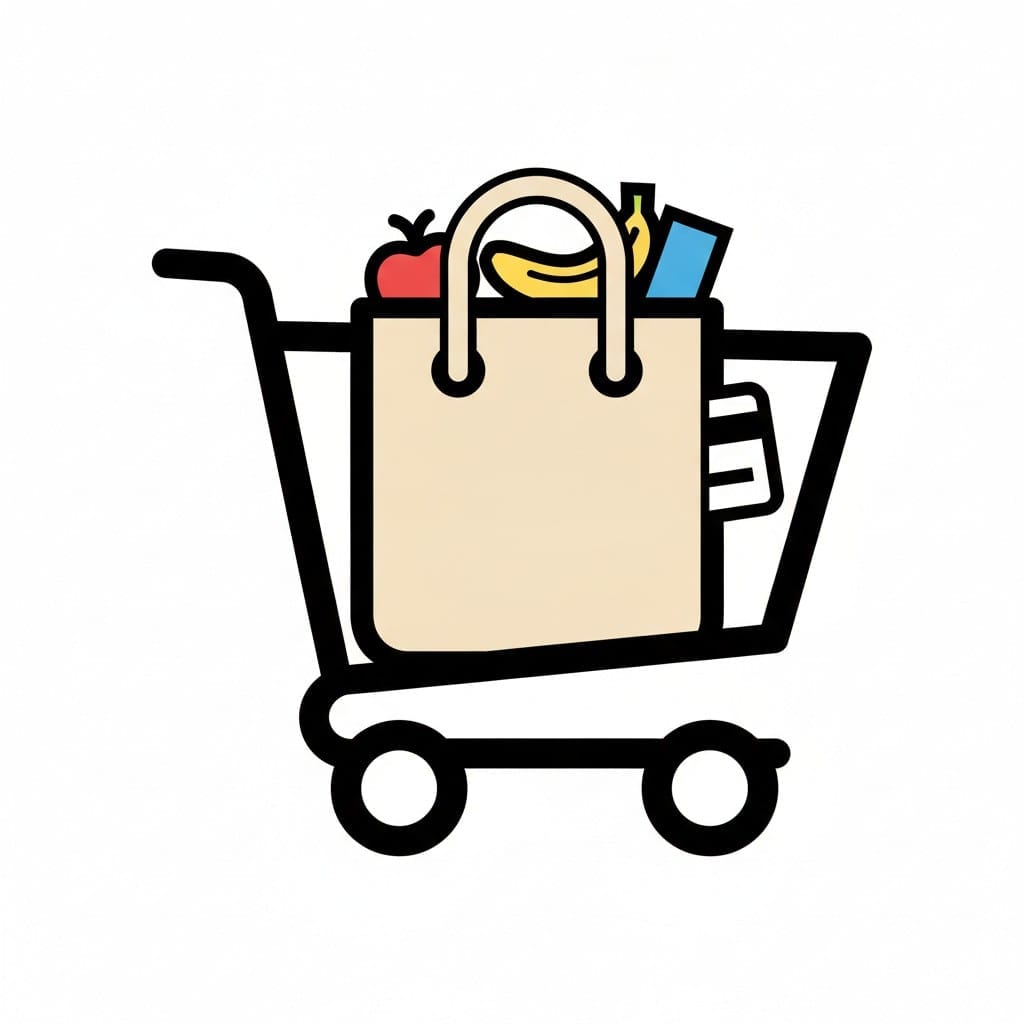
Cart with a paper bag
A line-drawn shopping cart holds a beige paper bag packed with an apple, a banana, and other items, with a receipt tucked at the side.
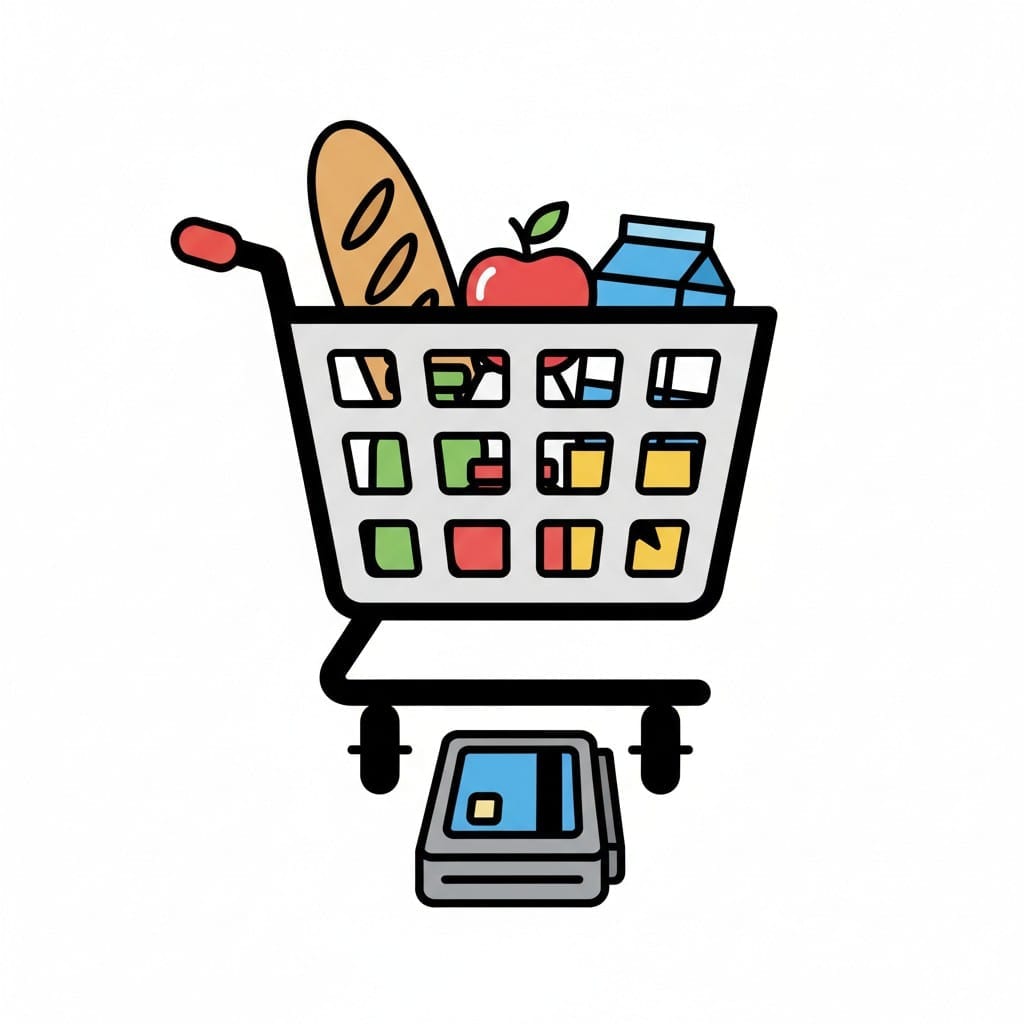
Shopping cart with groceries and payment
A shopping cart filled with groceries such as bread, milk, and an apple, with a payment terminal underneath the cart.
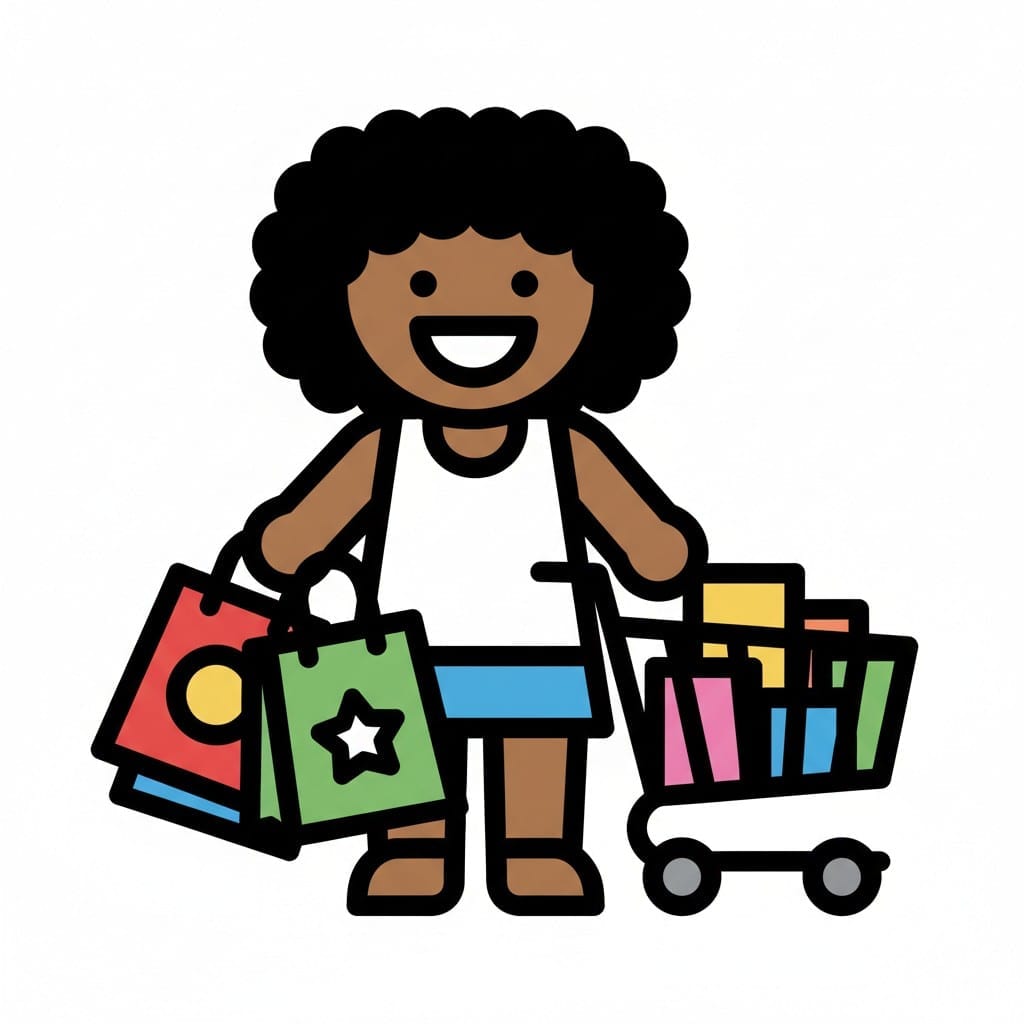 ♀
♀Person with shopping bags and cart
A person with curly hair, wearing a white tank top and blue shorts, holding two full shopping bags and standing next to a shopping cart with more items.
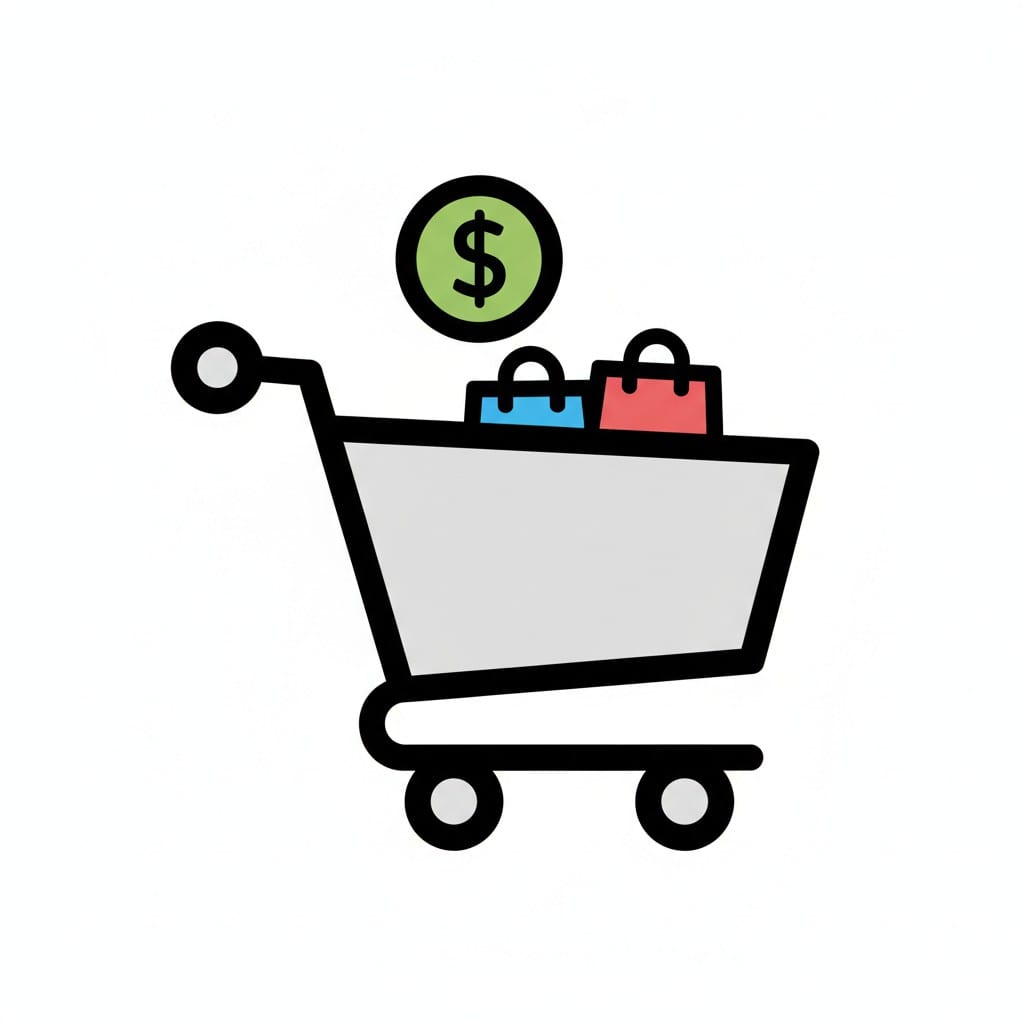
Shopping cart with bags and dollar sign
A shopping cart containing two small shopping bags, with a green dollar sign floating above the cart.
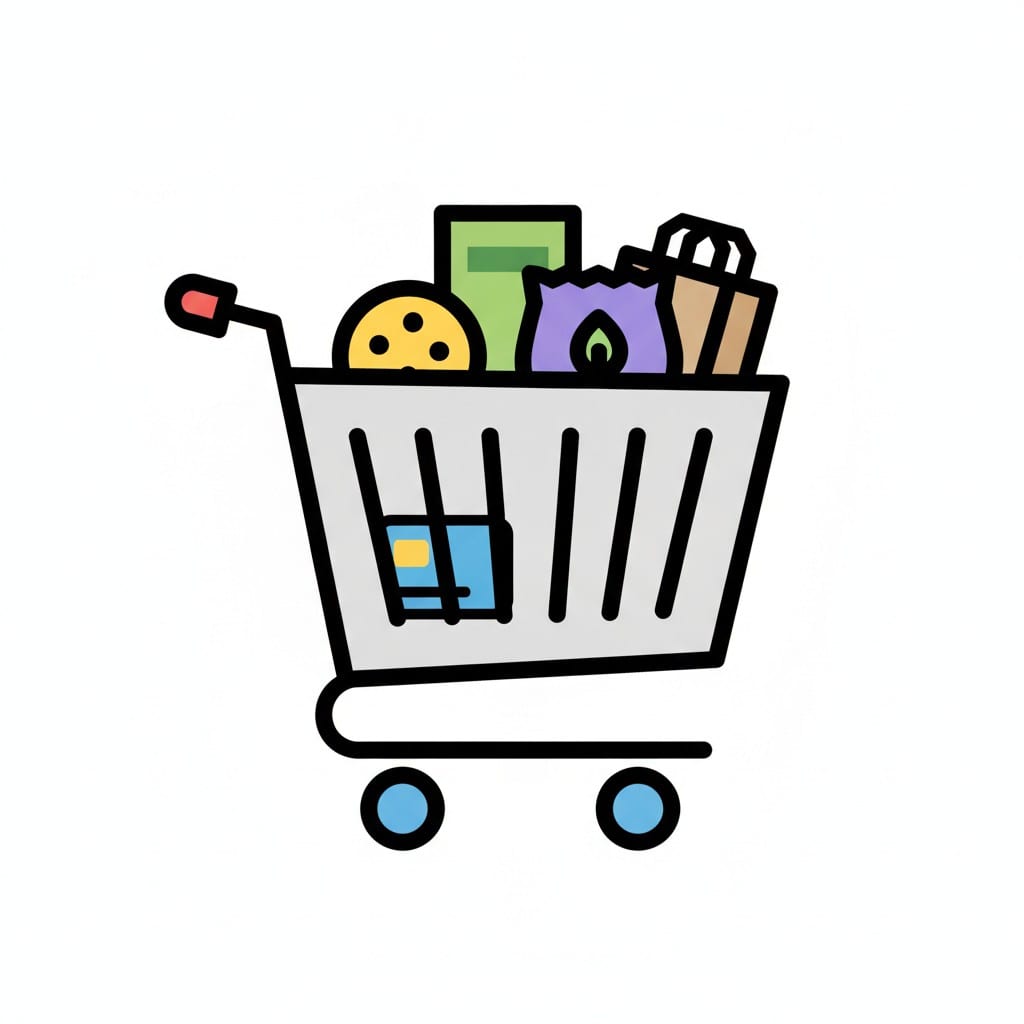
Grey cart with shopping
A grey shopping cart is filled with a round loaf, a green carton, a purple bag, and two brown paper bags, and a small card lies in the basket.
About this visual support
What tires the child in the shop is rarely the goods themselves but the environment around them. Fluorescent lights that flicker faintly, speaker music that switches mid-song, carts that bump and a queue that moves unpredictably. For a child taking everything in at once, the shop turns into a long tunnel of sound, and without a visible end there is nothing to count down to.
Visual support gives the trip a body. You arrange the cards in the order you actually walk: through the door, fruit, dairy, checkout, out. Then the child knows not only what is happening right now but also that there is a final picture to reach. An endless setting becomes a stretch with a border.
A tip that works: let the child carry the card for the next stop and swap it out as you pass each one. The cards become a concrete checkpoint in a place where very little else can be steered. Routined can pair the picture order with a timer so even waiting at the till has a clear end.
Use this image in a schedule
Build your own visual schedule with this image and download it as a print-ready PDF. Completely free.

More similar visual supports
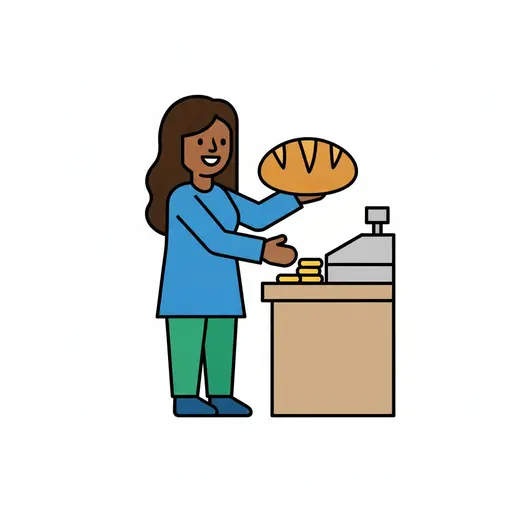
Buy bread
A smiling person holds up a loaf of bread at a checkout counter with coins and a...
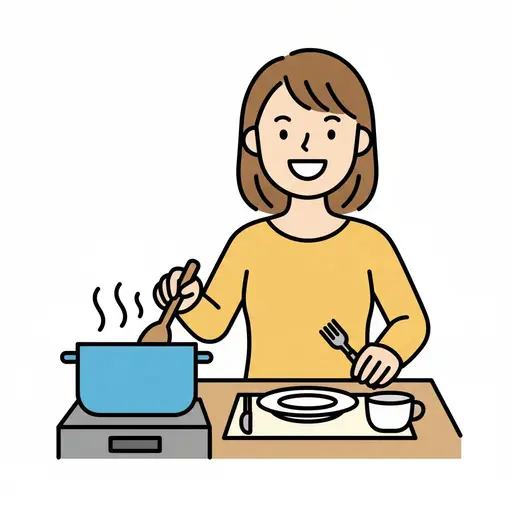
Cook and Set Table
A smiling girl stirs a pot on the stove next to a set table with a plate and cup...
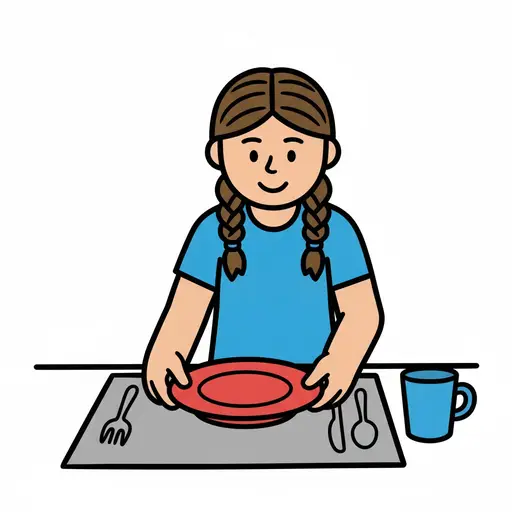
Help Set Table
A girl sets the table with a plate, cutlery and a mug.
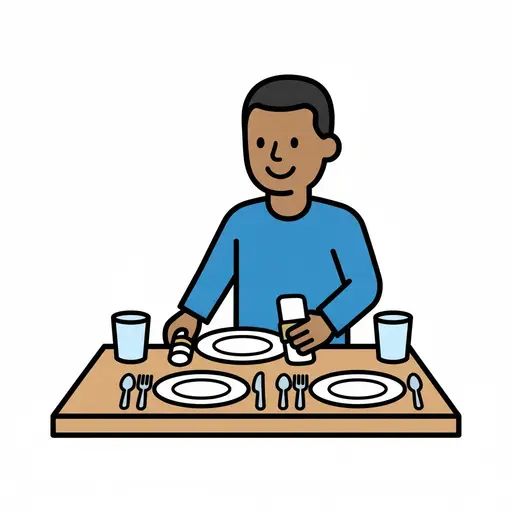
Lay the table
A boy sets a table with plates, glasses, cutlery and napkins.
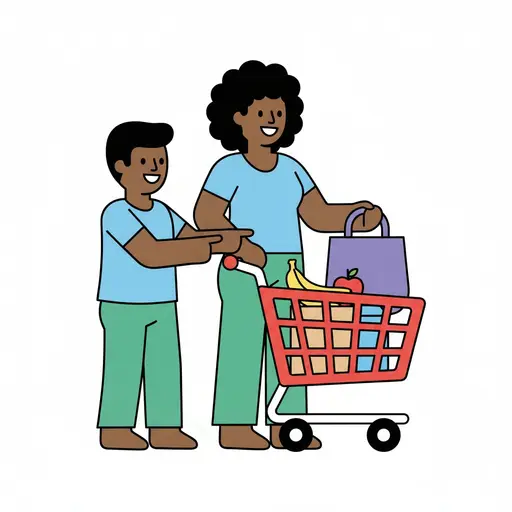
Go shopping
A smiling adult and a smiling child push a red trolley with a banana, an apple a...
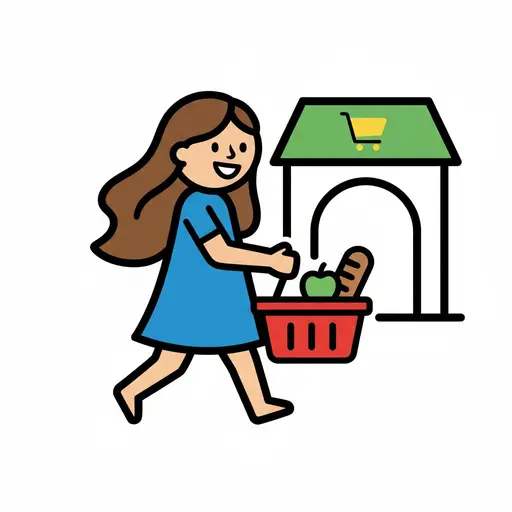
Go to the store
A person walks towards a store entrance, smiling and carrying a red shopping bas...
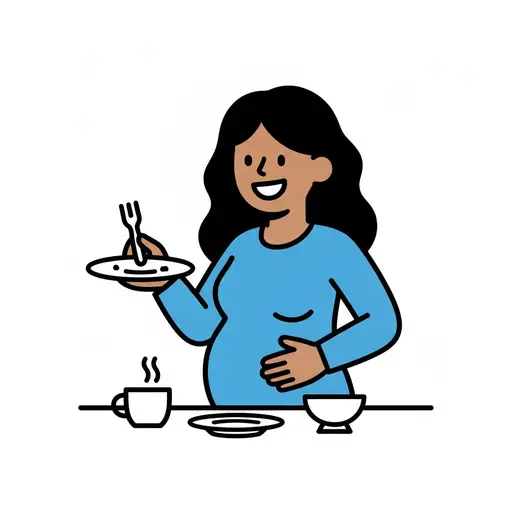
After dinner
A woman holds a plate with a fork and rests a hand on her stomach, with a cup an...
Apple
A red apple with a green leaf.
Take the visual supports with you
In Routined you build schedules from these pictures, add timers and voice instructions, and your child follows the day on their own.


* 14-day free trial included for new users.