Clean up
A messy room is rarely a tidying task, it is a wall. Everything shows up at once, nothing has an obvious entry point, and the decision of where to start triggers resistance. The visual support below offers a visible first point to move toward.
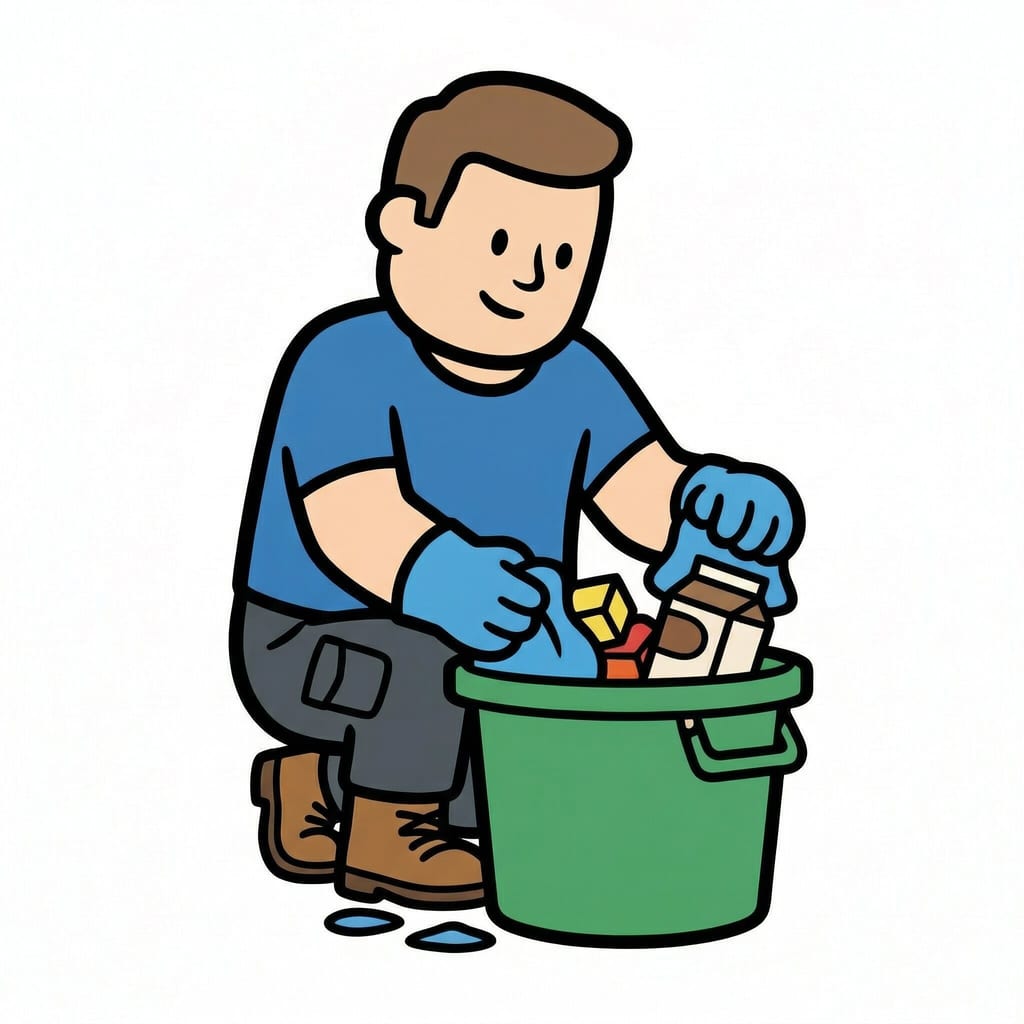 ♂
♂Clean up
A man putting various items into a green bucket.
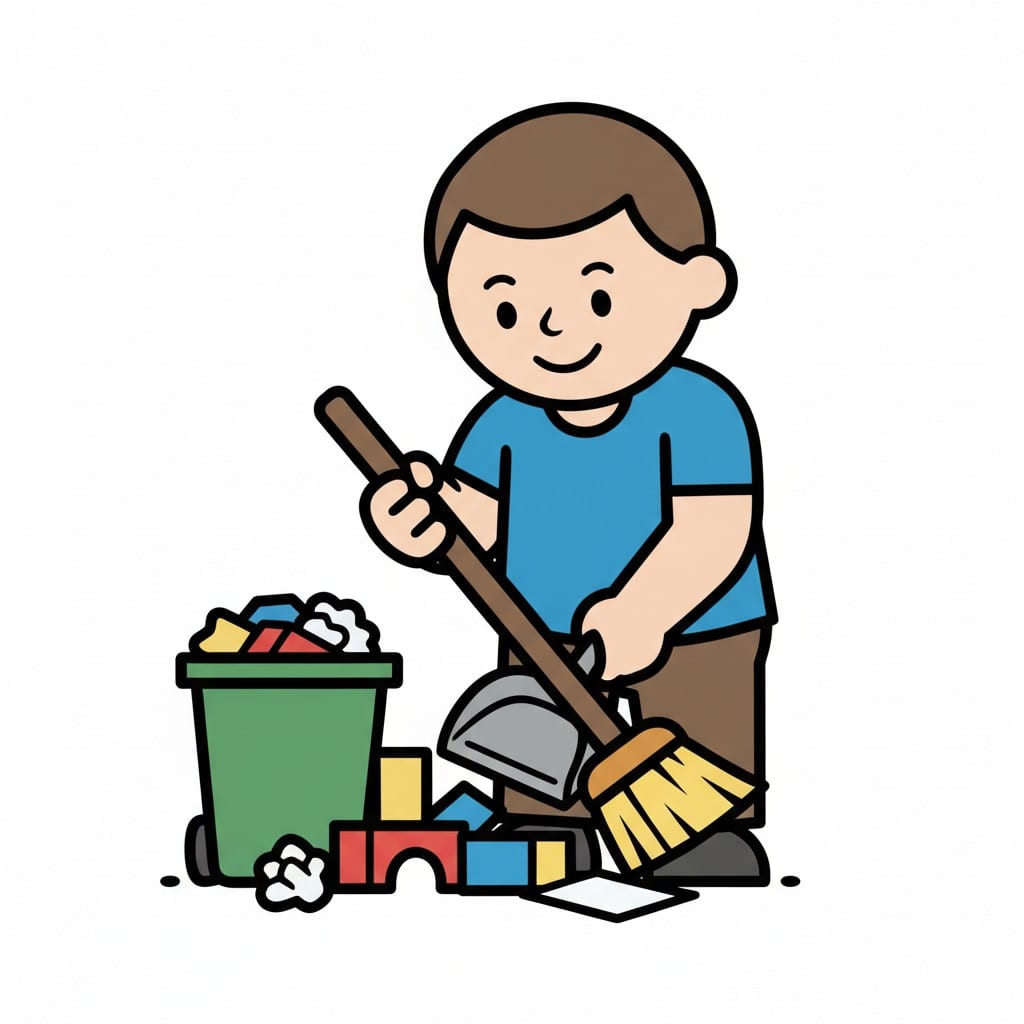 ♂
♂Clean up
A boy sweeping scattered toys and trash into a dustpan with a broom, next to an overflowing green trash can.
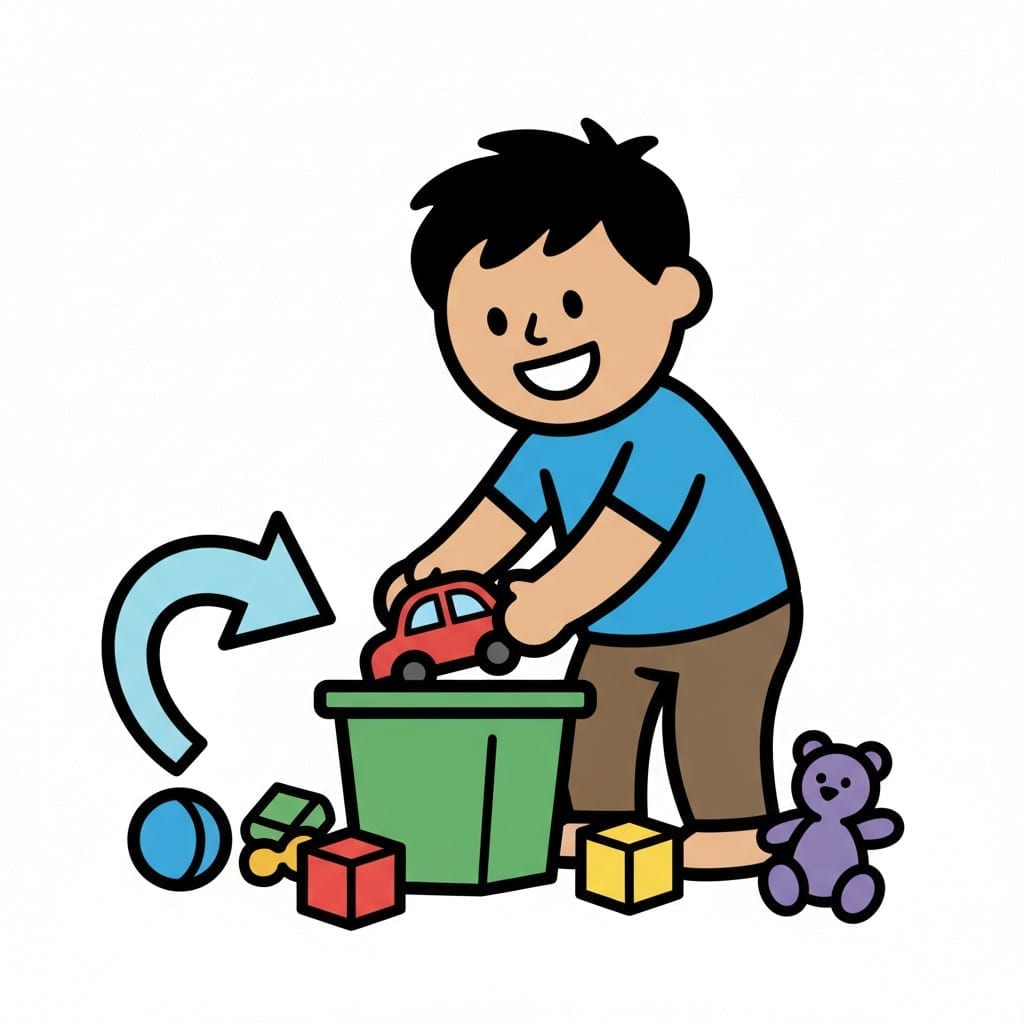 ♂
♂Clean up toys
A boy putting a red car into a green toy bin, with other toys around.
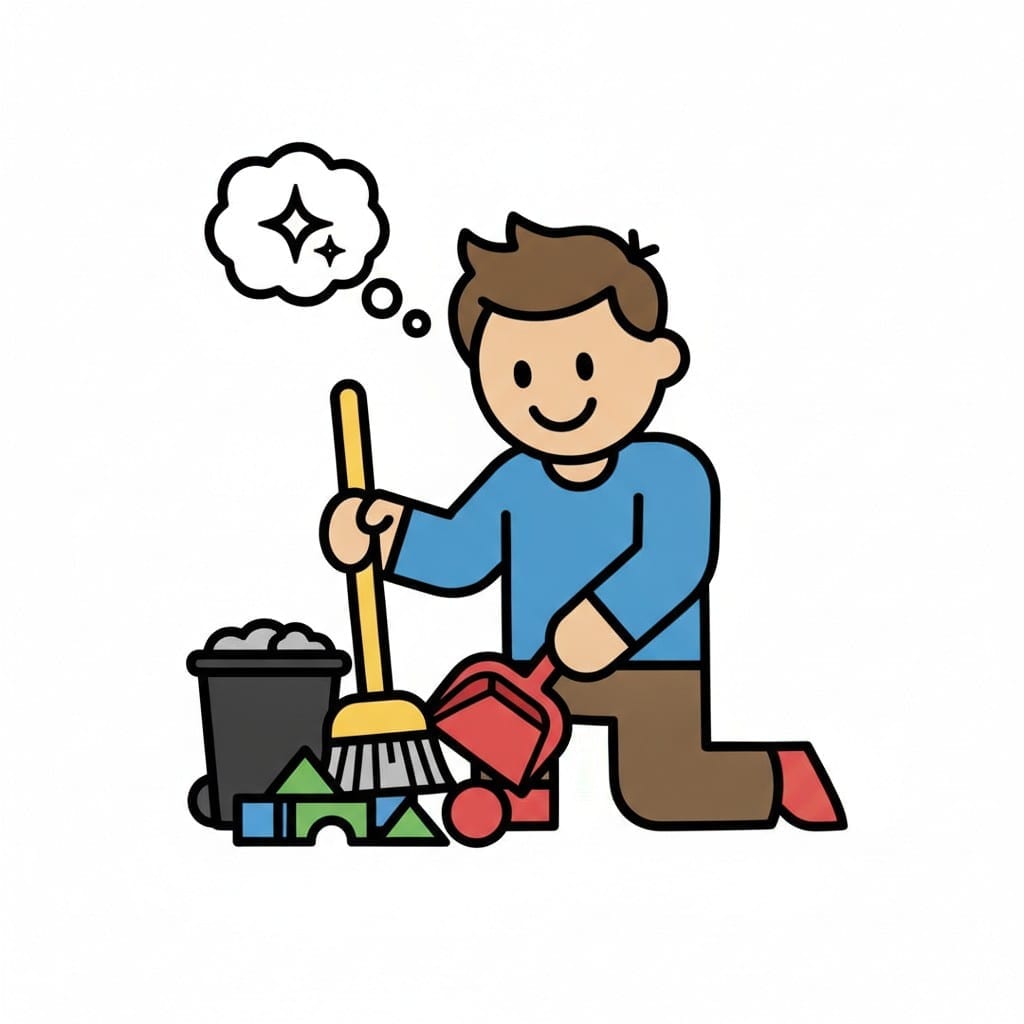 ♂
♂Sweeping up building blocks
A boy kneels and sweeps toy blocks into a red dustpan with a yellow broom beside a bin, while a thought bubble shows a sparkle.
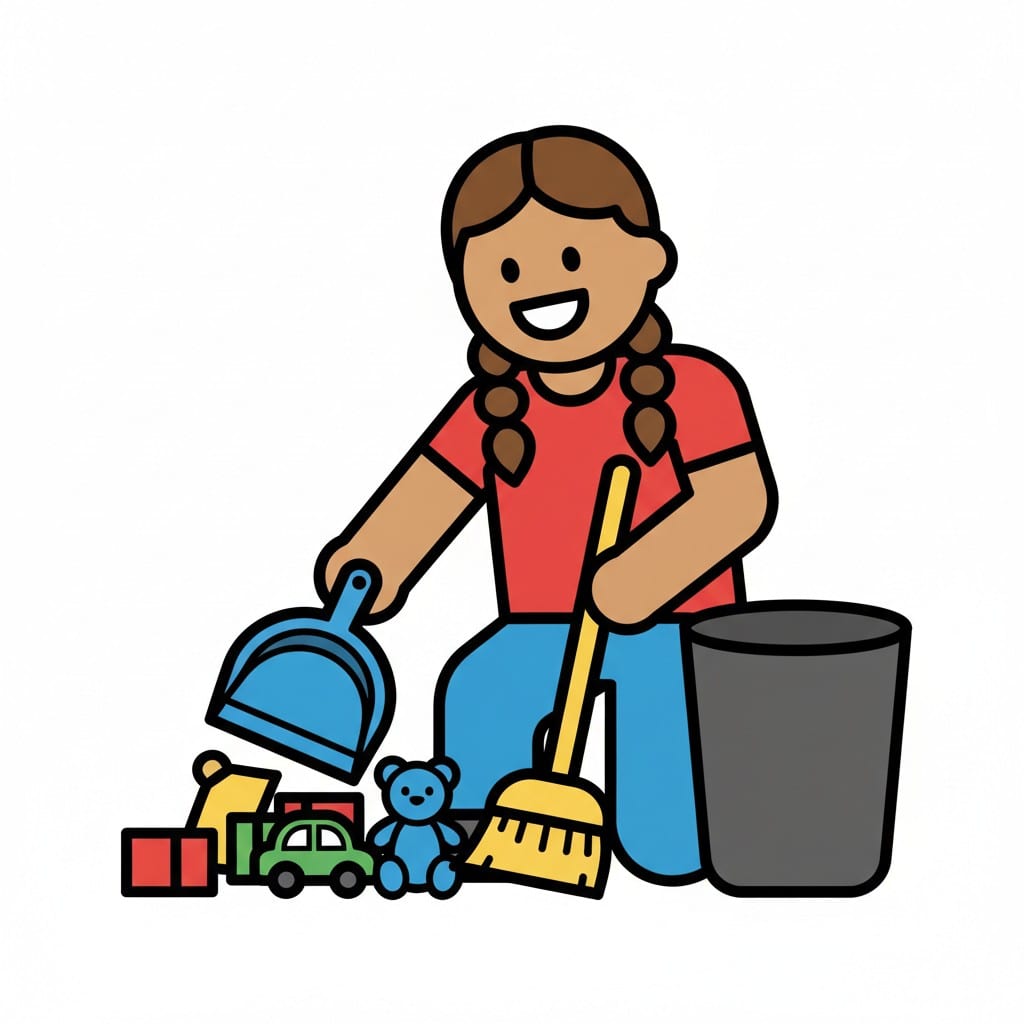 ♀
♀Clean up toys
A girl sweeping toys into a dustpan with a broom next to a trash can.
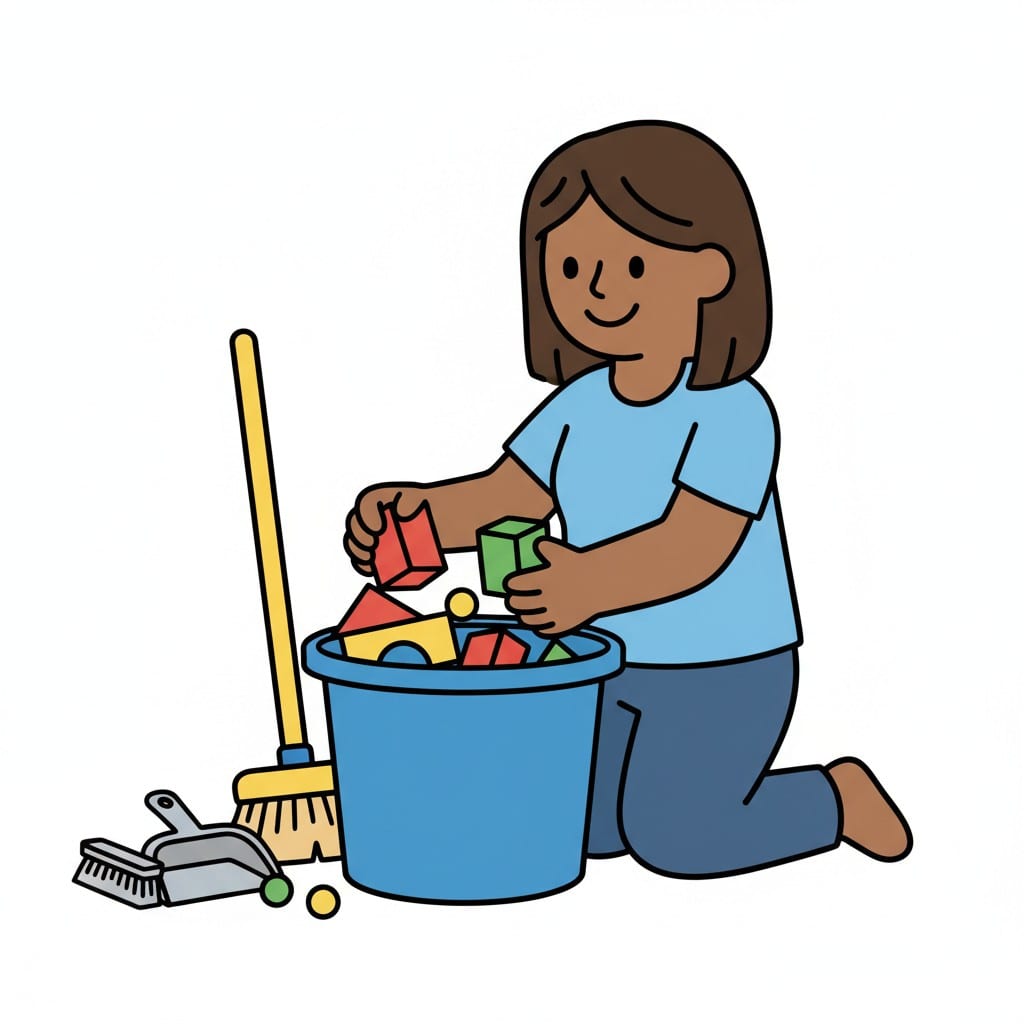 ♀
♀Putting blocks in a bucket
A girl kneels and drops colourful building blocks into a blue bucket, with a broom, dustpan and brush on the floor beside her.
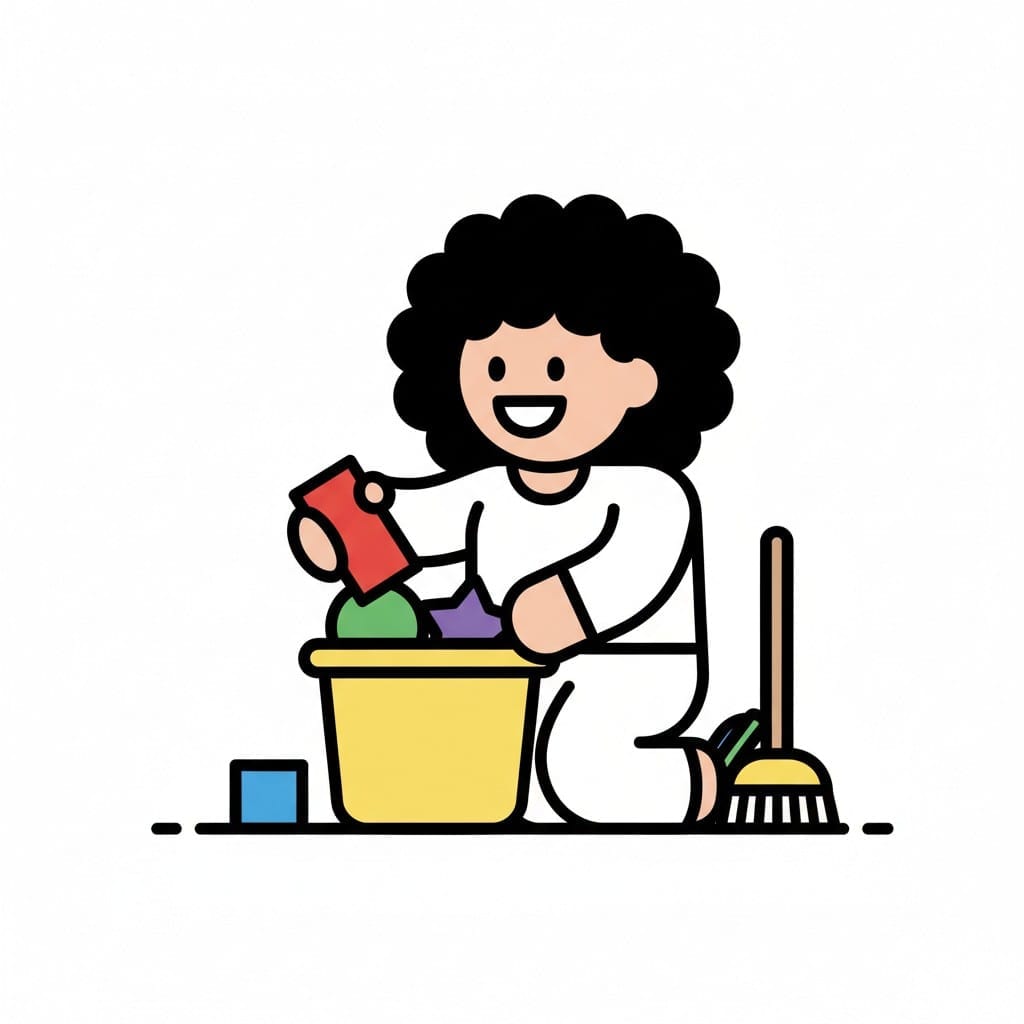 ♀
♀Tidying toys into a box
A girl with curly hair drops a red toy into a yellow box while a broom leans beside her and one blue block still lies on the floor.
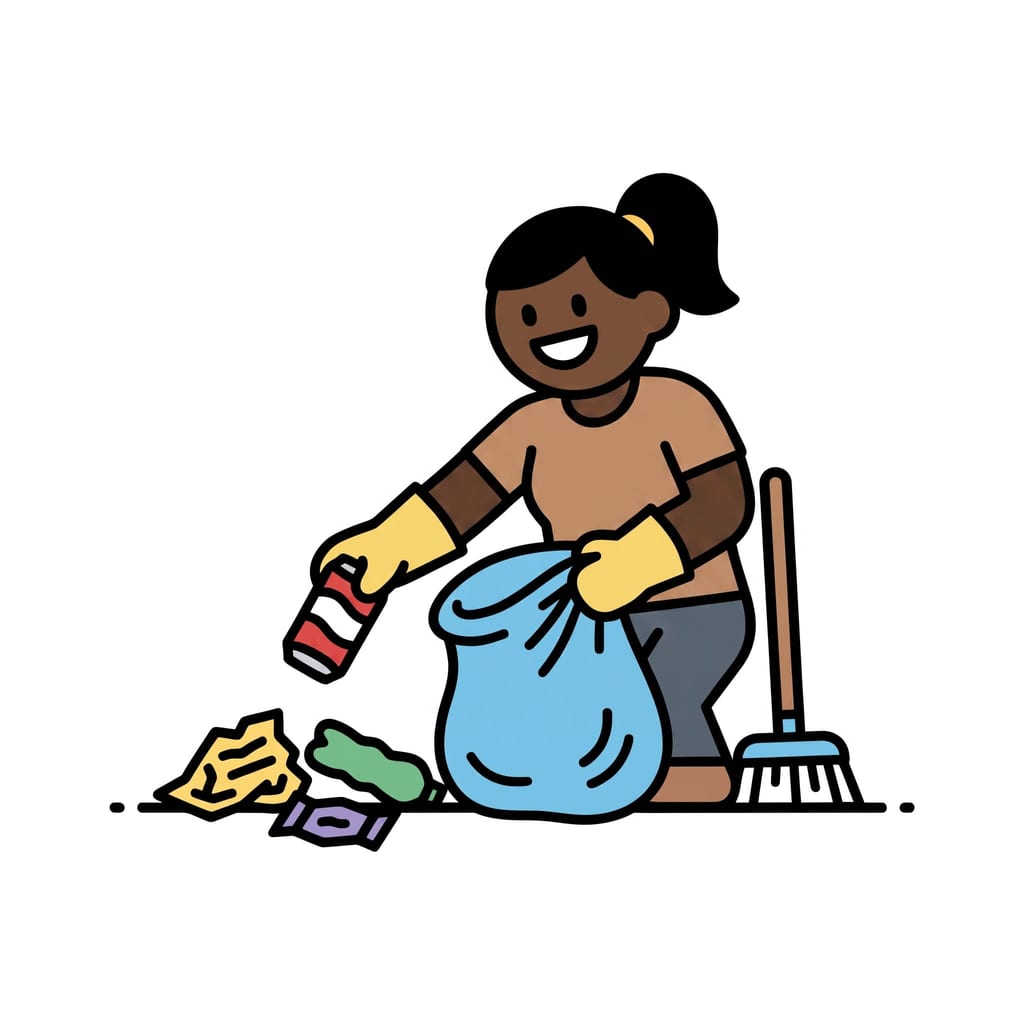 ♀
♀Collecting litter in a bin bag
A girl with a ponytail and yellow rubber gloves drops a can into a blue bin bag while more litter lies on the floor and a broom stands beside her.
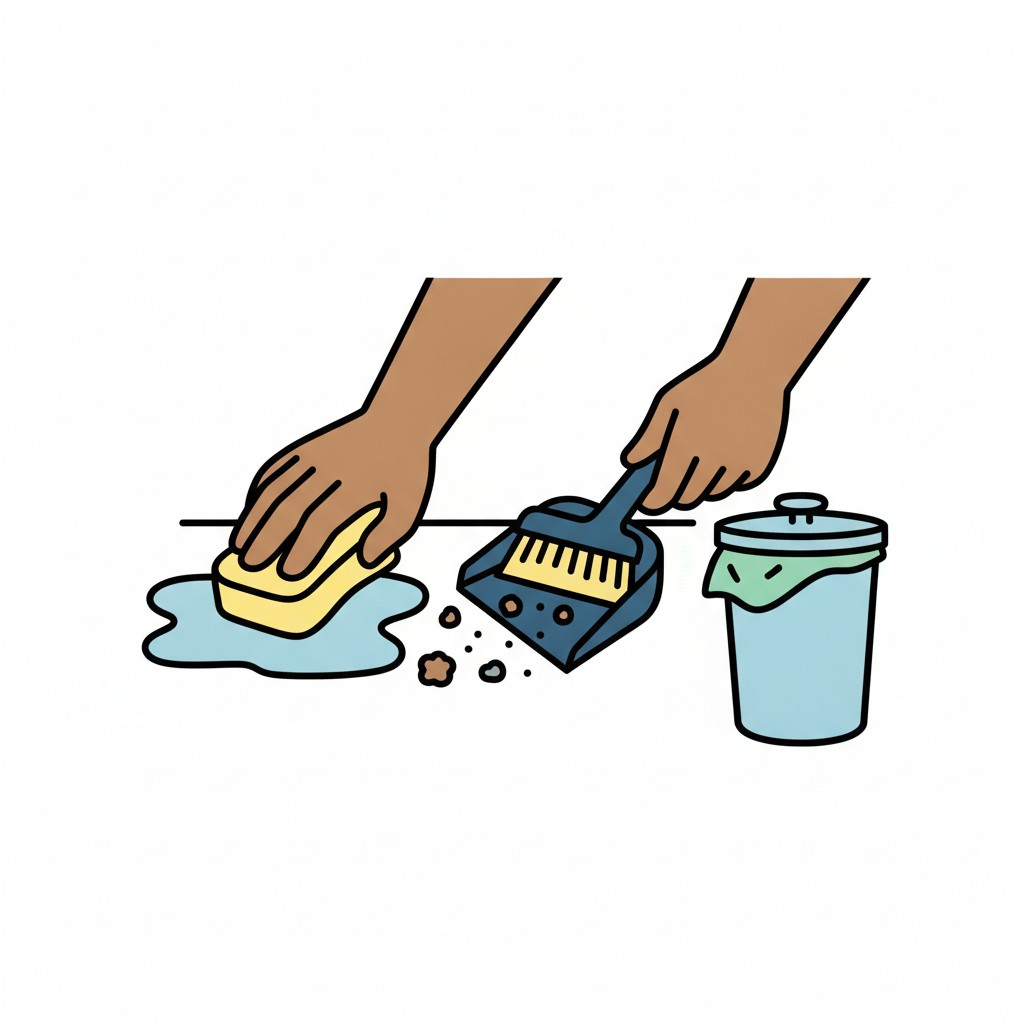
Wipe up a spill
Two hands wipe up a puddle with a sponge and sweep crumbs into a dustpan, with a bucket beside.
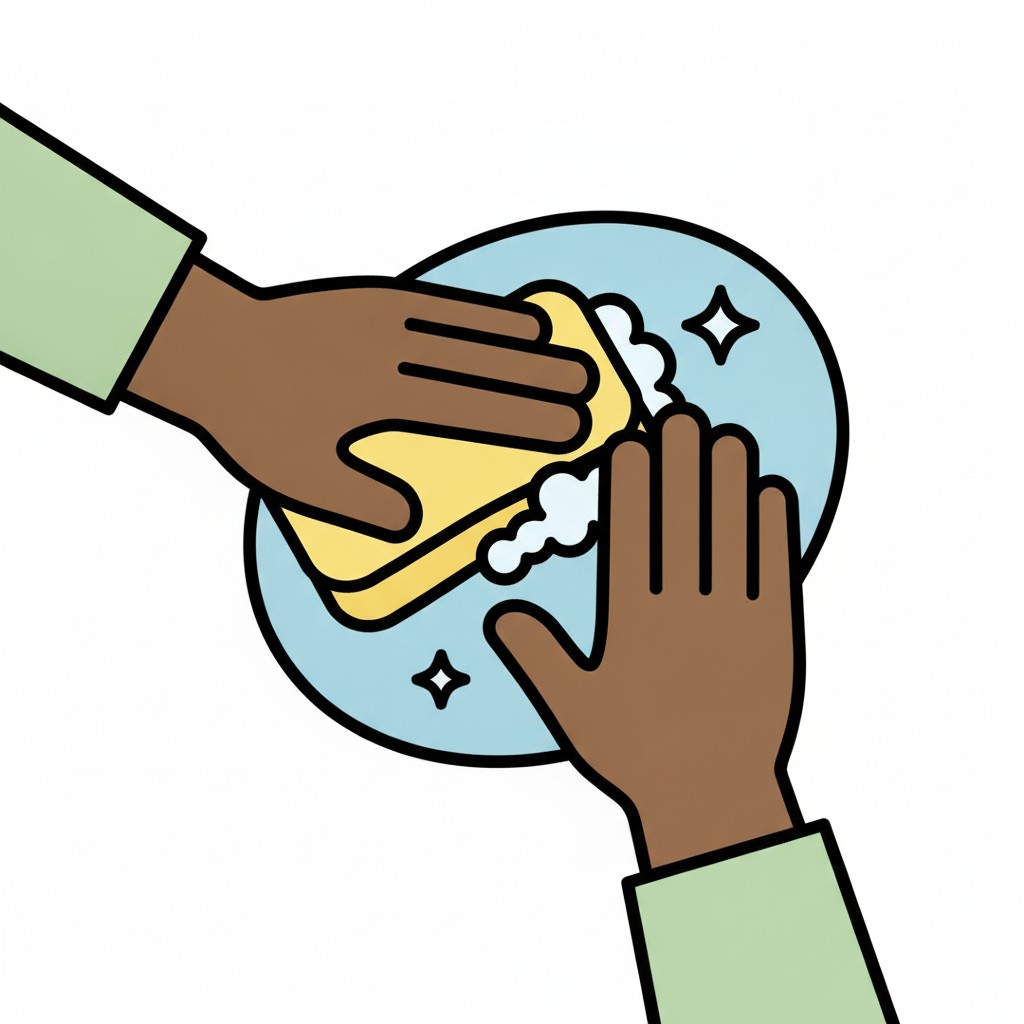
Wipe clean
A hand wipes a round surface with a yellow cloth until it shines.
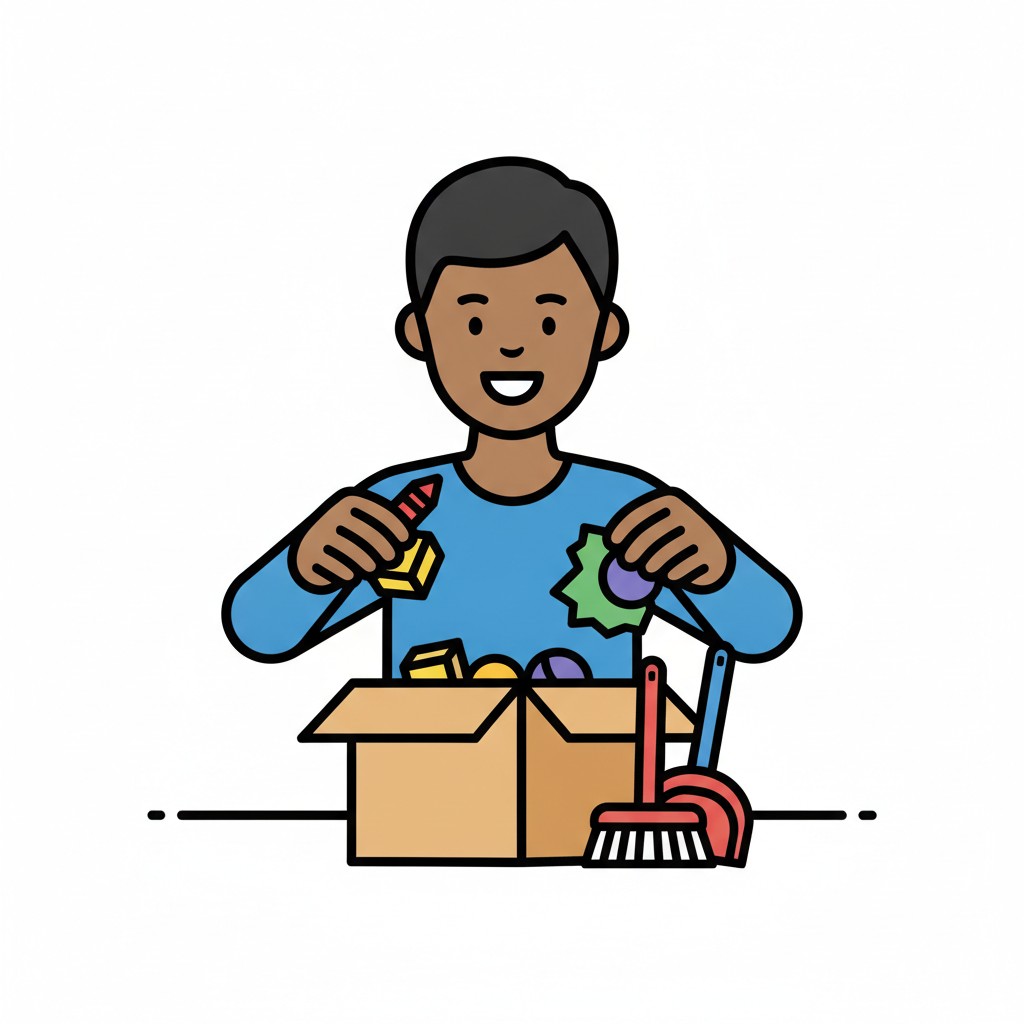 ⚲
⚲Boy tidying up
A boy puts toys into a cardboard box with a dustpan beside it.
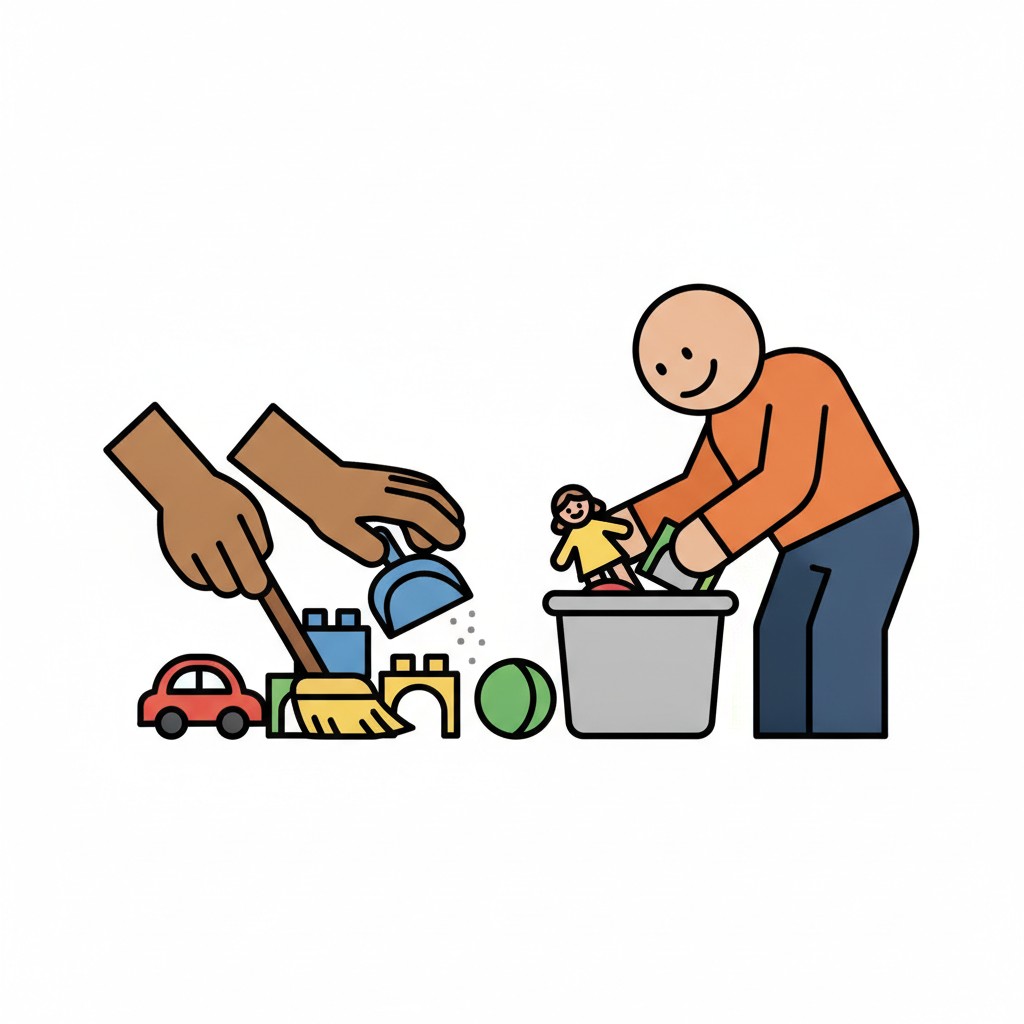 ⚲
⚲Tidying up together
An adult puts toys in a tub while two hands sweep up blocks and a toy car.
About this visual support
The hard part is not the tidying itself, it is the first choice. In the same second the brain has to weigh the clothes on the chair, the lego under the bed, the books on the floor and the pens on the desk, and because every option carries roughly the same weight, nothing happens. For many children the moment freezes into stuckness, not refusal.
A visual support replaces the inner decision with a visible order. When the picture shows clothes first, then books, then toys, the choice disappears and an action takes its place. The direction is already set, all that is needed is to start walking.
One tip specific to tidying: use categories instead of areas. Collect all clothes across the whole room before anything else, then all books. Moving around the room gives focus little pauses and feels more manageable than standing in one corner until the corner is done.
In Routined the tidying can be built as steps with a timer per category, so the end of each part shows up before motivation runs out. Free 14-day trial.
Use this image in a schedule
Build your own visual schedule with this image and download it as a print-ready PDF. Completely free.

More similar visual supports
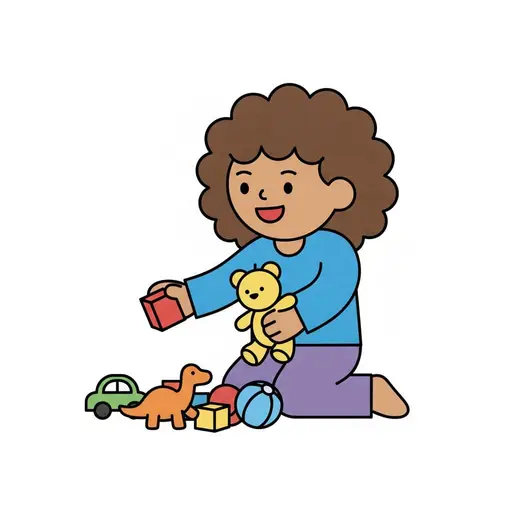
Put away toys
A child kneels holding a yellow teddy and a red block, with toys on the floor.
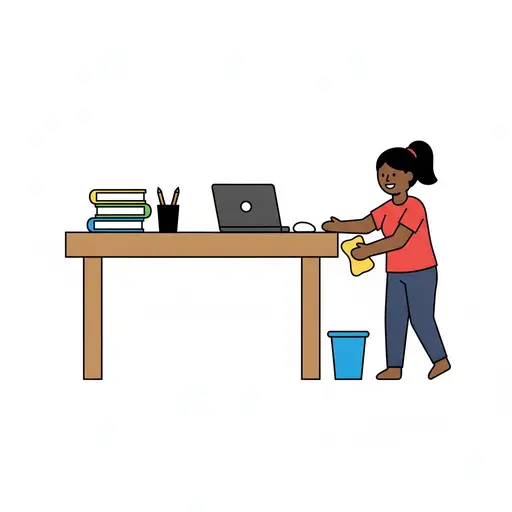
Clean desk
A girl wipes a desk holding books, pens and a laptop.

Clean the kitchen
A woman in a blue apron wipes the kitchen counter with a yellow sponge, with was...
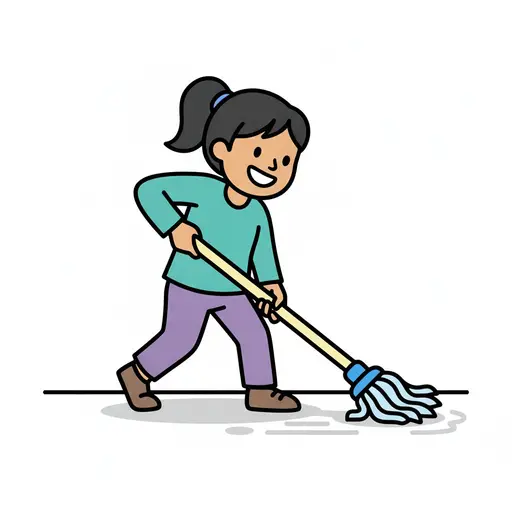
Mop the floor
A girl mops the floor.
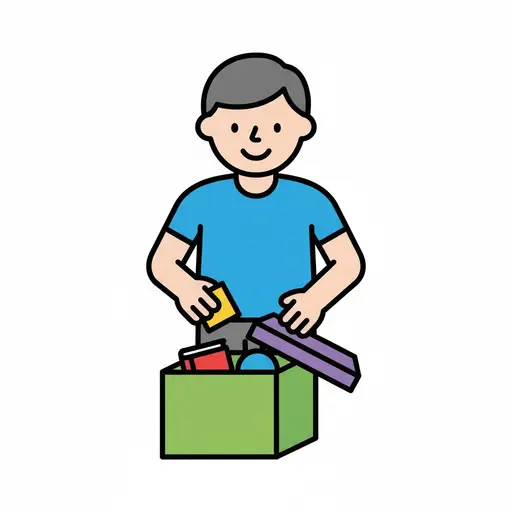
Put things away
A person puts things down into a green box with a lid beside it.
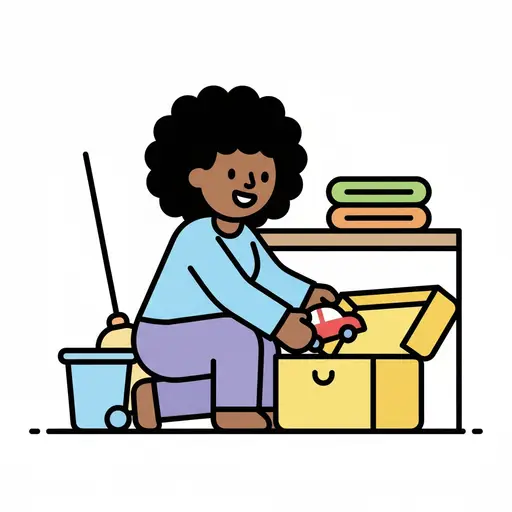
Straighten up the room
A woman puts toys into a yellow box with cleaning things nearby.
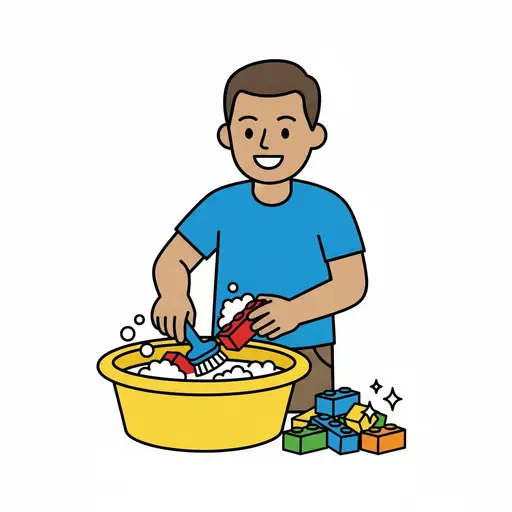
Tidy Lego
A boy washes building bricks in a tub of water.
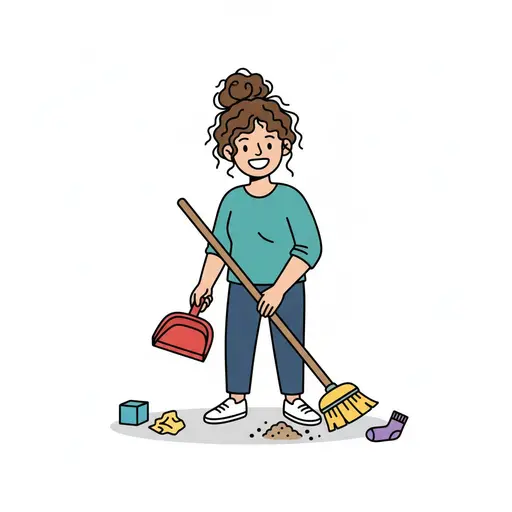
Tidy up
A smiling person with hair in a bun sweeps dirt on the floor with a broom while ...
Take the visual supports with you
In Routined you build schedules from these pictures, add timers and voice instructions, and your child follows the day on their own.


* 14-day free trial, then $2.39 a month or $20.99 a year (US pricing). Cancel anytime.