Put things away
Put things away means everything and nothing. With no edges around what, where, and when finished, the brain has nothing to grip. The visual support below puts borders around the task so the first step actually becomes doable.
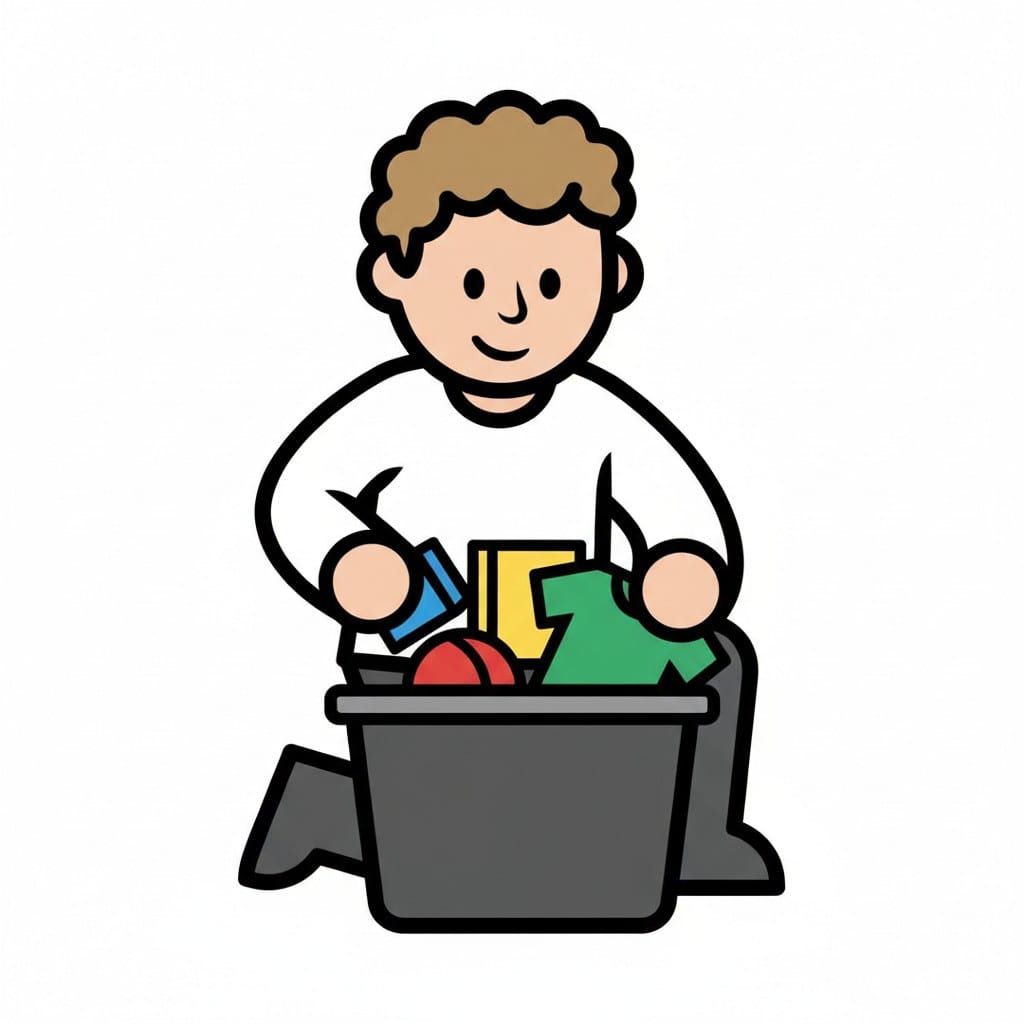 ♂
♂Boy cleaning up
An illustration of a boy kneeling and cleaning up colorful items into a grey bin.
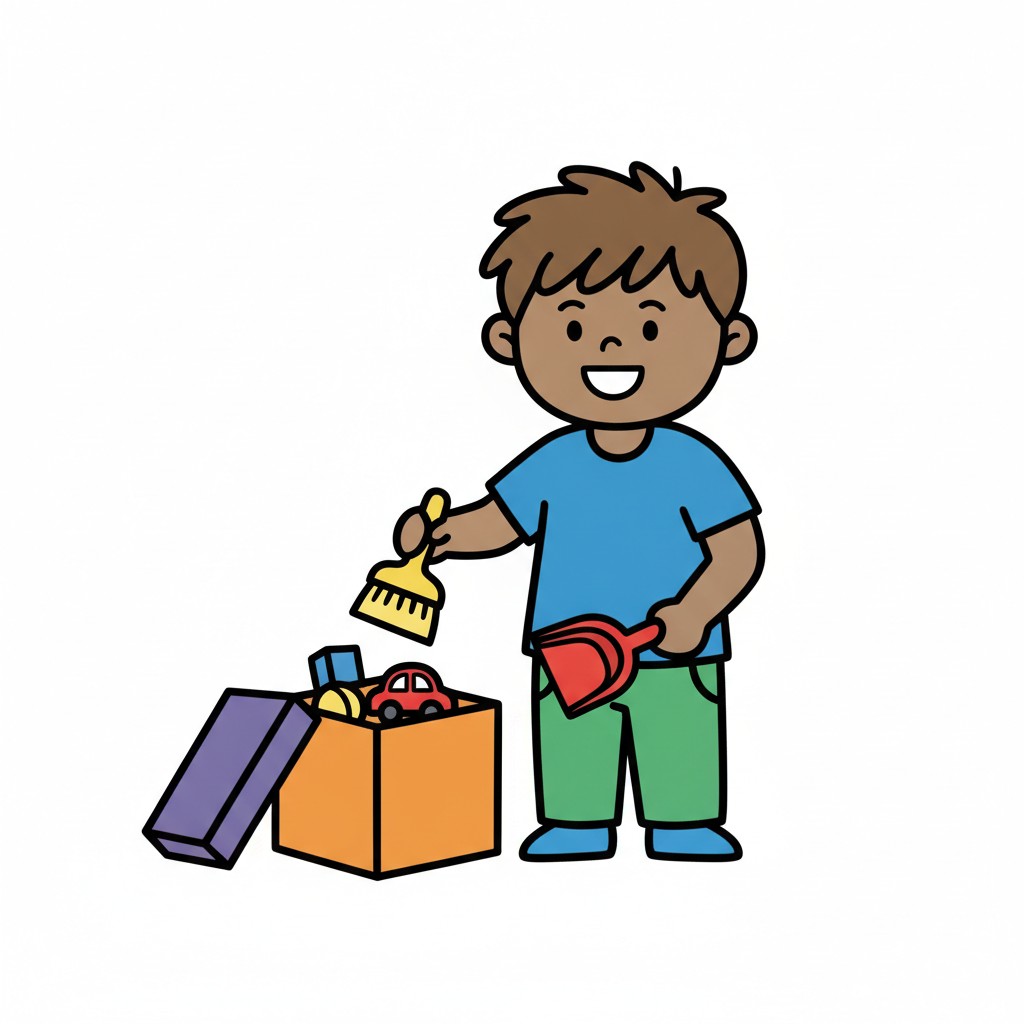 ♂
♂Clearing up stuff
A boy puts things into a box while holding a brush and a scoop.
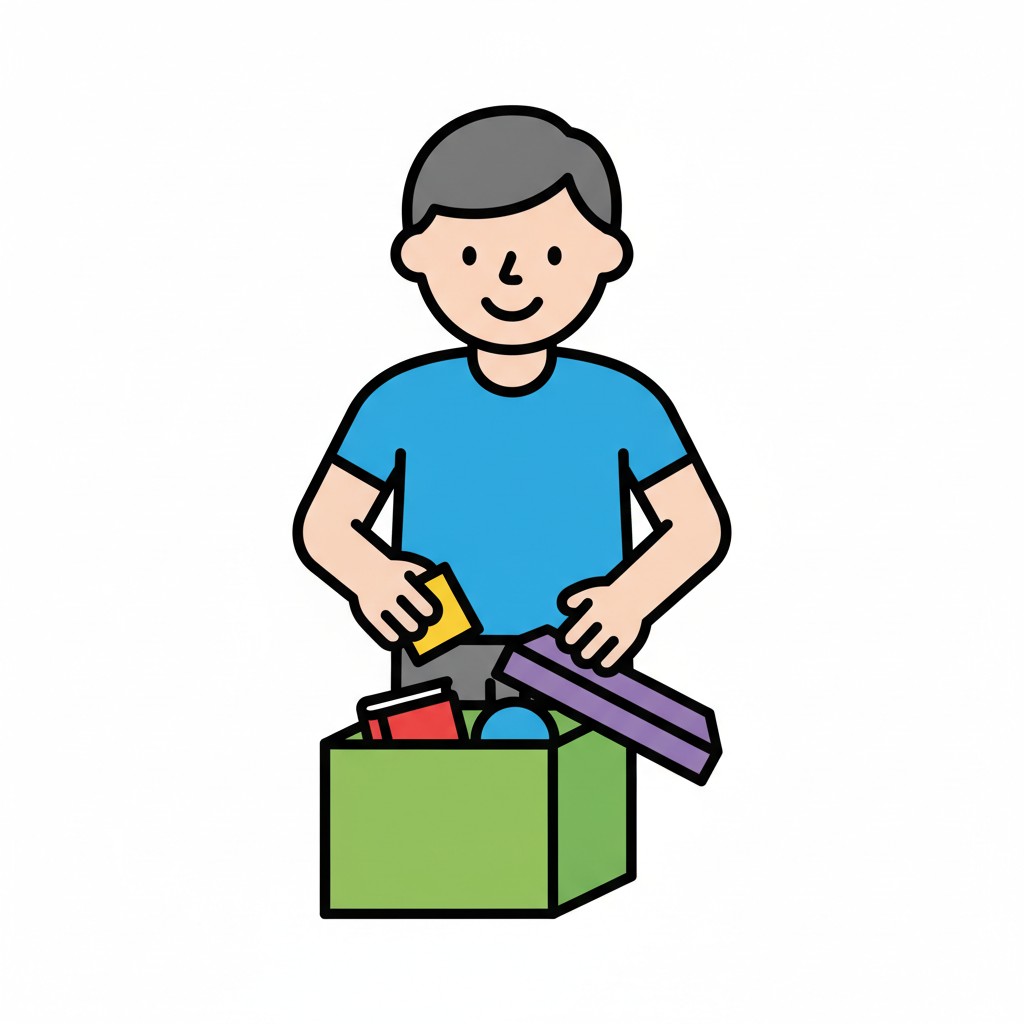 ⚲
⚲Put the things away
A person puts things down into a green box with a lid beside it.
About this visual support
Put things away is one of the most sabotage-friendly phrases in the house. A child hears tidy up over there and the questions arrive instantly: which things, how many, in what direction, when am I allowed to say done? Without answers the brain waits, and waiting looks like reluctance. It is not unwillingness, it is the absence of a shape to start inside.
Visual support gives the task edges by translating the words into something countable. One card can show five items to move, another show an area that needs to be empty, a third mark that the job ends when the basket is full. Suddenly there is a start, a middle, and an end, which is what the vague phrasing was missing. Kids with ADHD often react especially strongly to that lack of edges.
One concrete tip: swap the words tidy up for a number or a surface. Ten things. This rug. The table. The concreteness alone does half the work. In Routined you can build the routine as a checkable list where each card gets ticked off, so the ending stops being an opinion and becomes a finished picture.
Use this image in a schedule
Build your own visual schedule with this image and download it as a print-ready PDF. Completely free.

More similar visual supports
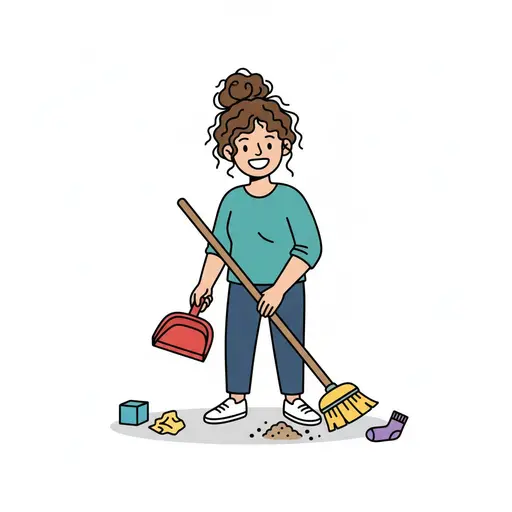
Tidy up
A smiling person with hair in a bun sweeps dirt on the floor with a broom while ...
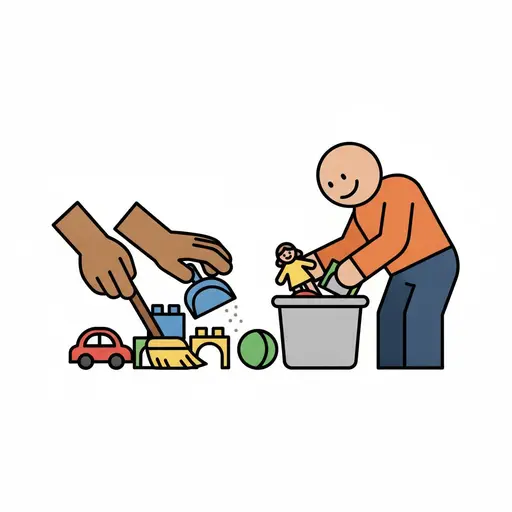
Clean up
An adult puts toys in a tub while two hands sweep up blocks and a toy car.
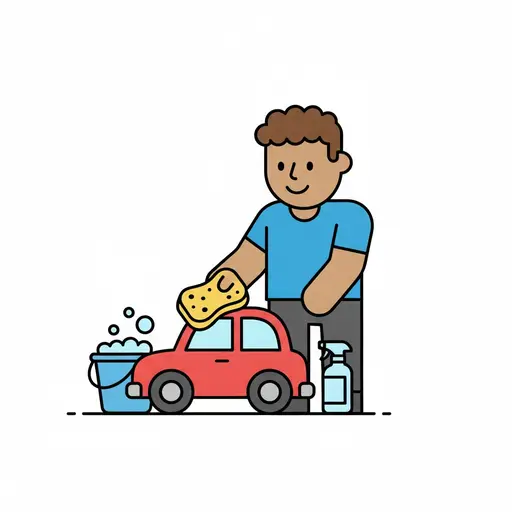
Clean up cars
A boy washes a red toy car with a sponge and a bucket of suds.
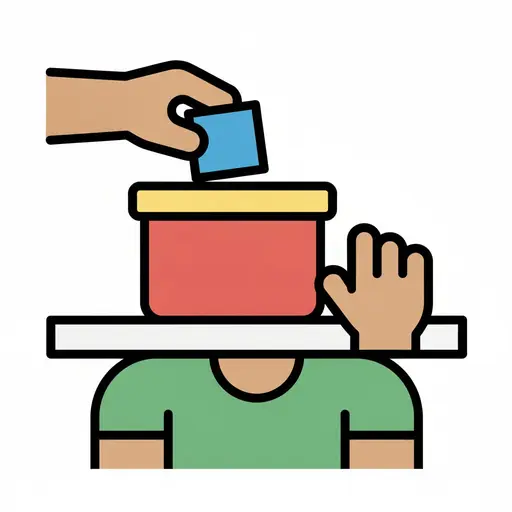
Put away
A hand places a blue block into a red container on a shelf.
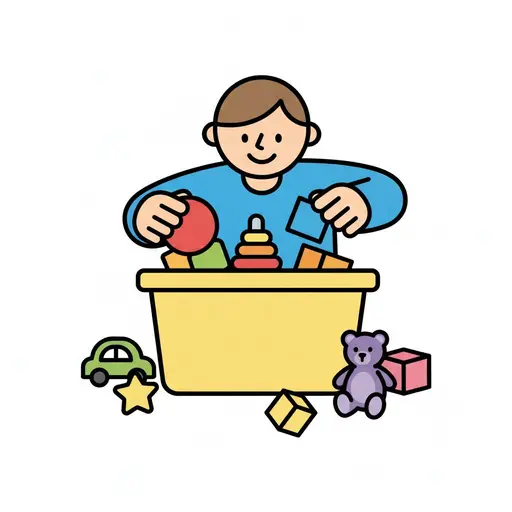
Straighten up
A child puts toys into a yellow tub, with a car, a teddy and a block on the floo...
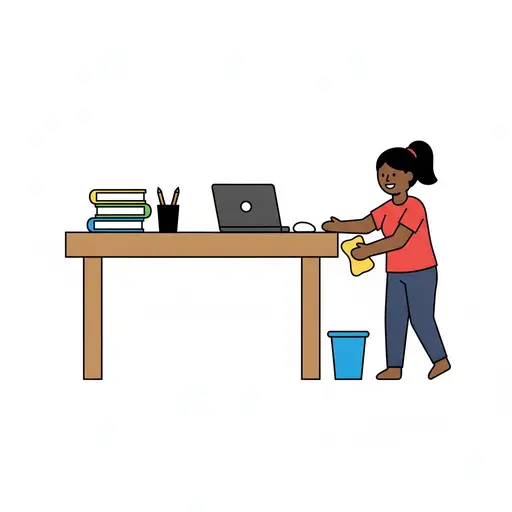
Clean desk
A girl wipes a desk holding books, pens and a laptop.
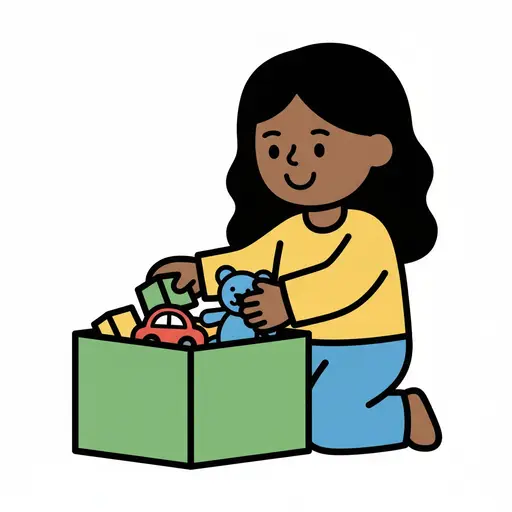
Clean up toys
A girl kneels and puts toys into a green box.
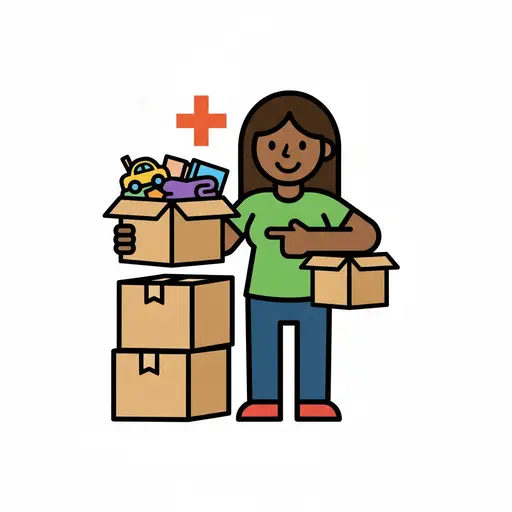
Pick up things
A woman stands by a stack of boxes with things inside.
Take the visual supports with you
In Routined you build schedules from these pictures, add timers and voice instructions, and your child follows the day on their own.


* 14-day free trial, then $2.39 a month or $20.99 a year (US pricing). Cancel anytime.