Blood sugar
It isn't the prick itself that hurts most, but the wait for it, the seconds before, when the child knows it's coming. A clear order makes those seconds shorter and more predictable. See how the steps look below.
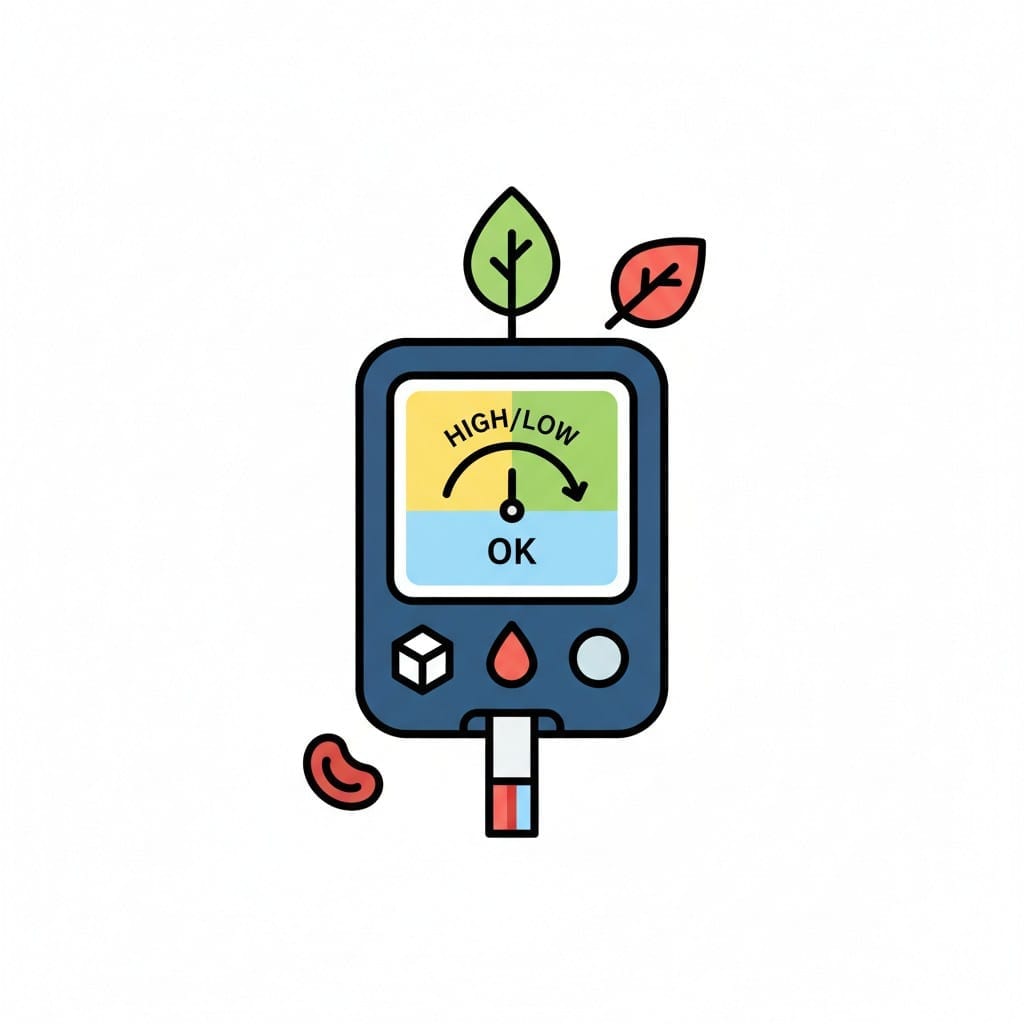
Blood sugar meter
A blood sugar meter with a gauge showing high, low and okay.
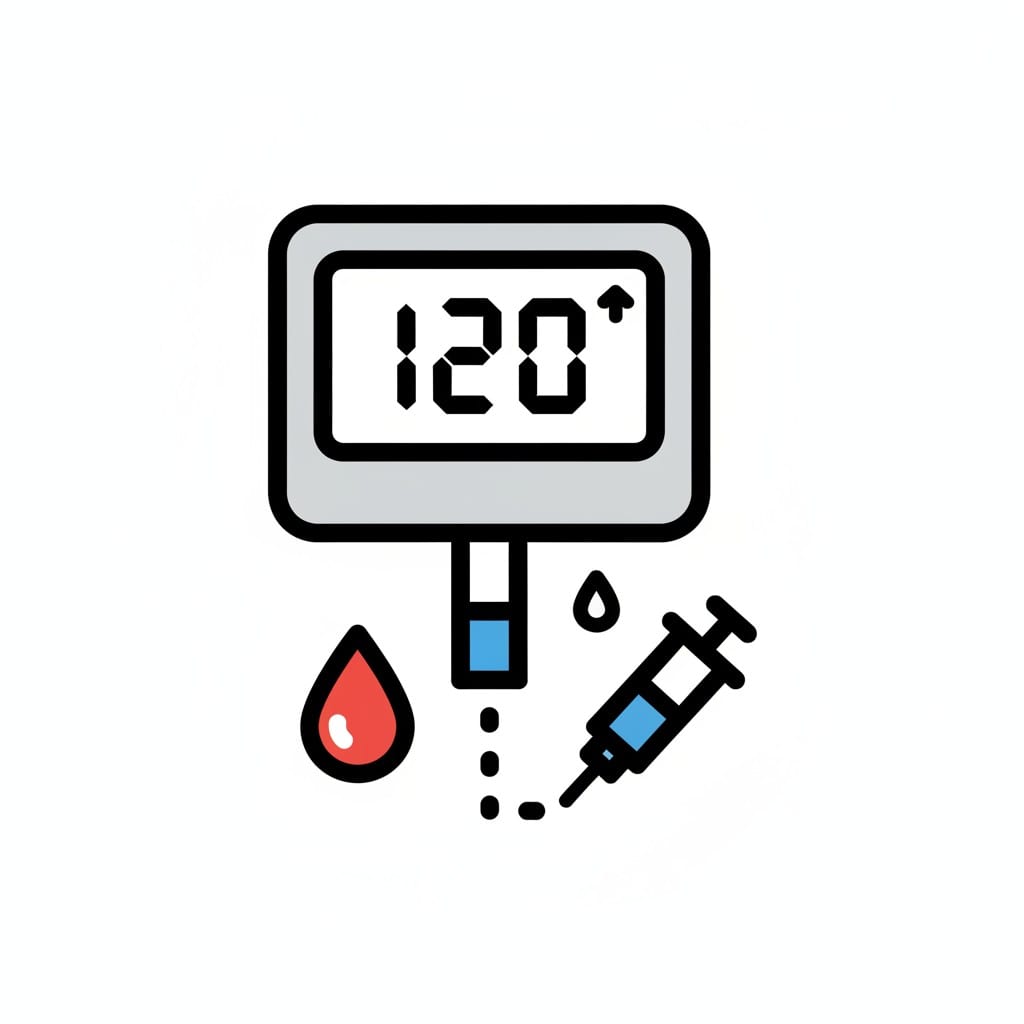
Meter showing 120
A blood sugar meter showing a reading of 120, with a blood drop and a lancet.
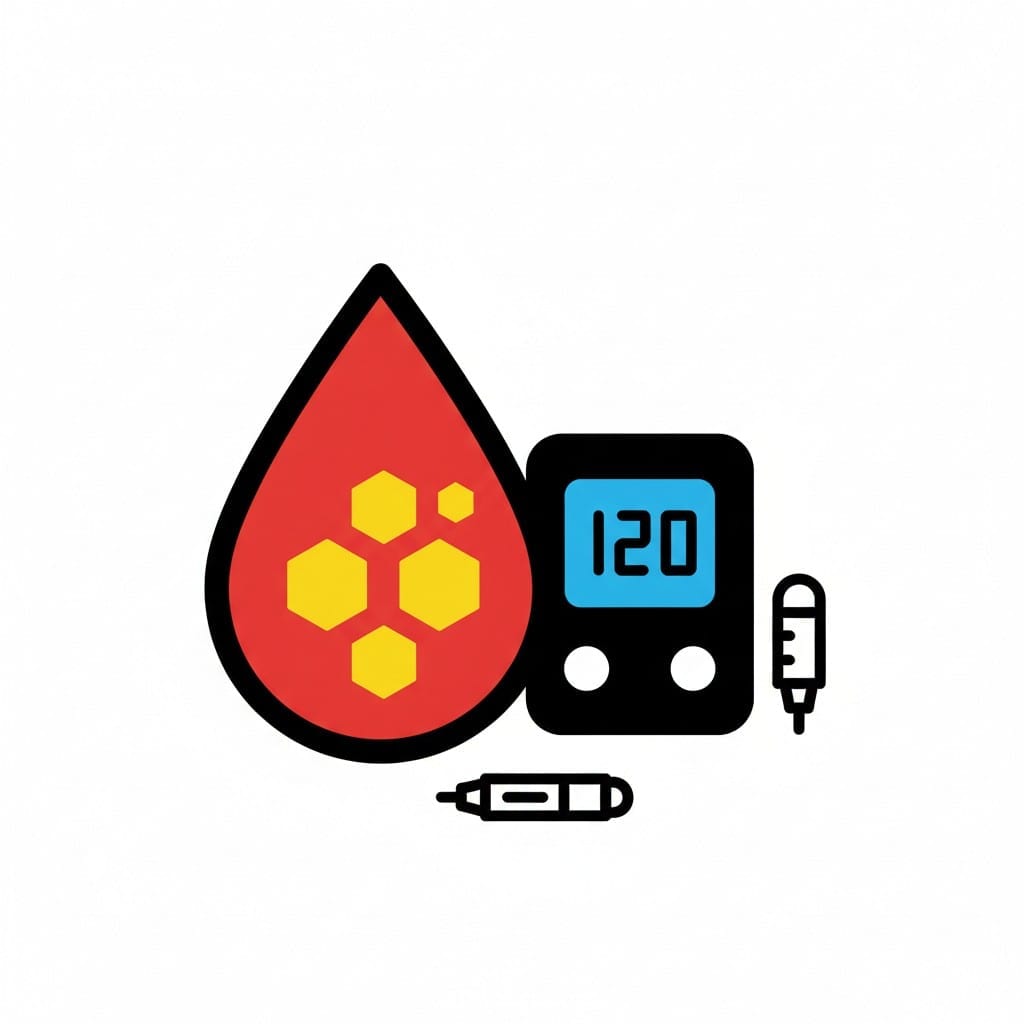
Blood drop and meter
A large red blood drop next to a blood sugar meter showing 120 and a lancet.
About this visual support
Anticipation is often worse than the prick. In the seconds before the needle meets the finger, the body has time to tense, and the tension itself hurts. When the measurement has to happen several times a day on top of that, each occasion becomes a fresh charge, and the child starts dreading the next one before the last is forgotten.
Visual support shortens the loaded wait by making the order known. When the child sees the cards wash hands, load the meter, prick and read off, they know exactly where in the process they are and how soon it ends. The predictability eases the worry, because fear grows most in the unknown.
A concrete tip is to add a step of its own after the prick, a picture for something soothing the child has chosen: a sticker square, a sip of juice, or squeezing a rubber ball during the prick. The process then ends on something the child looks forward to instead of on the pain.
To keep track of all the day's measurements, you can add them as recurring steps in the Routined app, so both you and the child can see what's already done.
Use this image in a schedule
Build your own visual schedule with this image and download it as a print-ready PDF. Completely free.

More similar visual supports
Check blood sugar and insulin
A blood sugar meter showing 120, a drop and an insulin pen.
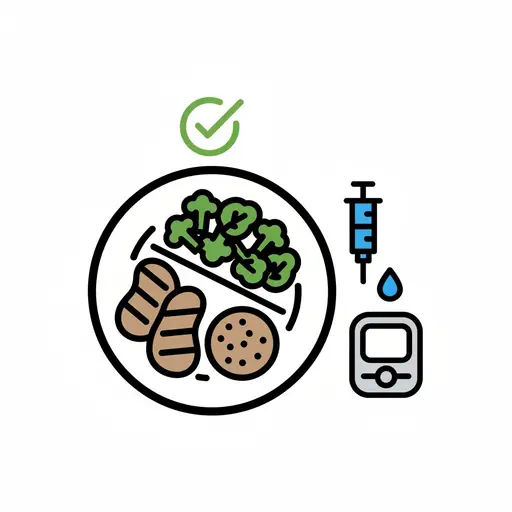
Diabetes meals
A plate with a balanced meal next to a blood sugar meter and a syringe.

Measure blood sugar and insulin
A red blood drop next to an insulin pen with a small drop at the needle.
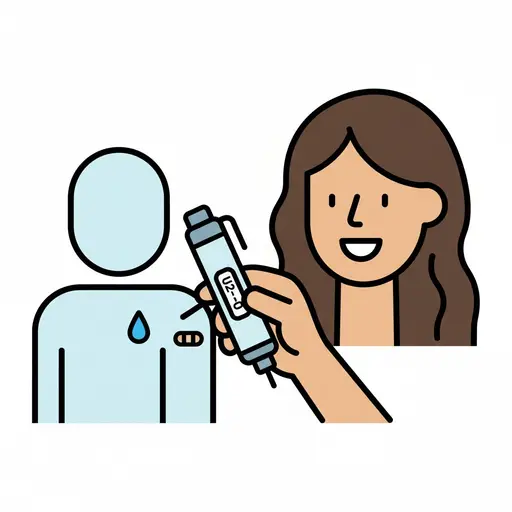
Insulin
A girl gives an insulin injection into someone's shoulder
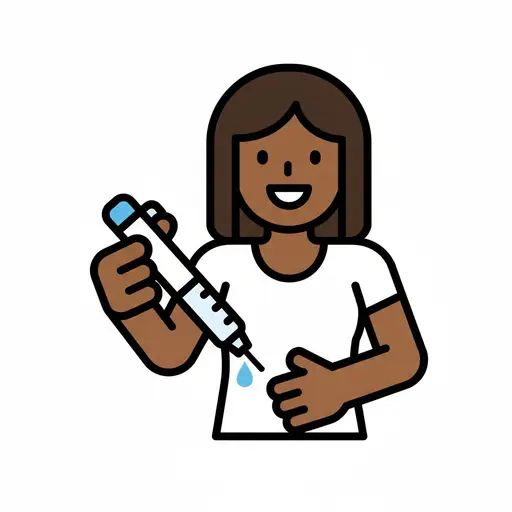
Take Insulin
A child gives themselves an insulin injection in the stomach.

Allergy medicine
Medicine bottle with a red cross next to a capsule, a leaf, and a cloud.
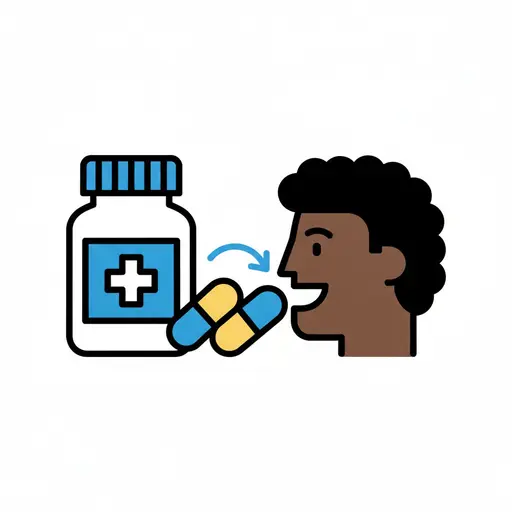
Antibiotics
A medicine bottle with capsules and a person taking their medicine.
Asthma inhaler
A blue asthma inhaler with a red mouthpiece cap.
Take the visual supports with you
In Routined you build schedules from these pictures, add timers and voice instructions, and your child follows the day on their own.


* 14-day free trial included for new users.