Ponytail
Yesterday's neat ponytail can feel impossible today. Scalp sensitivity shifts with the day, and the pull is a chapter of its own. The visual support below makes it easier to prepare each step without a fight.
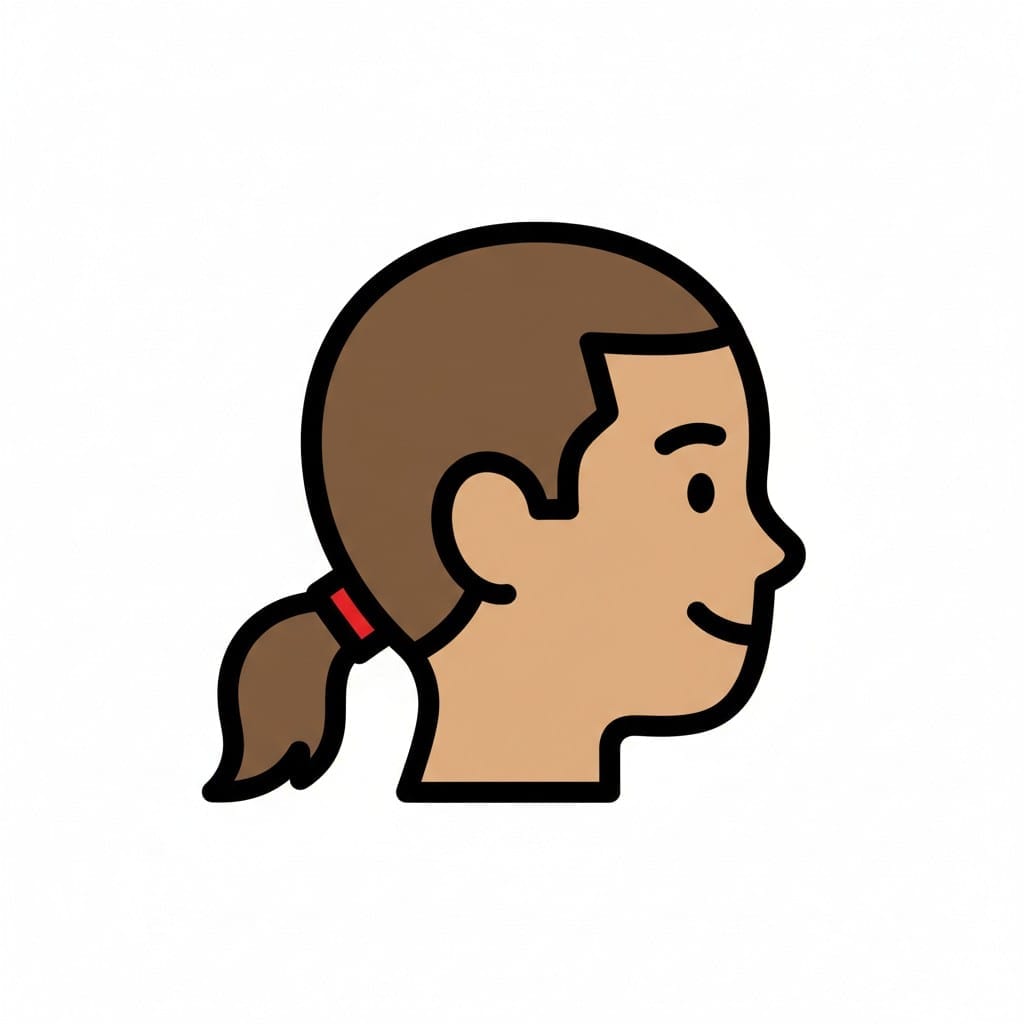
Ponytail
A cartoon illustration of a head in profile with a ponytail.
About this visual support
A ponytail isn't a hairstyle, it's a sensory negotiation. A band that sits a millimetre too tight broadcasts a signal across the whole morning. Too low at the neck feels wrong, too high becomes sore against the ear, and a brush snagging a knot near the scalp can trigger the whole reaction before the day has begun.
Visual support helps because it shifts the negotiation from words to choices. When pictures show brush, spray, where the band sits, how tight, and a finished look, the child can point out what should happen in what order, and stop before something feels off. The aim isn't to remove the sensory side, but to make it visible and negotiable.
One concrete tip: keep three bands within reach – soft spiral, thin elastic, medium standard – so the child can point to today's choice. Different mornings tolerate different tension. Routined can link pictures, order and a short morning timer during a 14-day trial.
Use this image in a schedule
Build your own visual schedule with this image and download it as a print-ready PDF. Completely free.

More similar visual supports
Braid your hair
Smiling person with a braid in their hair
Braid hair
Two hands braid the hair of a smiling girl wearing a pink shirt.
Brush hair
An image of a girl brushing her hair.
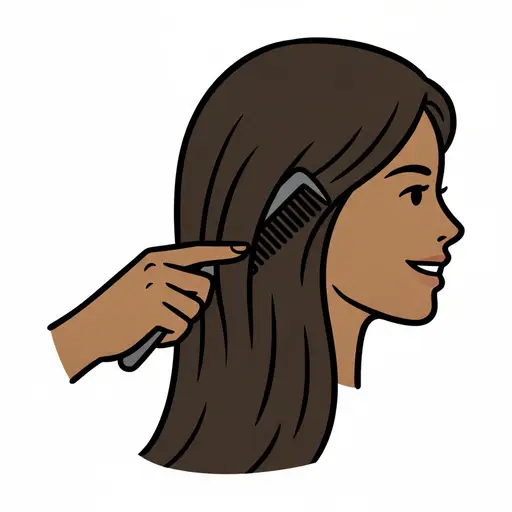
Comb hair
Seen in profile, a woman has a grey comb drawn down through her long brown hair.
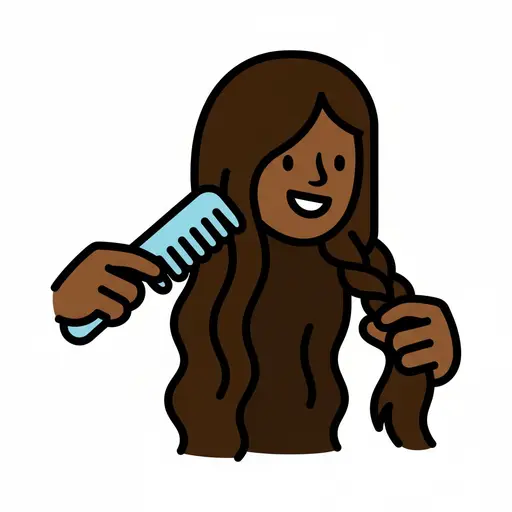
Do hair
Smiling as she works, a girl combs her long wavy hair with a light blue comb whi...
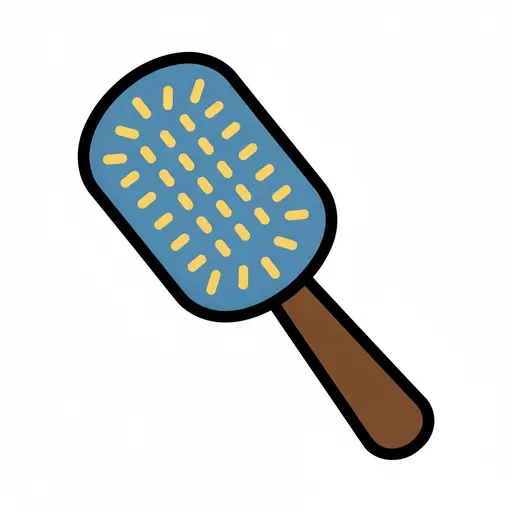
Hairbrush
Lying diagonally across the picture is a hairbrush with a blue head, yellow bris...

Straighten hair
A woman is straightening her hair with a flat iron.
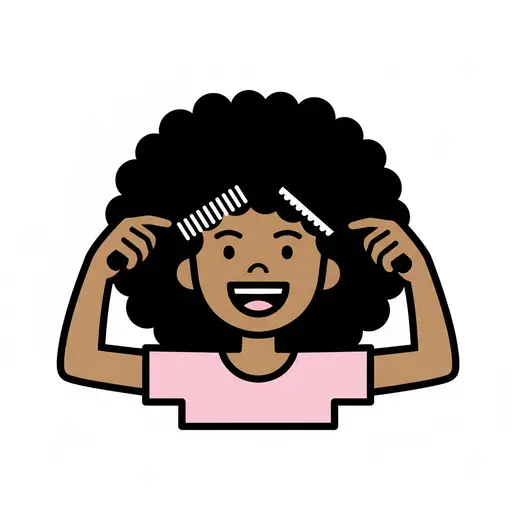
Style my hair
A cartoon person styling their hair with two combs.
Take the visual supports with you
In Routined you build schedules from these pictures, add timers and voice instructions, and your child follows the day on their own.


* 14-day free trial included for new users.