Wash body
A cloth against the skin is a strong signal, and warm water on the shoulders feels different from cool water on the feet. When the body is full of zones that each need a decision, washing turns into a long negotiation. The visuals below offer a map.
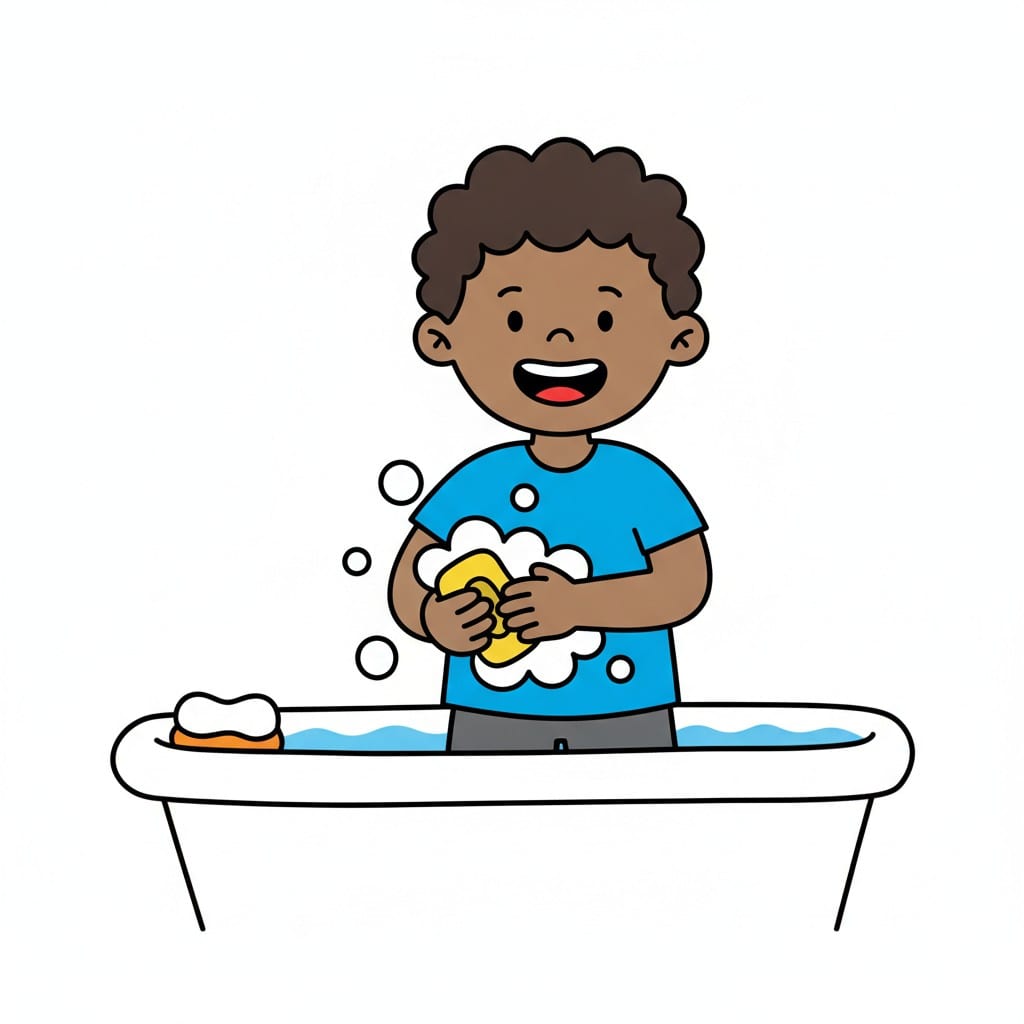 ♂
♂Washing in the bath
A happy boy soaps himself with a sponge in a bathtub with suds around him.
 ♀
♀Washing body
A woman wearing a shower cap and towel washes her body with two sponges, with suds and water droplets around.
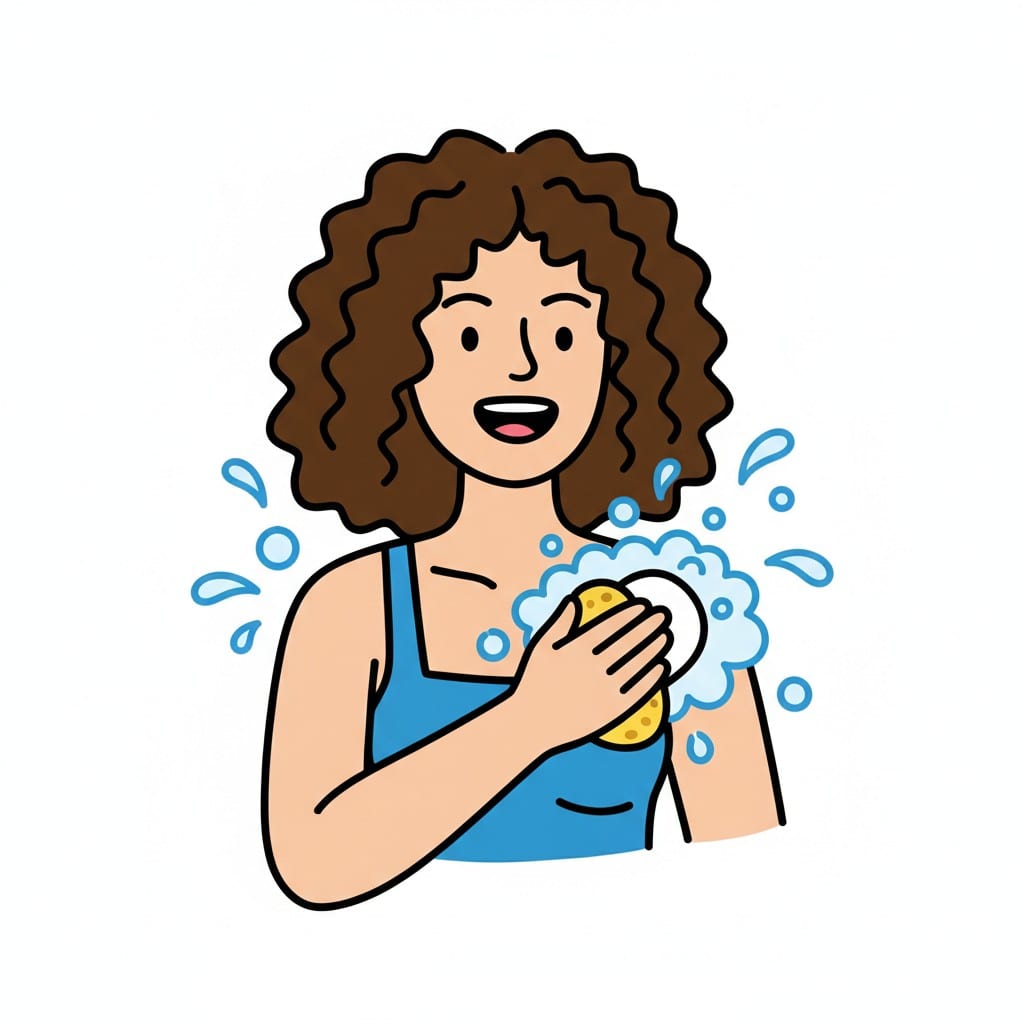 ♀
♀Wash body
A woman washes her body with a sponge and soap, with water splashes.
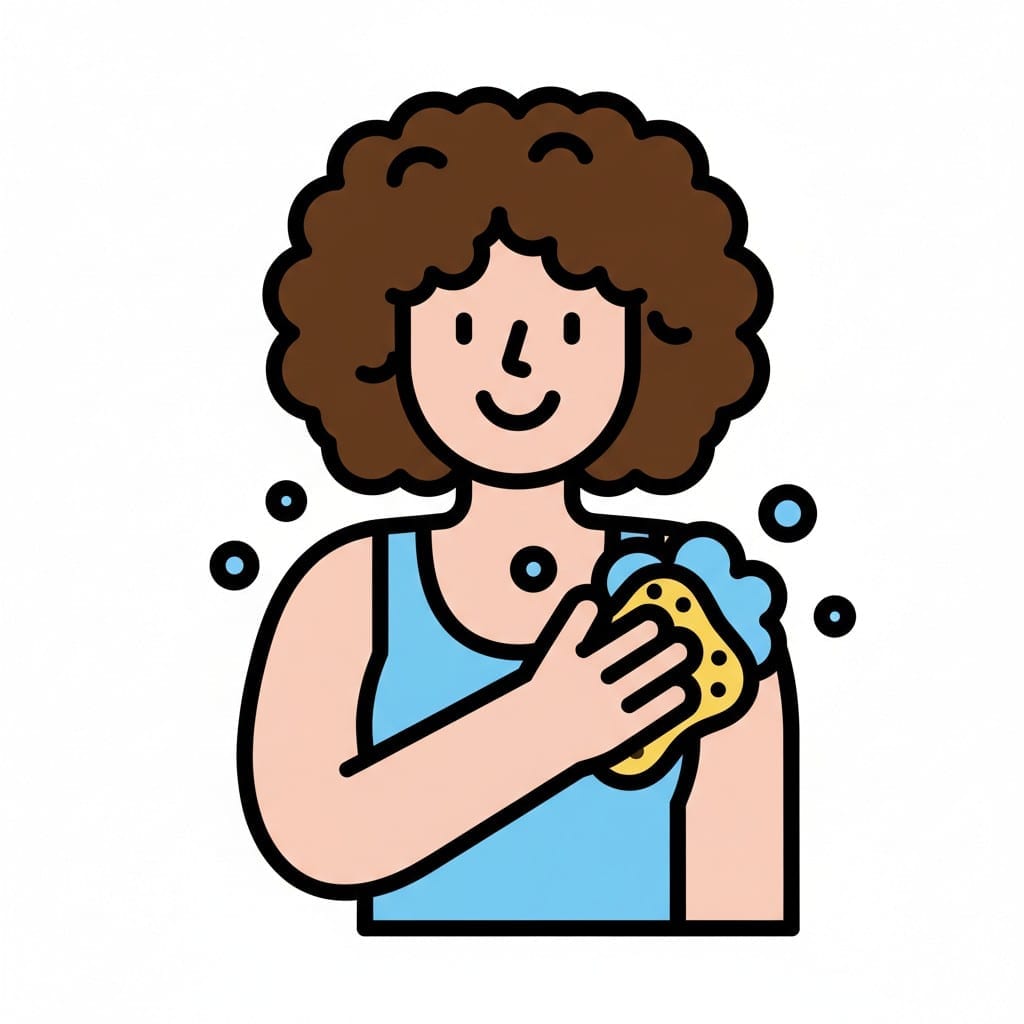 ♀
♀Wash body
A woman washes her body with a sponge and soap, with bubbles.
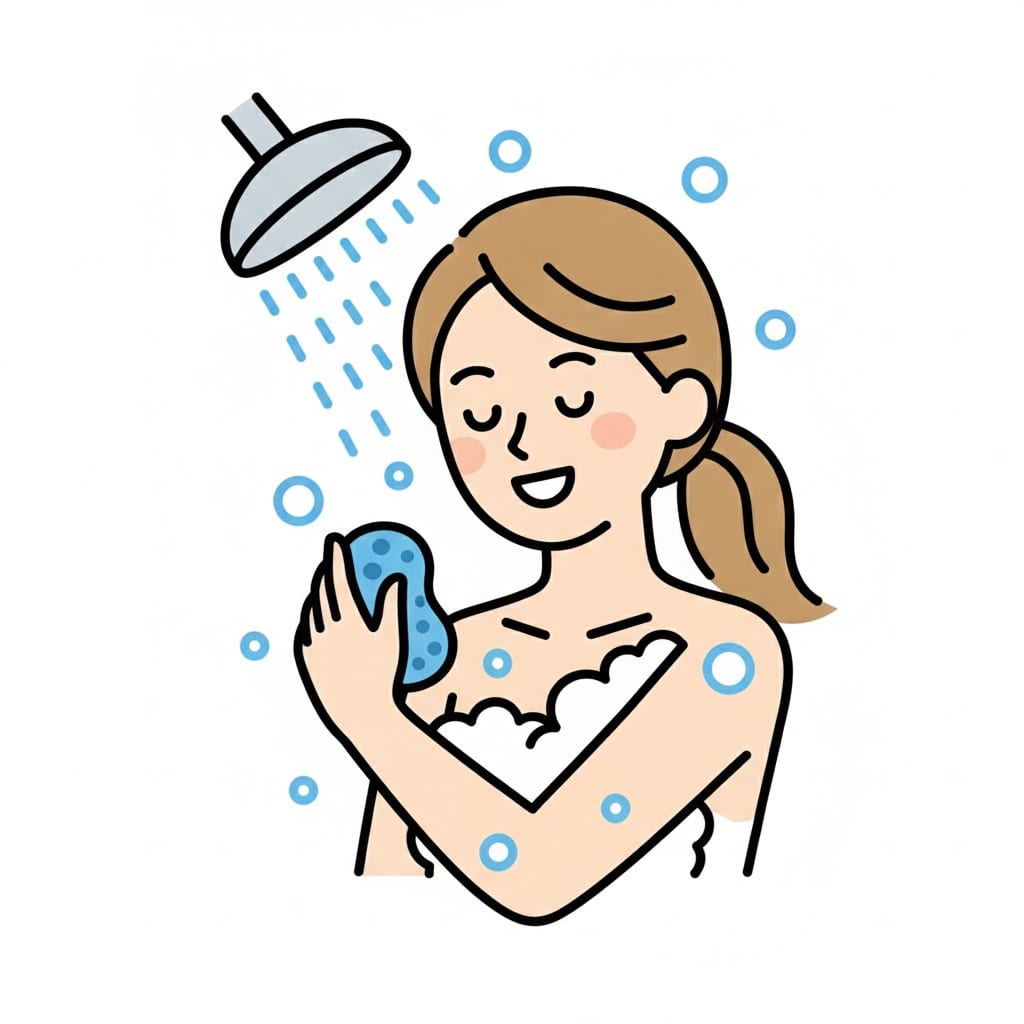 ♀
♀Woman washing her shoulder with a sponge
Under a running shower head, a woman with a ponytail scrubs her shoulder with a blue sponge as bubbles float around her.
About this visual support
Washing the body is the activity where sensory input literally covers the whole body. Soap texture, water temperature, the feel of the cloth, a hand that has to touch skin – it's a rich programme to handle all at once. For many kids, the resistance isn't about cleanliness but about the number of simultaneous signals.
A picture sequence lets the body be tackled in pieces. Shoulders first, then arms, then belly, then back, then legs, feet last. Each part becomes a defined zone, not an endless field. When the child can see exactly where the next stroke is coming, they can brace for the feeling before it arrives, which dials down the reactivity.
Try letting the child hold the cloth themselves for the parts that feel most loaded, and you take the rest. Control over your own pressure makes a huge difference. In Routined you can save two versions of the body wash – a short one for hectic mornings, a longer one for calm evenings – and let the child pick which fits today.
Use this image in a schedule
Build your own visual schedule with this image and download it as a print-ready PDF. Completely free.
More similar visual supports
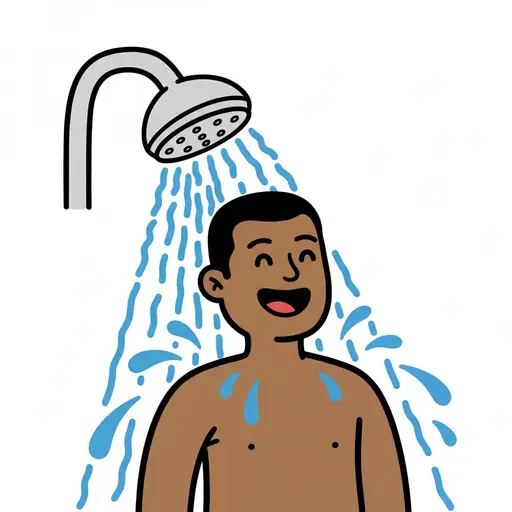
Shower child
An illustration of a boy with soap on his body, holding a sponge and a towel, st...

Bath towel
A rolled-up blue bath towel.
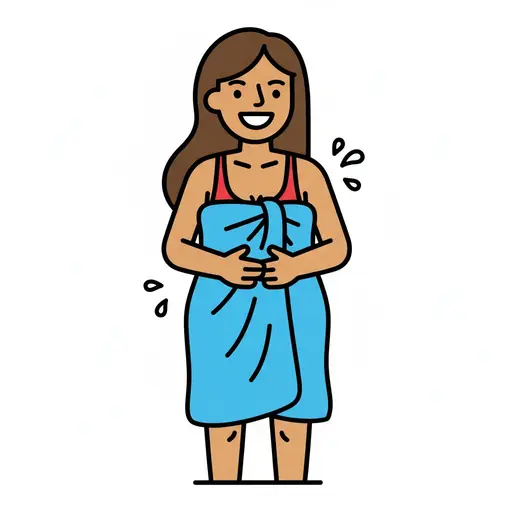
Dry your body
A woman has a towel wrapped around her body after a shower.
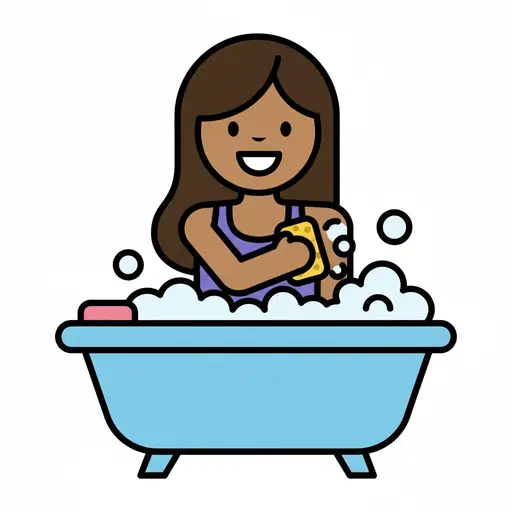
Bathe
A smiling girl sits in a bathtub full of foam and washes her arm with a yellow s...
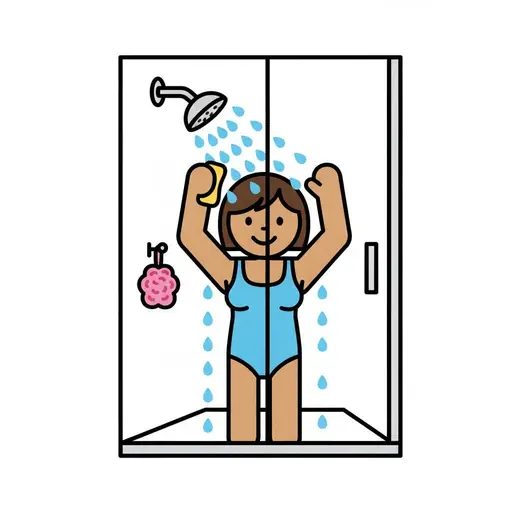
have a shower
A girl in a swimsuit stands in a shower cubicle with her arms raised and a spong...
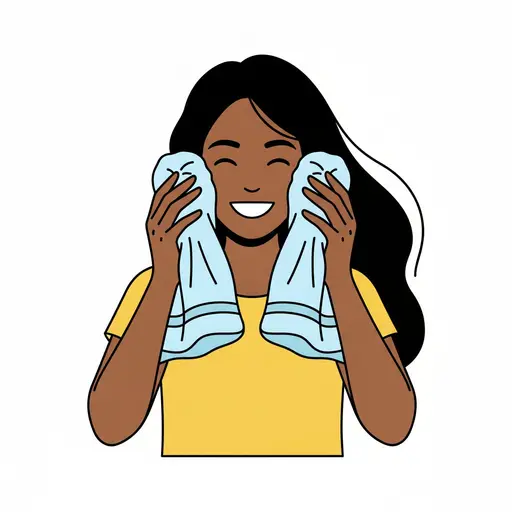
Use towel
A woman pats her face dry with a light blue towel.
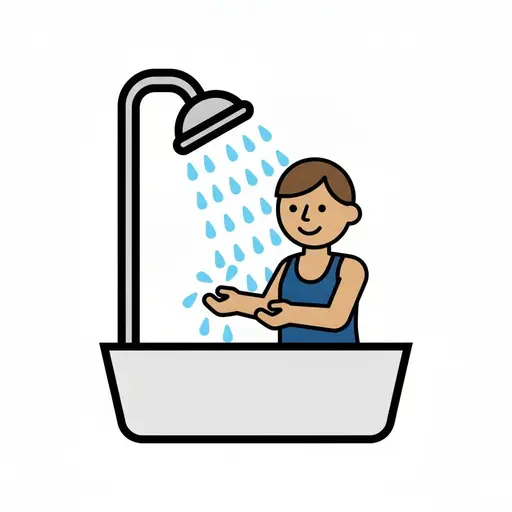
Shower
A child stands in the bathtub holding out their hands under the shower spray.
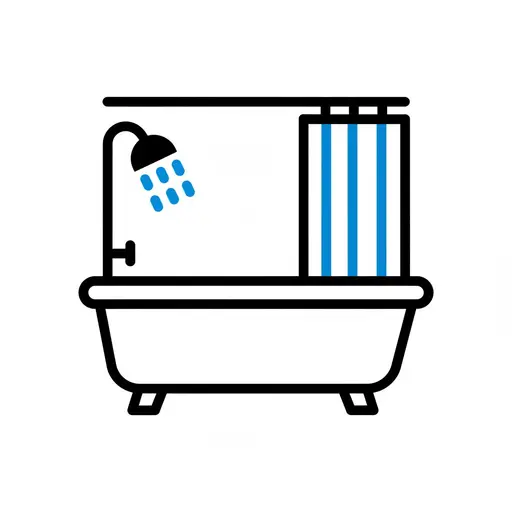
Bath or shower
An illustration of a bathtub with a shower head spraying water and a blue shower...
This visual support in other languages
Take the visual supports with you
In Routined you build schedules from these pictures, add timers and voice instructions, and your child follows the day on their own.


* 14-day free trial, then $2.39 a month or $20.99 a year (US pricing). Cancel anytime.