Animal behavior
A bear flipping a rock or a bird suddenly taking off is thrilling for two seconds, then the gaze wanders elsewhere. Giving the child words for what the animal does keeps the interest alive longer. Look at the pictures below.
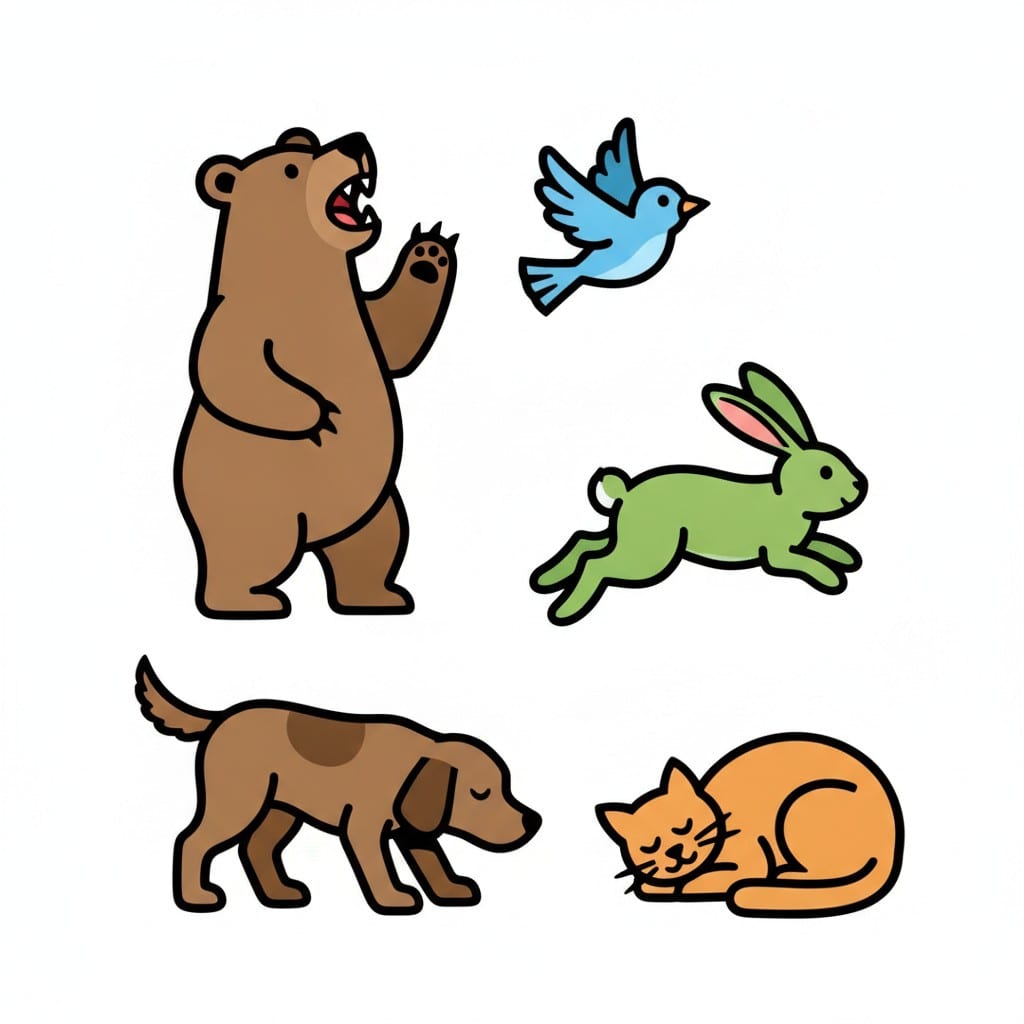
Animals showing different behaviors
Cartoon animals showing different behaviors: a bear roaring, a bird flying, a rabbit running, a dog sniffing and a cat sleeping.
About this visual support
Animals never behave the way you expect. The cat lies still for fifteen minutes and then bolts across the room, the bird pecks and pecks and suddenly lifts off. For a child waiting for a clear rule, there isn't one, and the curiosity drains away before anything real has happened.
This is where visual support helps, by giving the action a name. When the child can point to a card for eating, hiding or building a nest, the invisible pattern becomes visible. Instead of just seeing movement, the child gets an anchor to hang the observation on, and comparisons become possible: did the hare do the same thing as last time?
One concrete tip is to let the cards work as a small checklist at the zoo or the bird feeder. Before you walk up, pick three behaviours to look for, and each time the child spots one, tick it off together. Watching turns into a mission rather than a matter of chance.
To carry it on at home, you can build on the observations in the Routined app and save the child's own animal finds as recurring cards.
Use this image in a schedule
Build your own visual schedule with this image and download it as a print-ready PDF. Completely free.

More similar visual supports
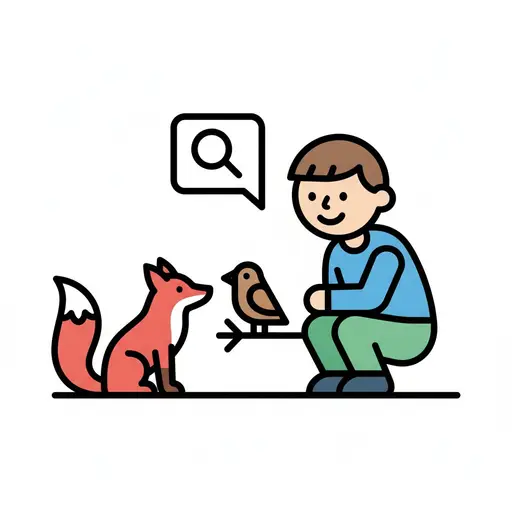
Study animals
A child crouches down and curiously observes a fox and a bird, with a magnifying...
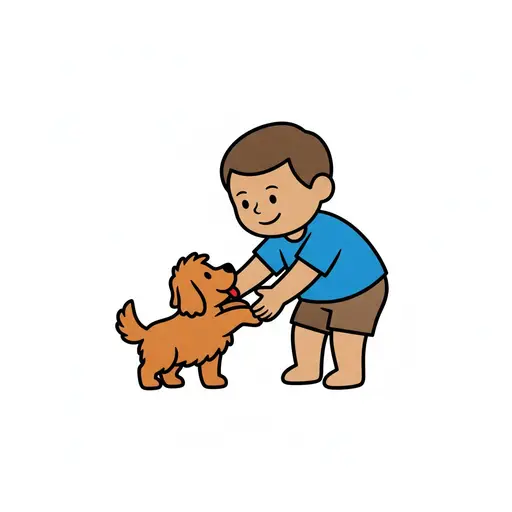
Get Rufus
A child bends down to play with a small brown dog standing on its hind legs.
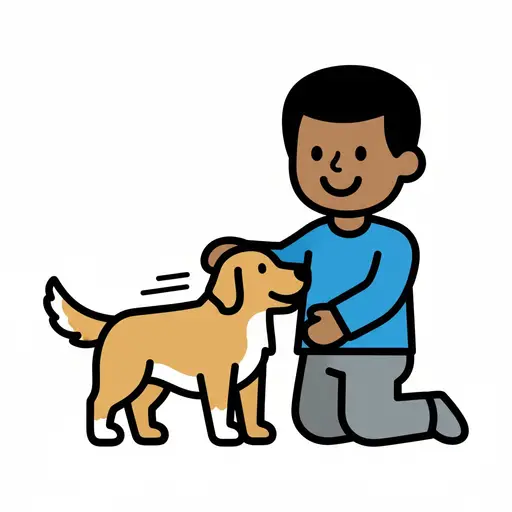
Pet the dog
A child kneels and pets a happy dog on the head.
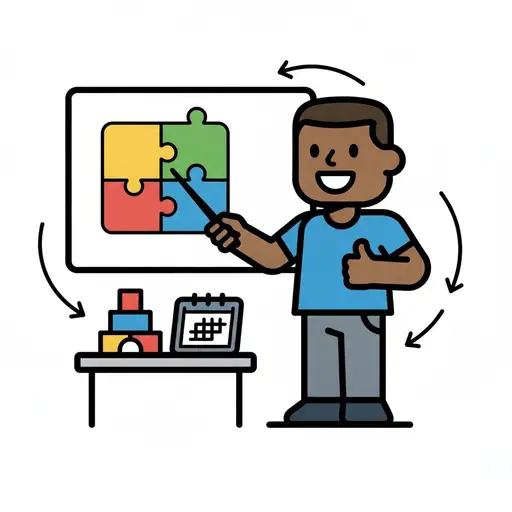
Activity Training
A man in a blue t-shirt points a stick at a whiteboard showing a four-piece puzz...
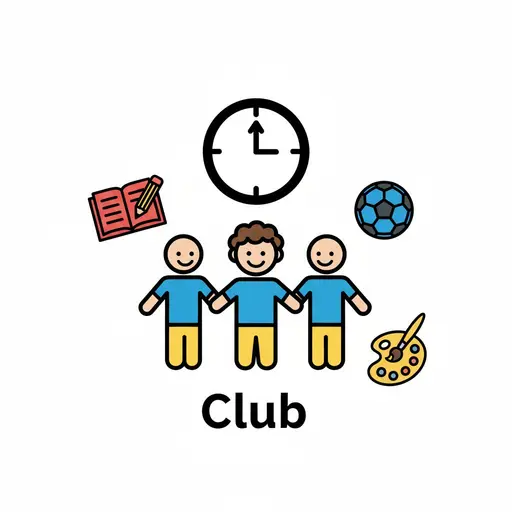
After school club
A symbolic image of an after school club with three people, a clock, a book, a s...
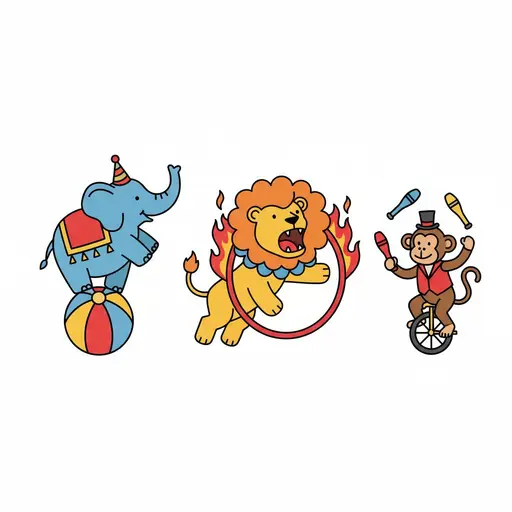
Circus animals
Three cartoon circus animals: an elephant balancing on a colorful ball, a lion j...
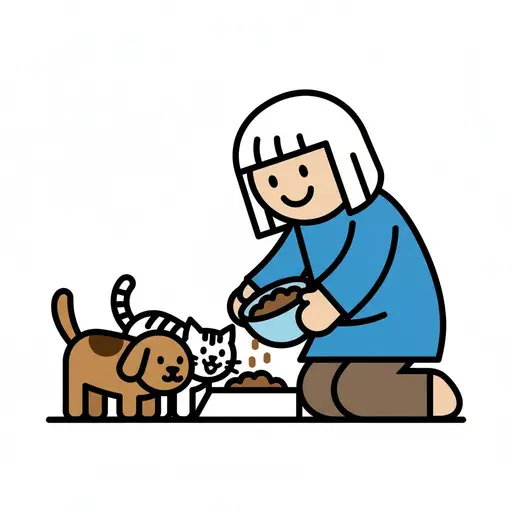
Feed animals
A person kneels, pouring food from a bowl into a pet bowl on the floor, in front...

Free
A person stands with arms raised, with two doves, an open padlock and an opened ...
Take the visual supports with you
In Routined you build schedules from these pictures, add timers and voice instructions, and your child follows the day on their own.


* 14-day free trial included for new users.