Circus animals
A circus is light, sound, smell and movement all at once, one of the few places that lands on every sense in the same second. The visual support below prepares your child for what actually happens in the ring, so the impressions become recognition rather than shock.
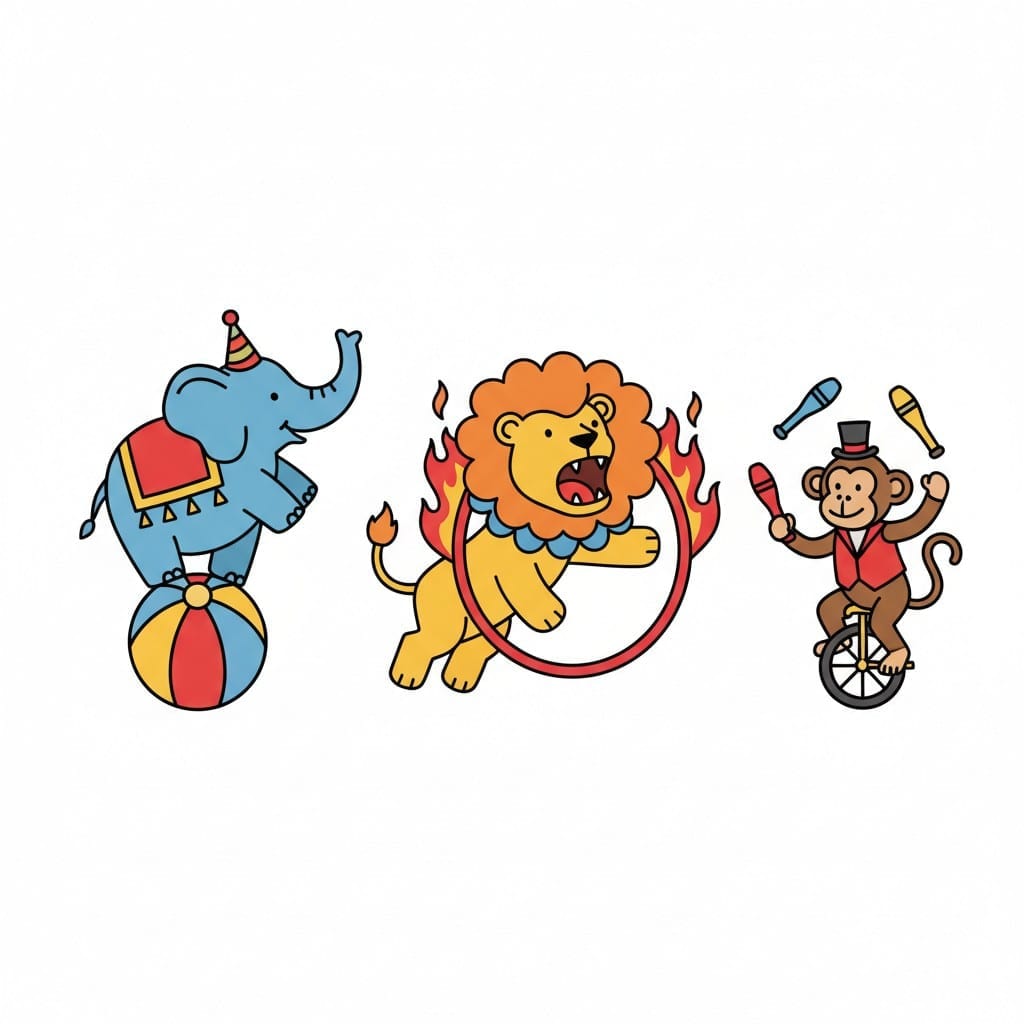
Circus animals
Three cartoon circus animals: an elephant balancing on a colorful ball, a lion jumping through a fiery hoop, and a monkey riding a unicycle while juggling.
About this visual support
Big drum, applause, stage smoke and an elephant that suddenly appears from behind a curtain. A circus is designed for surprise, and that is precisely the issue if a child already has a low tolerance for unexpected input. The animals are not the problem, it is that the brain cannot sort what is happening fast enough.
Going through pictures of elephants, horses, sea lions and maybe a clown before the show builds an internal list of what is coming. When the animals enter the ring, they are no longer unknown, they are already ticked off. Attention can then go to the experience itself rather than to managing the surprise.
A practical tip: do a brief walk-through on the way there and slip one of the cards into your pocket. When the room gets too much, your child can look at the picture of the calmest part, the sea lion, the pony, and rest their eyes on something steady. For children who overload easily in sensory-rich environments, a visual anchor like this can decide whether you leave at the interval or stay to the end. Routined lets you reuse the same setup for other outings.
Use this image in a schedule
Build your own visual schedule with this image and download it as a print-ready PDF. Completely free.

More similar visual supports
Game
Two hands rolling dice and moving pieces on a colorful board game.
Play cards
A hand holds a fan of cards while another hand lays down an ace of hearts.
Play games
Holding a controller, a girl with curly hair plays in front of a television show...
Song
Illustration of musical notes, sound waves, and lips, representing a song.
Active play
A girl jumps with a basketball in a playground with a slide and swings.
Activities
A child surrounded by icons for a book, paint palette, ball and building block.

Activity
Inside a dashed circle a girl runs along holding a paintbrush in one hand and a ...
After school club
A symbolic image of an after school club with three people, a clock, a book, a s...
Take the visual supports with you
In Routined you build schedules from these pictures, add timers and voice instructions, and your child follows the day on their own.


* 14-day free trial included for new users.