Dance practice
Practising the same steps day after day demands that progress shows up somewhere, otherwise motivation drains before the body can learn. Below is a visual sequence for dance practice where each part has its own place, so the small wins can stay visible between sessions.
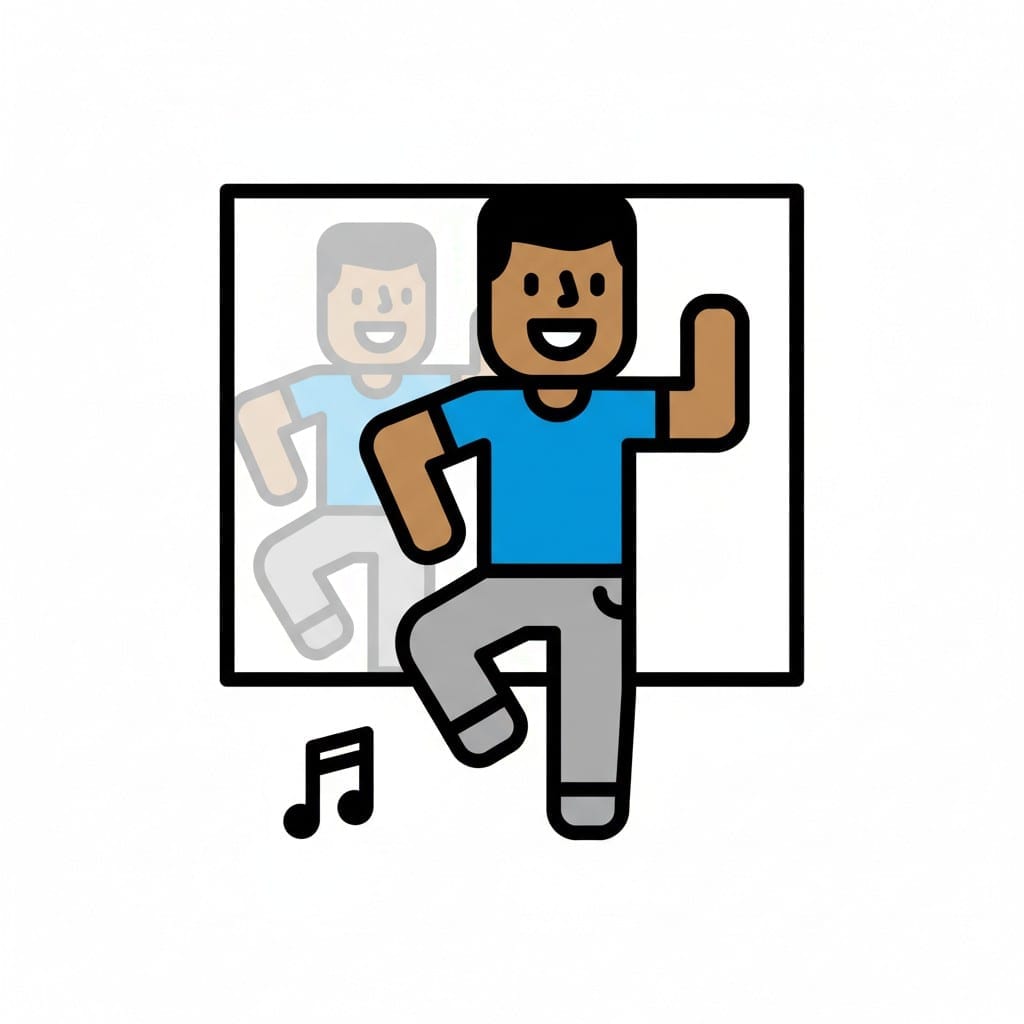 ♂
♂Boy dancing
A boy dances in front of a mirror, with music notes next to him.
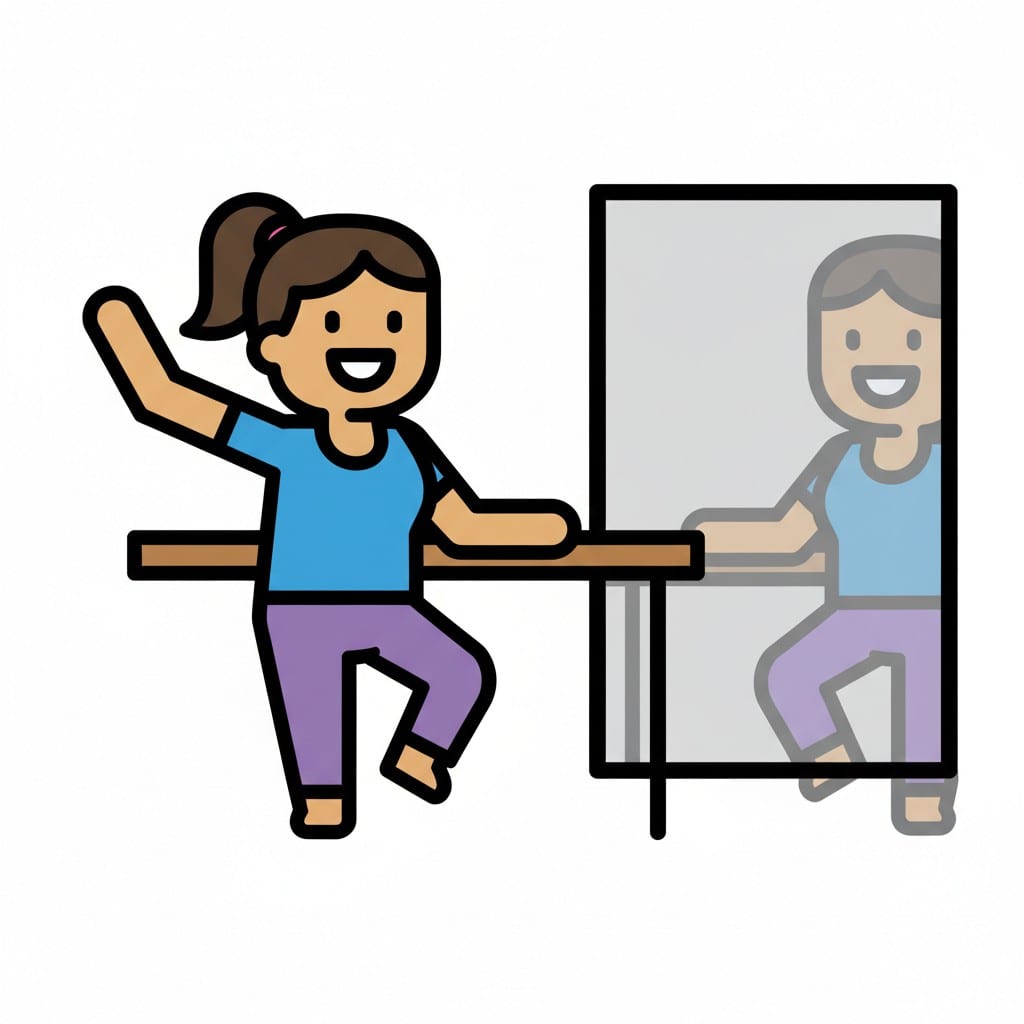 ♀
♀Girl at ballet barre
A girl practices ballet at a barre in front of a mirror.
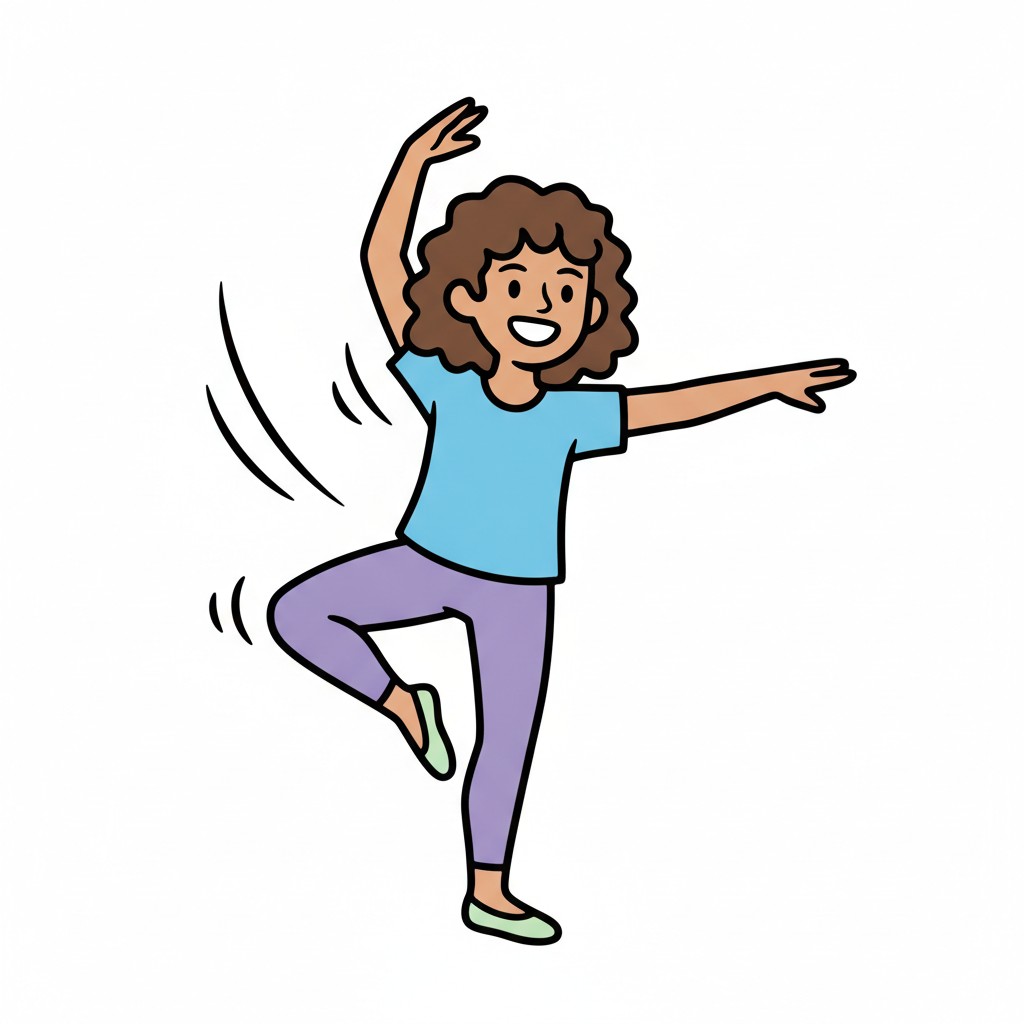 ♀
♀Practise dance steps
A girl practises a dance step with one arm raised and the other leg bent, with movement lines around her.
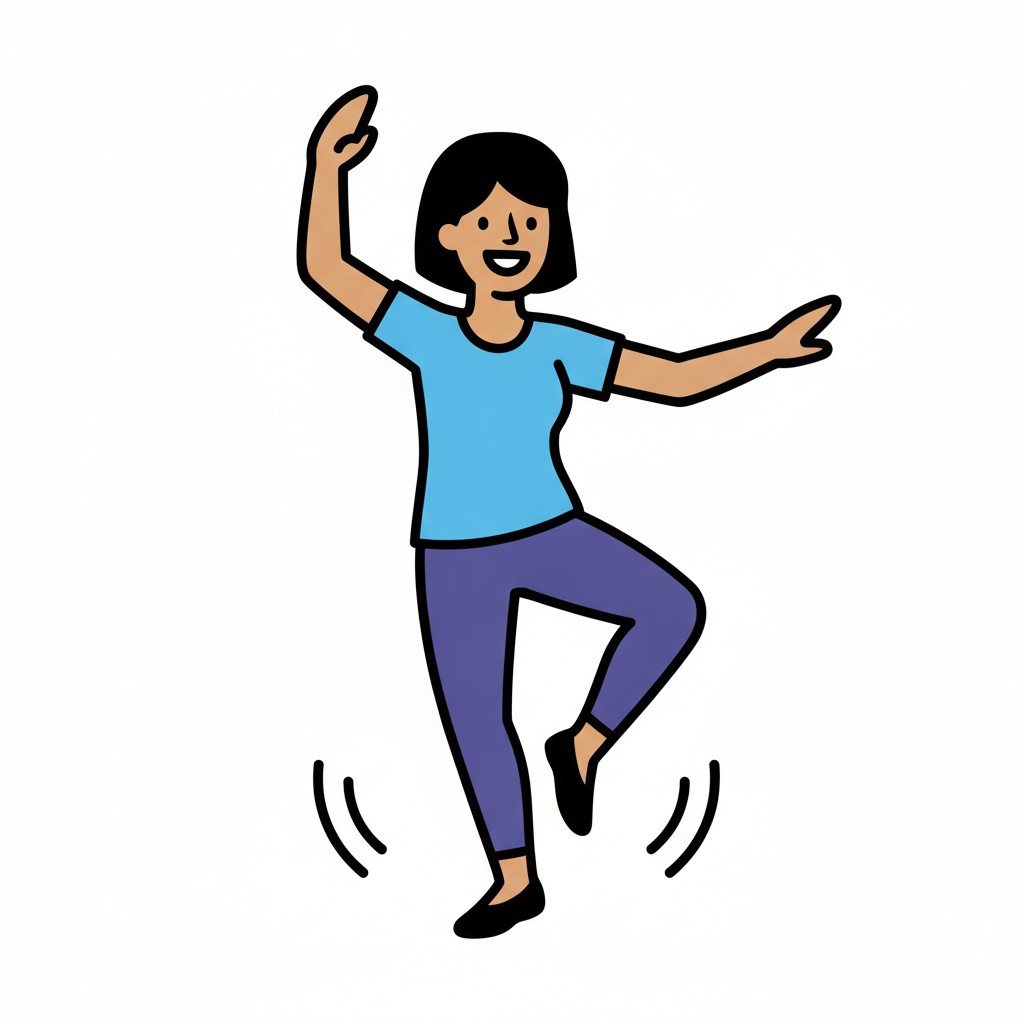 ♀
♀Dance practice with raised arm
A woman practises dance with one arm pointing up and one leg bent, with movement lines by her foot.
About this visual support
The hard part of dance practice is not the steps themselves but the gap between effort and result. Improvement arrives in weeks, while the body has to repeat the same move today, and tomorrow, and the day after. For many children that means motivation wavers long before the technique settles, turning every warm-up into a fight just to begin.
A visual sequence helps by making the invisible work visible. When warm-up, the move you are training right now, a short run-through and a cool-down each have their own card, the session breaks into pieces a child can finish. You can also mark which step was today's focus, so three sessions a week become three concrete wins instead of a shapeless lump of practice.
A concrete tip: film the last run-through once a week and watch it together at the start of the next session. The visual schedule then has a real-world counterpart, and the child sees that the body has actually learned something. If you also want to time each block and copy the session to the next day, you can lay it out in Routined and try fourteen days at no cost.
Use this image in a schedule
Build your own visual schedule with this image and download it as a print-ready PDF. Completely free.

More similar visual supports
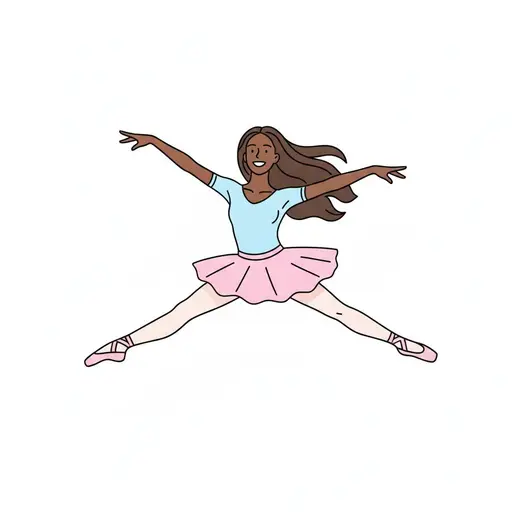
Ballet
A laughing dancer with long hair in a light blue top and pink tutu jumps with le...
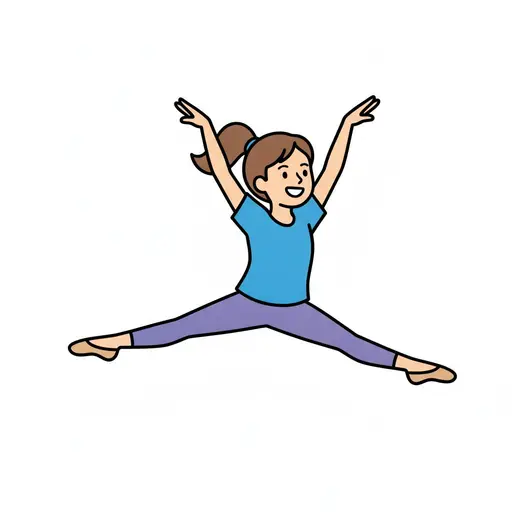
Dance leap
A smiling person with a ponytail in a blue t-shirt and purple trousers floats in...
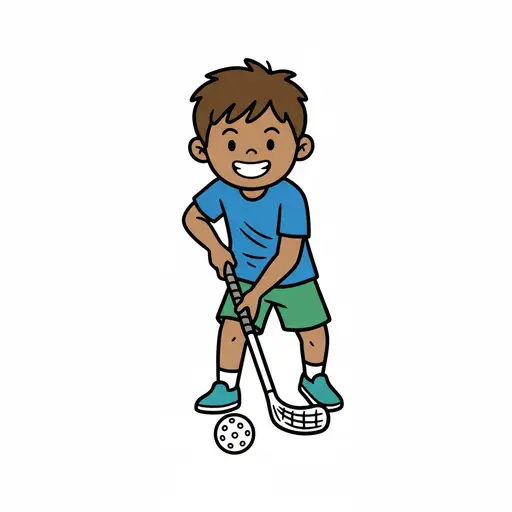
Floorball practice
A boy playing floorball with a stick and ball. He is wearing a t-shirt and short...
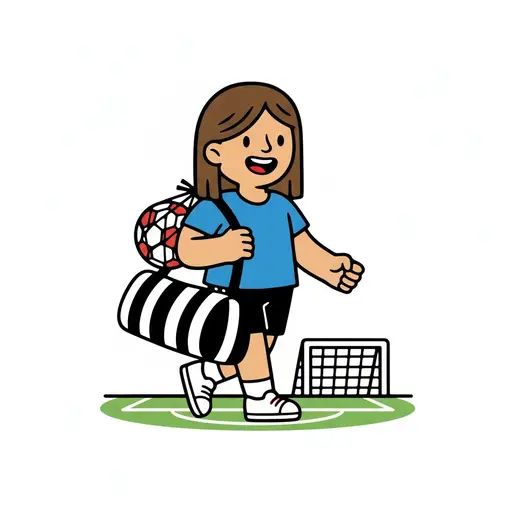
Go to practice
A child with a football and a bag walks across a pitch towards a goal.
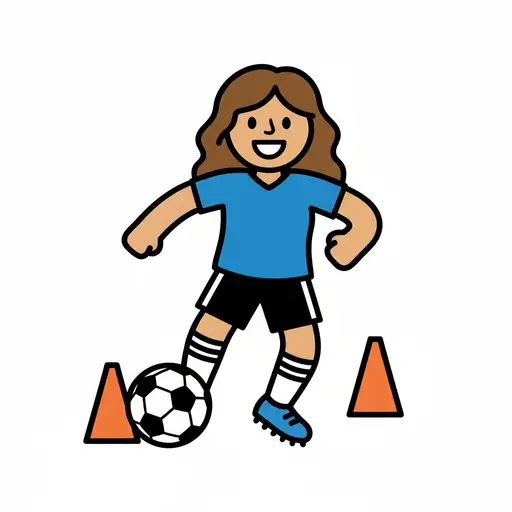
Kick-about
A girl dribbles a soccer ball between two orange cones on a white background.
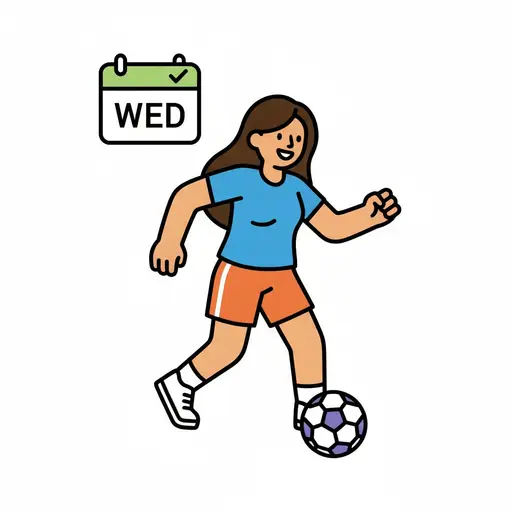
Sport
A smiling person in a blue top and orange shorts moves a football along, beneath...
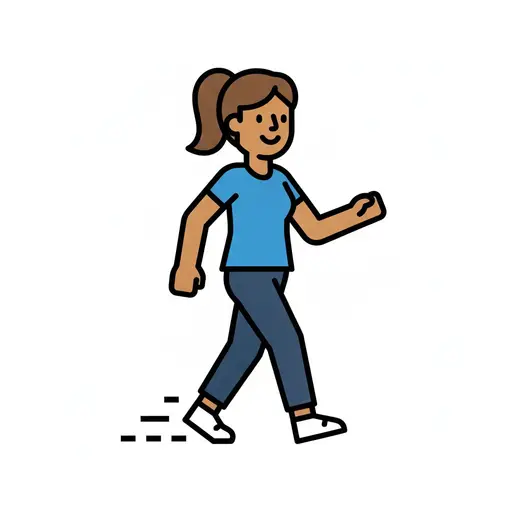
Take a walk
A woman with a ponytail strides forward in a blue t-shirt and dark trousers.
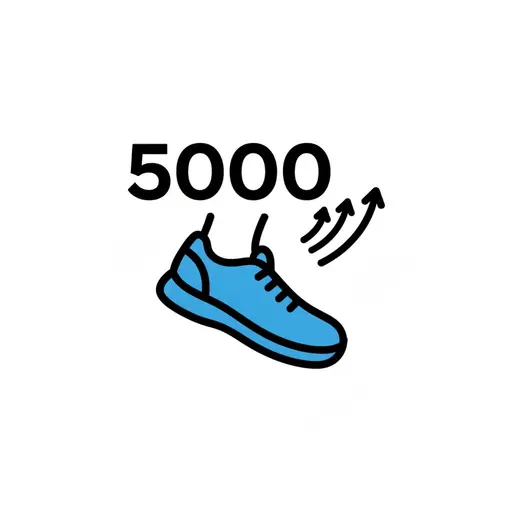
5000 Steps
A blue sneaker with the number 5000 and arrows showing movement.
Take the visual supports with you
In Routined you build schedules from these pictures, add timers and voice instructions, and your child follows the day on their own.


* 14-day free trial included for new users.