Sport
The hard part of sport is rarely the movement itself, but the minute before: thoughts about performance, comparison, the body's own signals. With the plan laid out in pictures, the inner negotiation is replaced by an outer structure. Find the visual support below.
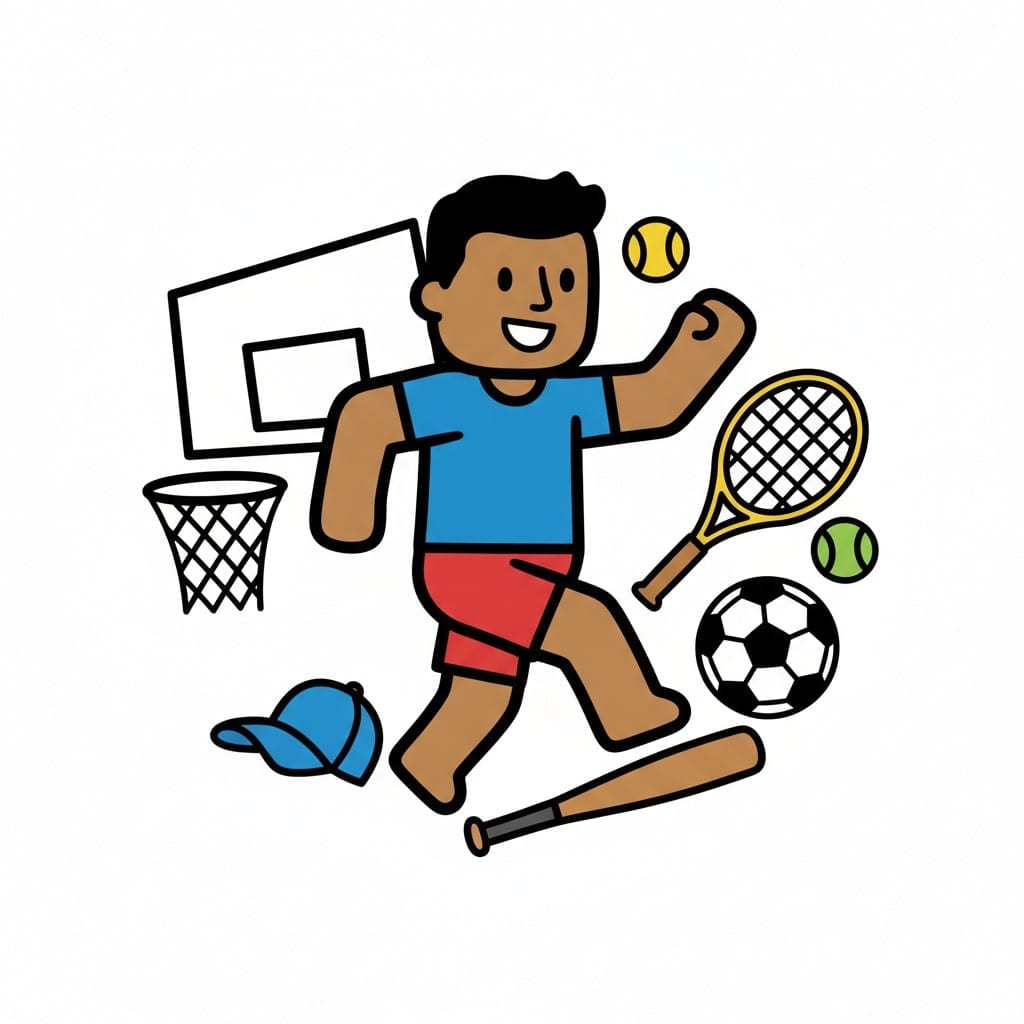 ♂
♂Boy playing sports
A happy boy running, surrounded by various sports equipment: a basketball hoop, a tennis racket, a soccer ball, a baseball bat, a baseball cap, a tennis ball, and a baseball.
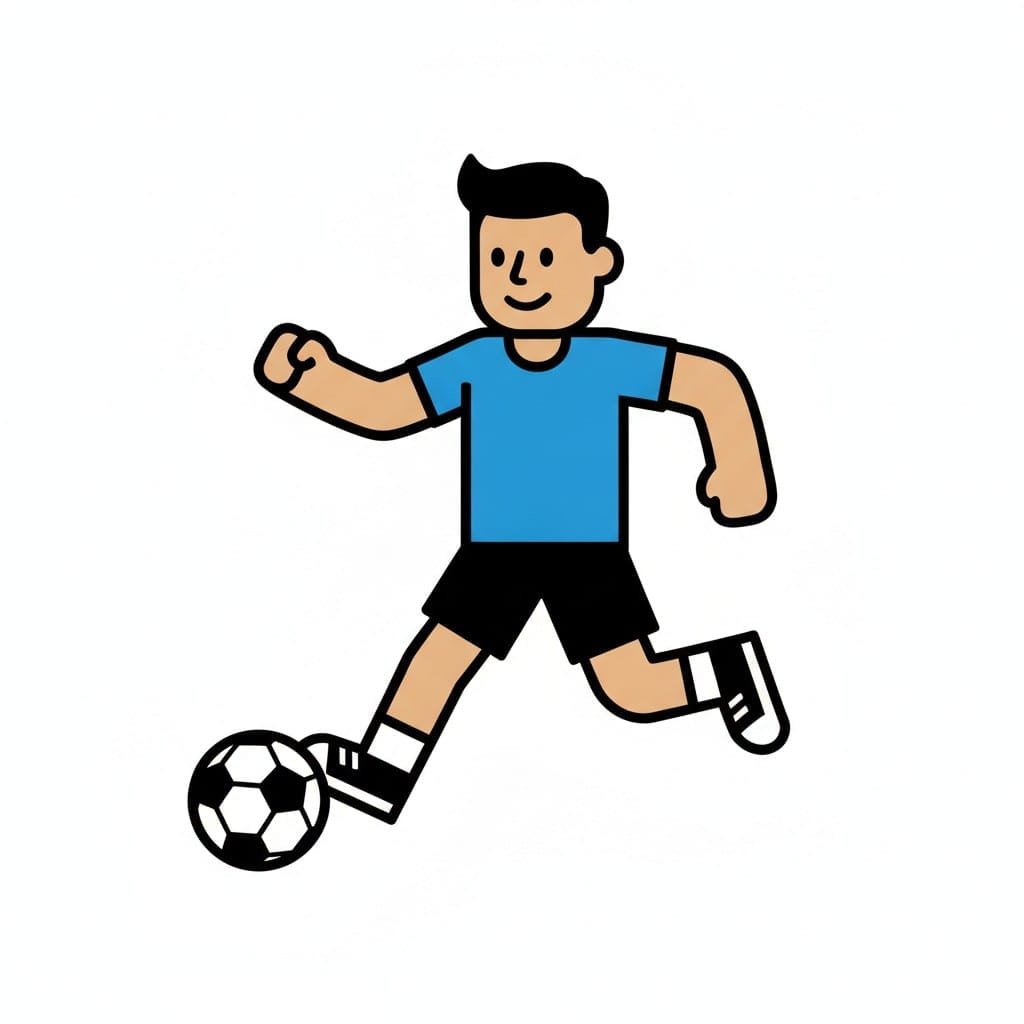 ♂
♂Person running with a football
A smiling person in a blue top and black shorts runs while moving a football along with their foot.
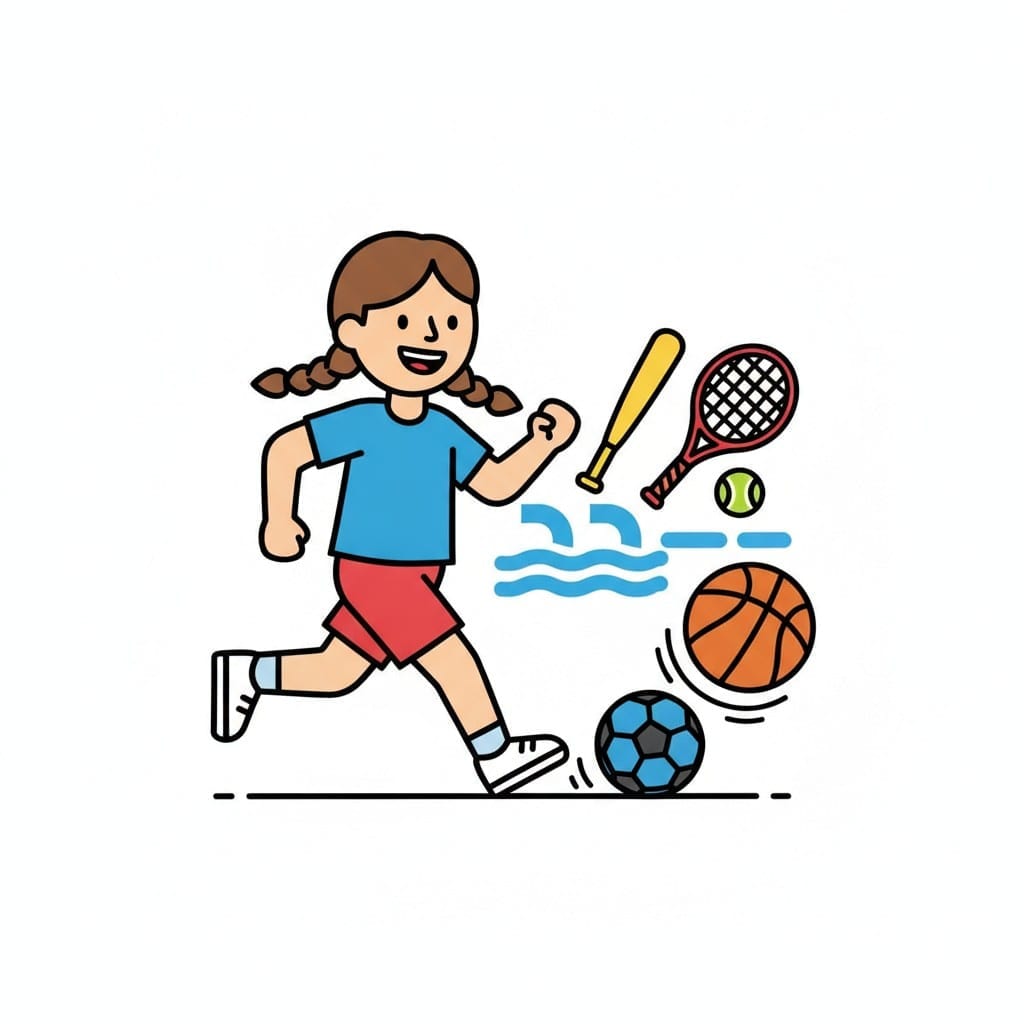 ♀
♀Girl running among sports symbols
A laughing girl with braids runs beside a football, a basketball, a tennis racket, a bat and wave symbols for swimming.
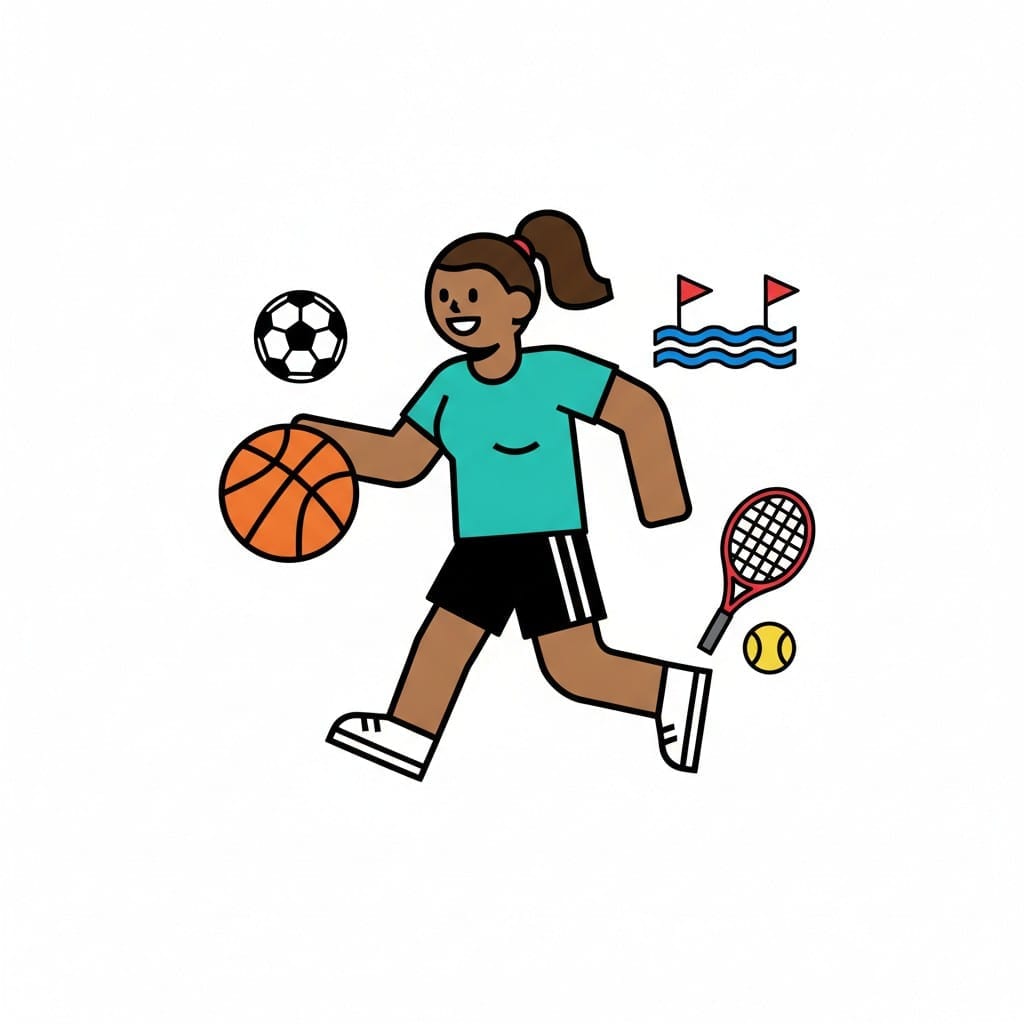 ♀
♀Girl dribbling a basketball
A smiling girl with a ponytail runs dribbling a basketball, surrounded by a football, a tennis racket with a ball and a swimming pool symbol.
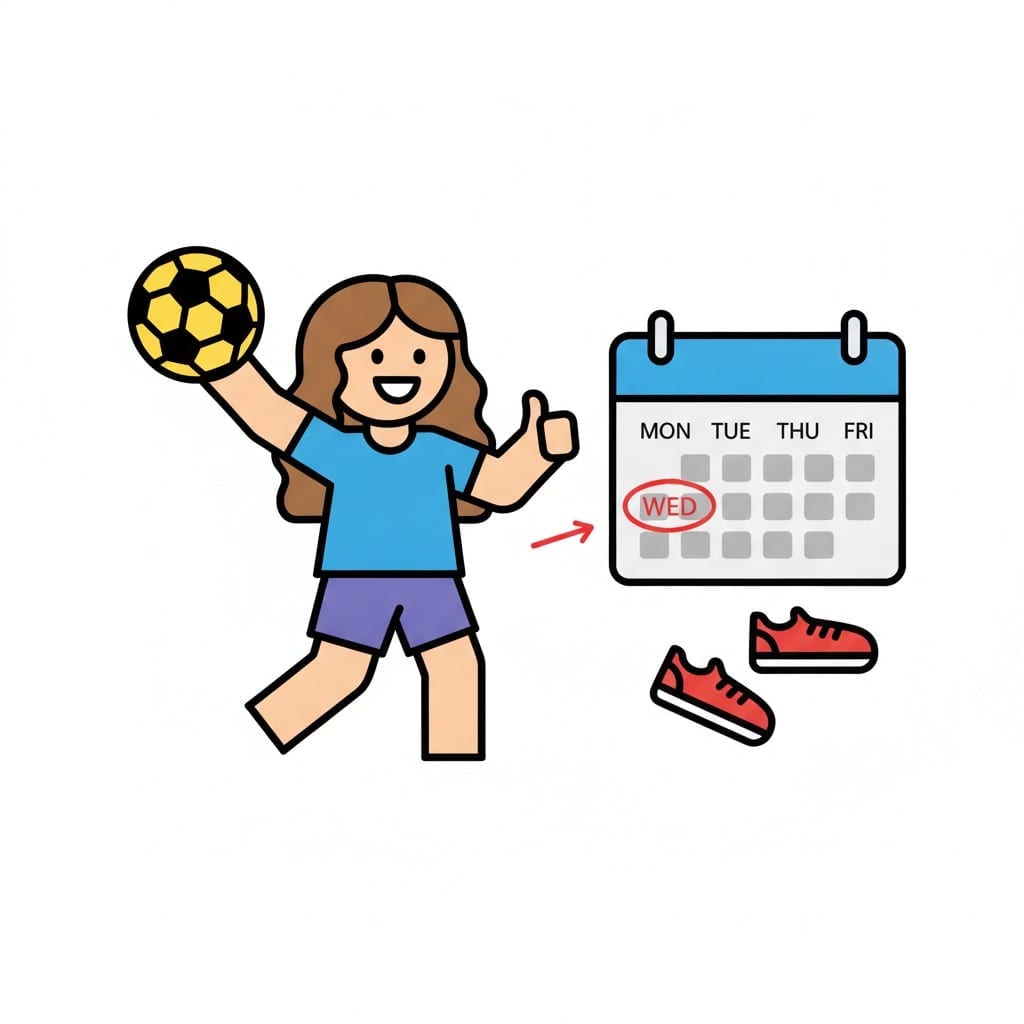 ♀
♀Person with a ball by the week calendar
A laughing person in sports clothes holds up a yellow and black ball beside a week calendar with WED circled, with a pair of red shoes below.
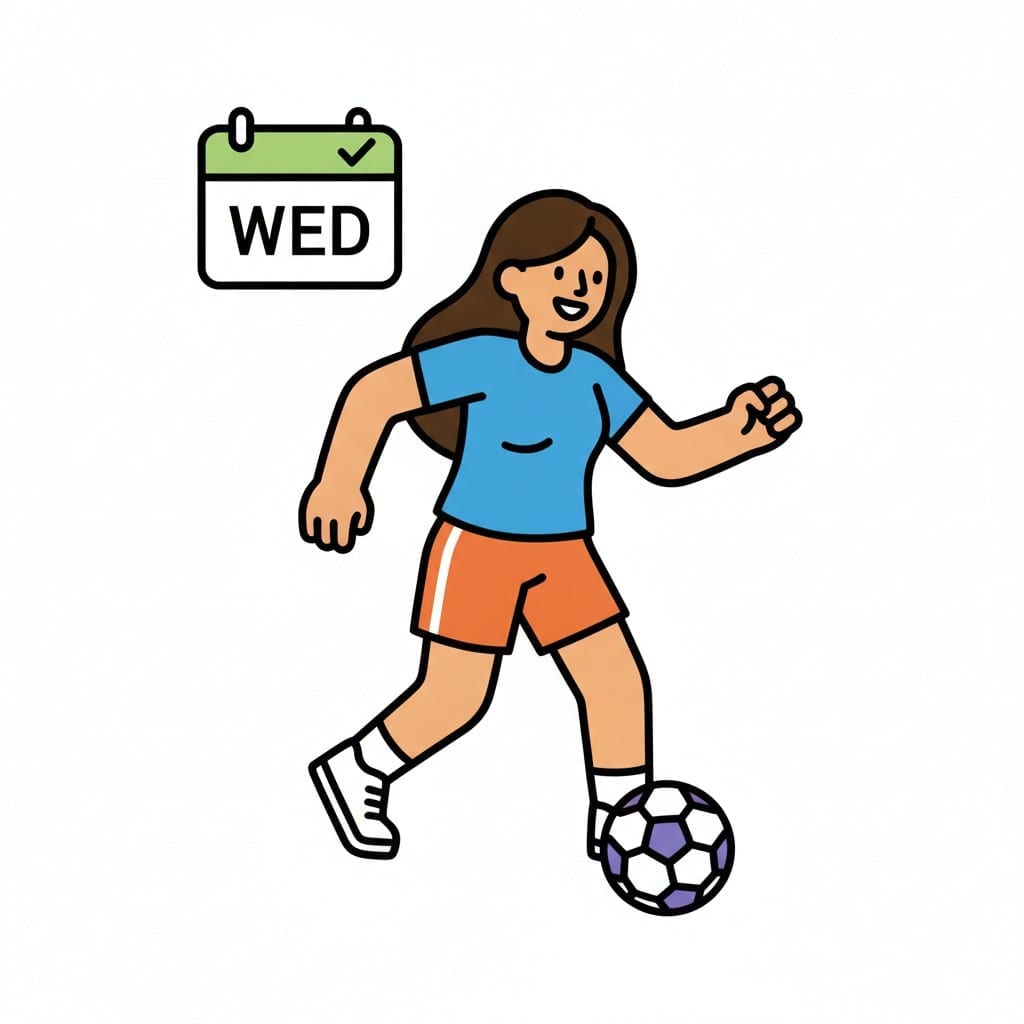 ♀
♀Person playing football on Wednesday
A smiling person in a blue top and orange shorts moves a football along, beneath a calendar marked WED with a tick.
About this visual support
Motivation for sport is about negotiation more than fitness. Before a child even moves, an internal debate is running: will this be embarrassing, will someone comment, how will my body feel afterwards? That debate costs more energy than the activity itself.
Visual support quiets the negotiation by making the outcome predictable. When the cards show a warm-up, a main activity and a wind-down, the child knows in advance that this is a bounded slot, not an open-ended demand. It is the difference between jumping into a lake and walking down the ladder from a jetty, same water, very different entry.
One concrete tip: let the child help pick one of the images in the sequence, for example the warm-up. Owning part of the plan shifts a bit of the performance feel out of the situation. Once the format is familiar, you can save the session as a recurring routine in Routined, so the start becomes as known as brushing teeth and the negotiation has less to push against.
Use this image in a schedule
Build your own visual schedule with this image and download it as a print-ready PDF. Completely free.

More similar visual supports
Move around
A person jogs forward in a green top and blue trousers.
5000 Steps
A blue sneaker with the number 5000 and arrows showing movement.
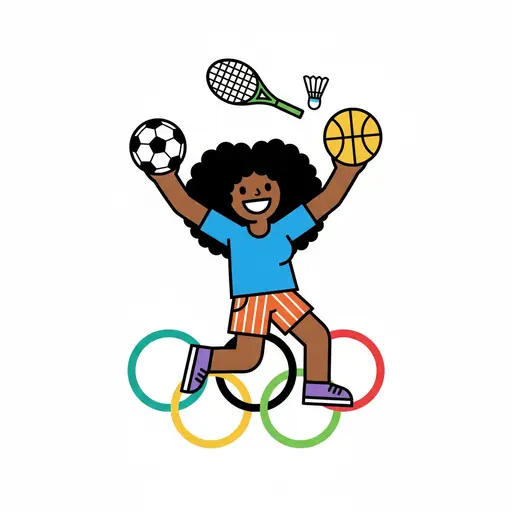
Active Time
A laughing person jumps holding a football in one hand and a basketball in the o...
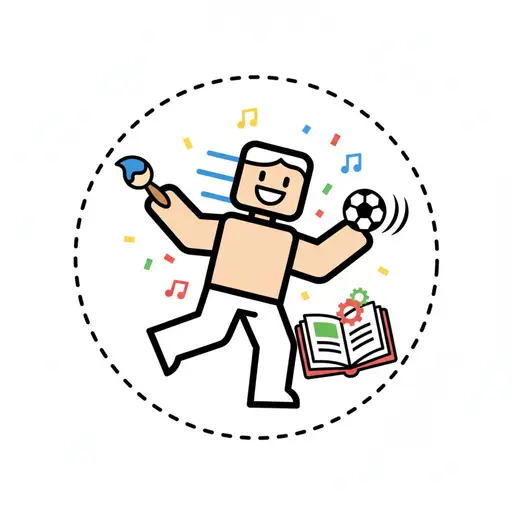
Activity
Inside a dashed circle a girl runs along holding a paintbrush in one hand and a ...
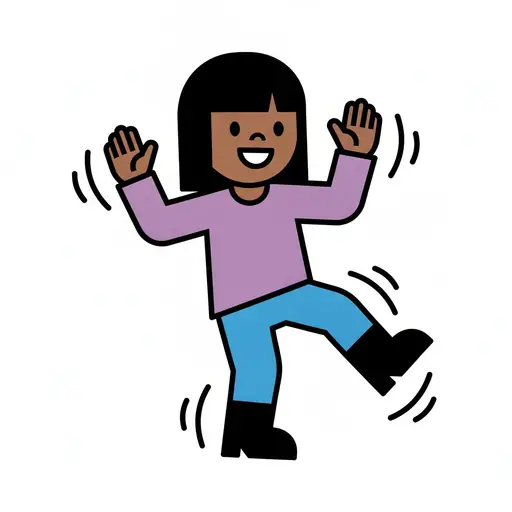
Dance
A girl dances with her arms raised and one leg lifted, with movement lines aroun...
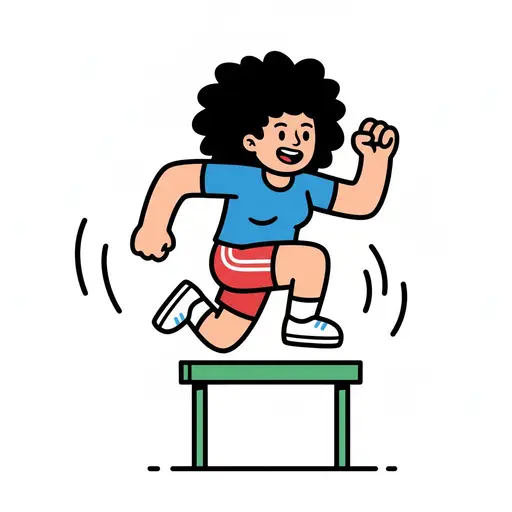
Exercise
Cartoon illustration of a woman in sportswear jumping over a green hurdle.
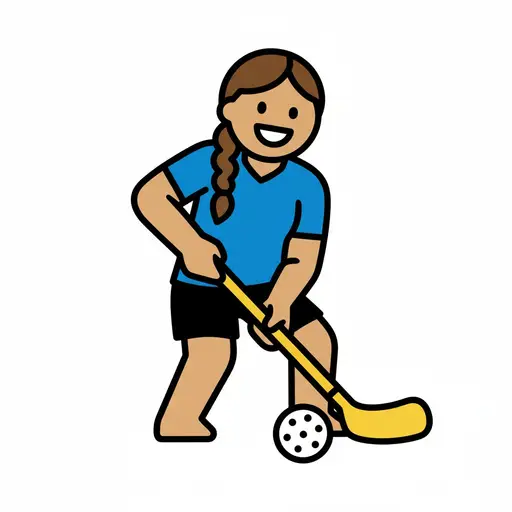
Floorball
A person with braided hair playing floorball with a stick and ball.

Football
A classic football patterned with black and white panels.
Take the visual supports with you
In Routined you build schedules from these pictures, add timers and voice instructions, and your child follows the day on their own.


* 14-day free trial included for new users.