Active Time
Organised active time carries a whole set of invisible codes: when to cheer, when to swap, what to say to the referee, how to queue. Visual support makes those codes visible before the child has to read them on the fly. The steps are below.
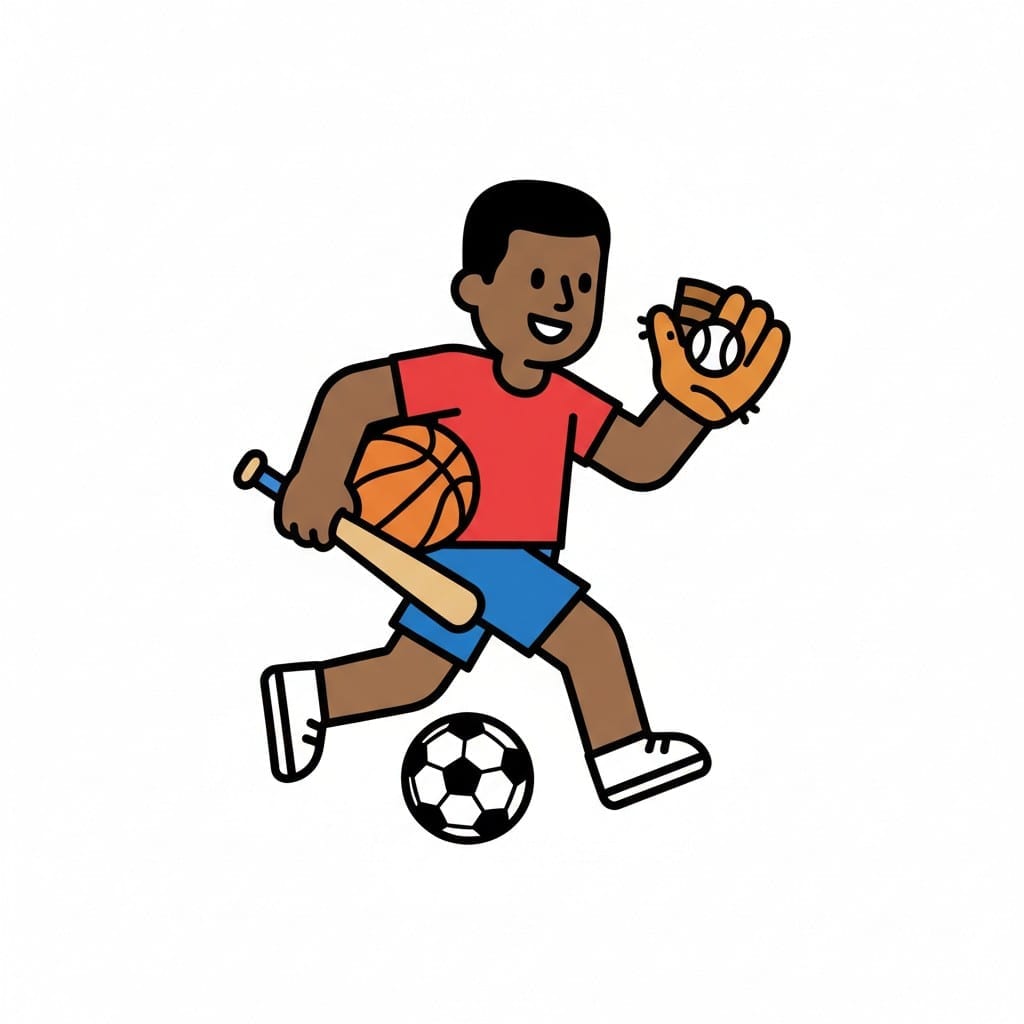 ♂
♂Playing sports
Illustration of a young person running, holding a basketball, a baseball bat, a baseball glove with a ball, and with a soccer ball at their feet, representing sports activities.

Sports equipment
An illustration showing various sports equipment, including a red baseball bat, a green baseball glove with a white baseball, a black and white soccer ball, an orange basketball, a blue and white tennis racket, and a yellow tennis ball.
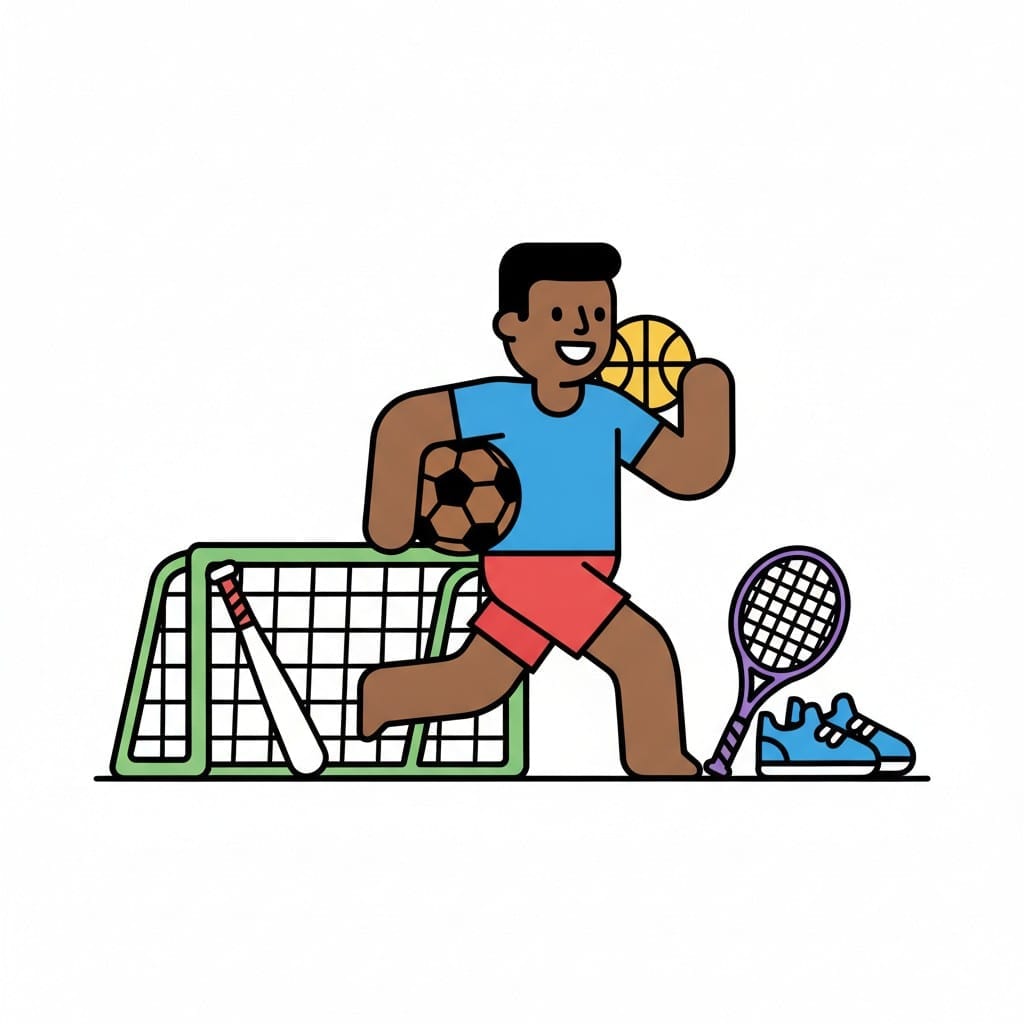 ♂
♂Person with a football and a basketball
A smiling person in sports clothes holds a football and a basketball beside a green goal, a bat, a tennis racket and a trainer.
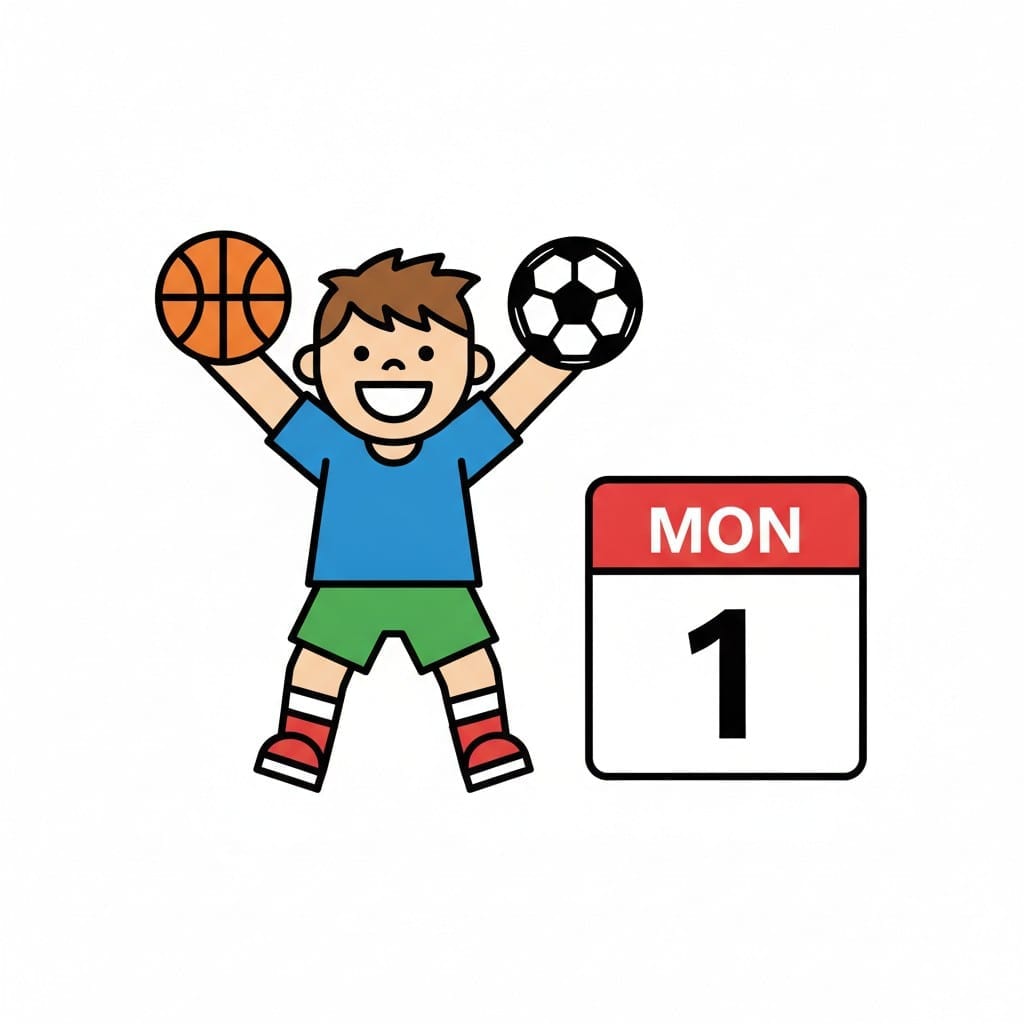 ♂
♂Boy with two balls by the Monday calendar
A laughing boy in sports clothes holds up a basketball in one hand and a football in the other, beside a calendar showing MON and the number 1.
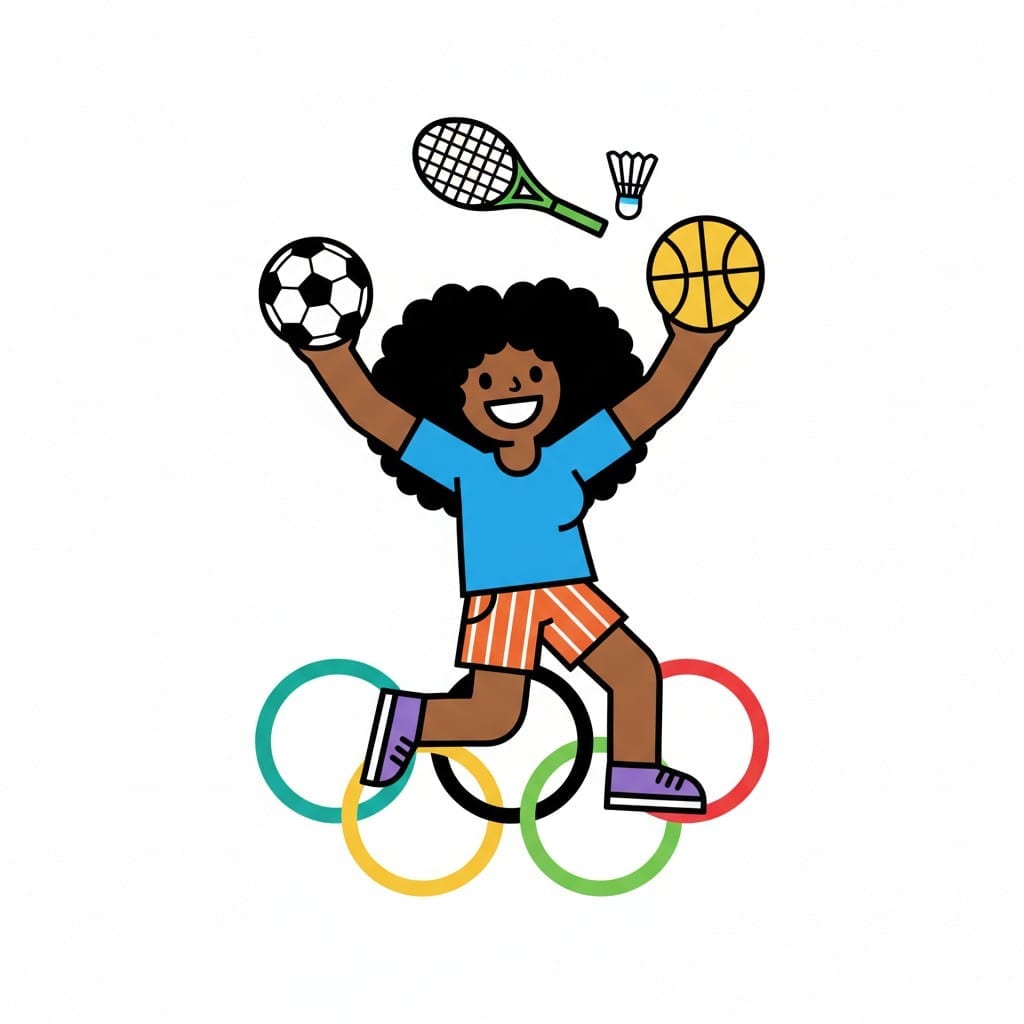 ♀
♀Person jumping with balls in their hands
A laughing person jumps holding a football in one hand and a basketball in the other, above coloured rings and beneath a racket with a shuttlecock.
About this visual support
What often makes organised active time hard is not the movement itself but everything around it: line-ups, swaps, fast verbal instructions from a coach who is already thinking two steps ahead. A child who misses those signals ends up on the edge of the group even when the body can do the task.
Visual support levels the field by showing the chain in advance. The cards walk through roll call, warm-up, position, first drill, break, next drill, ending. With the order already seen, the child is not blindsided by transitions, which is exactly where misunderstandings tend to land. This is especially useful for kids with ADHD, but it helps every newcomer.
One tip tied to organised active time: go through the cards on the way there, not at the venue. That way the expectations land before the noise, the other kids and the coach's voice take the attention. Once the format settles, you can save the sessions in Routined so the same sequence repeats before every practice and the threshold to walk in drops.
Use this image in a schedule
Build your own visual schedule with this image and download it as a print-ready PDF. Completely free.

More similar visual supports

Activity
Inside a dashed circle a girl runs along holding a paintbrush in one hand and a ...
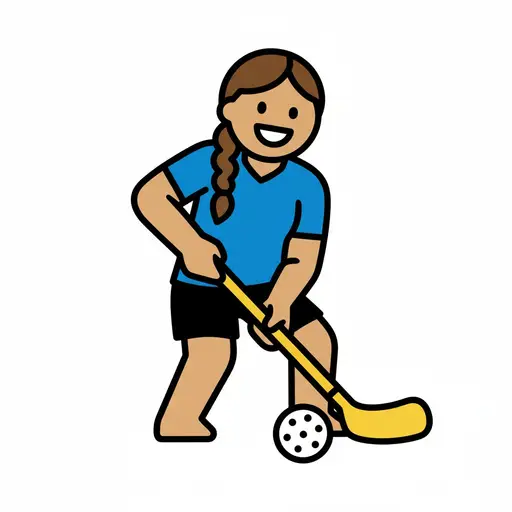
Floorball
A person with braided hair playing floorball with a stick and ball.

Football
A classic football patterned with black and white panels.
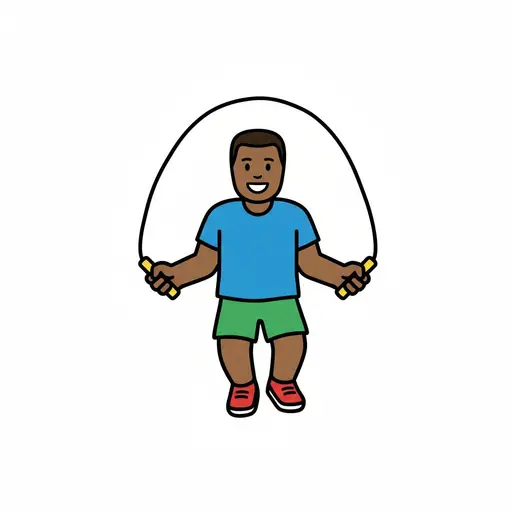
Jump rope
A boy jumping rope.
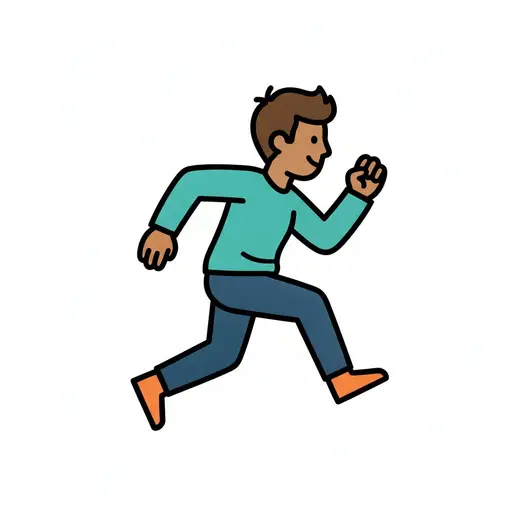
Move around
A person jogs forward in a green top and blue trousers.
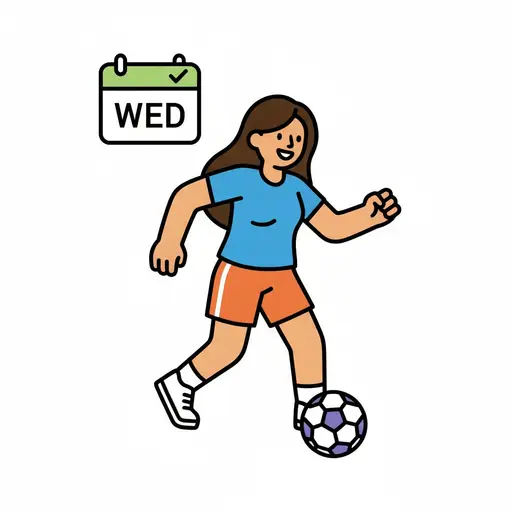
Sport
A smiling person in a blue top and orange shorts moves a football along, beneath...
Workout
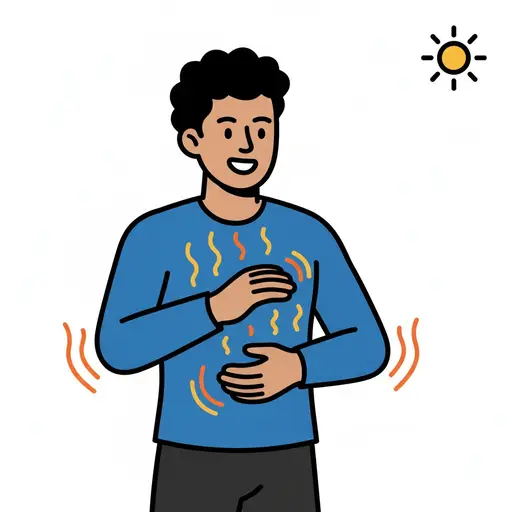
A person holds their hands to their body with warmth lines around them and a sun...
5000 Steps
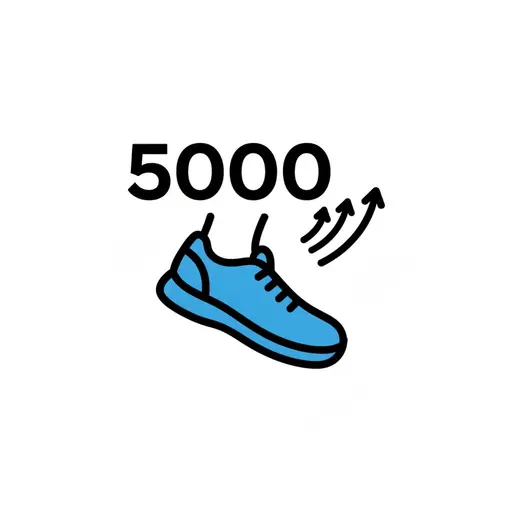
A blue sneaker with the number 5000 and arrows showing movement.
Take the visual supports with you
In Routined you build schedules from these pictures, add timers and voice instructions, and your child follows the day on their own.


* 14-day free trial included for new users.