Done
Long after the puzzle has been packed away, a child's head can still be sitting inside what just happened. A clear marker for done helps them leave the activity behind, and the steps here below show what an ending can look like.
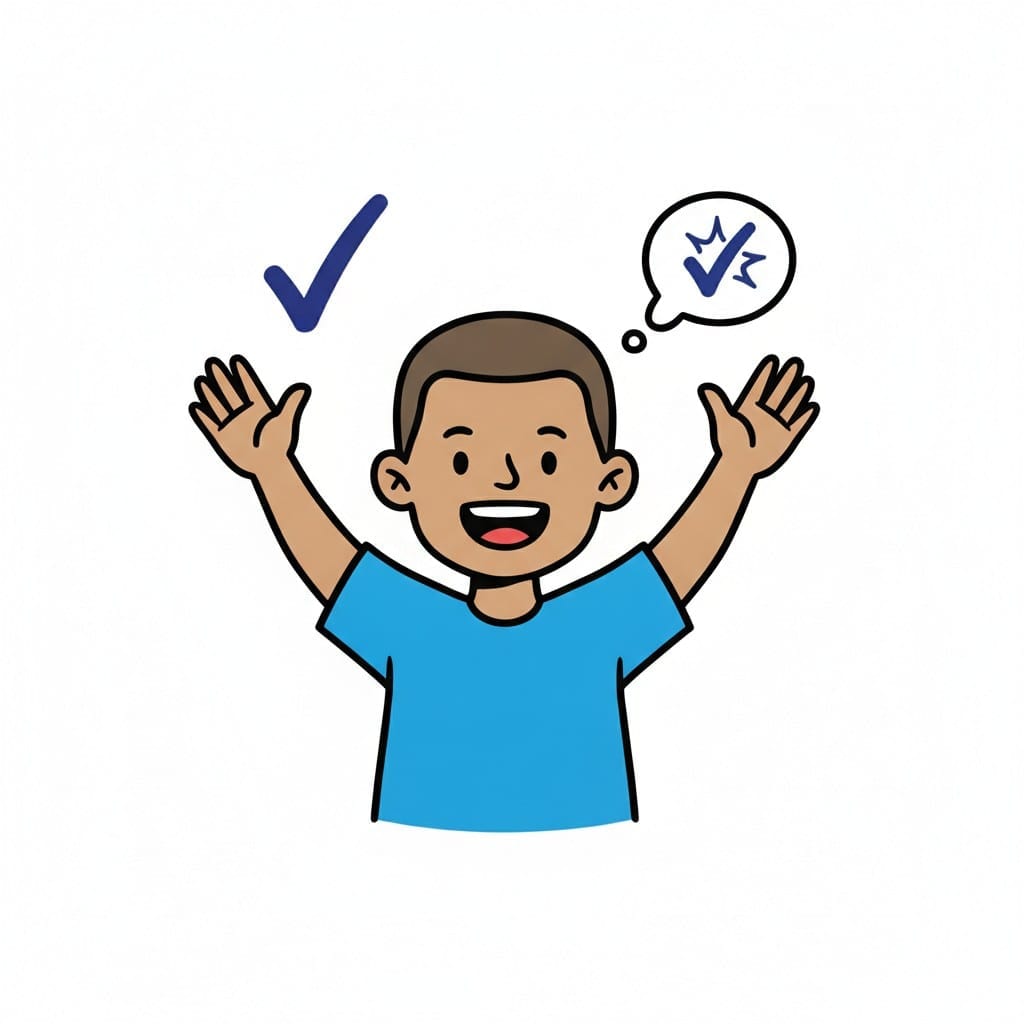 ♂
♂Task finished
A boy throws his arms in the air next to a checkmark showing the task is finished.
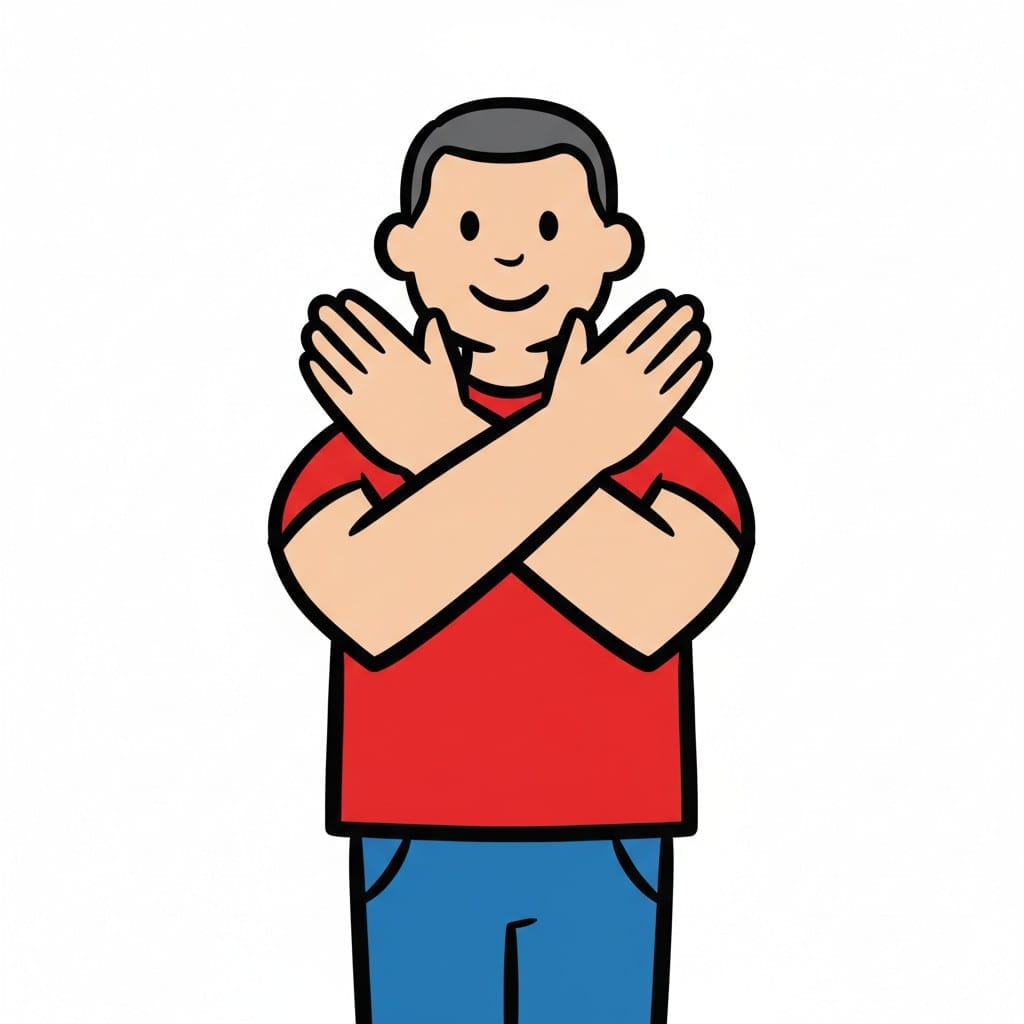 ♂
♂Signalling the end
A boy crosses his arms in front of his chest to show that the activity is over.
About this visual support
An ending that nobody marked keeps taking up space. The child puts down the pencil, but the mind carries on with the same task, and the next thing on the schedule only gets half the attention. Transitions are the demanding part of the day for many children with ADHD, and it is rarely the start that causes trouble, it is the finish.
A picture that means done gives the brain somewhere to place a full stop. It works as a border in time: this part is over, something else begins here. A concrete tip is to let the child turn or move the done card themselves once the activity is over. The hand movement makes the ending something the child performs rather than something an adult announces, and it adds a short moment of recognition before moving on. A few seconds are enough, and over time the gesture itself becomes a signal the child recognises in new situations too.
In Routined every step of a routine can be checked off and the routine closed visibly, so both child and adult can see that it really is finished.
Use this image in a schedule
Build your own visual schedule with this image and download it as a print-ready PDF. Completely free.

More similar visual supports
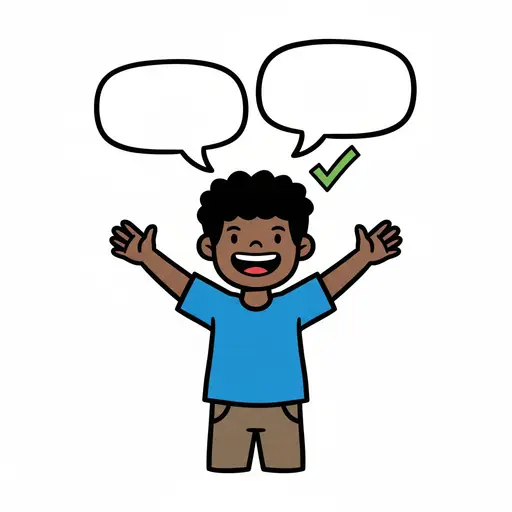
All done
A boy throws both arms out with a big smile under two speech bubbles and a green...
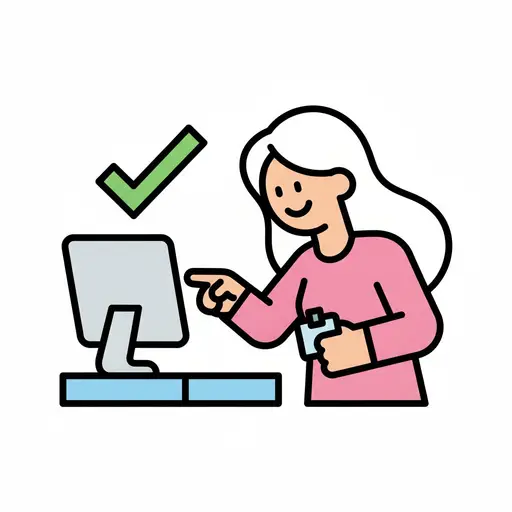
Check in
A person points at a computer screen and a green check mark appears next to it.
5000 Steps
A blue sneaker with the number 5000 and arrows showing movement.
A parent picks up the child
An adult happily lifts a child up in their arms.
Active play
A girl jumps with a basketball in a playground with a slide and swings.
Activities
A child surrounded by icons for a book, paint palette, ball and building block.
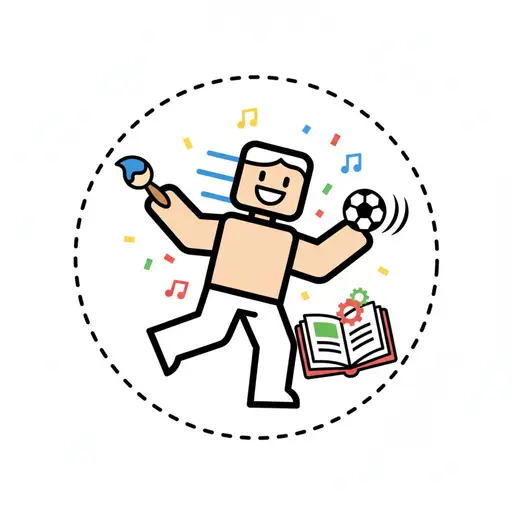
Activity
Inside a dashed circle a girl runs along holding a paintbrush in one hand and a ...
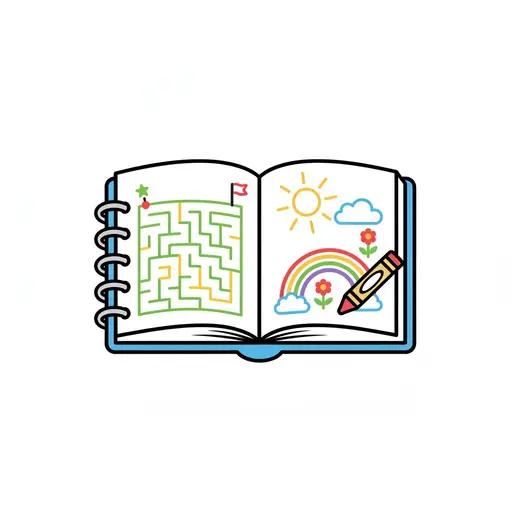
Activity book
An open activity book showing a maze on one page and a drawing of a sun, rainbow...
Take the visual supports with you
In Routined you build schedules from these pictures, add timers and voice instructions, and your child follows the day on their own.


* 14-day free trial included for new users.