Play Fia
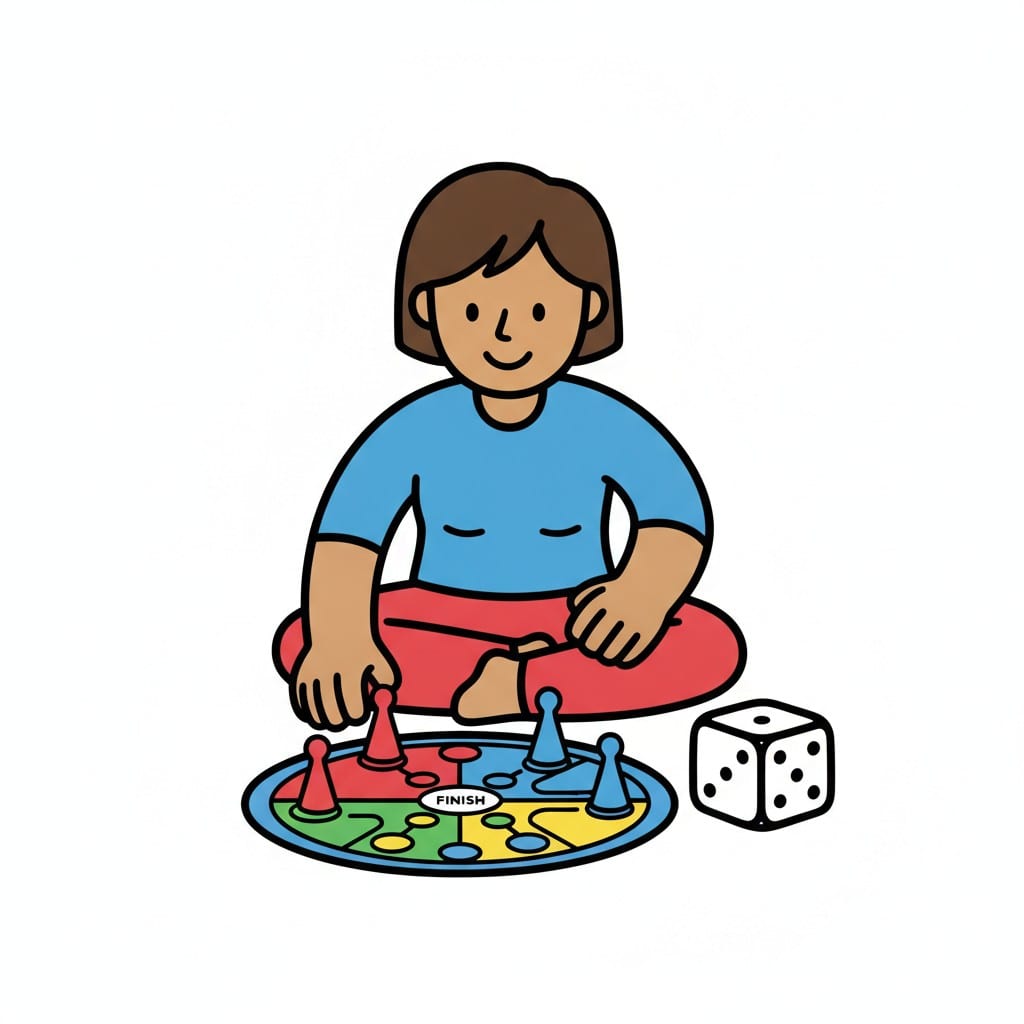
The hard part of Fia is not moving the piece but that the dice decides and you sometimes have to go back. The visual support below shows the turn order and rules so the child can see what is coming.
 ♀
♀Play Fia
A girl sitting on the floor playing a Fia board game, moving a playing piece next to a large die.
About this visual support
The dice, not the child, decides the outcome in Fia, and that is where things creak. Waiting your turn, watching another player pass you and being sent back several squares are social muscles that are not fully trained in a small child.
Visual support makes the invisible rules clear. When the turn order sits as a strip of pictures beside the board, it is easier to see that now it is a sibling's turn, then mine, and that the go-back square is part of the game rather than a mistake. The child can look at the picture instead of hearing the same explanation again, and that lowers the heat when someone is knocked back to start.
One concrete tip: make a small picture for the feeling of going back, ideally a figure stepping backwards but still smiling. Bring it out before you begin and talk about how it will happen at some point during the game. Then the step back is expected rather than a surprise that stops the play.
If you want the turn order and rules gathered on your phone, there is Routined. The pictures here are yours to download and print for the game shelf.
Use this image in a schedule
Build your own visual schedule with this image and download it as a print-ready PDF. Completely free.

More similar visual supports
Board game
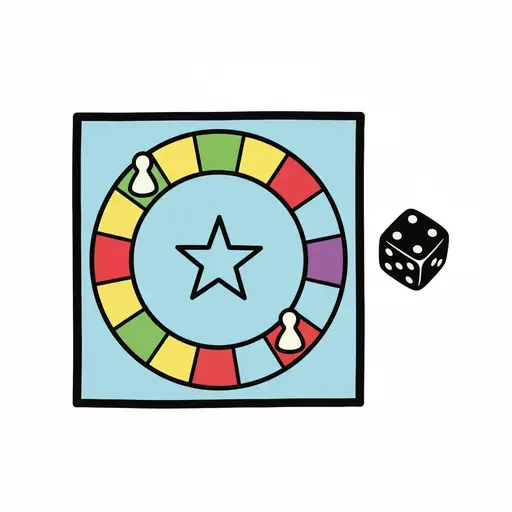
A round board game with colored squares, game pieces and a die beside it.
Play Board Games
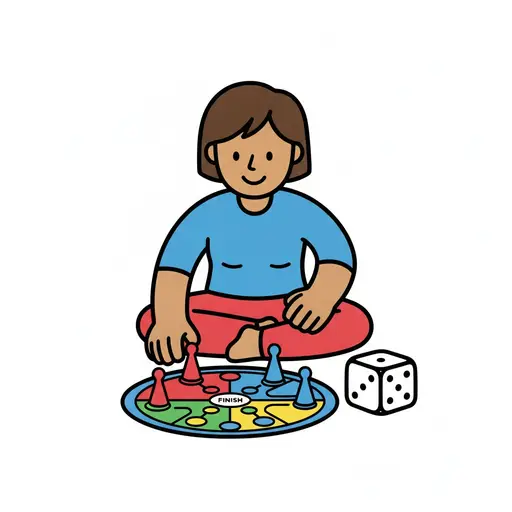
A girl holds a die and moves a piece across a colourful game board.
Play Quattro
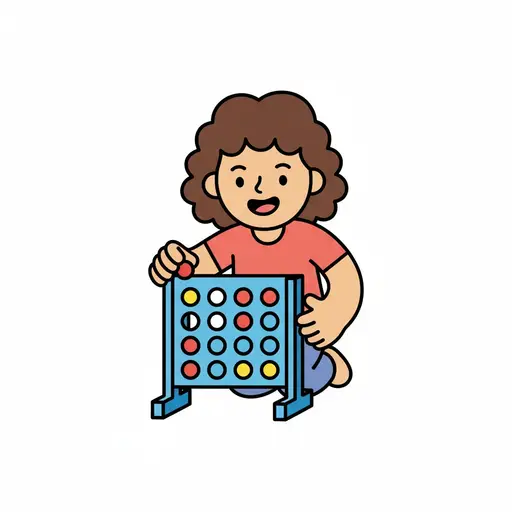
A child playing the game Quattro, inserting a red disc into the blue grid.

Board game or outdoor play
A boy holds a game and points toward a frisbee outdoors, showing a choice betwee...
Game
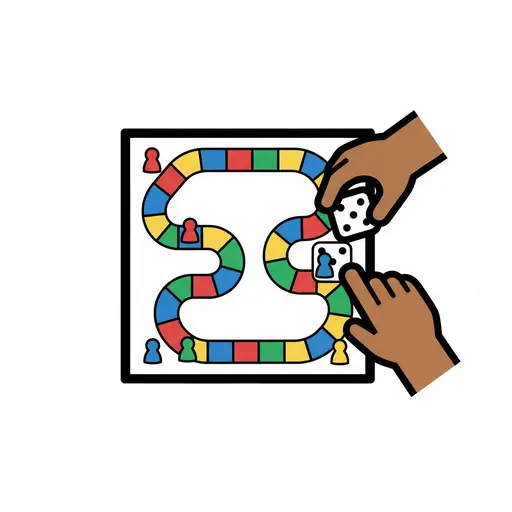
Two hands rolling dice and moving pieces on a colorful board game.

Indoor play
A child sits cross-legged on a rug with a tablet, with a teddy and books beside ...
Leisure time
A happy boy throws a colourful ball while a toy car and a stacking ring toy sit ...
Play bingo
A person with long, dark hair is playing bingo, holding red bingo balls and spin...
Take the visual supports with you
In Routined you build schedules from these pictures, add timers and voice instructions, and your child follows the day on their own.


* 14-day free trial included for new users.