Play Board Games
Board games rest on waiting for your turn, following rules you did not invent and bearing the odd loss. That is more demanding than it looks. The pictures below show how the game flows so the turn-taking becomes clear.
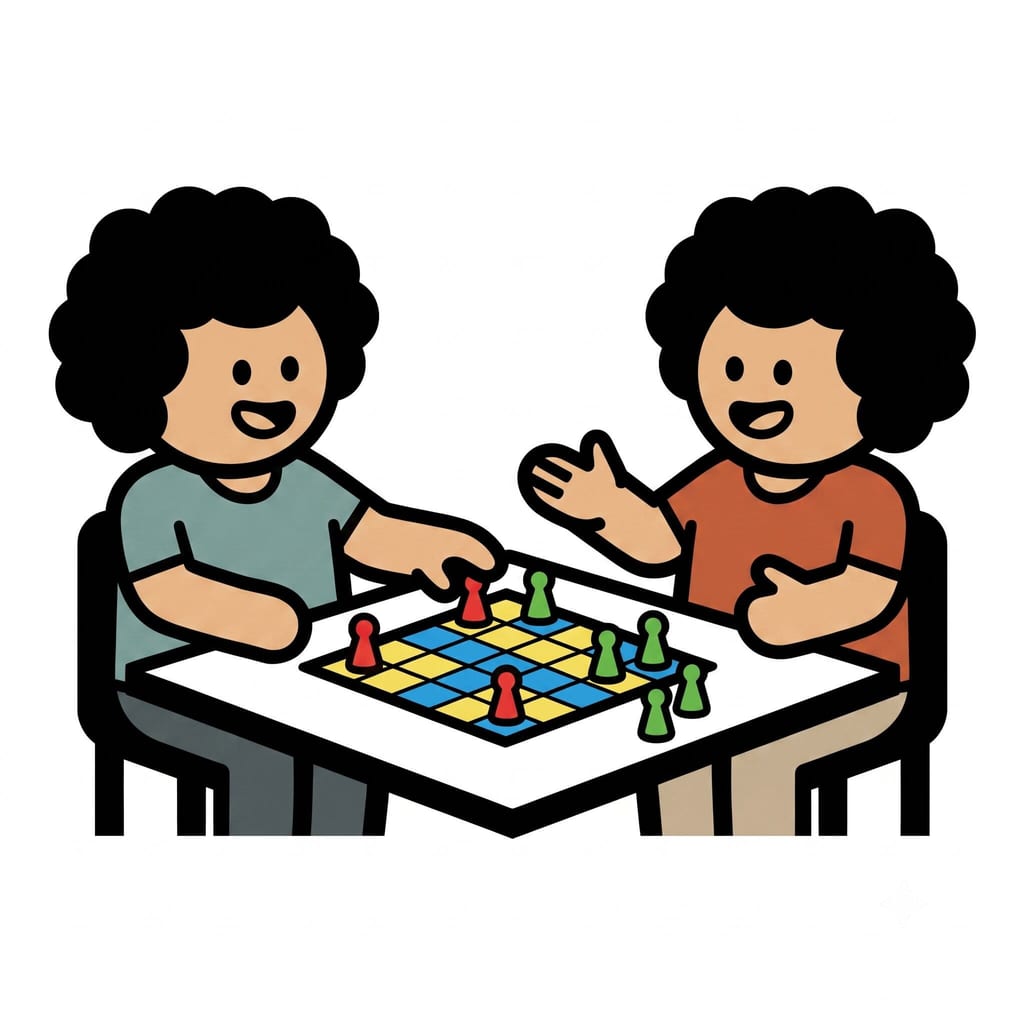 ♀
♀Play together
Two children sit at a table playing a board game with colorful pieces.
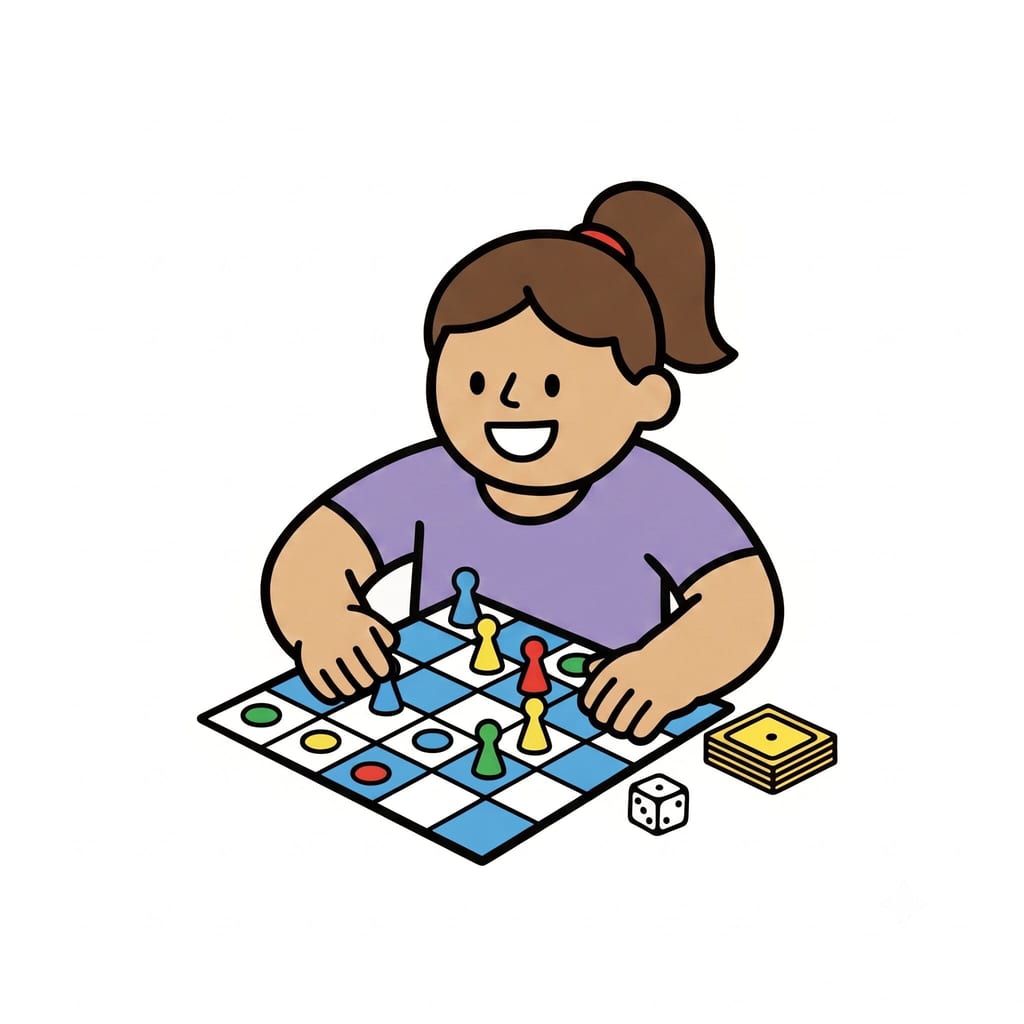 ♀
♀Move a piece
A girl leans over a board game moving a game piece with a die beside it.
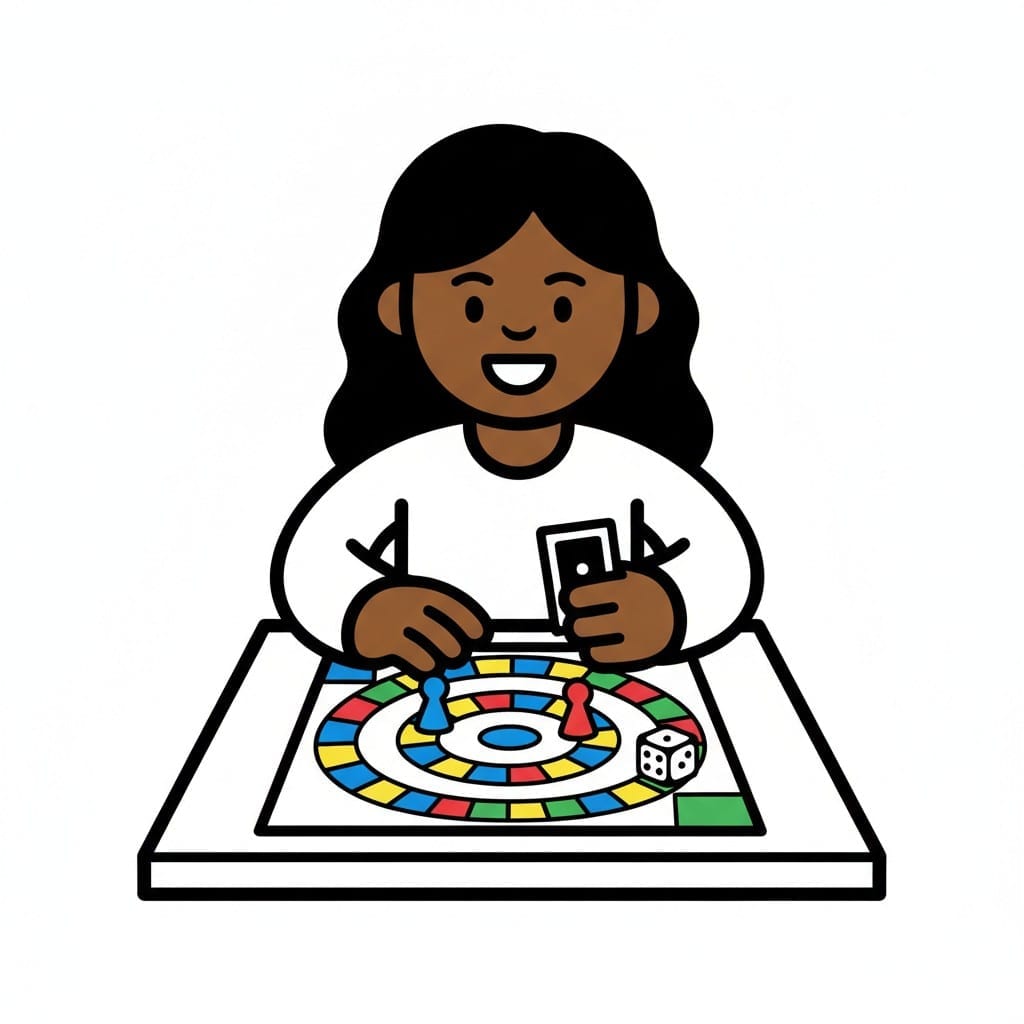 ♀
♀Board game with cards
A girl holds playing cards and smiles at a round board game with a die.
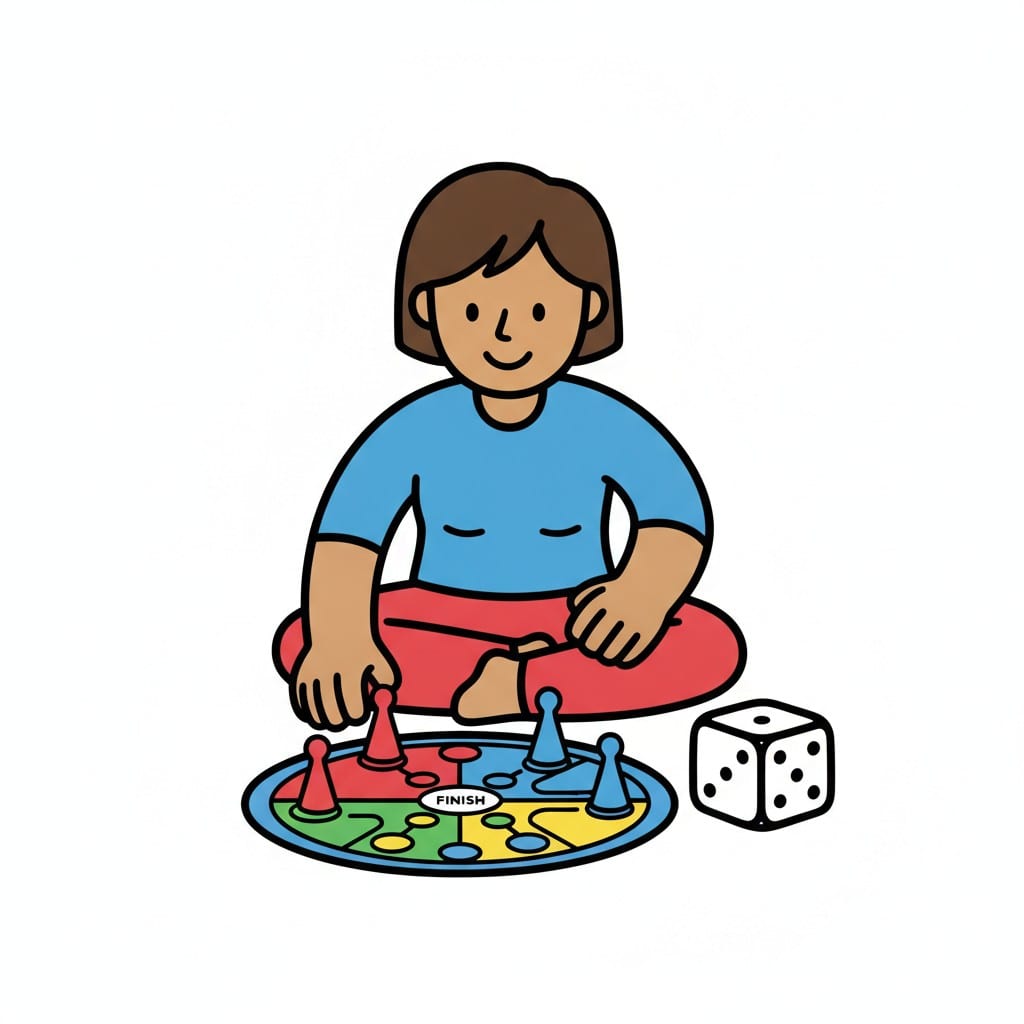 ♀
♀Girl playing a board game
A girl holds a die and moves a piece across a colourful game board.
About this visual support
A board game is full of invisible rules. You wait your turn while someone else makes a move, keep in mind what counts, and on top of that bear a dice roll that sometimes lands worse than you hoped. The waiting and the losing can feel heavy, and a fun moment can quickly tip into tears.
Visual support makes the game's invisible parts visible. When the turn order sits on pictures, it becomes clear when it is your own turn and when to wait, which removes much of the friction. A picture showing that the round ends also helps the child grasp that the waiting is not endless.
One concrete tip is to keep a picture for what to do if you lose: say well played, set the pieces up again, maybe play once more. Losing then becomes part of the game rather than its end. In the Routined app you can put the game's steps together and add a calm finish after the last move.
Use this image in a schedule
Build your own visual schedule with this image and download it as a print-ready PDF. Completely free.

More similar visual supports
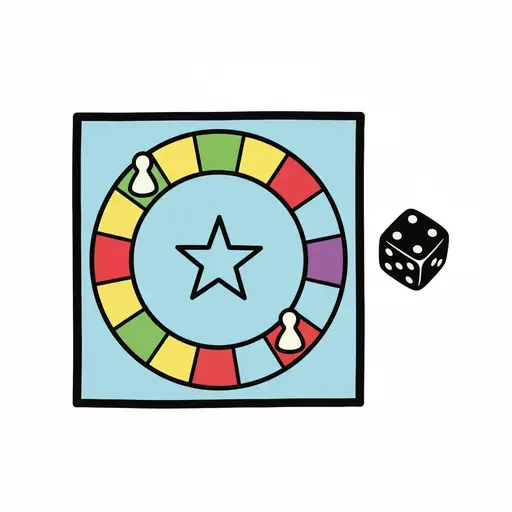
Board game
A round board game with colored squares, game pieces and a die beside it.
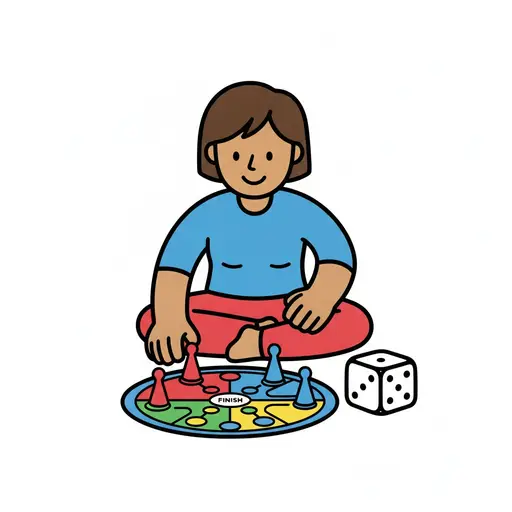
Play Fia
A girl sitting on the floor playing a Fia board game, moving a playing piece nex...
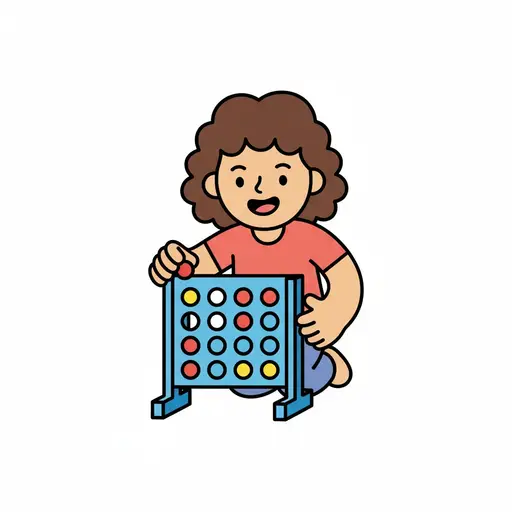
Play Quattro
A child playing the game Quattro, inserting a red disc into the blue grid.

Board game or outdoor play
A boy holds a game and points toward a frisbee outdoors, showing a choice betwee...
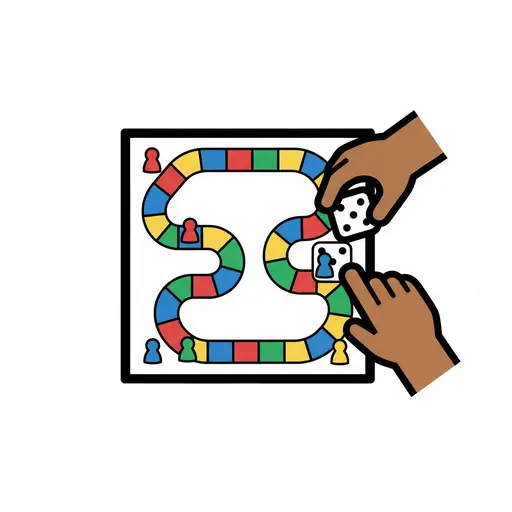
Game
Two hands rolling dice and moving pieces on a colorful board game.
Indoor play
A child sits cross-legged on a rug with a tablet, with a teddy and books beside ...
Leisure time
A happy boy throws a colourful ball while a toy car and a stacking ring toy sit ...
Play bingo
A person with long, dark hair is playing bingo, holding red bingo balls and spin...
Take the visual supports with you
In Routined you build schedules from these pictures, add timers and voice instructions, and your child follows the day on their own.


* 14-day free trial included for new users.