Stretch
Stretching means listening to the body for a moment, which is hard to explain but easy to show. The pictures below show six moves, from reaching both arms towards the ceiling to balancing on one leg.
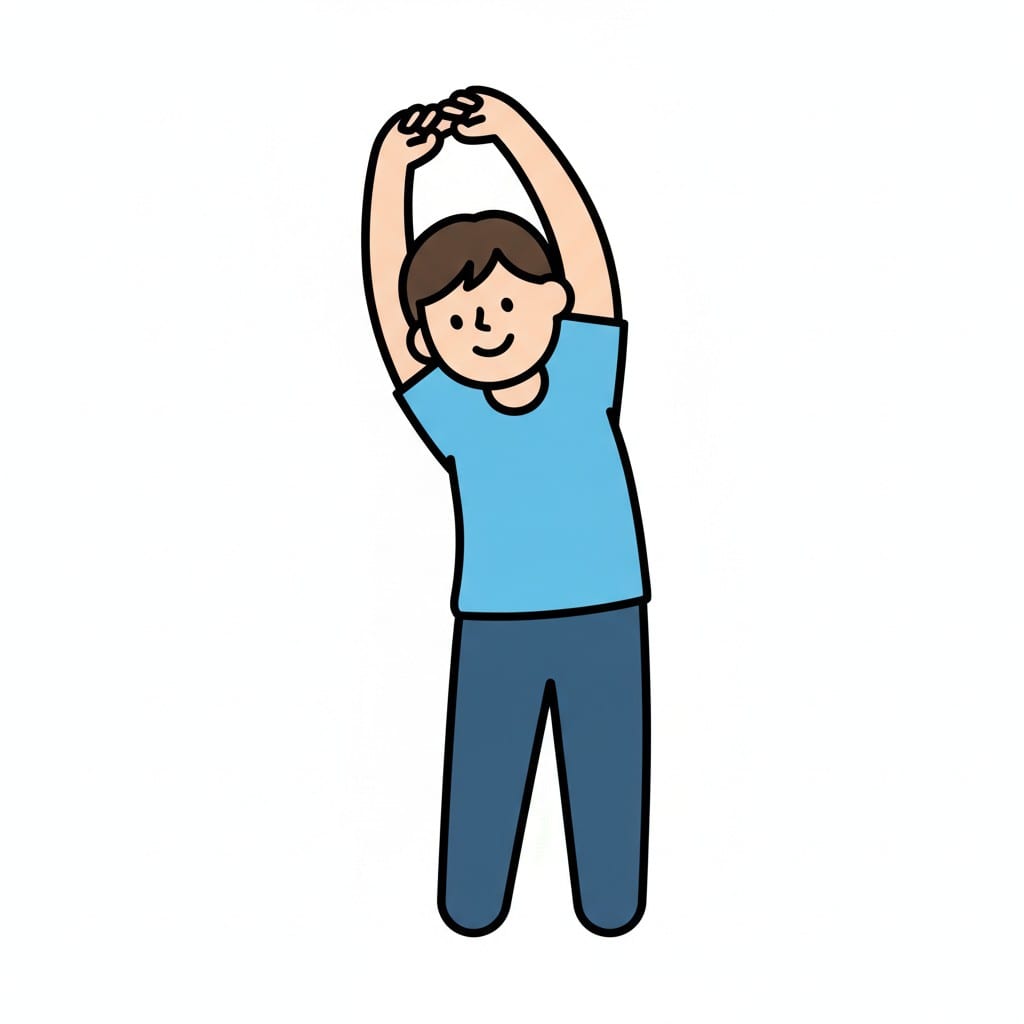 ⚲
⚲Side stretch
A person reaches their arms over their head and leans their upper body to the side.
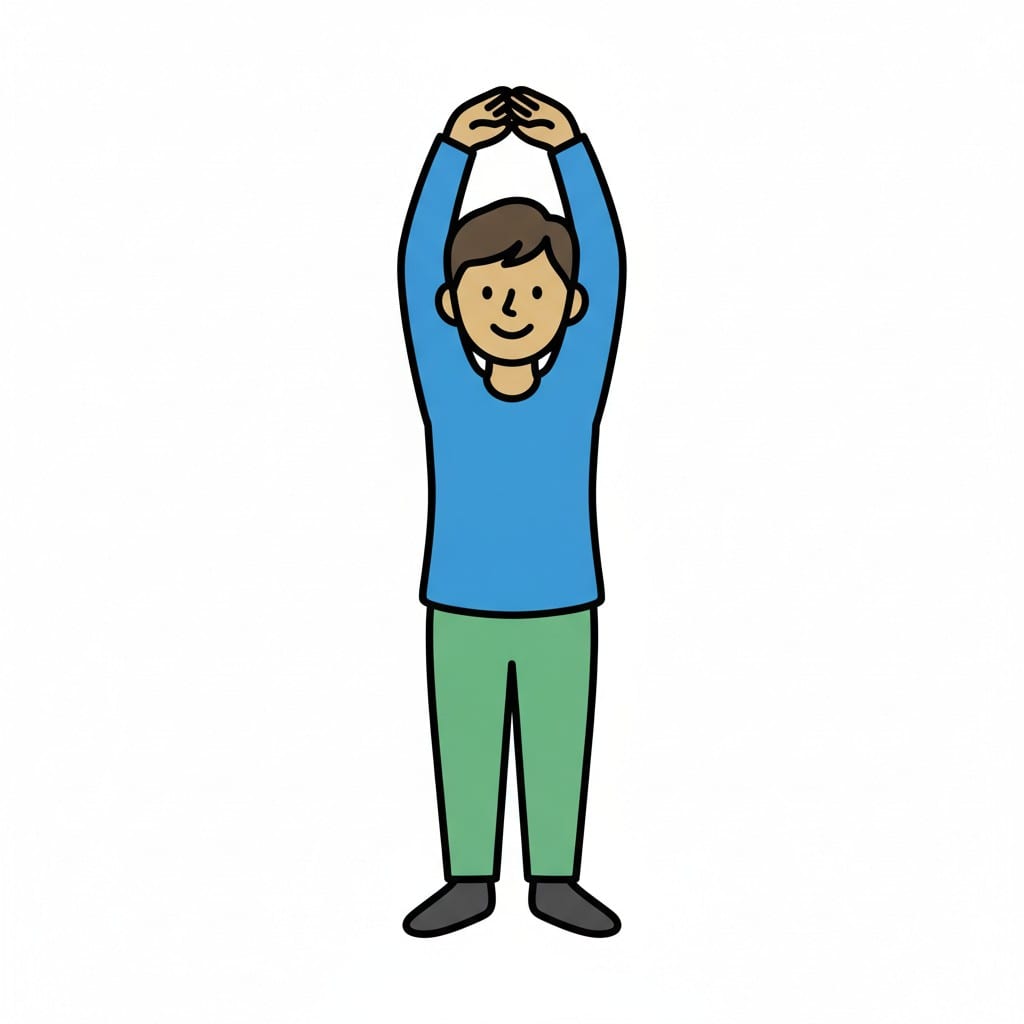 ⚲
⚲Stretching up
A smiling person stands straight and reaches their arms up with their hands together.
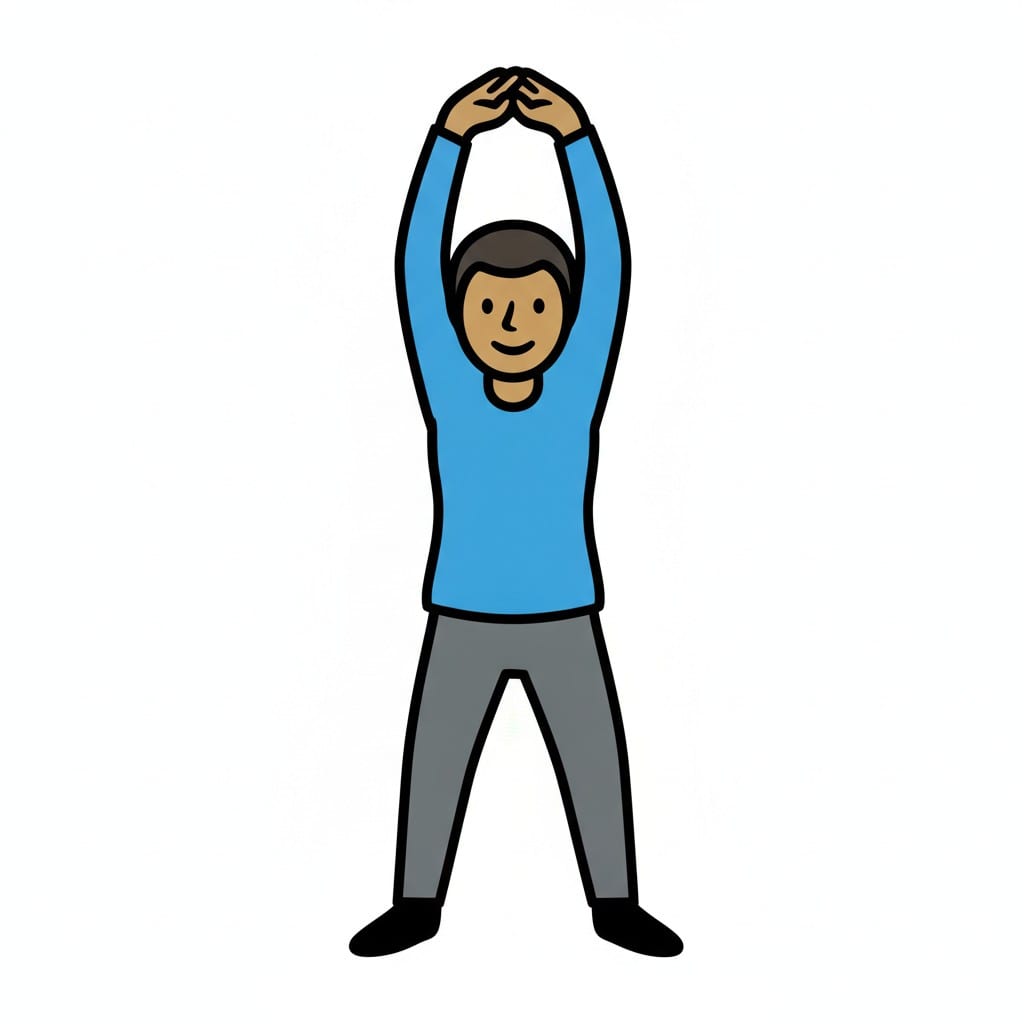 ⚲
⚲Reaching up high
A person stands with legs apart and stretches their arms high above their head with hands together.
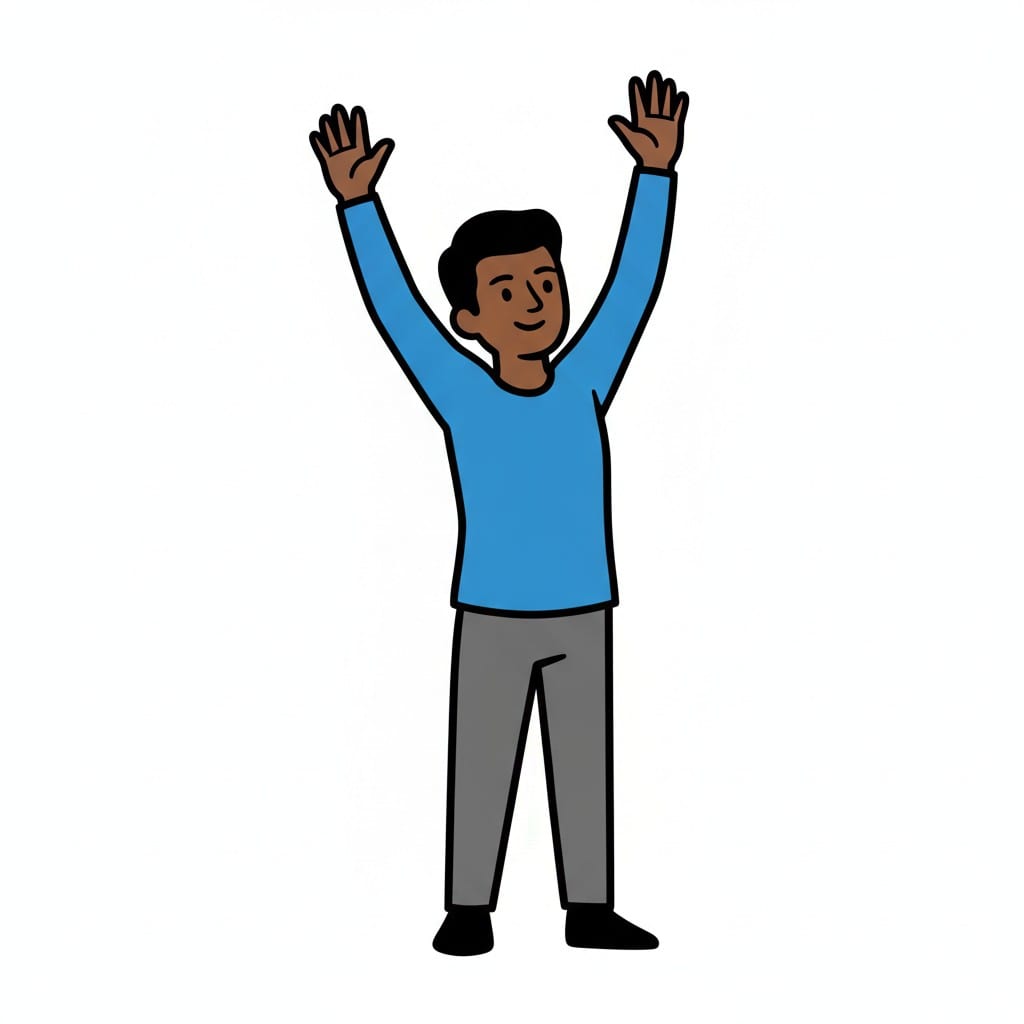 ⚲
⚲Arms up in a V
A person stands straight and raises both arms in a V with fingers spread.
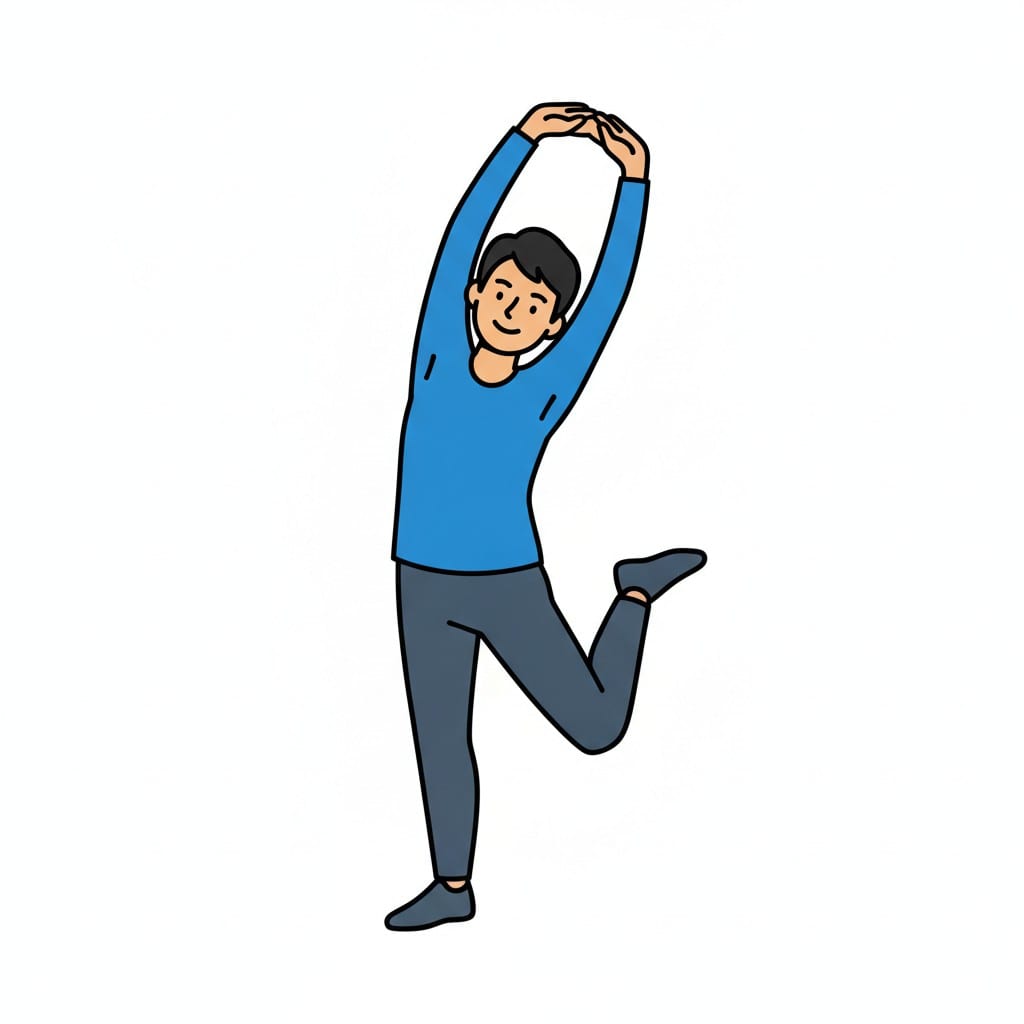 ⚲
⚲Stretching on one leg
A person stands on one leg with the other bent back and stretches their arms over their head.
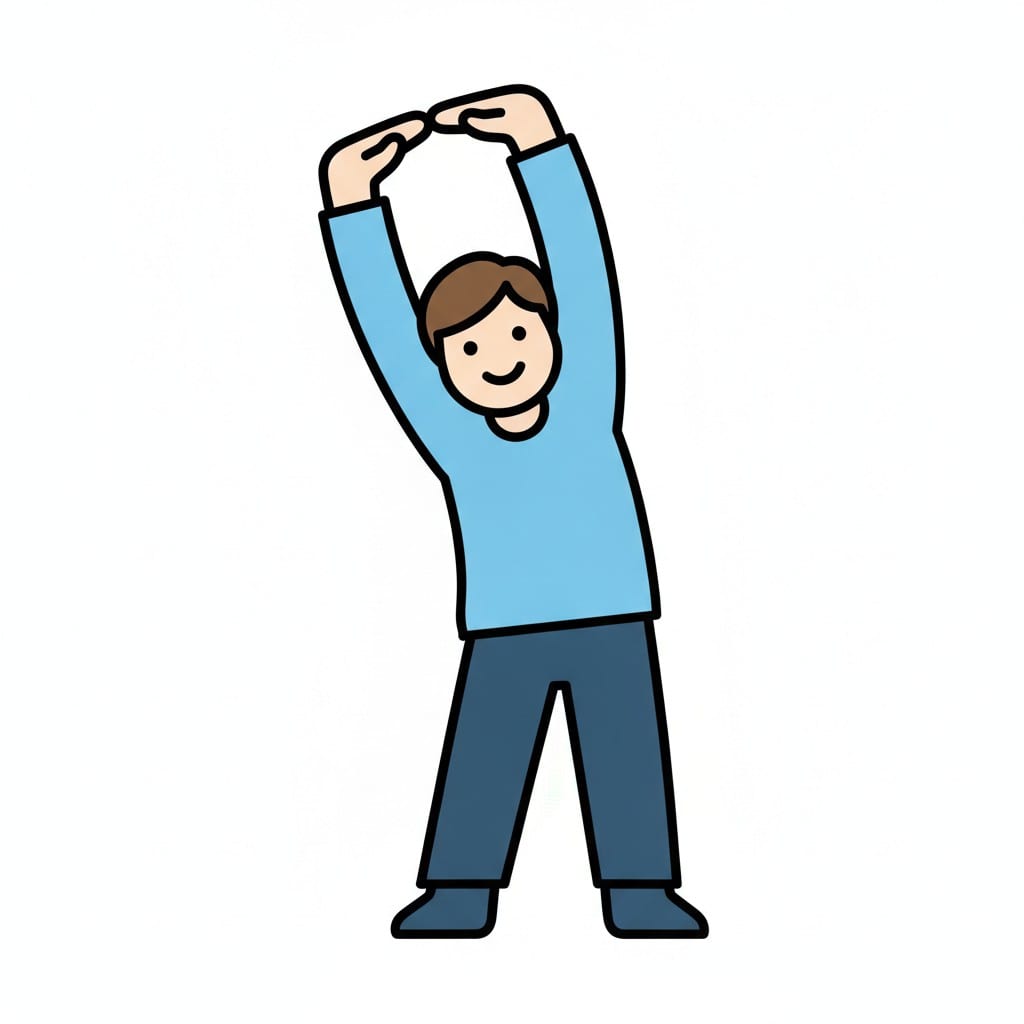 ⚲
⚲Side bend
A smiling person stands with legs apart and bends to the side with arms over their head.
About this visual support
Children often know they are restless, but rarely where in the body it sits. Stretching offers a way to find it. When the arms reach towards the ceiling it is felt in the sides, when you bend sideways it pulls at the waist, and when you stand on one leg you notice straight away whether the balance is there. That makes the moves useful in two situations: as a warm-up when the body needs to wake up before play or sport, and as a wind-down when it needs to land after a long stretch in front of a screen.
The pictures show six simple moves: arms straight up with hands together, arms high with legs apart, arms in a V, a side stretch, a side bend and a stretch on one leg. Put them up in a row and do them in the same order every time, so the order itself becomes the signal. Three breaths in each position is enough for most children.
A practical tip is to let your child choose two or three of the pictures and decide the order, so the moment feels like theirs rather than an exercise they are told to do. Swap a picture after a week if you like. In Routined you can add stretching to the morning or evening routine with pictures, and the app can be tried for 14 days at no cost.
Use this image in a schedule
Build your own visual schedule with this image and download it as a print-ready PDF. Completely free.
More similar visual supports
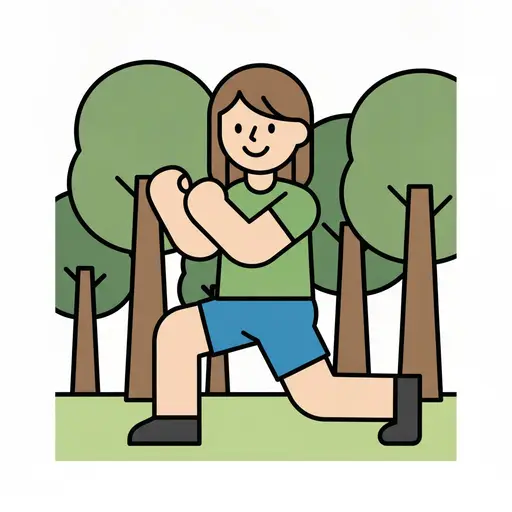
Exercise in the forest
A child does a lunge exercise among the trees in the forest.
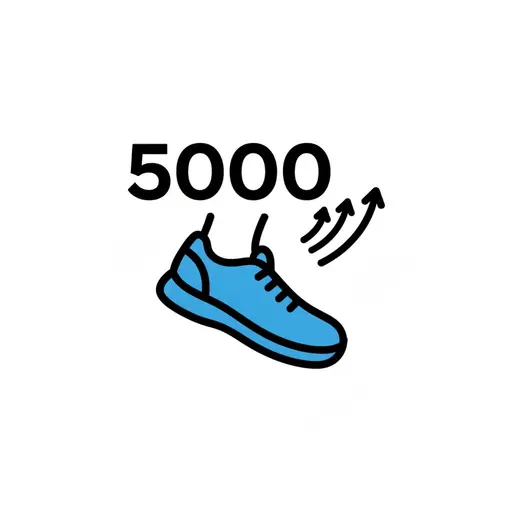
5000 Steps
A blue sneaker with the number 5000 and arrows showing movement.
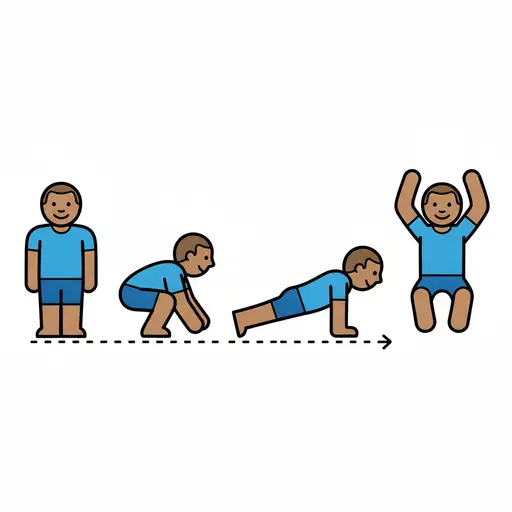
Burpees
Four figures in a row show a boy standing, squatting down, dropping into a plank...
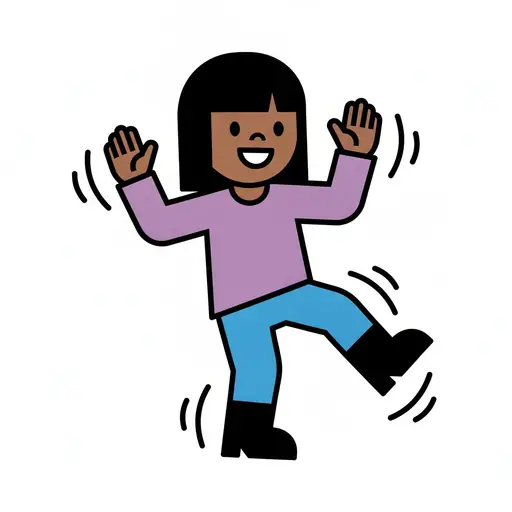
Dance
A girl dances with her arms raised and one leg lifted, with movement lines aroun...
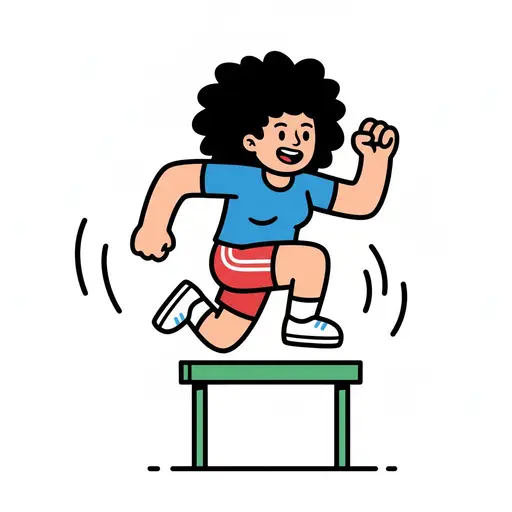
Exercise
Cartoon illustration of a woman in sportswear jumping over a green hurdle.
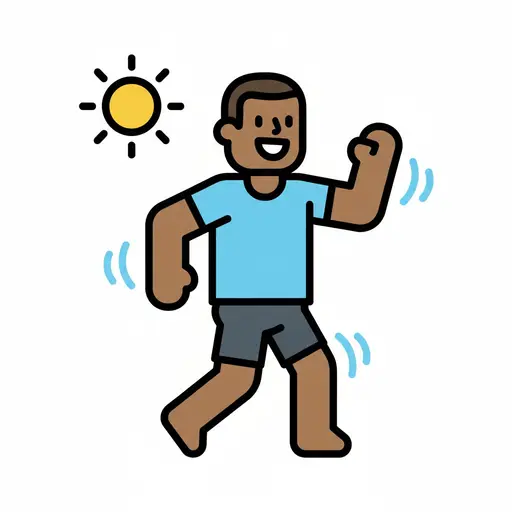
Morning exercise
A man in athletic wear performing morning exercise with the sun in the backgroun...
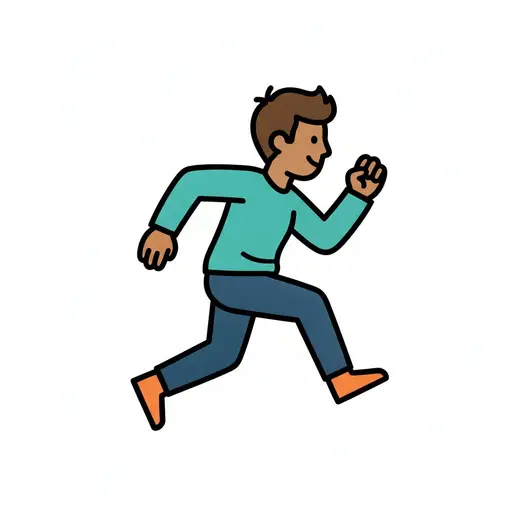
Move around
A person jogs forward in a green top and blue trousers.
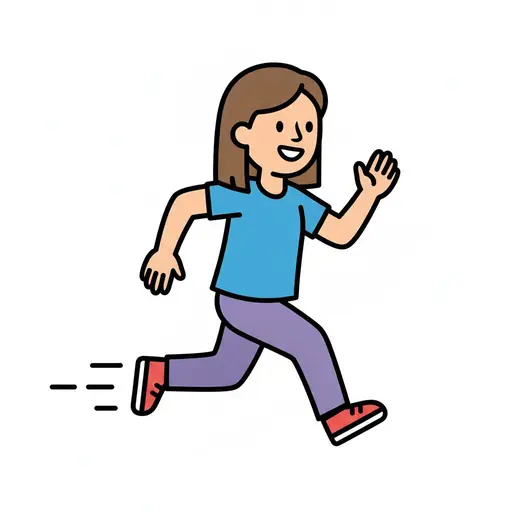
Movement
A person runs forward with their arms in motion and speed lines behind them.
Take the visual supports with you
In Routined you build schedules from these pictures, add timers and voice instructions, and your child follows the day on their own.


* 14-day free trial, then $2.39 a month or $20.99 a year (US pricing). Cancel anytime.