Throw paper airplane
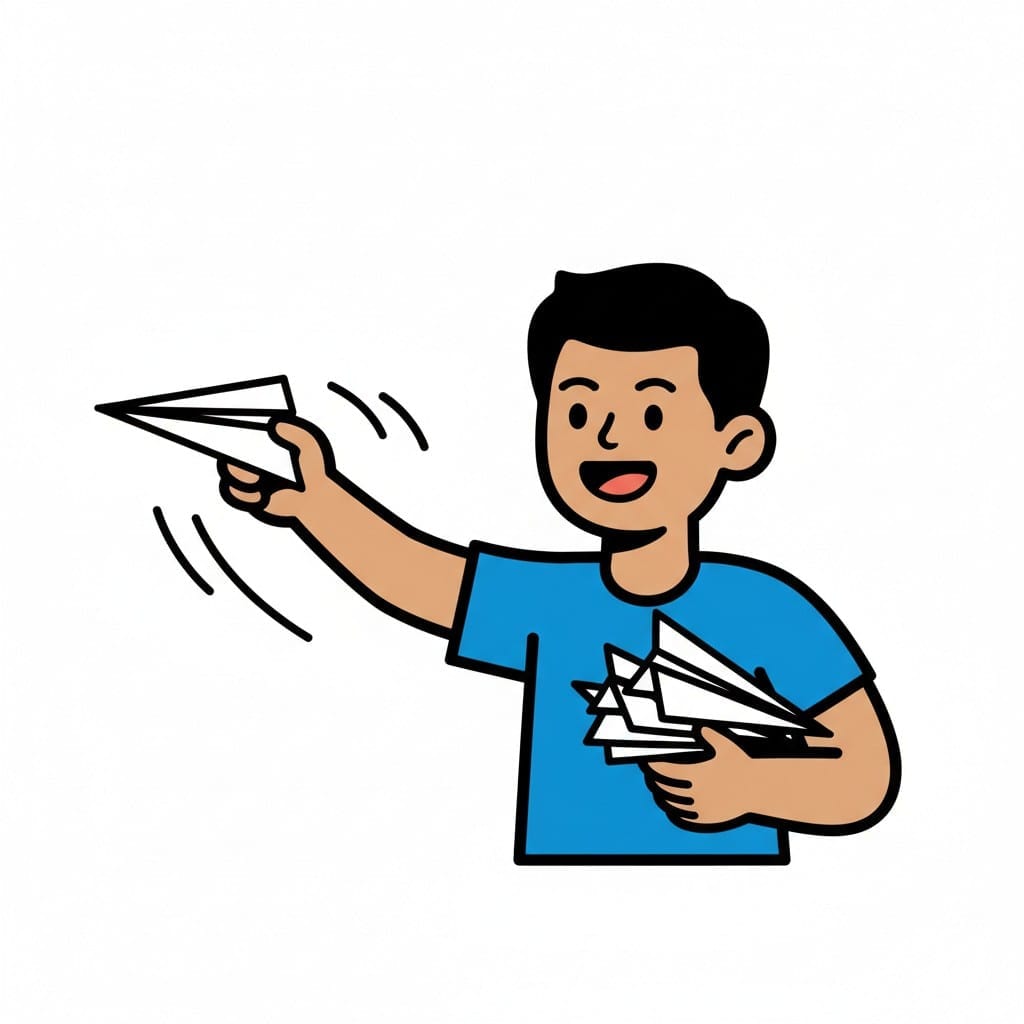
A paper airplane only flies if the folds are even and the throw catches the right angle, otherwise it dives straight into the floor. The result shows up instantly, so disappointment is as visible as joy. The steps below give small fingers a guide.
 ♂
♂Throw paper airplane
A boy with a wide smile throwing a paper airplane. He holds a stack of other paper airplanes under his arm.
About this visual support
Few activities give as instant feedback as a paper airplane. When the plane dives straight into the rug, the whole effort – the folding, the focus, the throw – looks like a one-second failure. That is why this little task often carries a tension that you cannot see by just looking at the finished plane.
The visual support breaks the folding into manageable creases and then separates the grip from the throwing arm. Comparing the actual paper to each picture step by step makes it easier to spot what to adjust before the plane even leaves the hand. A specific tip: ask the child to press every fold with the thumbnail along the full edge before the next crease. That stiffens the plane and cuts down on lopsided dives.
If you want the game to become a recurring break in the day, drop it into Routined as a short slot, for example after homework or tidying. The flight then becomes a reward tied to something concrete, not just a scattered impulse.
Use this image in a schedule
Build your own visual schedule with this image and download it as a print-ready PDF. Completely free.

More similar visual supports

Activity
Inside a dashed circle a girl runs along holding a paintbrush in one hand and a ...
Do puzzle
A girl with brown hair in a ponytail sits at a table assembling a puzzle with se...
Game
Two hands rolling dice and moving pieces on a colorful board game.
Outdoor Play
A happy girl on a swing in an outdoor setting with a tree and sun.
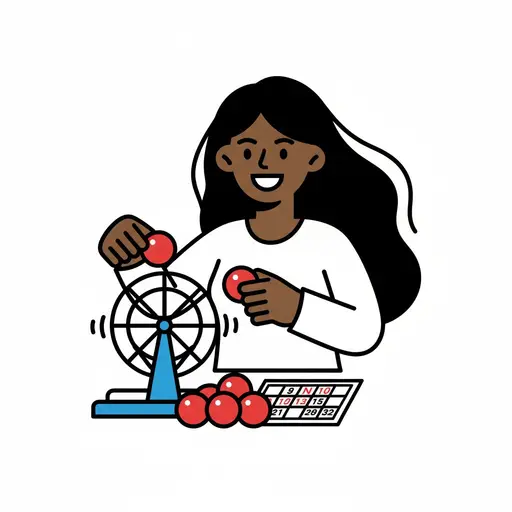
Play bingo
A person with long, dark hair is playing bingo, holding red bingo balls and spin...
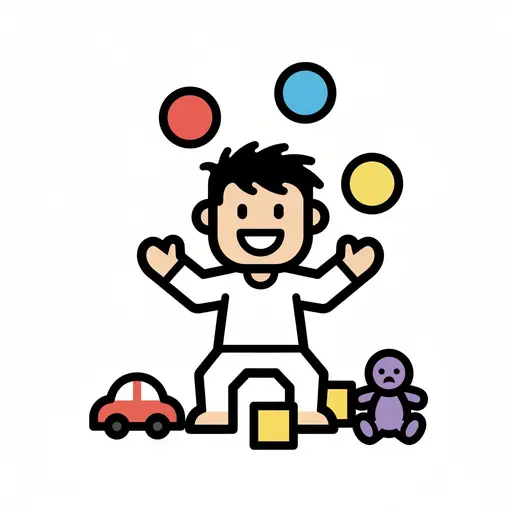
Play time
A laughing boy juggles a red, a blue and a yellow ball while a toy car, blocks a...
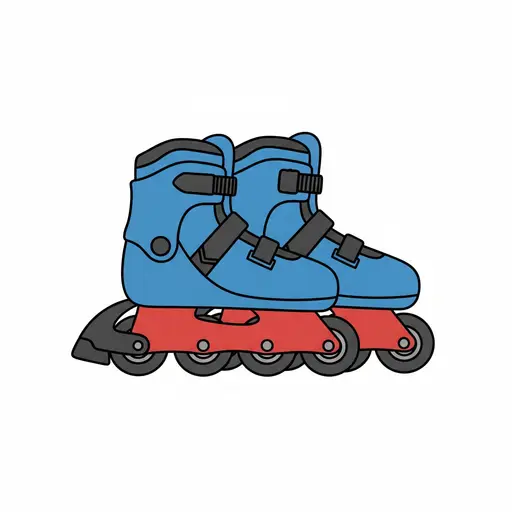
Roller skates
A pair of blue roller skates with red frames and black buckles.
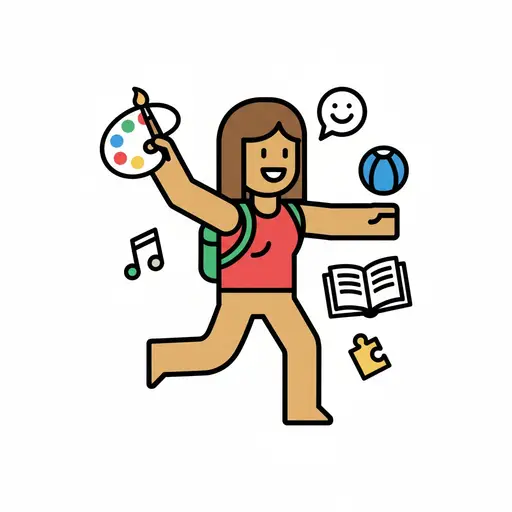
Activities
A child surrounded by icons for a book, paint palette, ball and building block.
Take the visual supports with you
In Routined you build schedules from these pictures, add timers and voice instructions, and your child follows the day on their own.


* 14-day free trial included for new users.