TV
Watching TV is appealing precisely because it does not stop on its own, the next episode starts before there is time to think. The visual support below gives a clear frame for where the viewing begins and where it ends.
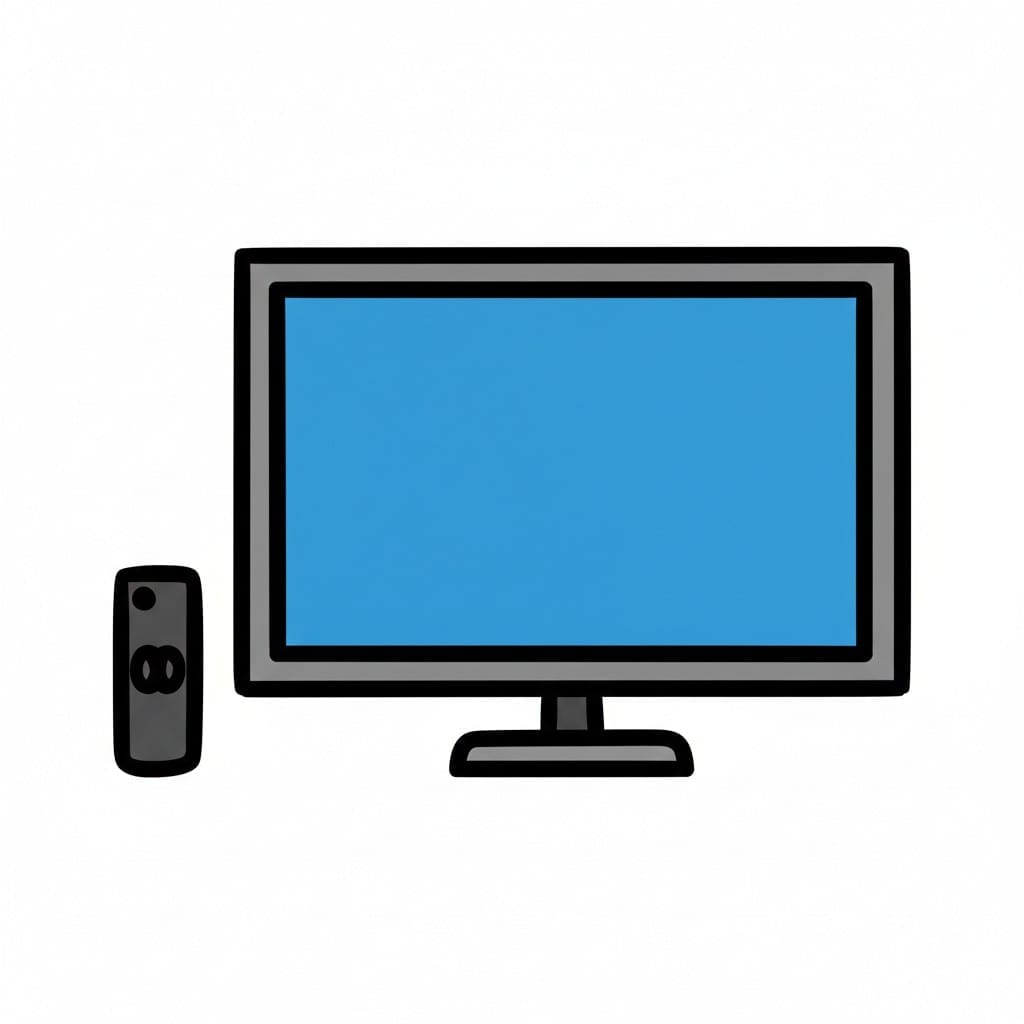
TV with remote control
An illustration of a TV with a blue screen and a black remote control next to it.
TV
An older model of television with a thick screen and two buttons.
Retro TV with antenna
A grey television with rabbit-ear antenna, a blue screen and three knobs stands on two legs.
TV
A TV with a star on the screen and two dials.
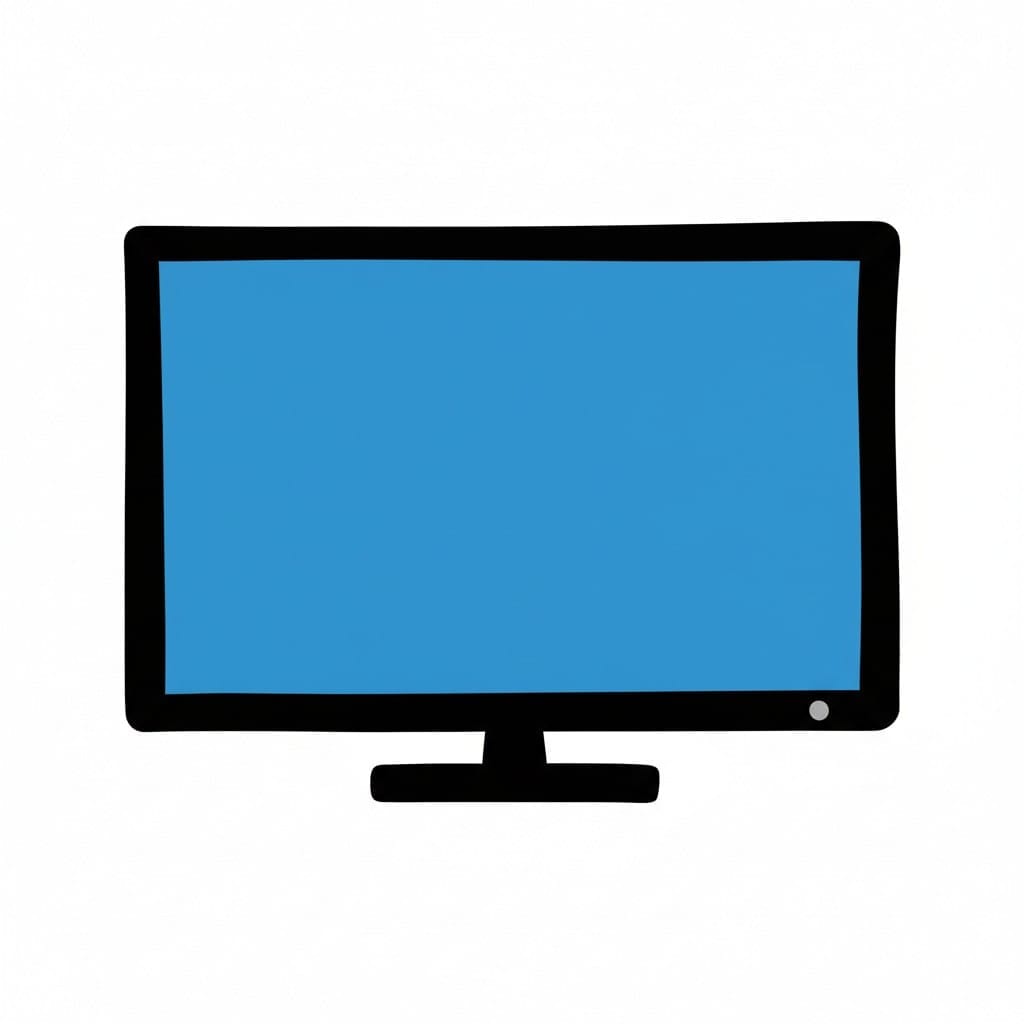
TV
A modern flat-screen television with a large blue screen.
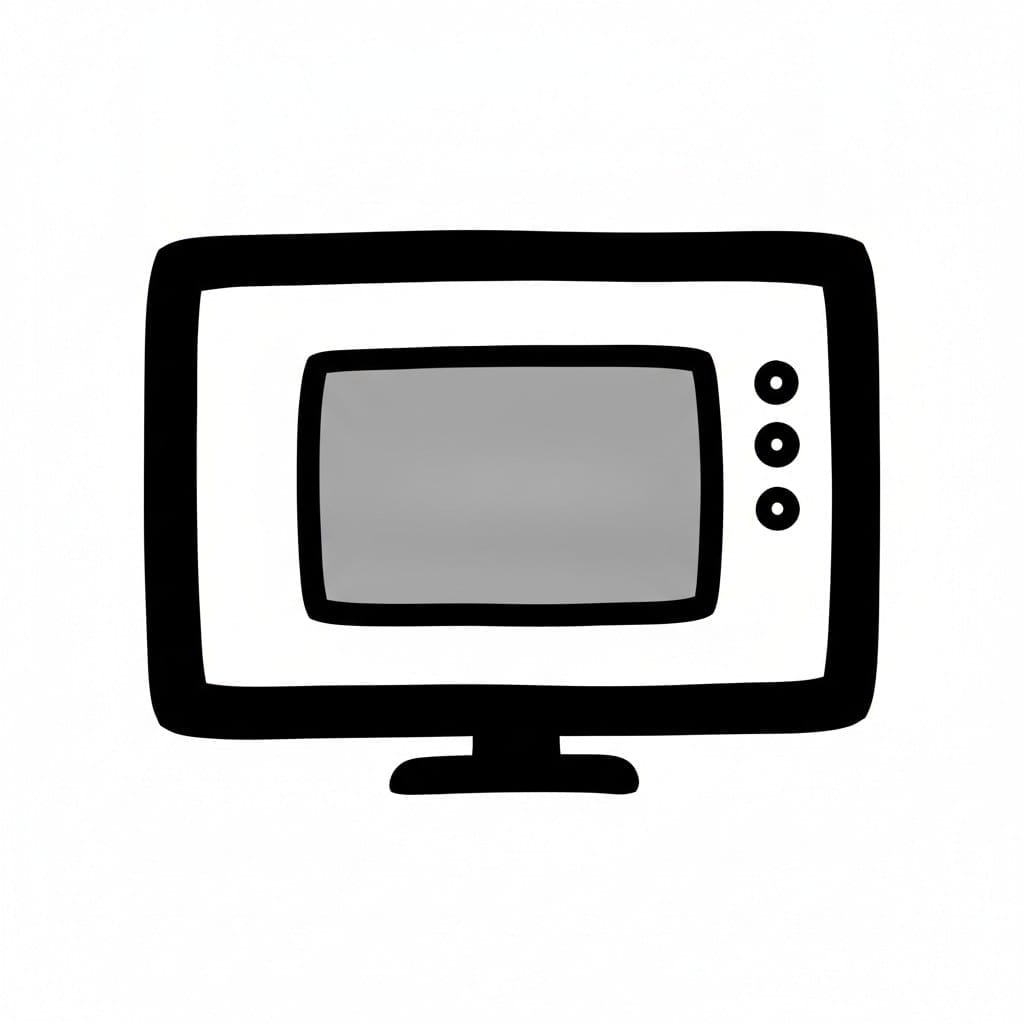
TV on a stand
A television drawn with thick black outlines has a grey screen, three round buttons and a small stand.
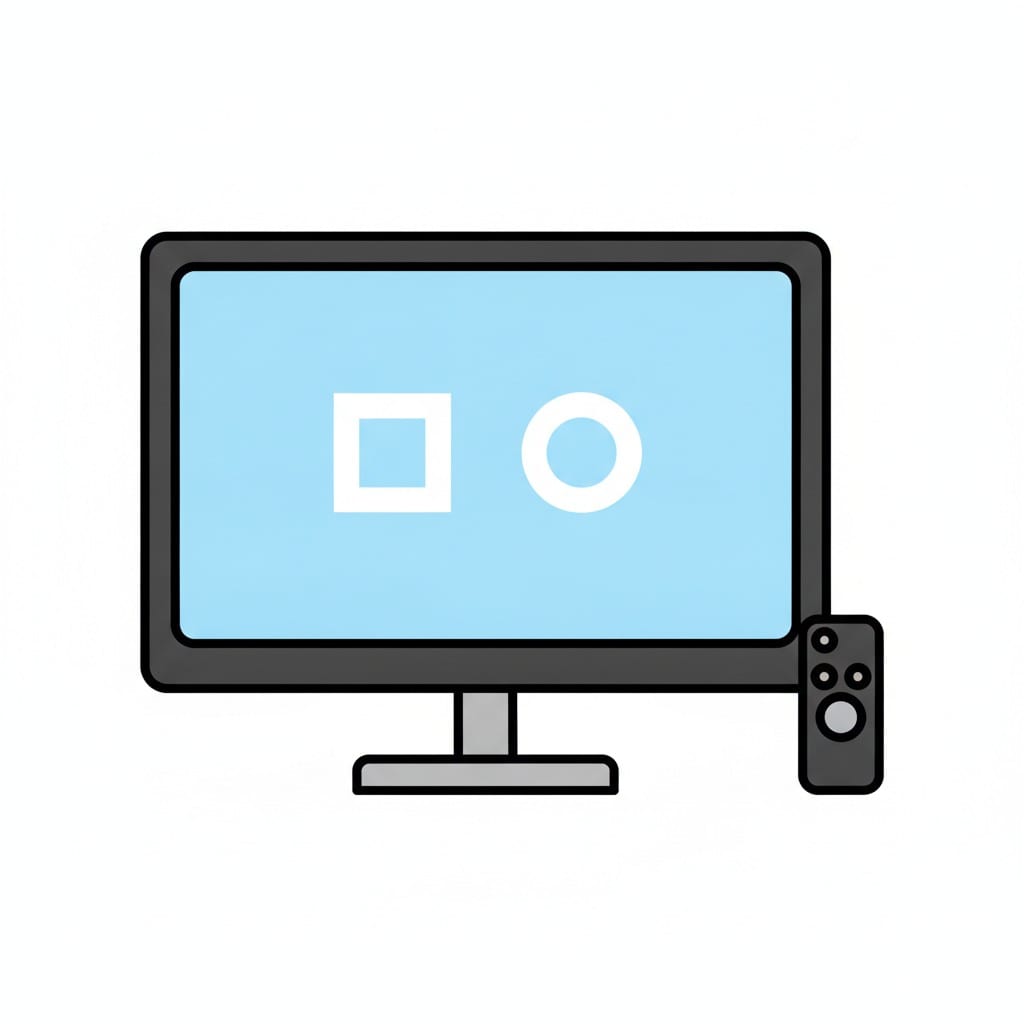
TV with remote
A flat-screen TV with a remote control beside it.
About this visual support
Streaming services are designed so that there is no natural pause point. Credits shrink, the next episode begins within seconds, and the suggestion row shimmers at the edge. For a child that means the viewing itself never signals when it is time to stop, the cue has to come from outside.
Visual support does not fix the streaming design, but it gives the child something to lean on before the watching even starts. When the card showing how many episodes, the card showing the remote, and the card showing what comes afterwards are all laid out from the beginning, the frame stays visible the whole time. The ending is not a surprise, it is a planned part of the activity.
One specific thing that helps: decide the frame together with your child before pressing play, one episode, two, a specific film, and point at the cards as you do it. The decision carries more weight when it is shared upfront, not enforced halfway through. If you want to link the TV slot to a longer afternoon routine, you can drop it into Routined as one block.
Use this image in a schedule
Build your own visual schedule with this image and download it as a print-ready PDF. Completely free.
More similar visual supports

YouTube
The classic YouTube logo, a red rounded rectangle with a white play button trian...
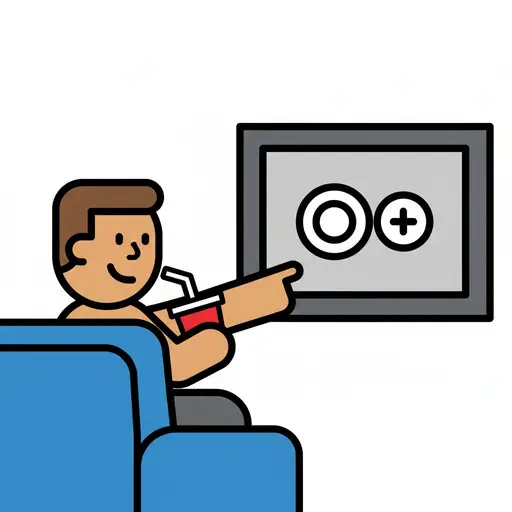
Drink and TV
A person sits on a blue couch, drinking from a red cup with a straw and pointing...
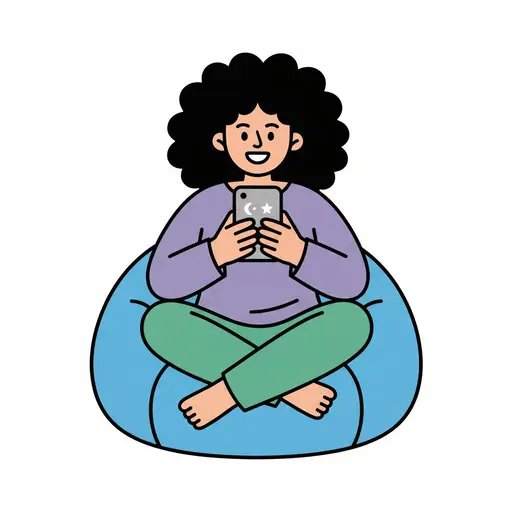
Phone time
A woman sits on a beanbag looking at her phone.
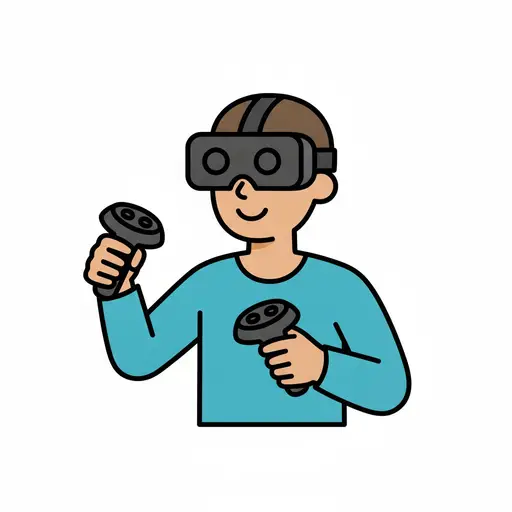
Gaming
A person wearing a VR headset holds two controllers.
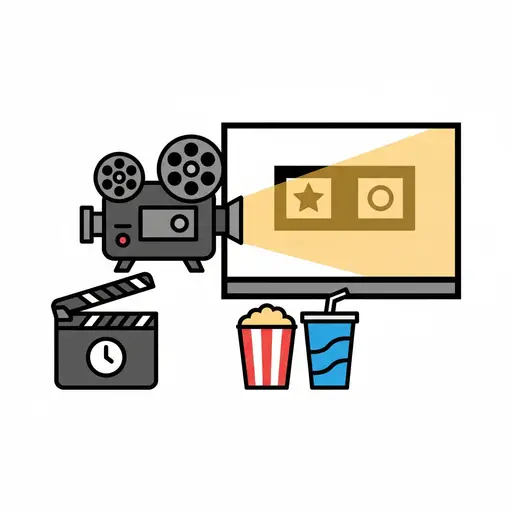
Movie time
An illustration showing a movie projector, a film clapboard with a clock, a scre...
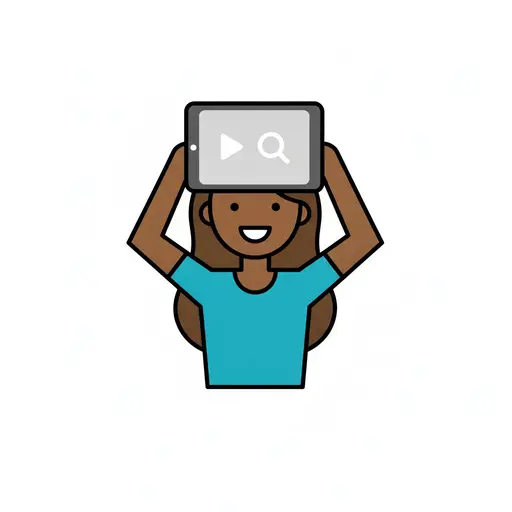
Screen time
A girl holds a tablet showing video and search above her head.
Watch mobile
A person with straight hair watching a mobile phone with a play button on the sc...
Watch phone
A woman holds a phone horizontally and watches the screen.
This visual support in other languages
Take the visual supports with you
In Routined you build schedules from these pictures, add timers and voice instructions, and your child follows the day on their own.


* 14-day free trial, then $2.39 a month or $20.99 a year (US pricing). Cancel anytime.