Walk there
A stretch of road without landmarks feels endless, and legs tire faster when the goal never really comes closer. The visual support below breaks the route into places to pass, so the child can see how much is already behind them.
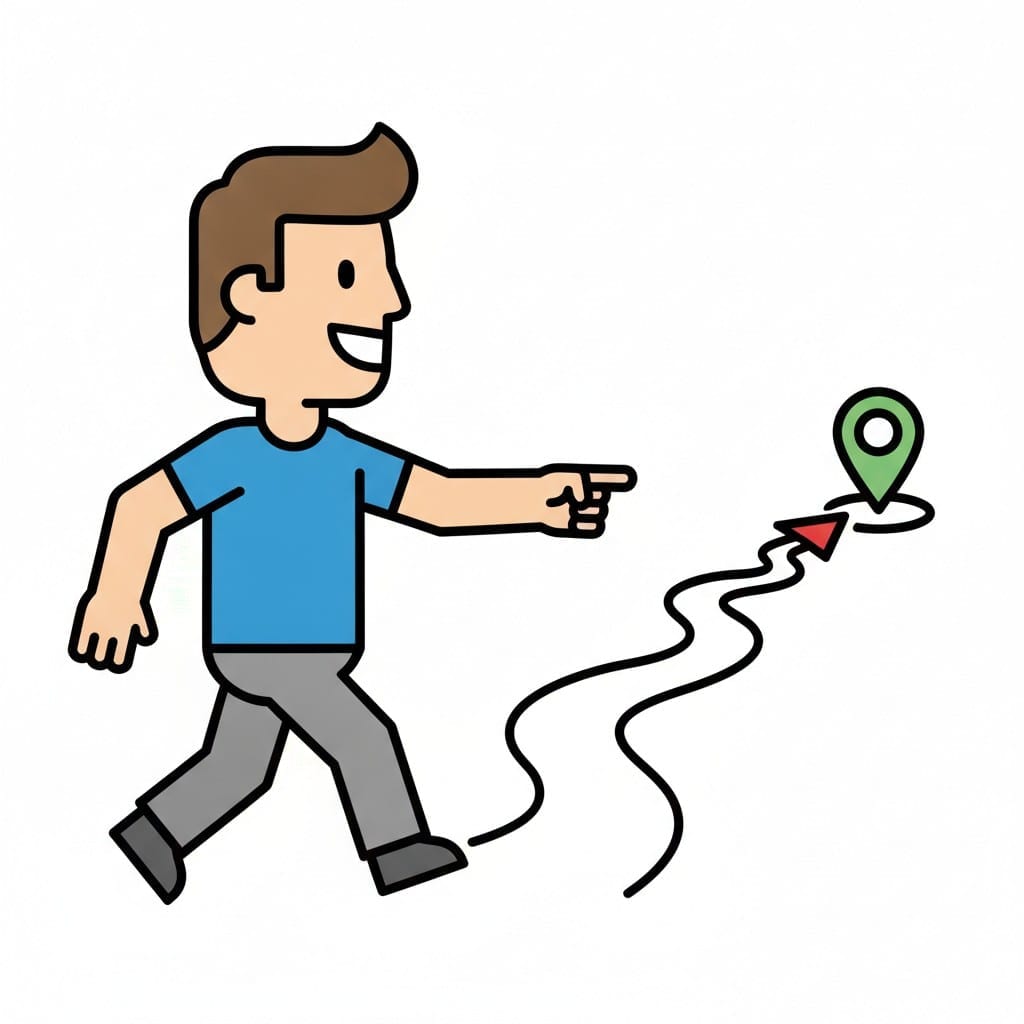 ♂
♂Man walking to the destination
A man strides forward, pointing along a path toward a map pin.
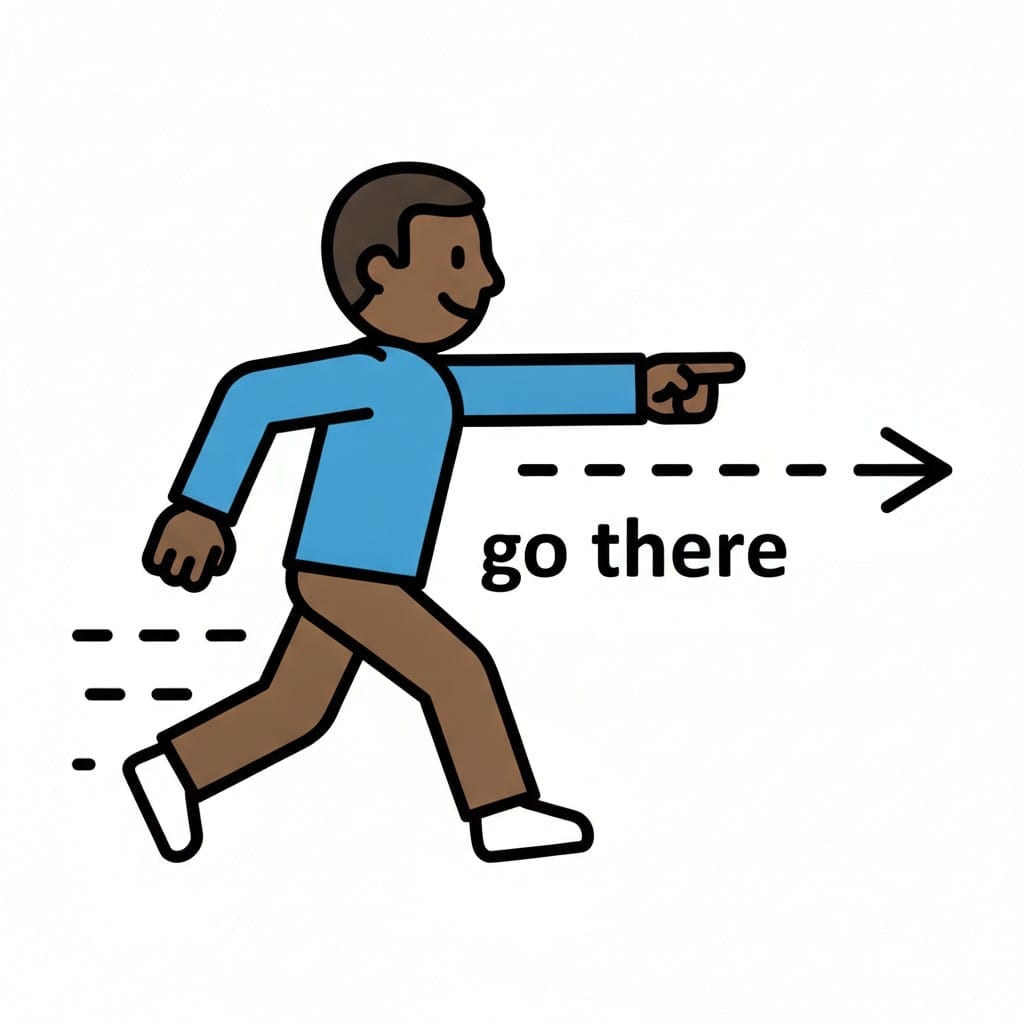 ♂
♂Go there
A boy strides forward and points at a dashed arrow showing the way.
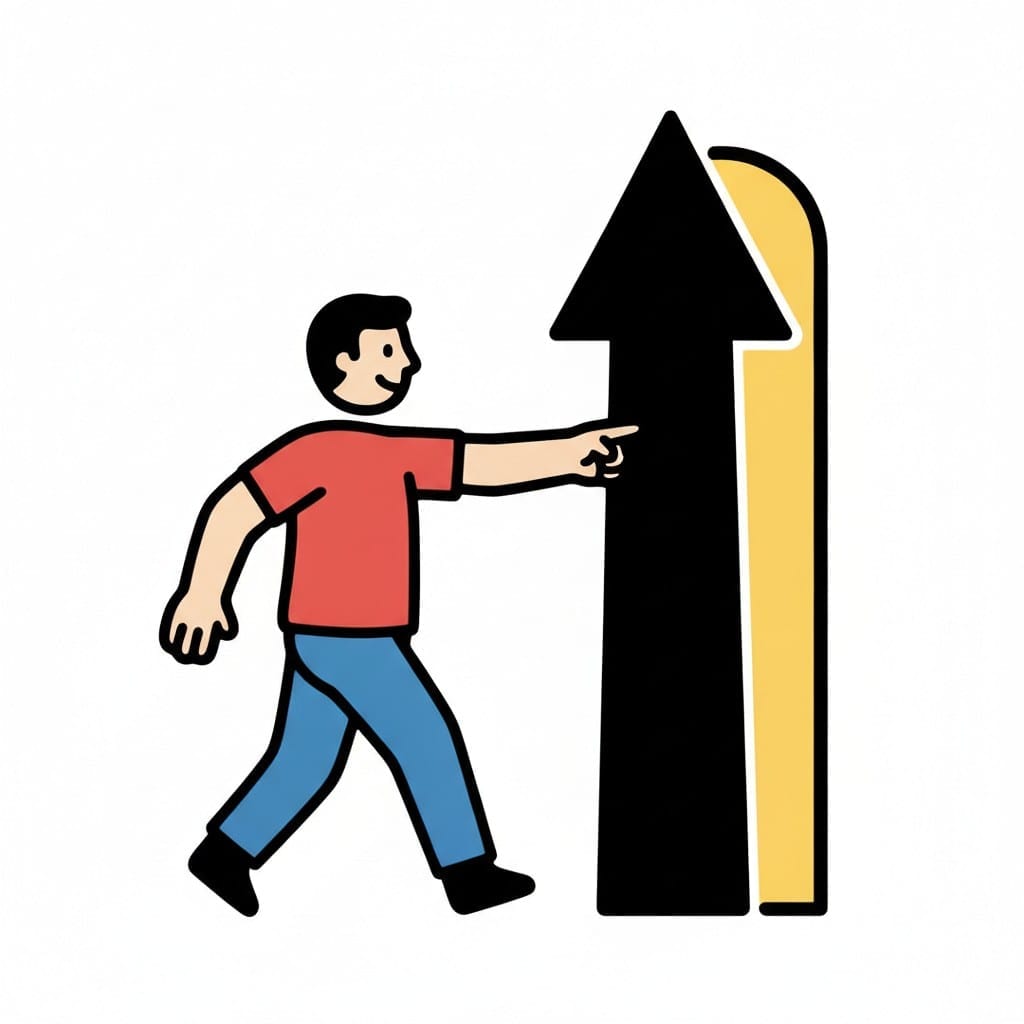 ♂
♂Follow the arrow
A man walks ahead and points at a large arrow pointing upward.
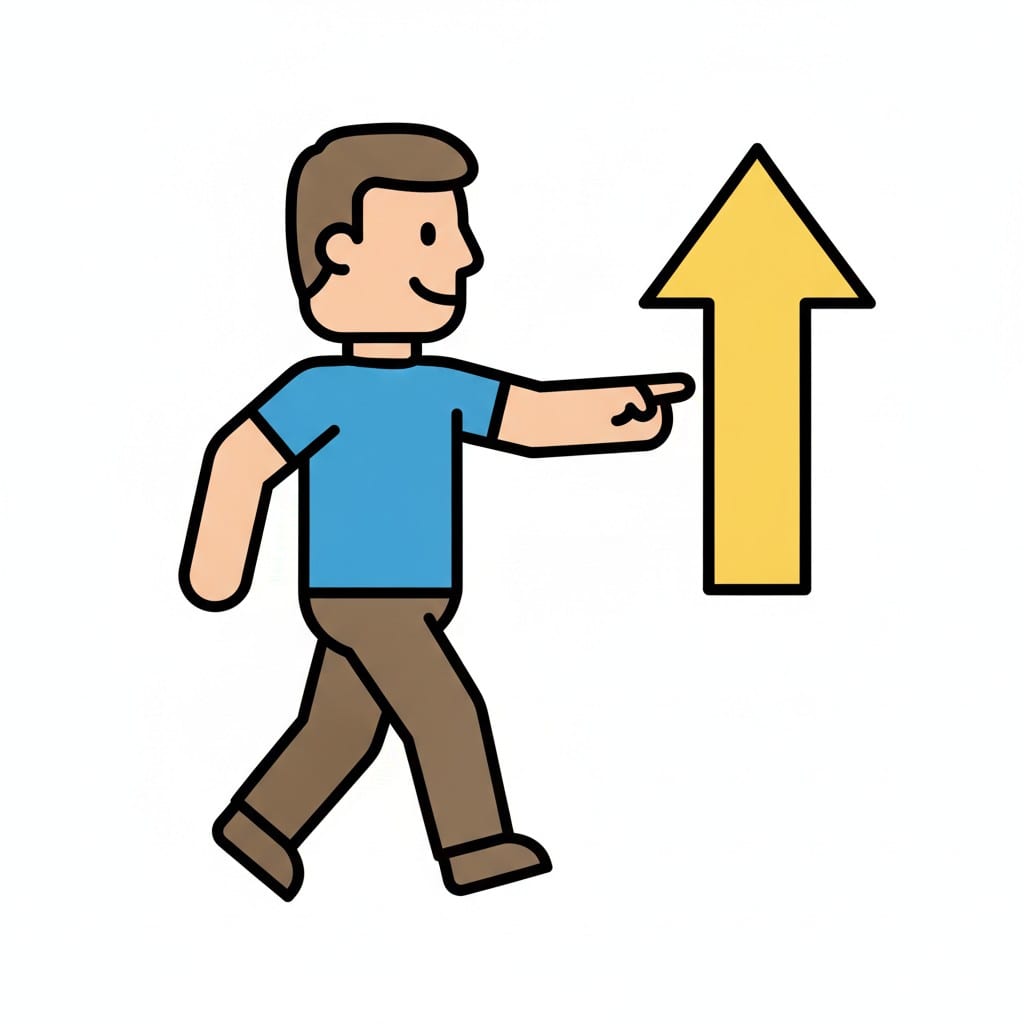 ♂
♂Point to the goal
A man in a blue t-shirt points toward a yellow arrow as he walks.
About this visual support
The question of how far is left gets asked not because the child is impatient but because the distance has no measuring points. A straight road without features offers nothing to tick off, and then every metre feels as long as the one before. Legs tire because the body has no idea how much energy to save.
Pictures give the route structure. The post box, the bridge, the red gate and the last hill turn into concrete stages the child can watch run out one by one. That makes the walk measurable without a clock, and a tired five-year-old often manages considerably further when the next landmark is visible in front of the next step.
A tip: let the child hold the row of pictures and point out each landmark as you pass it, so ticking off becomes part of walking rather than a stop. In Routined you can save the same route as a recurring routine to school or to training, and try the app for 14 days at no cost.
Use this image in a schedule
Build your own visual schedule with this image and download it as a print-ready PDF. Completely free.

More similar visual supports
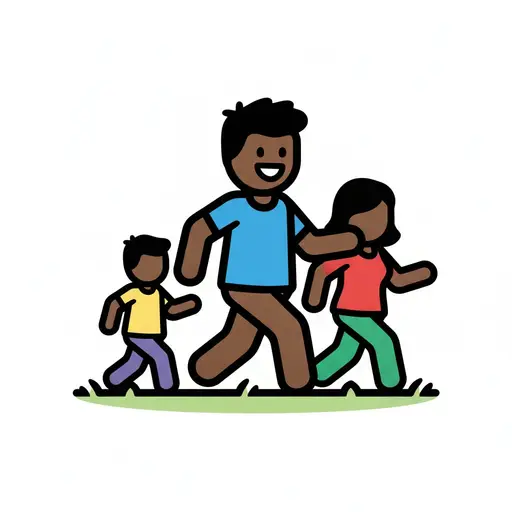
Family walk
An adult and two children walk together on the grass.
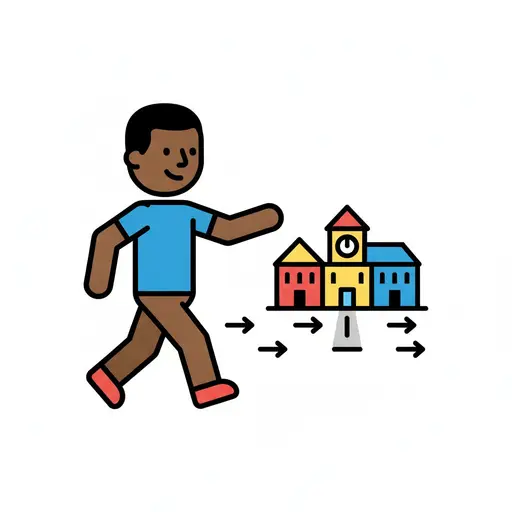
Walk to Town
A person walks toward colorful town buildings with arrows showing the way.
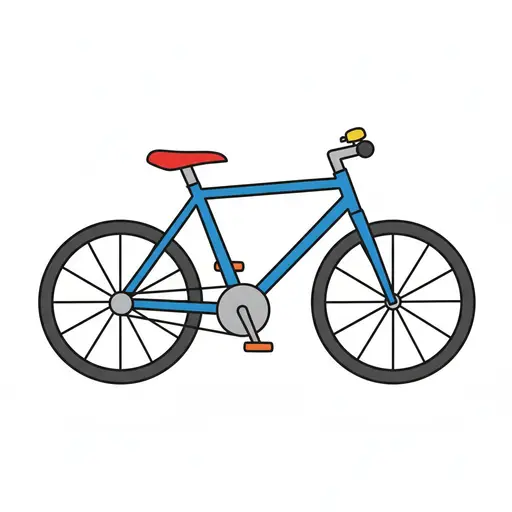
Bike
A blue bicycle seen from the side with a red saddle, orange pedals and a bell on...
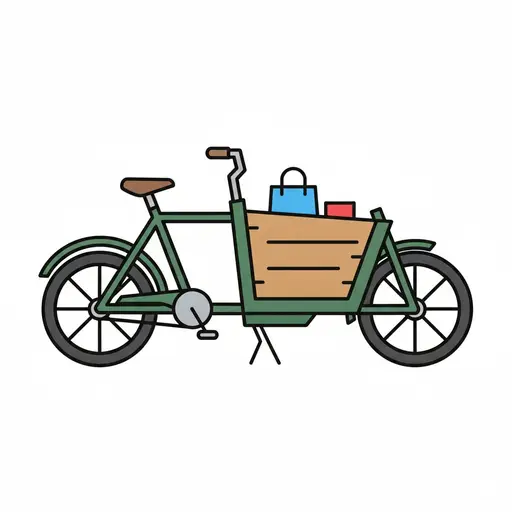
Cargo bike
A green cargo bike seen from the side with a wooden box at the front holding a b...
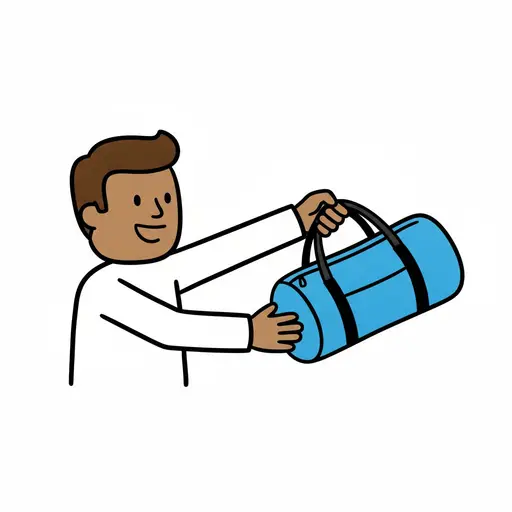
Fetch the gym bag
A boy reaches out and picks up a blue sports bag.
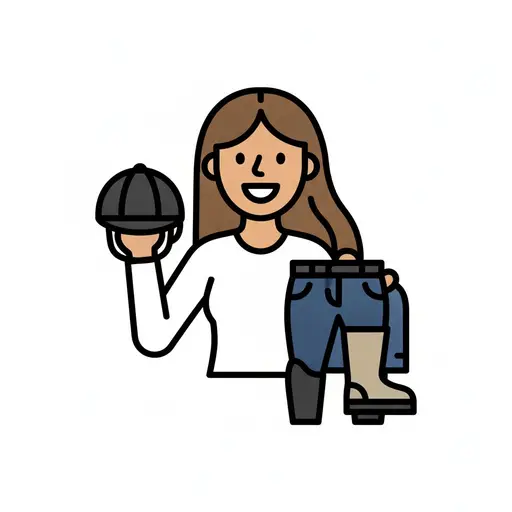
Get riding clothes
A girl holds up a black riding helmet next to a pair of breeches and riding boot...
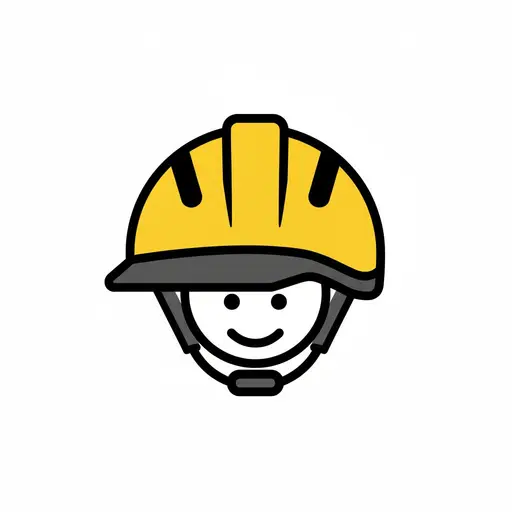
Helmet
A smiling face wearing a yellow helmet.
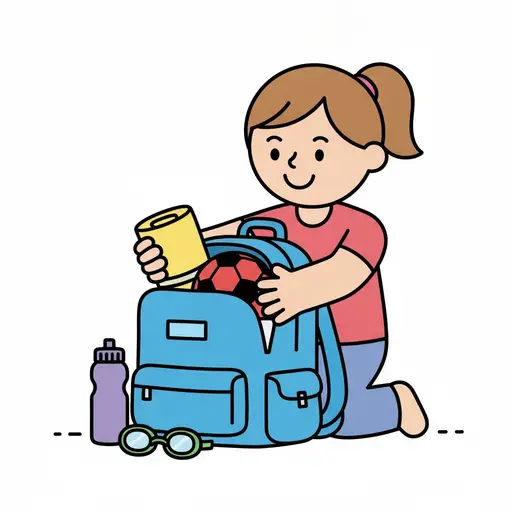
Pack for activities
A girl packs a blue backpack with a ball and a rolled towel, and a water bottle ...
Take the visual supports with you
In Routined you build schedules from these pictures, add timers and voice instructions, and your child follows the day on their own.


* 14-day free trial included for new users.