Walk to Town
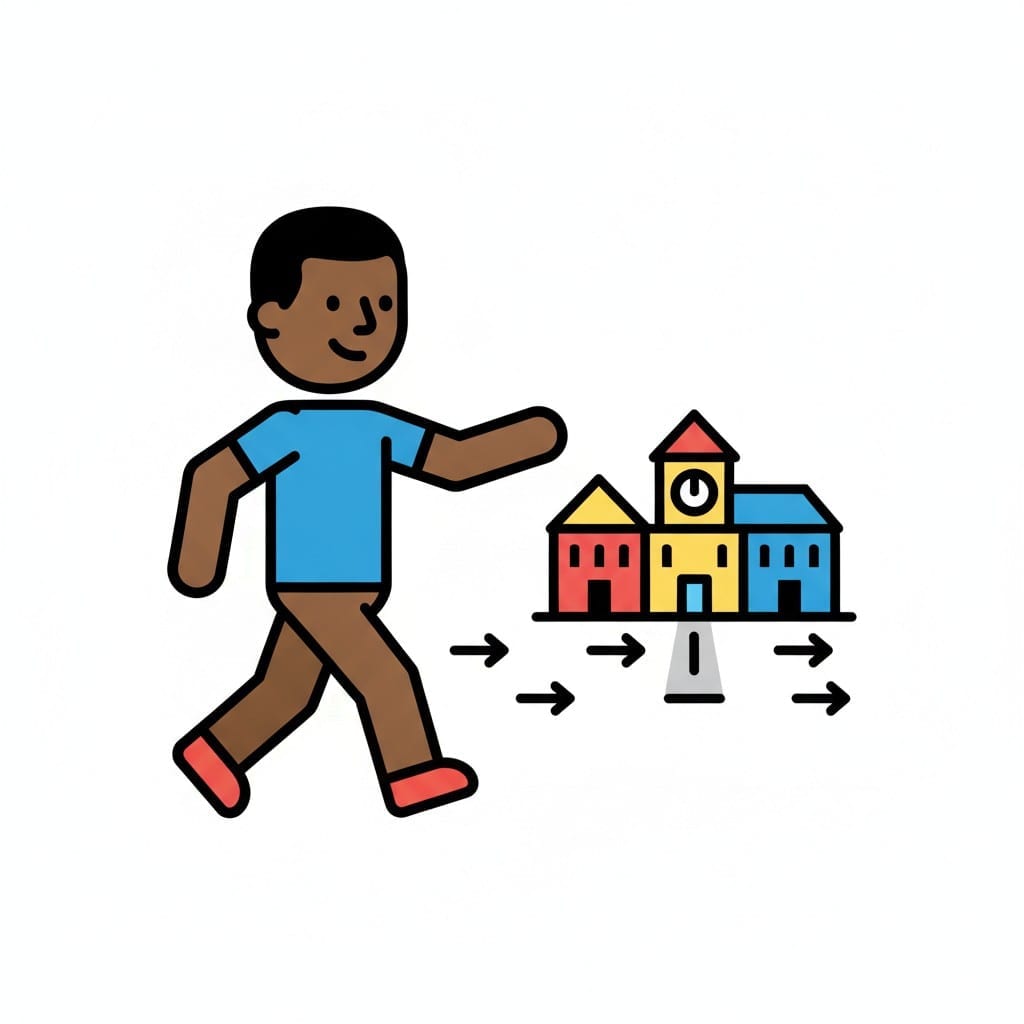
The question how much further does not come from laziness, but from the fact that a stretch with no visible end feels endless. When a child can see where the walk finishes, the legs grow lighter. The visual support below breaks the way into parts you can take in.
 ♂
♂Walk to Town
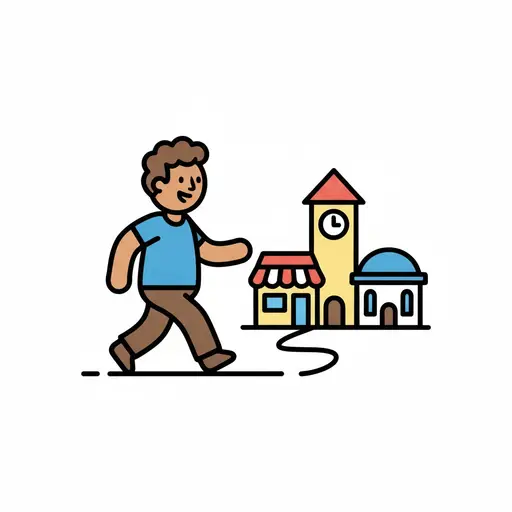
A person walks toward colorful town buildings with arrows showing the way.
About this visual support
A walk into town can feel any length at all for someone with no sense of the distance. Without a visible finish, the child has no idea whether two minutes are left or twenty, and so every step grows heavier than it needs to be, because the body does not pace itself when it cannot tell how long the effort must last.
Visual support helps by giving the way a shape the child can grasp. When the stretch is broken into known points, such as the shop, the playground, the bridge, the last hill, the unwieldy question how far is left turns into a row of small targets ticked off one by one. The walk becomes a series of short legs instead of a single long, uncertain road.
One concrete tip: pick two or three clear landmarks along your particular route and point them out in advance. When the child passes one, they know exactly how much of the distance is done, and the end suddenly feels within reach.
If you want the legs of the route along as you go, you can add them to the Routined app and check off the landmarks one after another, so the progress shows right there in your hand.
Use this image in a schedule
Build your own visual schedule with this image and download it as a print-ready PDF. Completely free.

More similar visual supports
Family walk
An adult and two children walk together on the grass.
Walk the bike
A smiling boy in a blue t-shirt and black shorts walking beside a red bicycle wh...
Walk there
A man in a blue t-shirt points toward a yellow arrow as he walks.
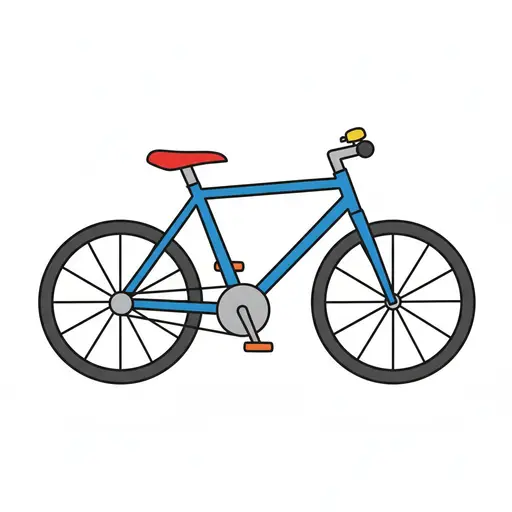
Bike
A blue bicycle seen from the side with a red saddle, orange pedals and a bell on...
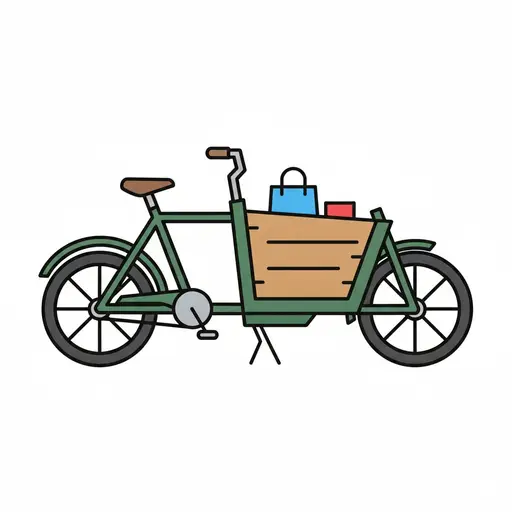
Cargo bike
A green cargo bike seen from the side with a wooden box at the front holding a b...
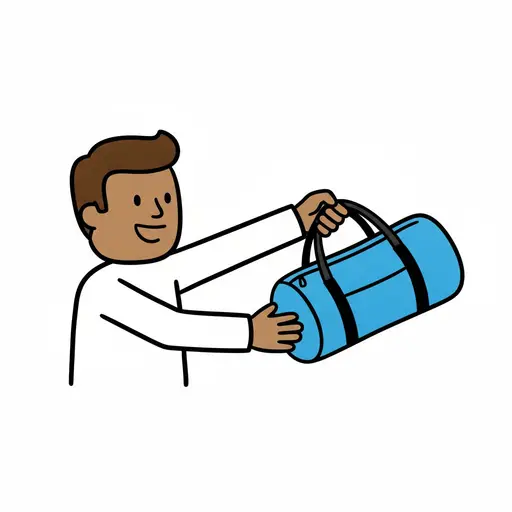
Fetch the gym bag
A boy reaches out and picks up a blue sports bag.
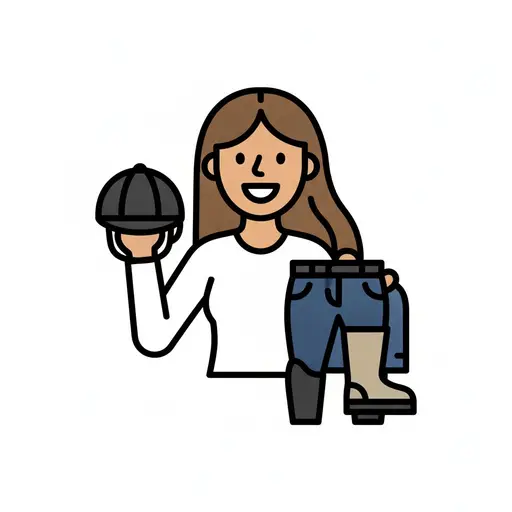
Get riding clothes
A girl holds up a black riding helmet next to a pair of breeches and riding boot...
Go to Town
A boy walks along a path toward town buildings with a clock tower.
Take the visual supports with you
In Routined you build schedules from these pictures, add timers and voice instructions, and your child follows the day on their own.


* 14-day free trial included for new users.