Get the bag
A child sets off to fetch the bag, passes a window, spots the cat and returns with no bag but a detailed report about the cat. The steps below turn the errand into something visible that survives the walk down the hall.
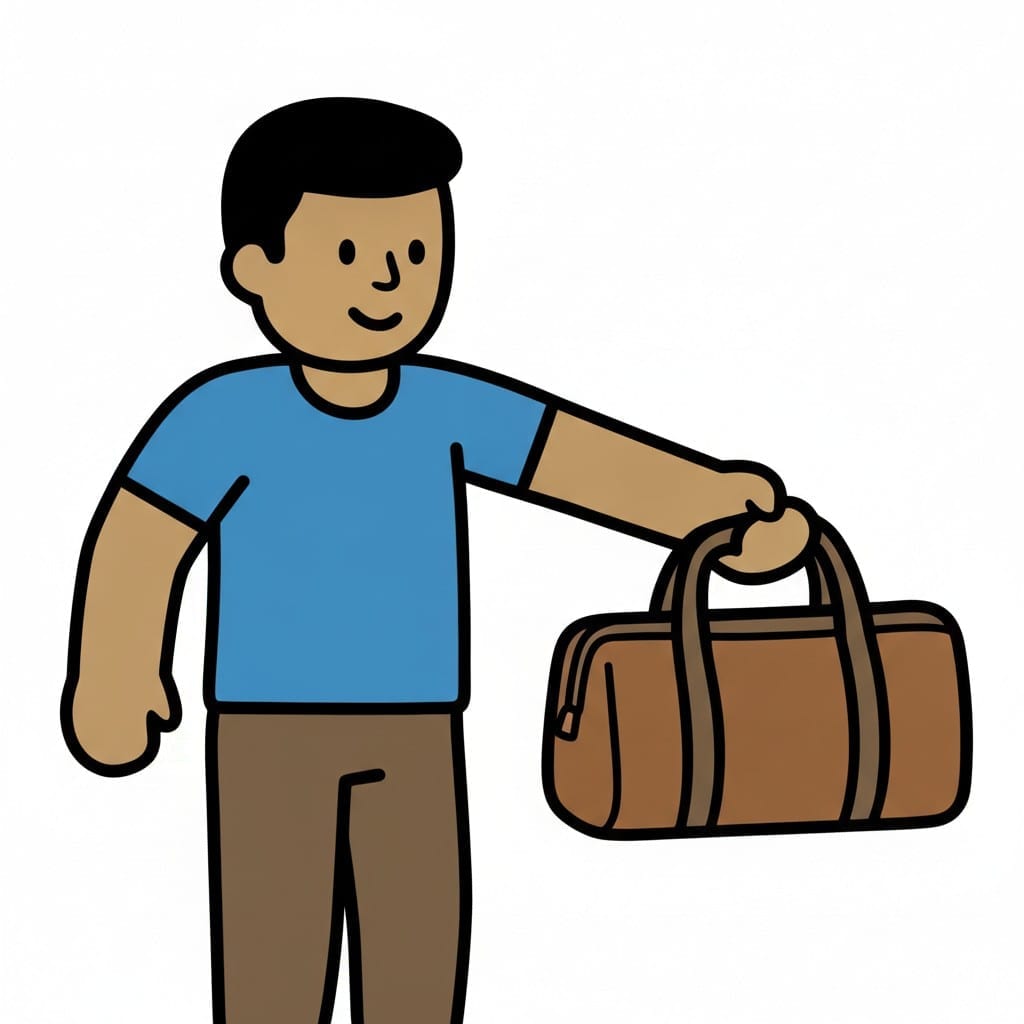 ♂
♂Get the bag
A boy holds a brown duffel bag in his hand, ready to head out.
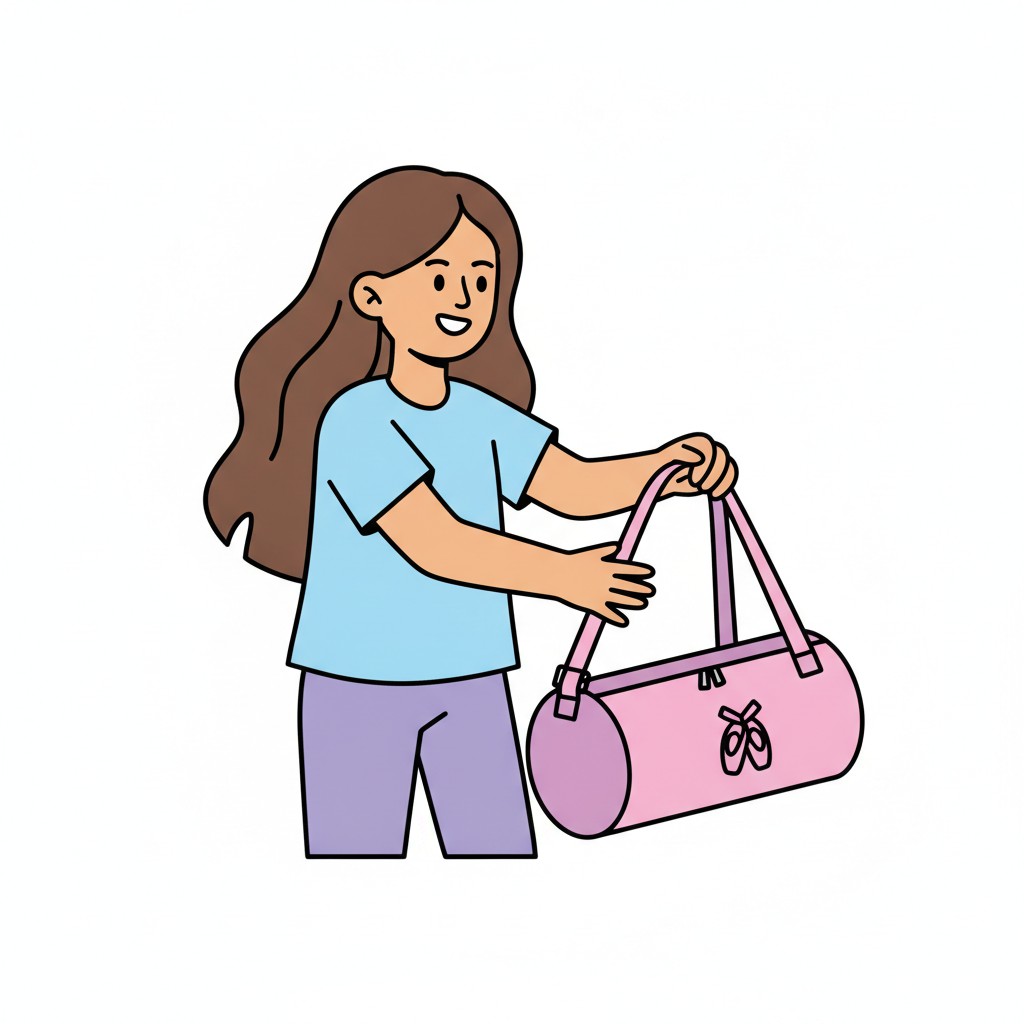 ♀
♀Take the bag with you
A person picks up a pink bag with a ballet shoe motif.
About this visual support
The errand rarely survives the journey. Between the kitchen and the room where the bag lives there is a whole corridor of other things: a screen, a question from a sibling, a toy on the floor. By the time the child comes back, the memory of what they went for has gone, and a parent is left repeating the same sentence for the third time.
Visual support works here because it gives the errand a body outside the head. A card carried in the hand, or a strip of pictures by the front door, means the question of what am I doing has an answer that can be looked at halfway down the hall. Make the picture place specific: photograph the actual hook or chair where the bag belongs, so the step is about that spot rather than bags in general. The same picture then works in the evening, when the bag goes back.
This short journey can sit inside a morning routine in Routined, with a picture and a tick once the bag is by the door. The pictures here download free, and the app has a 14 day trial.
Use this image in a schedule
Build your own visual schedule with this image and download it as a print-ready PDF. Completely free.

More similar visual supports
Bring backpack
A smiling girl in a blue top swings a yellow backpack onto her shoulder as she s...
Check the bag
Person packing and checking the contents of a bag
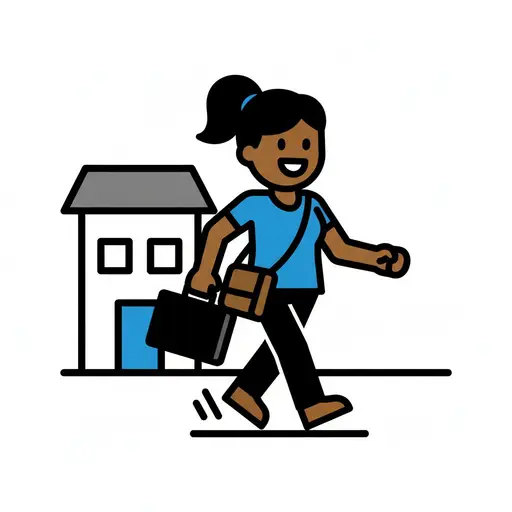
Go to work
A smiling person walks away from a house carrying a briefcase and a shoulder bag...
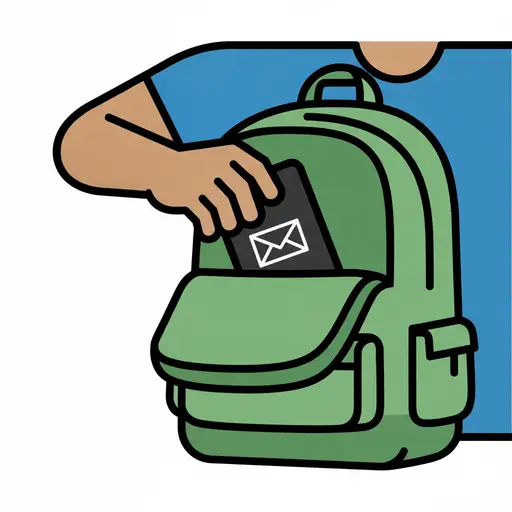
Pack phone
Close-up of a hand sliding a dark phone with an envelope icon on its screen into...

Put on the backpack
A smiling girl puts a blue backpack on over her shoulder.
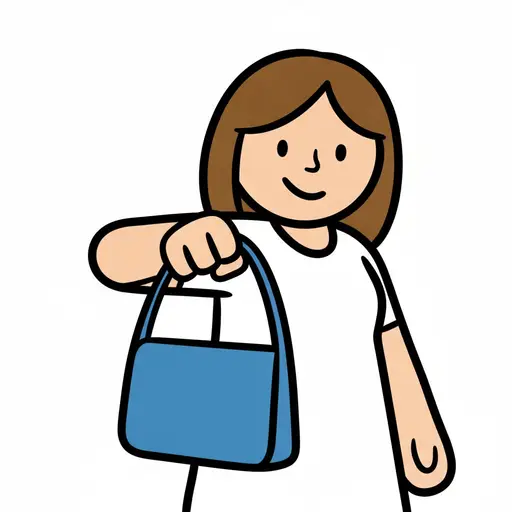
Take the bag
A smiling girl holds a blue bag by its handle.
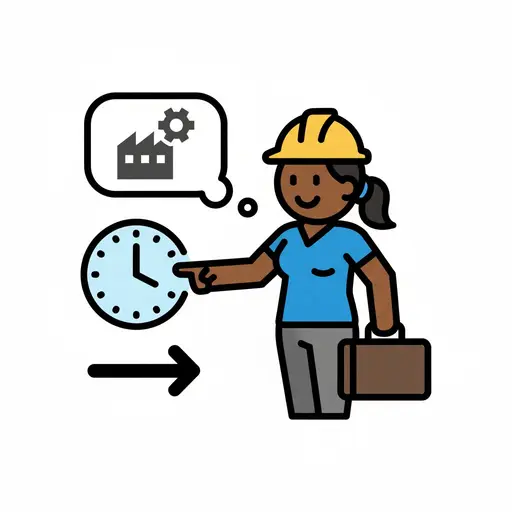
Before work
A woman wearing a yellow hard hat and blue shirt, holding a toolbox and pointing...
Bring keys and phone
A woman holds a set of keys in one hand and a smartphone in the other.
Take the visual supports with you
In Routined you build schedules from these pictures, add timers and voice instructions, and your child follows the day on their own.


* 14-day free trial included for new users.