Bass lesson
A bass lesson asks for two things at once: precision in the fingers and the nerve to let an adult hear every wrong note up close. That's a lot to carry. The pictures below break the lesson into smaller pieces.
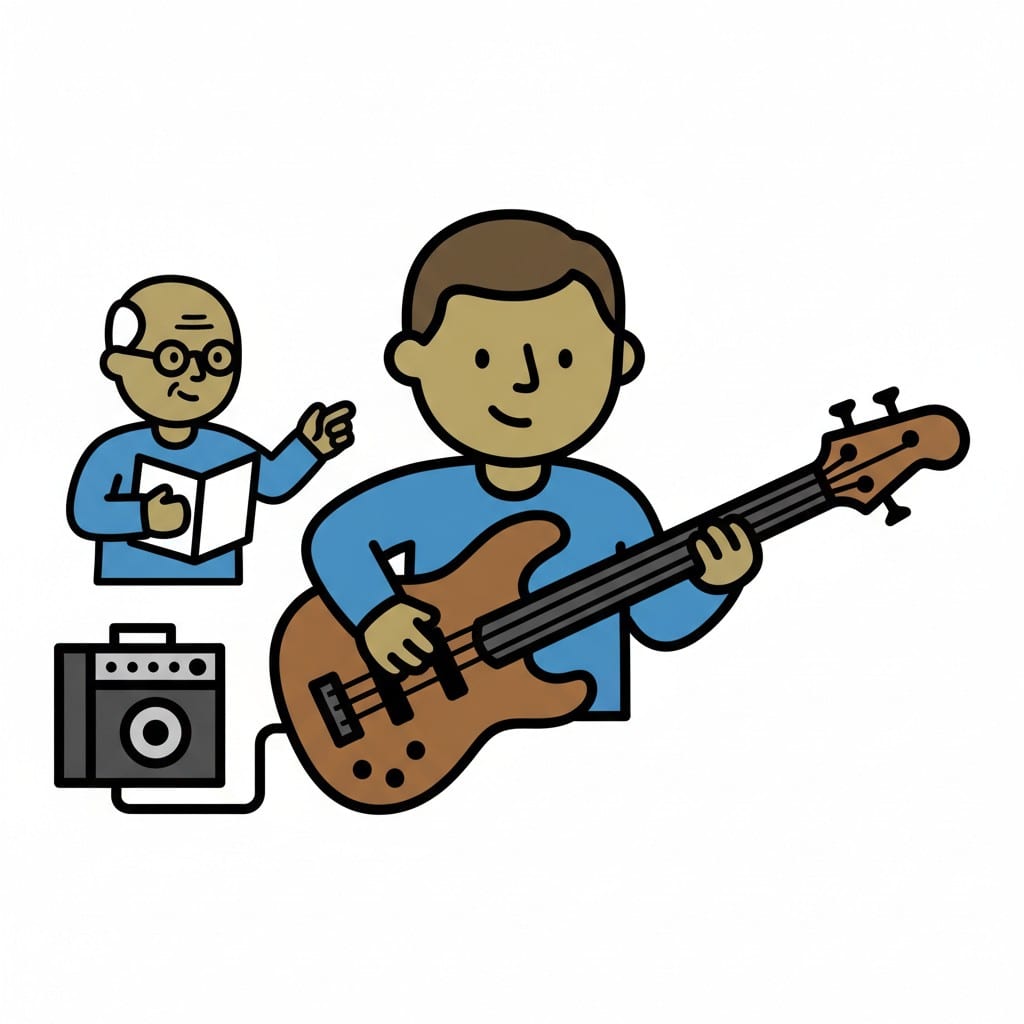 ♂
♂Playing bass
A person plays a bass guitar with an amplifier while an older person points to a book.
About this visual support
Learning the bass is a rare combination of fine motor work and social exposure. The fingertips need the exact string and the exact fret, and a meter away sits a teacher who hears everything. For many children, that presence — not the playing itself — is the hard part, because every mistake is audible to someone whose opinion counts.
Visual support helps by making the shape of the lesson predictable before the sound even starts. Tune up, warm up, revisit last week's riff, learn something new, play through, ask questions. When the child knows what comes next, the alertness drops a notch and attention can go where it's needed: into the fingers.
One concrete tip: after the lesson, have the child point to the picture that felt hardest and take that image home as a marker for the week's practice. Home practice becomes aimed at something specific instead of a vague "I should practice". In the Routined app the steps can be saved as a recurring routine, so the same sequence travels between music school and the bedroom.
Use this image in a schedule
Build your own visual schedule with this image and download it as a print-ready PDF. Completely free.

More similar visual supports
Recorder lesson
A boy plays a recorder at a music stand with a speech bubble showing a music not...
Write
A boy in a blue t-shirt holds a red pen and writes the word HELLO in large lette...
Afternoon lessons
A boy sits at a desk writing in an open book, with a clock and books beside him.
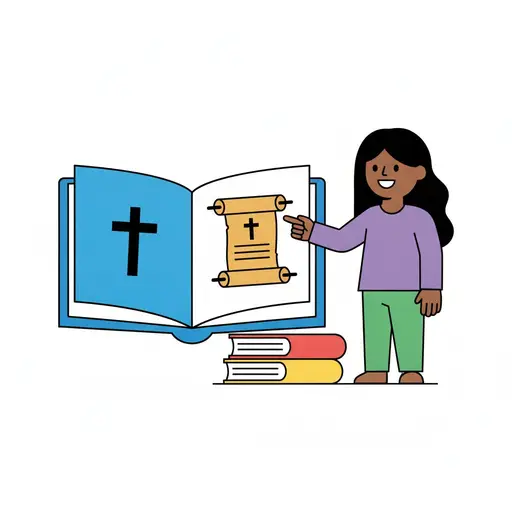
Christian studies
A smiling pupil points at a large open blue book showing a cross and a scroll, b...

Danish
A round pastry icon with golden petals, white sprinkles and a red round filling ...
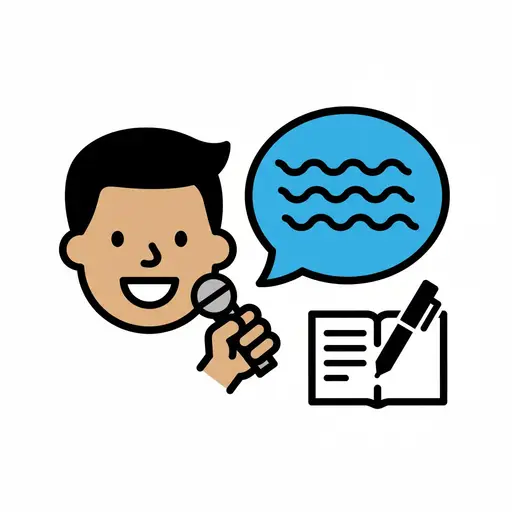
Do dictation
A person's head speaks into a microphone, with a speech bubble showing waves. Ne...
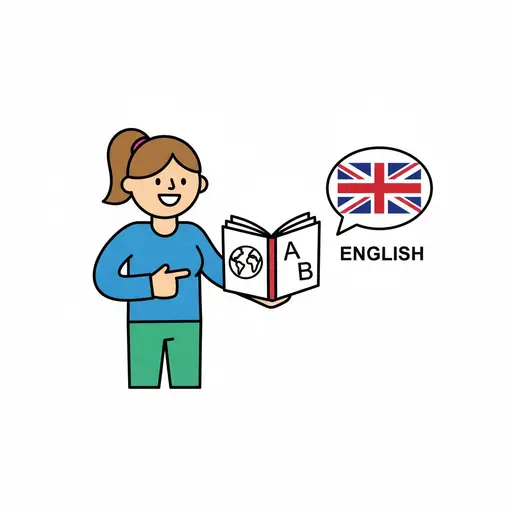
English
A smiling person with a ponytail holds an open book showing a globe and the lett...

English Class
An illustration symbolizing an English class with an open book displaying letter...
Take the visual supports with you
In Routined you build schedules from these pictures, add timers and voice instructions, and your child follows the day on their own.


* 14-day free trial included for new users.