Study driving
Driving theory asks for long focus on abstract rules while the body has to stay seated. For many young learners that clashes head-on with what the brain can hold in one go. The steps here below break the session apart.
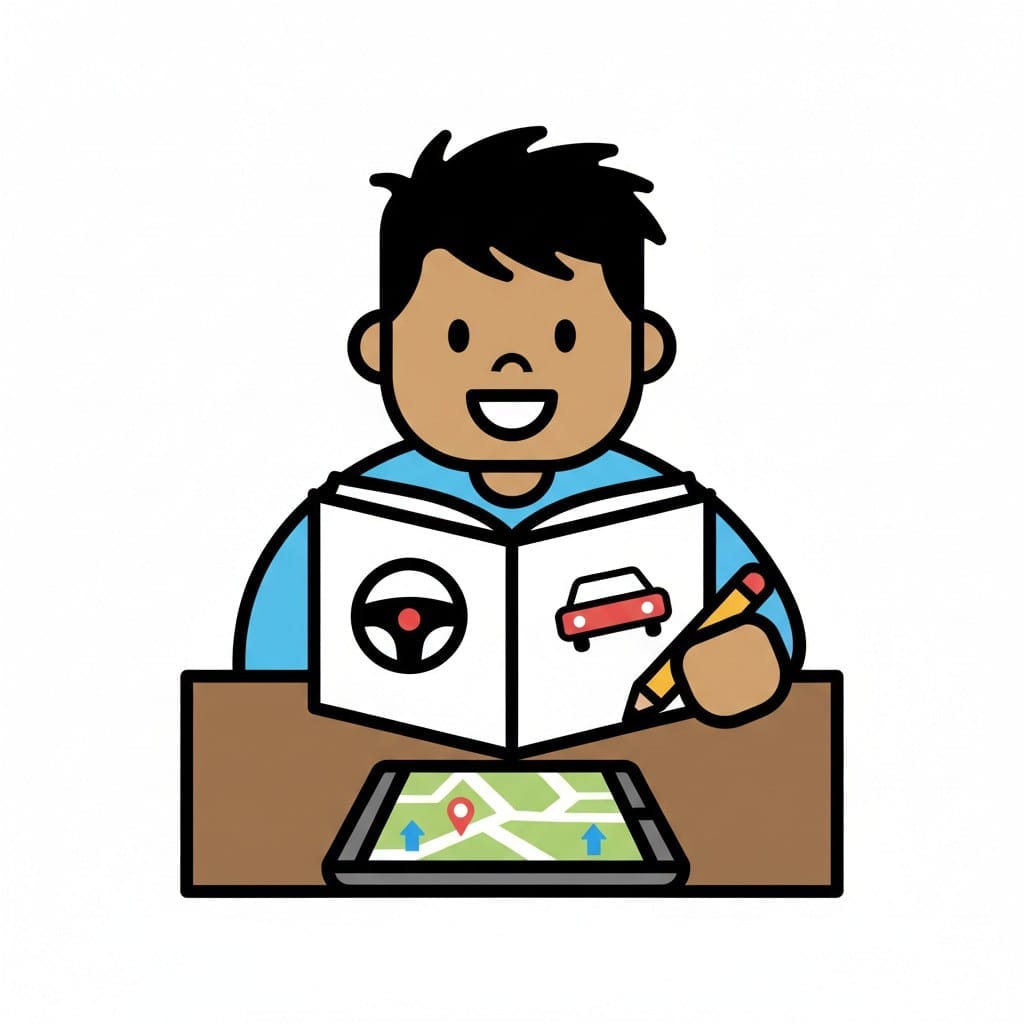 ♂
♂Boy studying driving
A boy sits at a table studying a driving lesson book featuring a steering wheel and a car illustration. He has a pencil and a tablet showing a map in front of him.
About this visual support
Studying for a driving licence is an odd task for the body. The rules are abstract, the text runs long, and the chair stays still for hours on end. At the same time, switching between movement and stillness is exactly what many young adults need to keep attention up. That makes theory as much a stamina exercise as a knowledge one.
Visual support helps because it turns an invisible block of text into a visible curve. When the pictures show open a chapter, read a section, write a rule down, stand up and move, drink water and take a mock test, the learner can see how much is left and where the breaks sit. Quite a bit of the dread that usually shuts the book after ten minutes disappears there.
A concrete tip: put a short walking break after each chapter rather than one long break at the end. Many learners last longer in total when the movement is woven through. With Routined you can build the study chain itself, drop in a timer per chapter and try the setup free for fourteen days.
Use this image in a schedule
Build your own visual schedule with this image and download it as a print-ready PDF. Completely free.

More similar visual supports
Get smarter
An illustration of a person with books and arrows above her head, symbolizing le...
Learn words
A boy reads an open book with words and a lightbulb symbolizing new ideas around...
Practice math
A girl sits at a table writing in a math book. A calculator is next to the book....
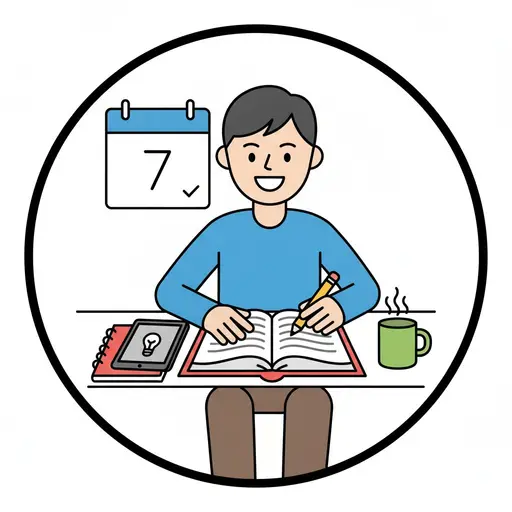
Study
A person sits at a desk writing in a book, with a calendar, a tablet and a mug b...
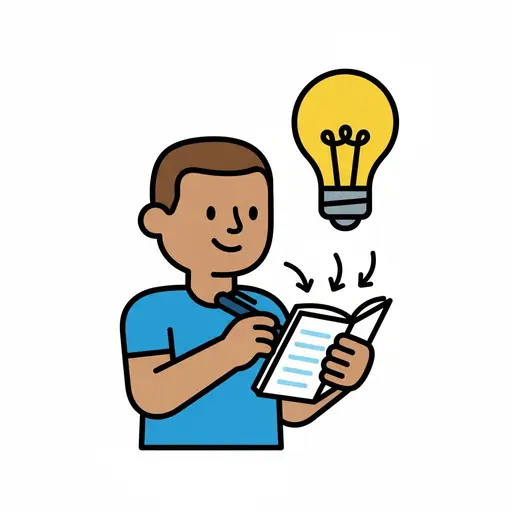
Take note
A boy holding a pen and writing in a notebook. A glowing lightbulb floats above ...
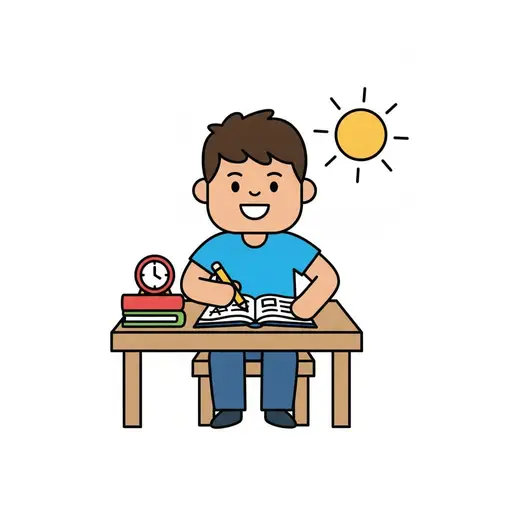
Afternoon lessons
A boy sits at a desk writing in an open book, with a clock and books beside him.
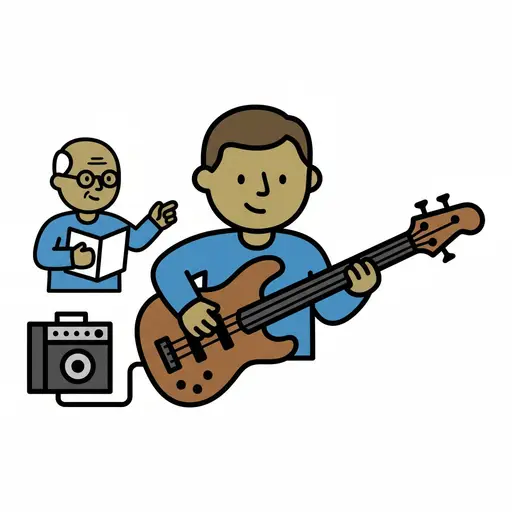
Bass lesson
A person plays a bass guitar with an amplifier while an older person points to a...
Be quiet
An illustration of a person holding a finger to their lips to signal to be quiet...
Take the visual supports with you
In Routined you build schedules from these pictures, add timers and voice instructions, and your child follows the day on their own.


* 14-day free trial included for new users.