Setting Family Screen Time Rules That Everyone Can Follow
Blanket bans rarely last. Here is a calmer way to set family screen time rules together, model them yourself, and use visual reminders and timers to reduce the daily battles, especially for children with ADHD or autism.
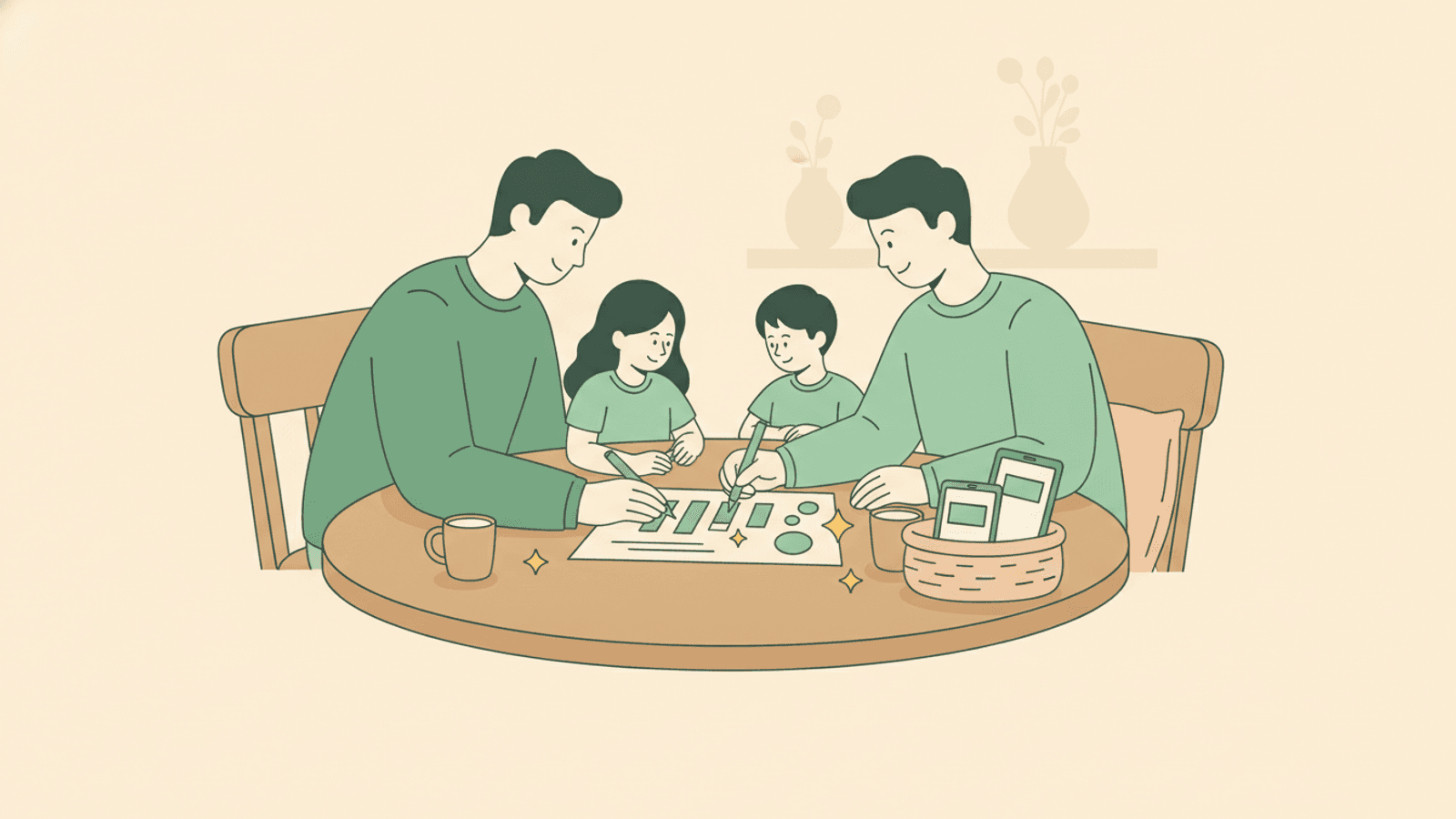
Family screen time rules are the shared agreements your household makes about when, where, how much and what kind of screen use is okay. The most effective ones are not handed down as a ban from above. They are decided together, written down as a simple family media agreement, and backed up by visual reminders so everyone knows what to expect.
If you are exhausted by the daily tug-of-war over tablets and consoles, you are not failing as a parent. Screens are designed to be hard to put down. The good news is that clear, predictable rules do more to calm the battles than any amount of nagging, and they are something you can build gradually.
Why blanket bans tend to fail
A sudden total ban feels decisive, but it usually backfires. Screens become the forbidden fruit, every request turns into a negotiation, and children learn to sneak time rather than manage it.
Rigid rules also leave no room for real life. A long car journey, a rainy Sunday or a video call with a grandparent are all reasonable exceptions, and a rule with no flexibility either gets broken or breeds resentment. What children actually respond to is predictability, not severity.
Make family screen time rules together
Sit down as a family and write a short media agreement together. When children help shape the rules, they understand the reasons behind them and are far more likely to follow them. Keep it to a handful of clear points rather than a long list of restrictions.
Frame it around what the family values: sleep, mealtimes together, outdoor play, homework and being kind online. Older children can help set their own limits within boundaries you are comfortable with, which gives them a sense of ownership and a bit of practice at self-regulation.
What to decide together
- When: which times of day screens are allowed, and which are off-limits, such as before school, during meals and the hour before bed.
- Where: which rooms are fine and which are screen-free, such as bedrooms and the dinner table.
- How much: a daily or weekly amount that feels reasonable for each child's age.
- What content: which games, apps and shows are okay, and how you check age ratings together.
Model the rules yourself
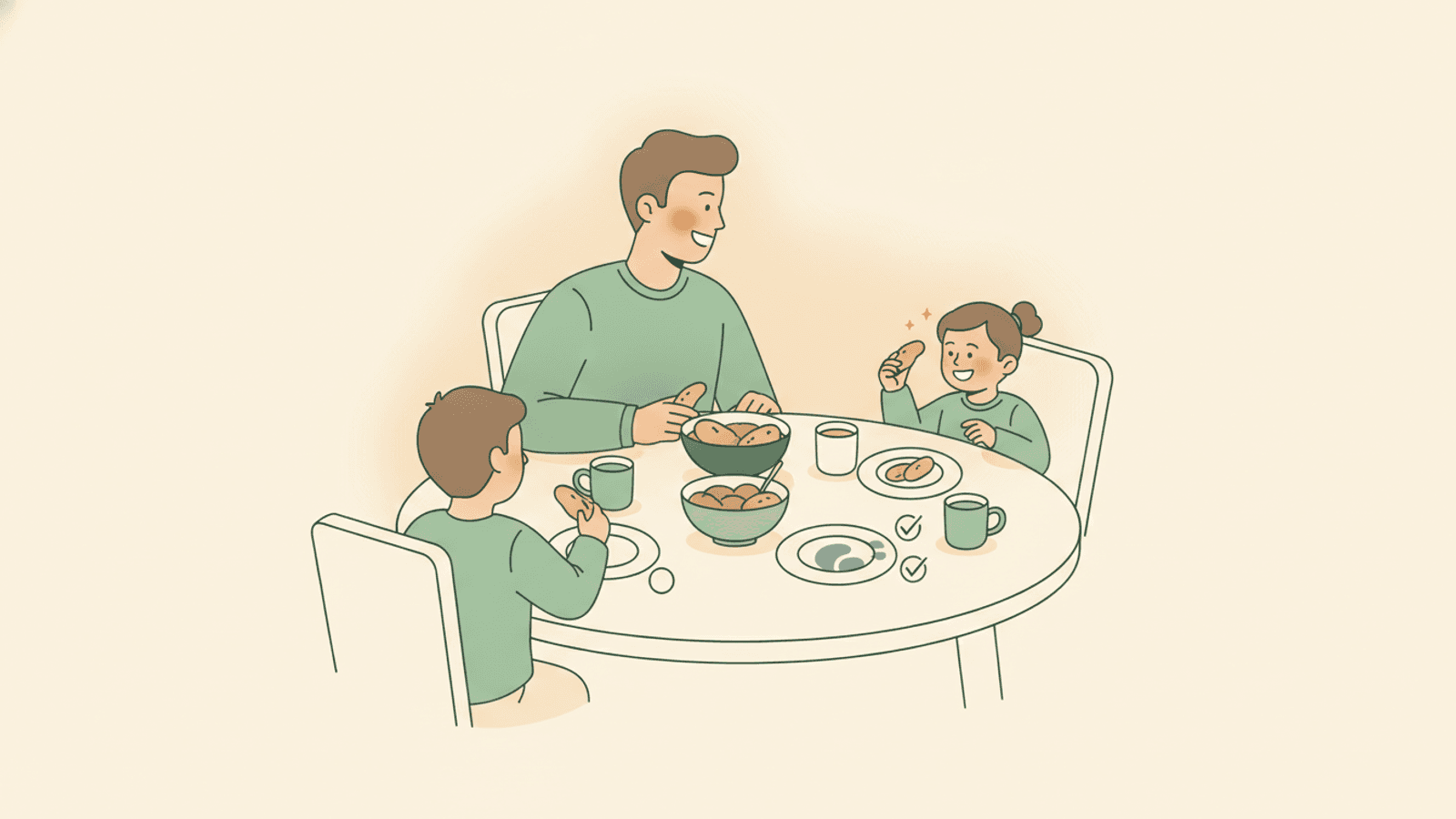
Children notice what we do far more than what we say. If phones are at the dinner table for the adults, the rule quietly stops meaning anything. Modelling the agreement yourself is the single most powerful thing you can do.
That does not mean being perfect. It means narrating your own choices out loud: putting your phone in a basket during dinner, or saying you will finish scrolling and then go for a walk. Seeing you manage your own screen time teaches self-regulation better than any lecture.
Set screen-free times and zones
Rather than counting every minute, it often helps to protect a few clear screen-free times and zones that apply to everyone. These anchors give the day a rhythm and remove a lot of case-by-case arguing.
- Mealtimes, so the family can talk and eat together.
- The hour before bed, to protect sleep and wind-down.
- Bedrooms overnight, with devices charging in a shared family spot.
- Homework time, unless the screen is part of the task.
Keep it consistent across both parents and carers
Rules only work if they mean the same thing wherever your child is. If one parent enforces the limit and the other quietly extends it, children learn to shop around for the easier answer, and the person holding the line ends up the villain.
Agree the rules between you first, out of earshot of the children, and share them with anyone else who cares for them: grandparents, a childminder, an ex-partner in a separate home. A shared, visible agreement means everyone is enforcing the same thing, and no single adult has to be the bad guy.
Revisit the rules as children grow
A screen agreement is a living document, not a one-off. What suits a six-year-old will feel patronising to a twelve-year-old, and new games, group chats and social platforms arrive constantly.
Plan to review the rules every few months, or whenever something changes: a new device, a new school year, a new app all their friends are using. Involve your child in the update so it stays a shared agreement rather than something imposed on them.
Use forewarnings to ease transitions off screens
Most screen battles happen at the moment of switching off, not during play. Being pulled out of an absorbing game with no warning feels genuinely jarring, and the meltdown that follows is often about the abrupt transition rather than defiance.
Give a forewarning instead. A gentle heads-up that there are ten minutes left, then five, then a clear signal that time is up, turns an ambush into a predictable ending. A visible countdown does this work for you, so the timer becomes the thing saying stop, not you.
Why predictable rules help children with ADHD or autism
For children with ADHD or autism, screens can be especially absorbing, and unexpected transitions can be especially hard. Predictable rules with visual reminders and timers reduce the uncertainty that fuels so many battles.
When a child can see what is coming next and how long is left, they do not have to hold the whole plan in their head or guess your intentions. A picture of what happens after screen time, paired with a visible timer, replaces a stressful surprise with a calm, expected routine, which lowers anxiety for the whole family.
How Routined helps
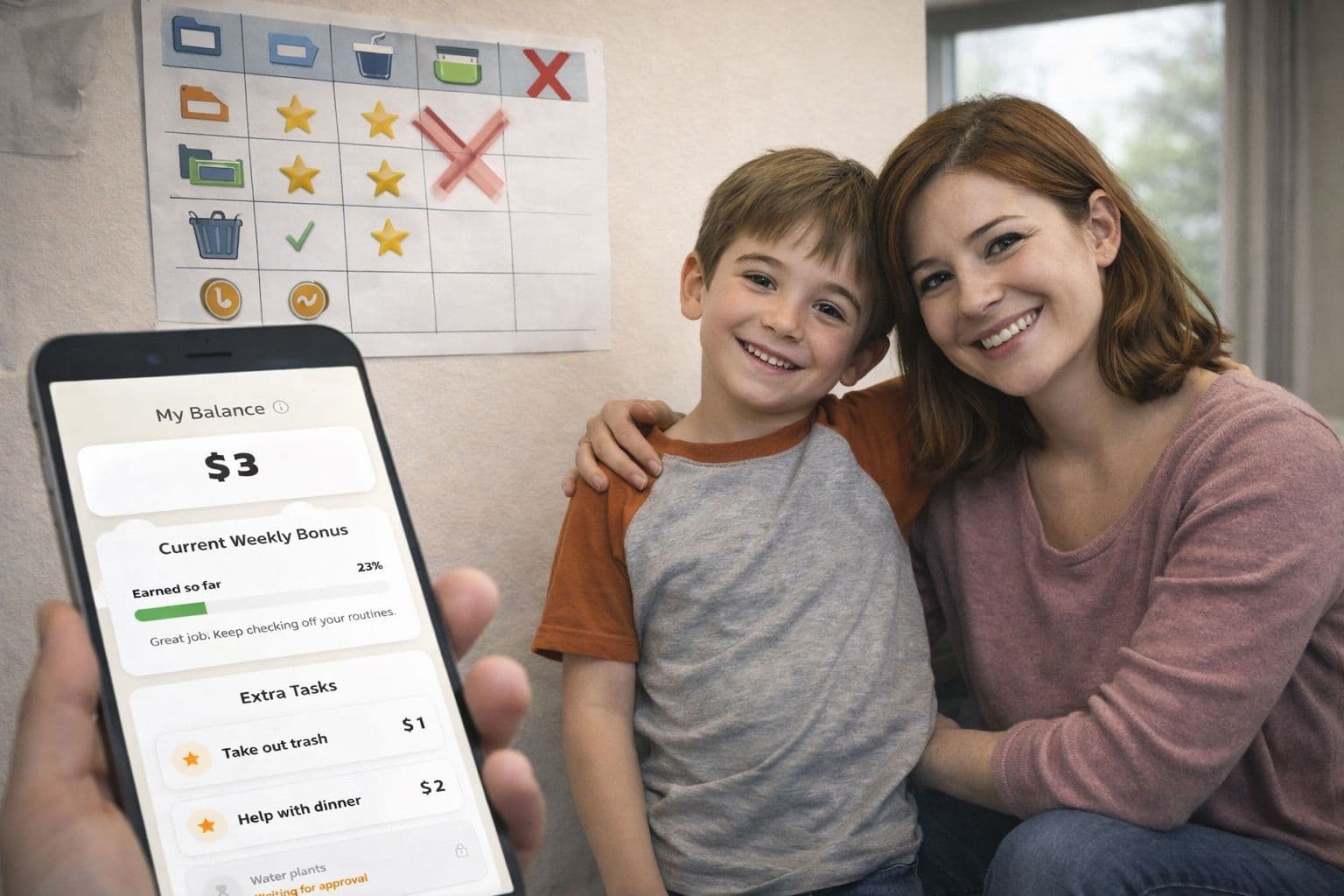
Routined lets you turn your agreed rules into a clear daily routine. You can build steps in a Standard text-and-checkbox view or a Visual Support view with big picture cards, using images from a built-in library, AI images or your own photos, so a child can see exactly what screen time looks like and what comes next.
An optional visual countdown timer on a step makes the end of screen time predictable, and you can record a short voice note for a step that plays automatically when your child opens it. If you use rewards, screen time can even be earned as minutes shown alongside the completed routine, so the limits feel fair rather than arbitrary.
The takeaway
You do not need to win a daily war over screens. You need rules your family helped write, that the adults model, that stay consistent across homes and carers, and that come with enough warning to make switching off feel predictable. Start with one or two screen-free anchors, add a clear forewarning before time is up, and let visual reminders do the reminding so you can stay the calm, kind parent in the room.
Read more
Frequently asked questions
How much screen time should a child have per day?
There is no single right number. Rather than fixating on a count, focus on protecting sleep, meals, homework and outdoor time, then agree an amount that fits your child's age and leaves room for those priorities.
How do we make screen time rules that our child will actually follow?
Make them together as a short family media agreement, keep them to a few clear points, model them as adults, and back them up with visual reminders and a warning before time is up so switching off feels predictable.
What should be in a family media agreement?
Decide when screens are allowed, where they can be used, how much time is reasonable, and what content is okay. Keep it short, put it somewhere visible, and review it as your child grows.
Why does my child melt down when screen time ends?
Being pulled out of an absorbing activity without warning is genuinely jarring, especially for children with ADHD or autism. Give a forewarning with a visible countdown so the ending is expected rather than a surprise.
How do we keep screen time rules consistent between two parents or homes?
Agree the rules privately between the adults first, then share them with everyone who cares for your child. A written, visible agreement means everyone enforces the same thing and no single adult becomes the bad guy.