Noise Sensitivity at Home: Helping a Child Who Finds Sound Overwhelming
The vacuum sends them running, the hand dryer causes a meltdown, a busy room is unbearable — for a child with noise sensitivity, everyday sounds can feel painfully loud or genuinely distressing. It is real, and home can be made much calmer.
The vacuum sends them running from the room, the hand dryer causes a full meltdown, the noise of a busy gathering is simply unbearable — for a child with noise sensitivity, everyday sounds can feel painfully loud or genuinely distressing. It is one of the most invisible struggles, because the rest of us barely notice the sounds that overwhelm them. It is real, though, and with a few changes home can become much calmer. Here is how.
What noise sensitivity is
Noise sensitivity means the nervous system registers ordinary sounds as too loud, too sharp or genuinely distressing. Some specific sounds — the vacuum, the blender, a hand dryer, a fire alarm — can be unbearable. Many sensitive children also cannot filter out background noise, so every sound competes for attention at once and the brain is quickly overwhelmed. For some it comes with fear, for others with a flash of anger at particular sounds like chewing or tapping. It is not being dramatic; the sounds genuinely feel different to them.
How it shows up at home
You might see your child covering their ears, fleeing or melting down at the vacuum, blender or hairdryer, becoming distressed by sudden or unexpected noise, avoiding noisy rooms and busy gatherings, or growing irritable and exhausted in a loud household. Some struggle to concentrate whenever there is background sound. A “loud” day at home can leave a sound-sensitive child frayed and dysregulated for hours afterwards, long after the noise has stopped.
Give them tools to control the sound
- Ear defenders or noise-reducing headphones for known-loud events — the vacuum, parties, fireworks — kept somewhere easy to grab.
- Earbuds with quiet music or a podcast can help mask unpredictable noise in busy places.
- Let your child leave the room or cover their ears without shame; never force them to “tough it out.”
Manage the home sound environment
- Warn before loud appliances — “I’m about to turn on the blender” — so it is never a sudden shock.
- Turn off background noise no one is using, like a TV or radio left on, to reduce the competing sound load.
- Use soft furnishings — rugs, curtains, cushions — to absorb sound and calm a hard, echoey room.
- Do the noisiest chores, like vacuuming, when your sensitive child is out or in another room.
Create a quiet retreat
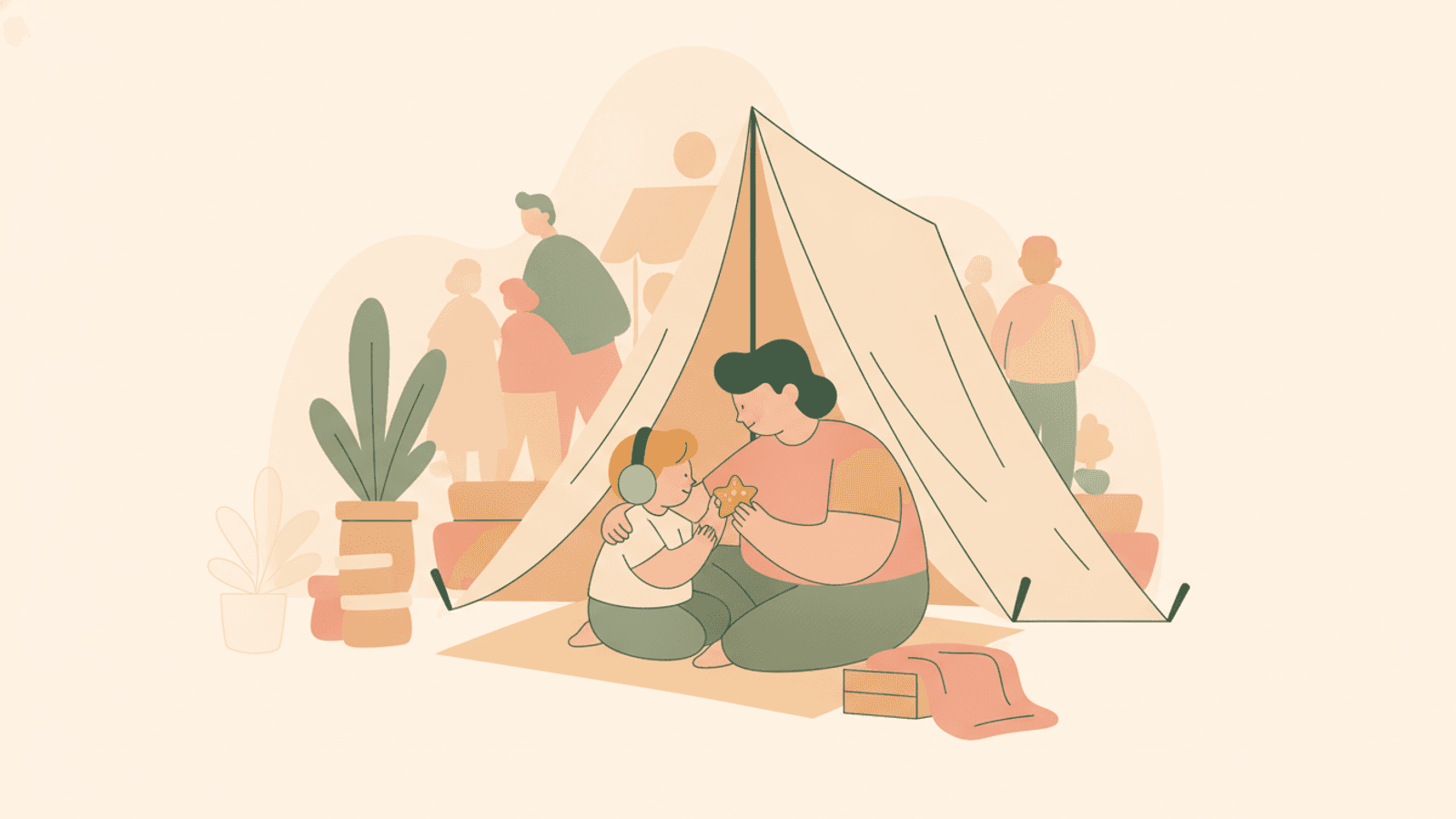
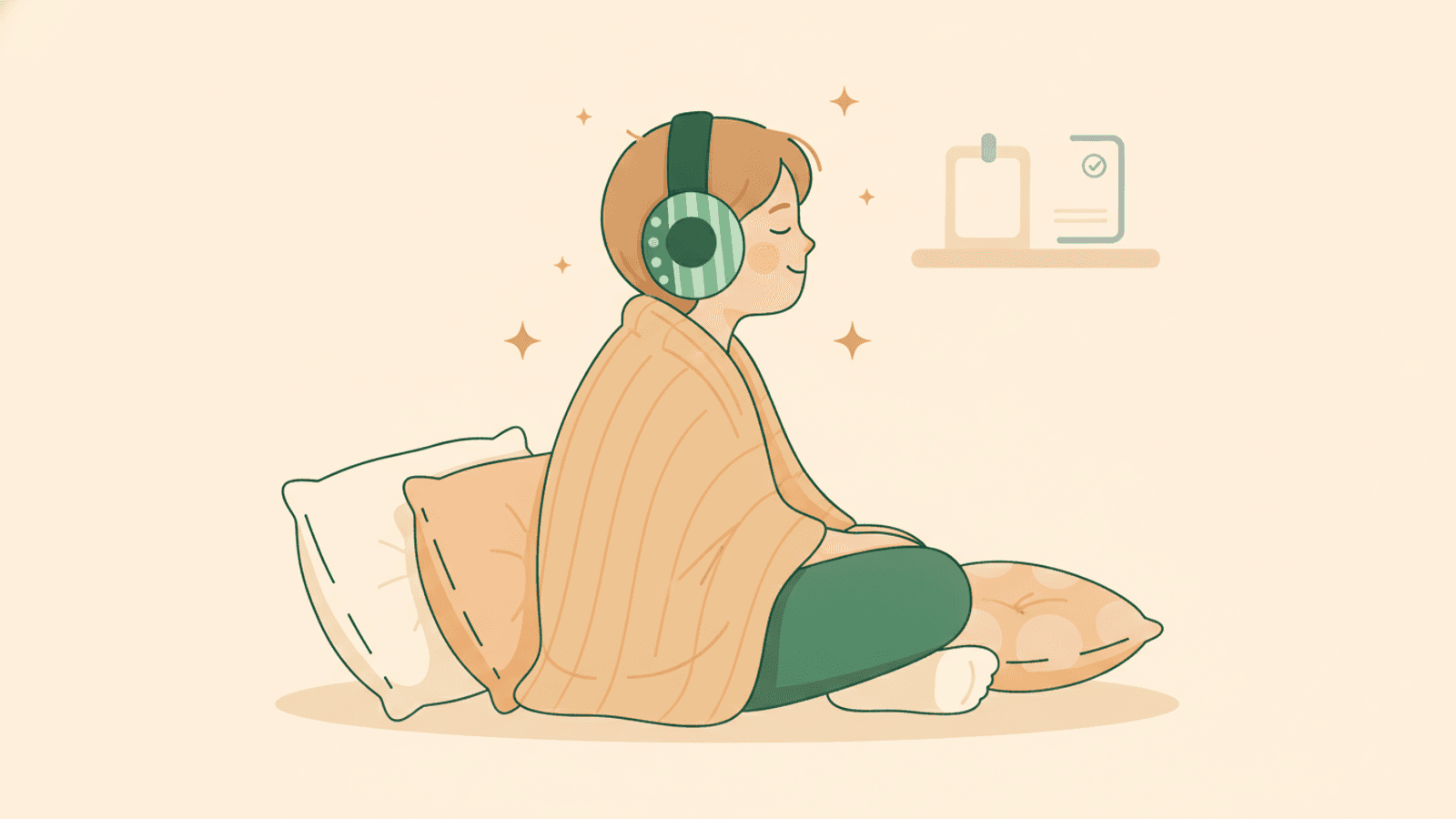
Every noise-sensitive child benefits from a calm, quiet space they can retreat to — a corner, a den, their own room — to recover when the household gets loud. White noise or a fan can mask unpredictable sounds and help some children feel calmer; for others, silence itself is the goal. Simply knowing they have somewhere to escape to makes the noisy times far easier to bear, because the overwhelm has an exit.
Believe it and don't force it
The single most important thing is to take it seriously. “It’s not that loud” dismisses a real experience, and covering ears or leaving the room is not rude — it is coping. A child forced to endure painful noise learns that the world is not a safe place and that you do not understand them. Respecting the sensitivity instead builds trust, lowers the stress, and often, slowly, leads to a little more tolerance over time.
For children with ADHD or autism
Both commonly involve real difficulty filtering sound, so a noisy environment is genuinely exhausting and dysregulating rather than just annoying. Provide ear defenders, a quiet retreat and forewarning of loud sounds, and keep background noise down. If a specific sound triggers extreme distress, fear or anger, an occupational therapist or psychologist can help. This article is general guidance, not medical advice.
Read more
Frequently asked questions
Why is my child so sensitive to noise?
Because their nervous system registers ordinary sounds as too loud or distressing, and often cannot filter out background noise, so everything competes at once. It is a genuine sensory difference, common in children with ADHD and autism but seen in others too, not being dramatic.
What sounds bother noise-sensitive children most?
Often sudden, loud or high-pitched ones: the vacuum, blender, hairdryer, hand dryers, fire alarms and fireworks. Some children also react strongly to specific repetitive sounds like chewing or tapping, and many struggle with general background noise they cannot filter out.
Should my child wear ear defenders?
Ear defenders or noise-reducing headphones are a simple, effective tool for known-loud situations and busy places, and there is no harm in a child using them to feel safe. Keep a pair handy, and let your child choose when to put them on rather than forcing it.
How can I make my home quieter for a sensitive child?
Turn off unused background noise, warn before loud appliances, add soft furnishings to absorb sound, do noisy chores when your child is elsewhere, and create a quiet retreat space they can go to. Small changes add up to a much calmer environment.
Is noise sensitivity linked to autism or ADHD?
It is very common in both, often because of difficulty filtering sound, but it also occurs in children without any diagnosis. Whatever the cause, the experience is real and the same supportive strategies — tools, a quiet space, and being believed — help.