Waiting for an ADHD or Autism Assessment: What You Can Do Now
The referral is in and the wait is measured in months. Almost everything that helps after a diagnosis can start today.
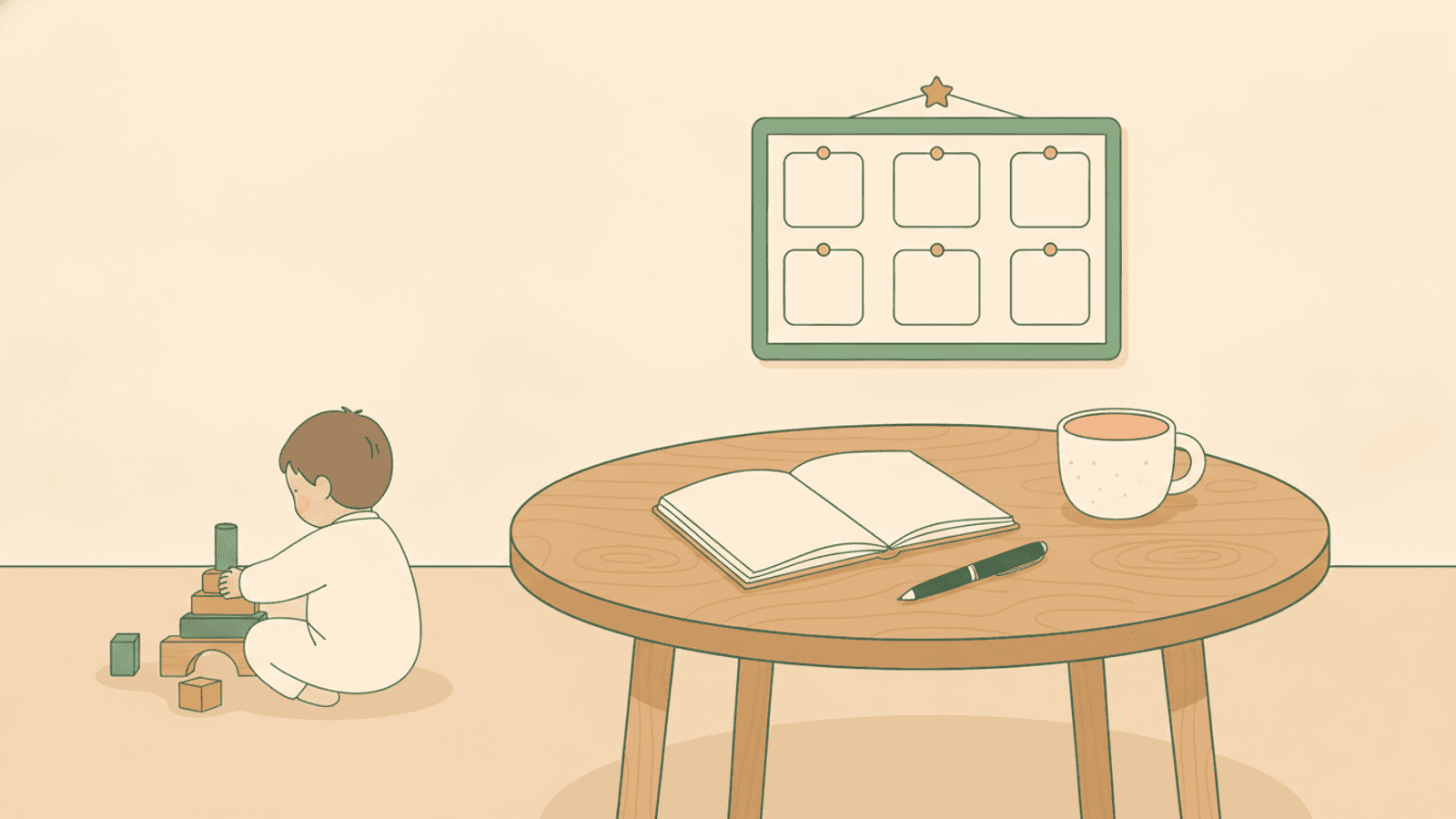
While you are waiting for an ADHD or autism assessment, the most useful thing to know is that you do not need the diagnosis in order to start. Nearly everything that would be recommended afterwards — predictable routines, visual support, lower sensory load, fewer demands at the hard times of day, adjustments at school — is available now, costs nothing, and does not require anyone’s permission. The assessment explains the pattern. It does not unlock the help.
That matters because waits are long in most places, often measured in many months and sometimes in years. Treating the wait as a holding pattern wastes it. Treating it as a period of trying things and writing down what worked turns it into the most useful preparation you could possibly do.
Start with the four things that help almost everyone
- Predictability. The same order to the day, particularly mornings and evenings, and a warning before every transition.
- Visible structure. Take the sequence out of your child’s head and put it on the wall or on a screen where they can check it themselves.
- Lower sensory load. Quieter mornings, fewer people at once, permission to leave a loud room, ear defenders if sound is the issue.
- Fewer demands at the worst hour. Identify the hour your household reliably falls apart and take something out of it rather than trying harder in it.
None of this is diagnosis-specific. It is the same advice that would follow an assessment, and it is set out in visual supports and in the wider guide to visual support at home.
School support does not have to wait
In many countries, including the Nordic ones, support at school is legally based on the child’s needs rather than on a diagnosis. That is worth saying out loud in a meeting, politely, because it is often assumed to work the other way round. Ask what can be put in place now, name specific things rather than asking for "support", and get the answer in writing.
- A predictable seat, a visual schedule for the day, and a warning before changes.
- Instructions given one at a time and repeated individually rather than only to the class.
- Somewhere to go when it gets too much, agreed in advance, without needing to ask each time.
- Reduced or restructured homework during the wait.
- One named adult who knows your child and whom your child knows.
How to run that conversation, and how to keep it going over a school year, is covered in working with your child’s school around ADHD or autism.
Document while you wait
This is the part most parents skip and later wish they had not. Assessments rely heavily on history and on descriptions from home and school, and memory compresses everything into "it has always been hard".
- Keep a short log. Two or three lines a few times a week: what happened, when, what preceded it, how long it lasted. Patterns emerge within a month.
- Note what you tried and what happened. "We introduced a visual morning routine, mornings improved, transitions did not" is exactly the kind of information an assessor wants.
- Ask school for their written observations as you go, rather than asking for a summary of two years at the end.
- Collect old reports. Preschool notes, health checks, previous teachers, anything that shows the pattern over time.
- Video, if you are comfortable. A short clip of a typical difficult moment can convey what a form cannot. Keep it private and only share it if you choose to.
Chasing the waiting list, without becoming a nuisance
Be persistent and pleasant. Confirm in writing that the referral was received and ask for the expected wait. Ask whether you can be contacted at short notice if a slot is cancelled, and make sure they have a phone number that is answered. Ask what would count as new information worth reporting, and if the situation deteriorates significantly — school refusal, sleep collapse, self-harm — report it, because urgency is usually reassessed on new information rather than on time waited.
Should you tell your child?
You can describe the difficulty without naming a diagnosis you do not have yet. "Your brain finds waiting and starting harder than most, and we are going to see someone who is good at working out what helps with that." Children generally know an assessment is happening, and being kept in the dark is worse than an honest, low-key explanation. Avoid presenting the appointment as a test they might fail.
Managing the wait yourself
The limbo is genuinely difficult. Parents describe swinging between certainty and doubt, and every relative with an opinion arrives during exactly this period. Two things help. First, keep your energy on what changes daily life rather than on convincing sceptics; a working morning routine persuades people faster than any argument. Second, connect with other parents who are in or past this stage, because they know things about your local system that no leaflet will tell you.
If the answer is no diagnosis
It happens, and it does not mean nothing was wrong. It can mean the criteria were not met, that the picture is unclear at this age, that another explanation fits better, or that the assessment did not capture how your child is at home. Ask what the conclusion was based on, ask what they recommend regardless, ask whether re-referral is possible if things change, and keep the supports that were working. A child who needs a visual schedule still needs it on the day the letter says no.
A note on private assessments
Paying privately can shorten the wait considerably, and for some families it is the right decision. Before booking, check that the assessor’s report is accepted by your local health service and school, that the assessment includes information from school and not only from you, and what happens afterwards, because a report with no follow-up is of limited use. This article is general information, not medical or legal advice, and the rules differ by country.
What not to do while waiting
- Do not put daily life on hold until the appointment. The wait is often longer than anyone predicts.
- Do not treat the diagnosis as the goal. It is a means to understanding and support, not the finish line.
- Do not try five new strategies at once. Change one thing, give it two weeks, write down what happened.
- Do not let it become the only subject in the house. Your child is also a person having a childhood.
What to have ready for the appointment
- Your log, and a one-page summary of the main concerns in order of importance.
- School’s written observations and any previous reports.
- A list of what you have tried and what happened.
- Your three most important questions, written down.
Once the assessment is done, the practical order of business is in first steps after an ADHD or autism diagnosis.
Read more
- First steps after a diagnosis — what to do when the wait ends.
- Working with your child’s school — getting support in place without a diagnosis.
- Visual supports — the thing to start with today.
Frequently asked questions
Do we need a diagnosis before we can get help?
No. In many countries, including the Nordic ones, school support is based on need rather than diagnosis, and everything you would do at home afterwards can start now: predictable routines, visual structure, lower sensory load and fewer demands at the hardest hour. The assessment explains the pattern; it does not unlock the strategies.
How long are assessment waiting lists?
It varies enormously by country and region, and often runs to many months or longer. Confirm in writing that the referral arrived, ask for the expected wait, and ask to be called if a slot is cancelled. Report significant deterioration, because priority is usually reviewed on new information.
What should I write down while we wait?
Keep a short, regular log: what happened, when, what came before it and how long it lasted. Note what you tried and whether it helped. Collect school observations as you go and dig out older reports. Assessments lean heavily on history, and memory flattens it.
Should I tell my child what we are waiting for?
Describe the difficulty honestly without naming a diagnosis you do not yet have: their brain finds certain things harder, and you are seeing someone who is good at working out what helps. Being kept in the dark is worse, and the appointment should never be presented as a test they might fail.
What if the assessment concludes there is no diagnosis?
It does not mean nothing was wrong. Ask what the conclusion was based on, what they recommend anyway, and whether you can be re-referred if things change. Keep every support that was helping; a child who needs a visual schedule still needs it after a letter says no.