Moving House With Children: Keeping the Routine Through the Chaos
Everything about the house changes at once. Here is how to keep the one thing that should not change, and what to expect afterwards.
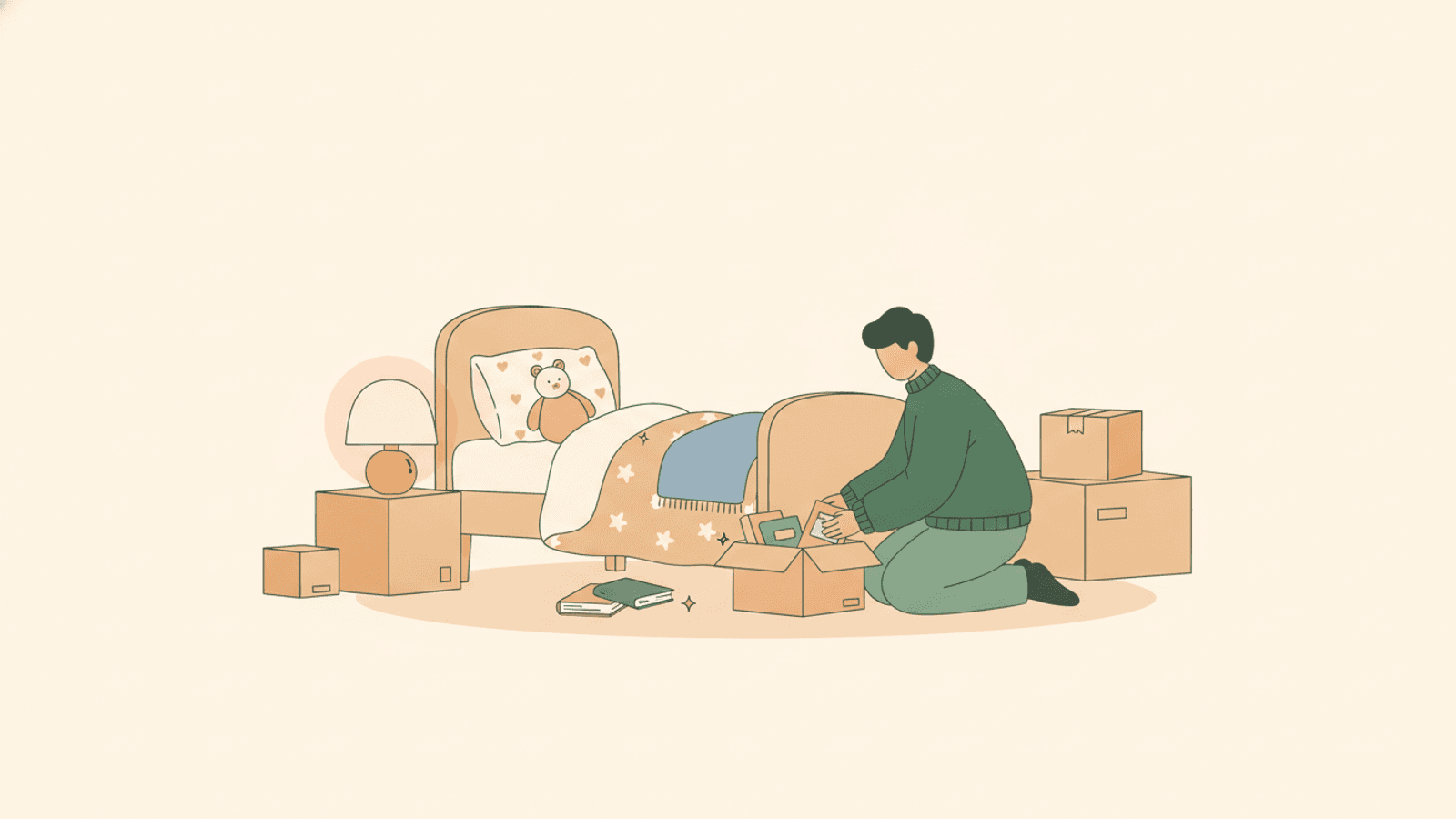
Children cope with moving house far better when the daily routine survives the move. The address changes, the room changes, sometimes the school changes, and the one thing you can hold steady is the order of the day: same wake-up, same meals, same bedtime sequence, in the same order, from the first night in the new place. Pack your child’s room last and unpack it first, and most of the rest sorts itself out.
A move is a big deal for a child even when it is a good move. Adults see a better kitchen and a shorter commute; a six-year-old sees the loss of the tree outside the window and the neighbour’s cat. Both are real, and only one of them gets talked about at the dinner table.
What children actually find hard
- Losing the known. Not the house, but the specifics: the creak on the stair, where the light falls in the morning, the route to school.
- Losing people. Friends, a favourite teacher, the person at the shop who says hello.
- No control. Nobody asked them, and nothing about the timeline is theirs.
- An invisible schedule. Adults know what happens in what order; children hear "soon" and "in a few weeks" for months.
- Stressed parents. Moving is one of the more stressful things adults do, and children read the mood long before they read the boxes.
Telling them
Tell your children once the move is genuinely decided, not while it is still a maybe. Waiting until it is certain avoids weeks of anxiety about something that might not happen; waiting too long past that point means they hear it from someone else, or work it out from the boxes.
- Under five: a few weeks is plenty. Talk in concrete terms — your bed comes too, your toys come too — because that is the actual worry.
- Five to nine: a month or two, with a visible countdown so "soon" becomes a number of sleeps.
- Ten and over: as soon as it is decided. At this age being told late is the injury, not the move.
Say what stays the same in the same breath as what changes. "We are moving in June. You will have your own room, your bed comes with us, and you will still go to the same school." Then let them ask the same questions repeatedly without getting impatient; repetition is how children process a change this size.
Before the move
- Visit the new place if you can, more than once. If you cannot, use photos and a video walk-through, and look at the street on a map together.
- Let your child choose something: which room if there is a choice, the wall colour, where the bed goes. One real decision changes how the move feels.
- Make a goodbye tour. Photograph the old house room by room, the garden, the walk to school, the neighbour’s cat. A small photo book of the old place helps more than parents expect.
- Say goodbye to people properly, with a date in the diary rather than a vague "we will see them again".
- Keep one box of things your child chooses, sealed and labelled by them.
The last week, and moving day
Pack your child’s room last. A room that empties three weeks early turns their one safe space into a building site for the whole run-up. Keep the bedtime routine exactly as it is, even among boxes.
Pack a first-night box and keep it in the car, not on the lorry: pyjamas, toothbrushes, the specific soft toy, bedding, a nightlight, the bedtime books, snacks, chargers, and anything the evening routine actually requires. On the first night you should not be opening boxes to find a toothbrush.
On the day itself, most children under about seven do better somewhere else with a familiar adult, and should arrive at the new house when the beds are up rather than when the hall is full of strangers carrying furniture. Older children often want to help, and helping genuinely reduces the sense of things happening to them; give them a real job rather than a token one.
The first night and the first week
Unpack the bedroom first, before the kitchen. Same bed, same bedding unwashed if you can bear it, same lamp, same order of the bedtime routine, same books. A child who gets the identical evening sequence in a different room has one thing changed rather than everything. This is exactly what a written routine schedule is for, and the week of a move is when it earns its keep.
In Routined the routine moves with you: the same steps with a picture and a timer on each one, on both parents’ phones, so the evening does not quietly fall apart in the week when nobody can find anything.
Walk the new neighbourhood in the first days. Find the shop, the postbox, the playground, the route to school. Familiarity is built by repetition, and a child who has walked a route four times stops experiencing it as strange.
What to expect afterwards
Expect some going backwards. Broken sleep, night waking, bedwetting that had stopped, clinginess, more meltdowns, a return to a comfort object they had outgrown. This is normal after a move and usually settles within two to six weeks. Respond to it as tiredness and unfamiliarity rather than as naughtiness, keep everything else stable, and it passes. If anxiety persists well beyond that, or shows up as stomach aches and school refusal, worry and anxiety in children is the next thing to read.
Change one thing at a time where you can. A new house, a new school and a new bed in the same fortnight is three transitions, and each one costs. If the big bed or dropping the dummy was on the plan, do it a month before or two months after, not now.
If the school changes too
A move that includes a new school is two separate transitions happening at once, and the school one is usually the harder of the two for children over six. It has its own preparation: meeting the teacher, seeing the classroom, and finding one child to know before the first day. That is covered in changing schools or class.
If the move follows a separation and your child now has two homes, the priority is a shared core routine rather than identical houses — one routine in two homes has the practical version.
Children who find change harder
For a child with autism or ADHD, a move is a large sensory and predictability event, and the reaction is usually bigger and longer than in other children. What helps most is preparing visually and keeping sensory anchors: the same bedding, the same curtains if possible, the same lamp, the room set up in the same layout as the old one for the first weeks. Make a photo map of the new house and go through it repeatedly before the move, and be honest that a full settling-in can take a couple of months rather than a couple of weeks.
What not to do
- Do not oversell it. "You are going to love it" leaves a child no room to be sad, and being sad about leaving is not a problem to be argued away.
- Do not minimise. "You will make new friends" is true and completely beside the point in the first week.
- Do not pack the child’s room early to get ahead.
- Do not stack transitions. One move is enough for one month.
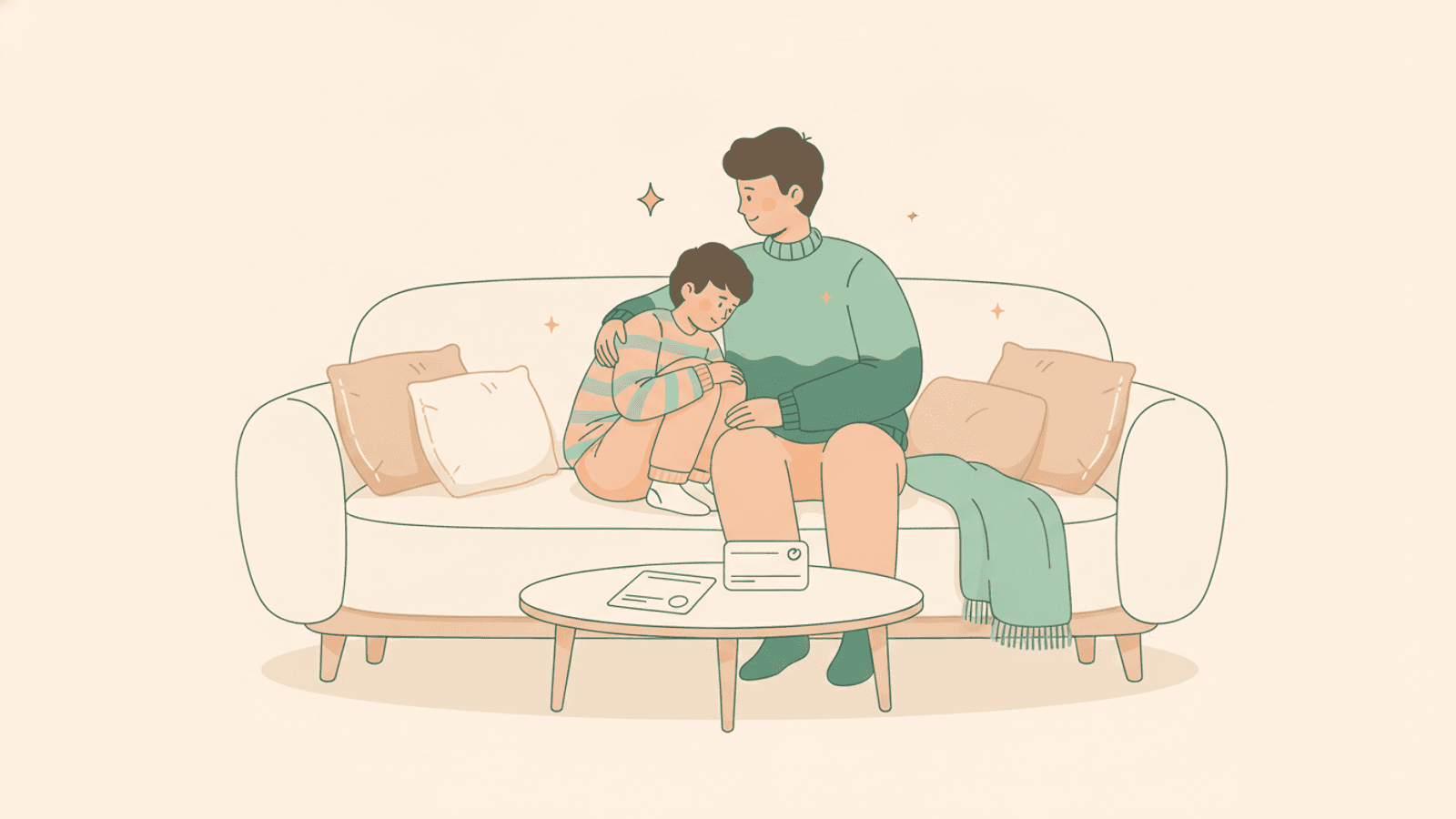
- Do not hide your own stress entirely; name it briefly and factually, so your child knows the tension in the house is about boxes and not about them.
A rough timeline
- Six weeks before: tell the children, start the countdown, visit the new place.
- Three weeks before: goodbye photos, the memory box, arrange one date with a friend for after the move.
- The last week: pack everything except your child’s room, prepare the first-night box.
- Moving day: young children elsewhere, beds up first.
- First week: bedroom unpacked, routine identical, walk the neighbourhood.
- First month: expect wobbles, change nothing else, and do not judge the move by week one.
Read more
- Changing schools or class — the other transition that often comes with a move.
- One routine in two homes — when the move creates a second household.
- Worry and anxiety in children — if the unsettledness lasts longer than expected.
Frequently asked questions
How far in advance should we tell our children we are moving?
Once it is genuinely decided rather than while it is still uncertain. As a guide, a few weeks for under-fives, one to two months for five to nine-year-olds with a visible countdown, and immediately for ten and over. Being told late is usually more upsetting to older children than the move itself.
Should my child be there on moving day?
Most children under about seven do better spending the day with a familiar adult somewhere else and arriving once the beds are up. Older children often want to help, and giving them a real job reduces the feeling that the move is happening to them rather than with them.
My child has started wetting the bed again since we moved. Is that normal?
Yes. Going backwards after a move is common: night waking, bedwetting, clinginess and more meltdowns. It usually settles within two to six weeks. Treat it as unfamiliarity rather than misbehaviour, keep the rest of the routine identical, and speak to your child health service if it persists well beyond that.
How long does it take a child to settle in a new home?
Most children feel at home within a month or two, though the first two weeks are usually the loudest. Children who find change hard, including many autistic and ADHD children, often need longer, and a new school on top of the move extends it further.
How do we help them keep their old friends?
Make it concrete rather than sentimental: put one visit in the diary before you leave, with a date. Video calls work better with a shared activity than with open-ended conversation. Expect the friendship to thin over a year for younger children, and do not treat that as a failure.