Prepare Your Child for the New School Year: Checklist for Preschool, Lower and Middle Grades
Starting förskoleklass, lågstadiet or mellanstadiet each comes with its own anxieties — for the child and the parent. A stage-by-stage checklist covering routines, anxieties, gear, and the conversations to have in the two weeks before school starts.
School start is the biggest annual transition most children face. Even kids who are excited can be wobbly that first week. Even kids who insist they're fine often aren't.
The preparation that matters isn't buying new pencils. It's a combination of routine, conversation and environment in the two to three weeks before the first day. Here's a stage-by-stage checklist.
Förskoleklass (age 6)
This is your child's first taste of "real school." Even children who've been in förskola for years experience this as a step up — longer days, more structure, more children.
Two weeks before:
- Visit the school at least once. Walk the route. Look at the playground.
- If possible, meet the teacher briefly. A familiar face changes everything on Day 1.
- Talk about the day in concrete terms: "You'll have a hook for your jacket. You'll have a teacher named Anna. You'll eat lunch in this room."
- Avoid abstractions like "school will be exciting!" — they don't help. Concrete details do.
One week before:
- Start the wake-up reset (see our 7-day reset post).
- Practice getting dressed independently with a timer. This is the single most common Day 1 struggle.
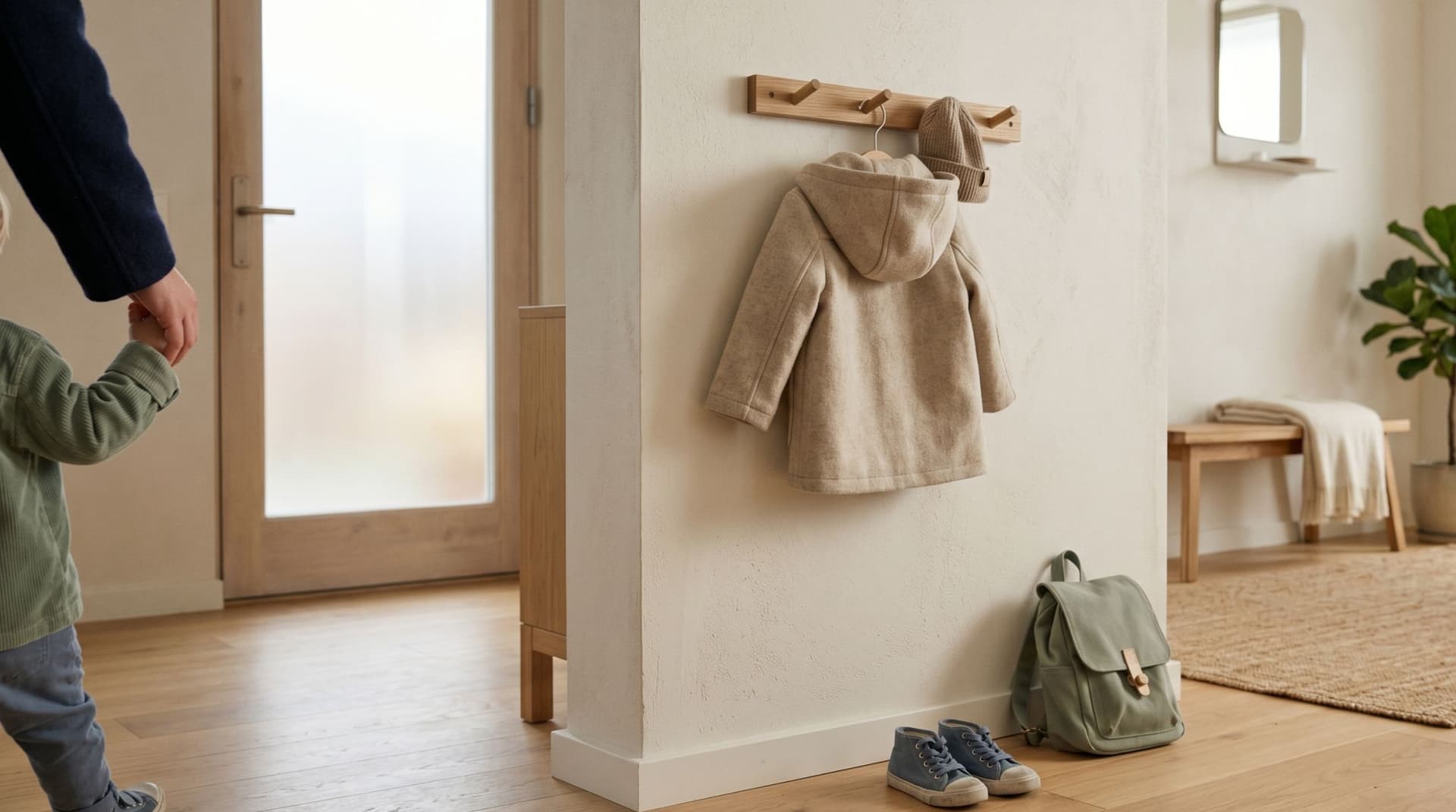
- Set up a hook by the door for school bag and jacket.
Day before:
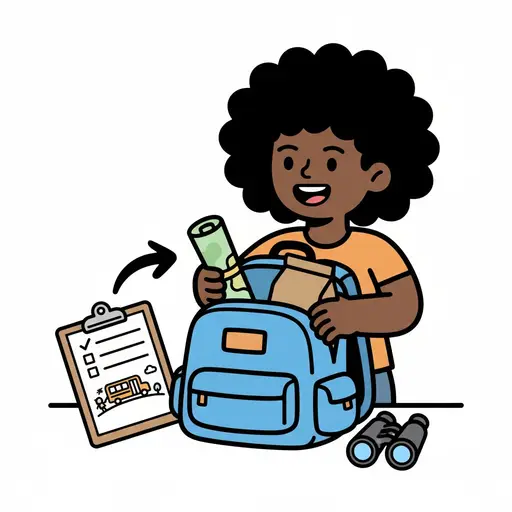
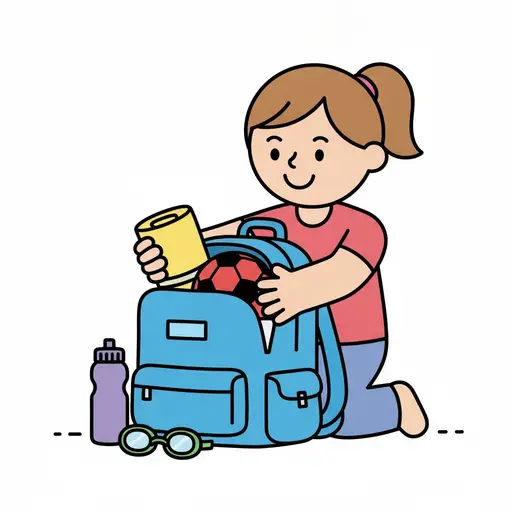
- Pack the bag together.
- Lay out clothes.
- Early bedtime — no celebration.
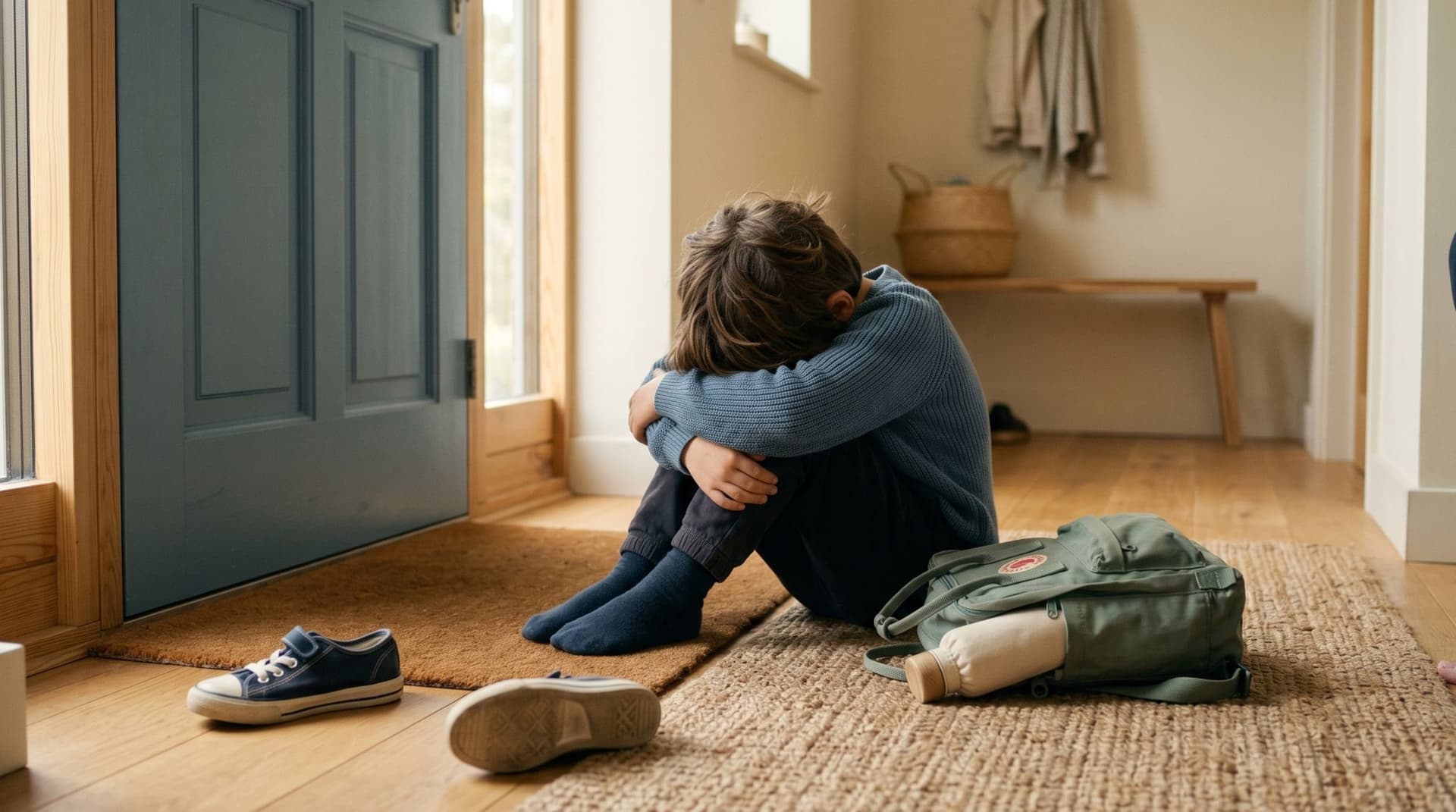
Anxieties to address:
- "What if no one plays with me?" Honest answer: "Sometimes the first day is lonely. The teacher's job is to help you find friends." Don't promise it'll be perfect.
- "What if I have to go to the bathroom?" Walk through the bathroom on the school visit. Knowing where it is solves 80% of this fear.
- "What if I don't like the food?" Pack a small backup snack the first week.
Gear that matters:
- Easy-fastening shoes (Velcro or slip-on for the first weeks).
- A school bag the child can open and close independently.
- Clothing without complicated buttons or zippers.
Lågstadiet (ages 7–9)
The child is more independent but the academic and social demands are stepping up. Reading is being learned in earnest. Friendships are starting to matter.
Two weeks before:
- Reintroduce reading. Even 10 minutes a day rebuilds the habit before homework restarts.
- Re-establish a homework spot. A quiet corner with a chair, a light, and minimal distractions.
- Restart the school-morning sequence in some form. Even if there's no school, a structured 8:00 AM is better than a chaotic 10:00 AM.
One week before:
- Practice packing the bag the night before. This is the single biggest morning friction point at this age.
- Walk through the schedule — what classes happen on which days, where the after-school activity is, who picks up.
- For children with ADHD or executive function challenges, build a visual after-school routine: snack, homework, free time, dinner. Make it a 4-icon row, not a paragraph.
Anxieties to address:
- "What if I don't make the team?" Acknowledge it's a real fear. Don't fix it. Listen.
- "What if my teacher is mean?" Most teachers aren't, but the fear is reasonable. "If something feels really wrong, you tell me and we'll figure it out together."
- Bullying concerns. Talk concretely about what to do — who to tell, how to leave a situation. Don't only do this conversation if there's already a problem.
Gear that matters:
- A working pencil case. Sharpened pencils. An eraser that erases.
- A water bottle that doesn't leak.
- A bag with separate compartments — at this age, dumping everything into one pocket leads to homework getting destroyed.
Mellanstadiet (ages 10–12)
This is a stage of growing independence and growing social pressure. Academic load is real now. So is comparison with peers.
Two weeks before:
- Get the child involved in their own preparation. Don't pack their bag for them; ask what they need.
- Re-establish a homework habit before homework restarts — 20–30 minutes of focused work a day.
- Discuss screen time during the school year. Set the rules now, not on Day 3 when there's a fight.
One week before:
- Run the 7-day reset for sleep.
- Discuss the after-school transition. Many mellanstadiet kids come home alone now. What's the routine for that hour before a parent arrives? Visual schedules and timers help even here — perhaps especially here.
- Check in about friendships. Who's in their class this year? Who isn't? Are they nervous about any of it?
Anxieties to address:
- Social hierarchies. The kid who hasn't seen friends all summer is anxious about returning to an established group. Don't dismiss this. Ask, listen, don't fix.
- Academic pressure. By mellanstadiet, kids start comparing grades. "I just want you to try your best" is hollow. Better: "I care more about how you handle hard things than how easy they are."
- Body changes. Some 10–12 year olds are entering puberty. Quietly make sure they have what they need (deodorant, period products, a private place to deal with bodily changes at school).
Gear that matters:
- A bag that fits a binder, a water bottle, a lunch and gym clothes.
- A phone or watch with location-sharing if they're walking to school alone.
- A workspace at home that feels age-appropriate — not the kitchen table corner they used at 7.
Conversations most parents skip
Three conversations are worth having before the first day, at any stage:
1. "What's the worst part you're worried about?"
Don't accept "nothing." Sit with the question. Let the answer come. Most children have a worry. Naming it disarms it.
2. "What's something good you're looking forward to?"
Same approach. Helps the brain weight the positive.
3. "What's my job to do if school gets really hard?"
This is the most important one. Most kids can't articulate what they want from a parent in advance, but asking shifts the relationship from "parent fixes problems" to "we figure it out together."
What to skip
Skip these, even though every blog post says to do them:
- Big speeches about how proud you are. Adds pressure.
- Comparing to siblings' first days. Each child gets to be new.
- A big celebratory breakfast on Day 1. Adds variability when you want predictability.
- Photos for social media in the doorway. Unless the child wants this, skip it. It's for you, not them.
School start is a transition, not a test. Preparation isn't about packing the perfect bag. It's about giving the child the structure, the conversations and the environment to handle a big change with as much support as they need.
Frequently asked questions
My child is starting at a new school mid-year. Different rules?
Yes — more emphasis on the social transition, less on the academic reset. Friendships are already formed at the new school; help the child plan one specific small social move (sit next to one specific person, ask one specific question on Day 1).
My child has special needs. What's different?
Build in the IEP/särskilt stöd conversation with the new teacher before Day 1 if possible. Don't assume coordination has happened. Bring documentation. The first two weeks set the tone for the year.
My child cries every morning the first week. Should I worry?
Usually not, for the first two weeks. Past two weeks, talk to the teacher. Persistent morning crying past the adjustment window often signals something specific that can be addressed.
Should I do a "trial run" of the morning?
Yes, especially for förskoleklass and lågstadiet kids. Actually doing the morning — getting up, getting dressed, walking to school, returning — at least once before Day 1 reduces first-day anxiety dramatically.