Water
Plain water rarely excites a child who’s used to sweeter drinks, and the body’s thirst signal often stays quiet. The visual support below turns drinking into a small, visible step in the day.
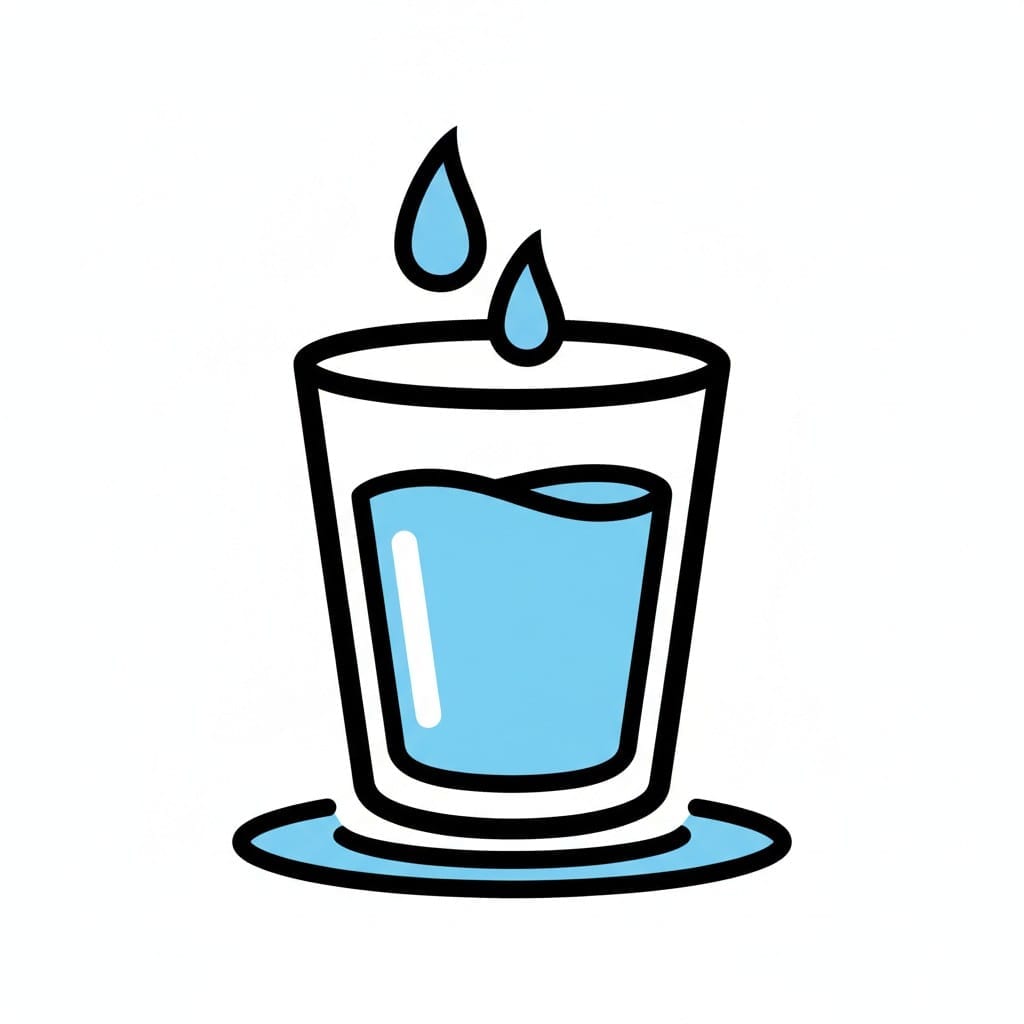
Glass of water with drops
A cartoon image of a glass with water and two water drops falling into it.
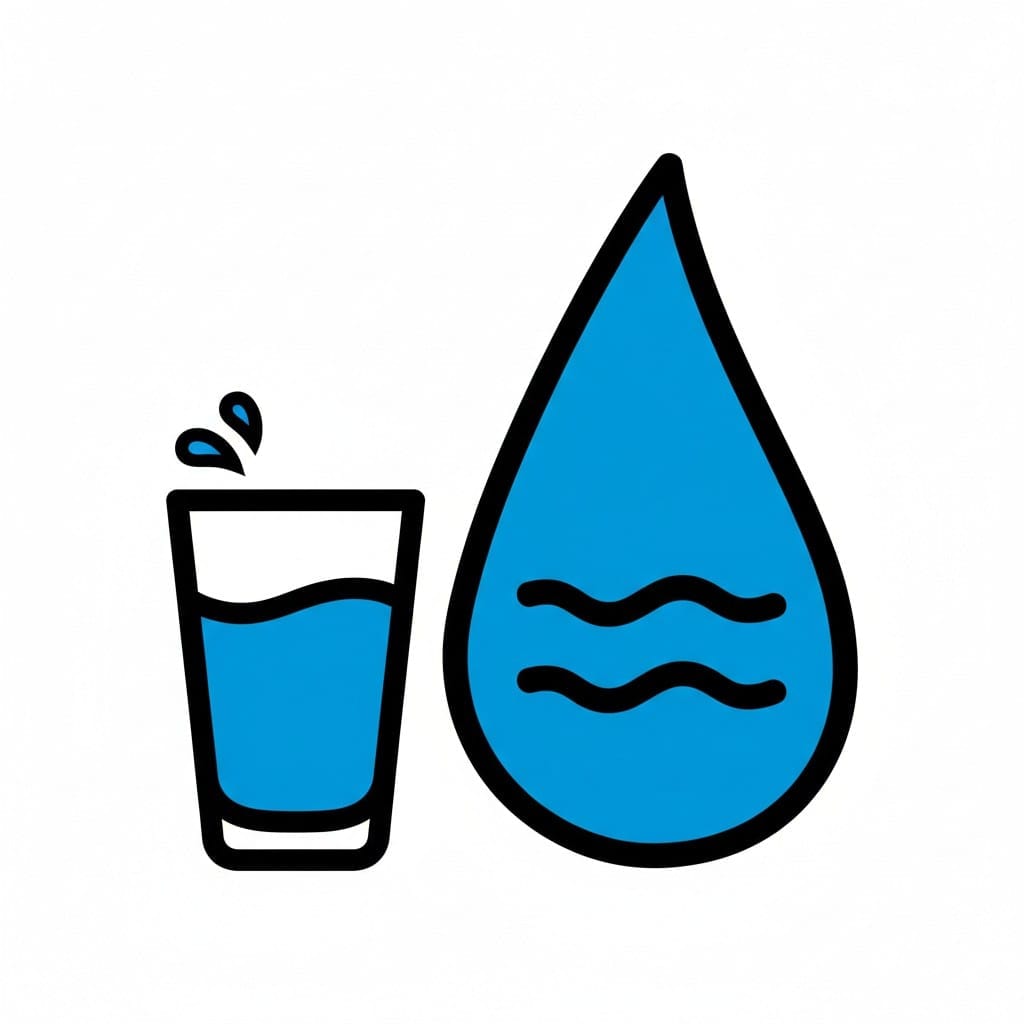
Glass of water and drop
A cartoon image of a glass of water next to a large water drop.
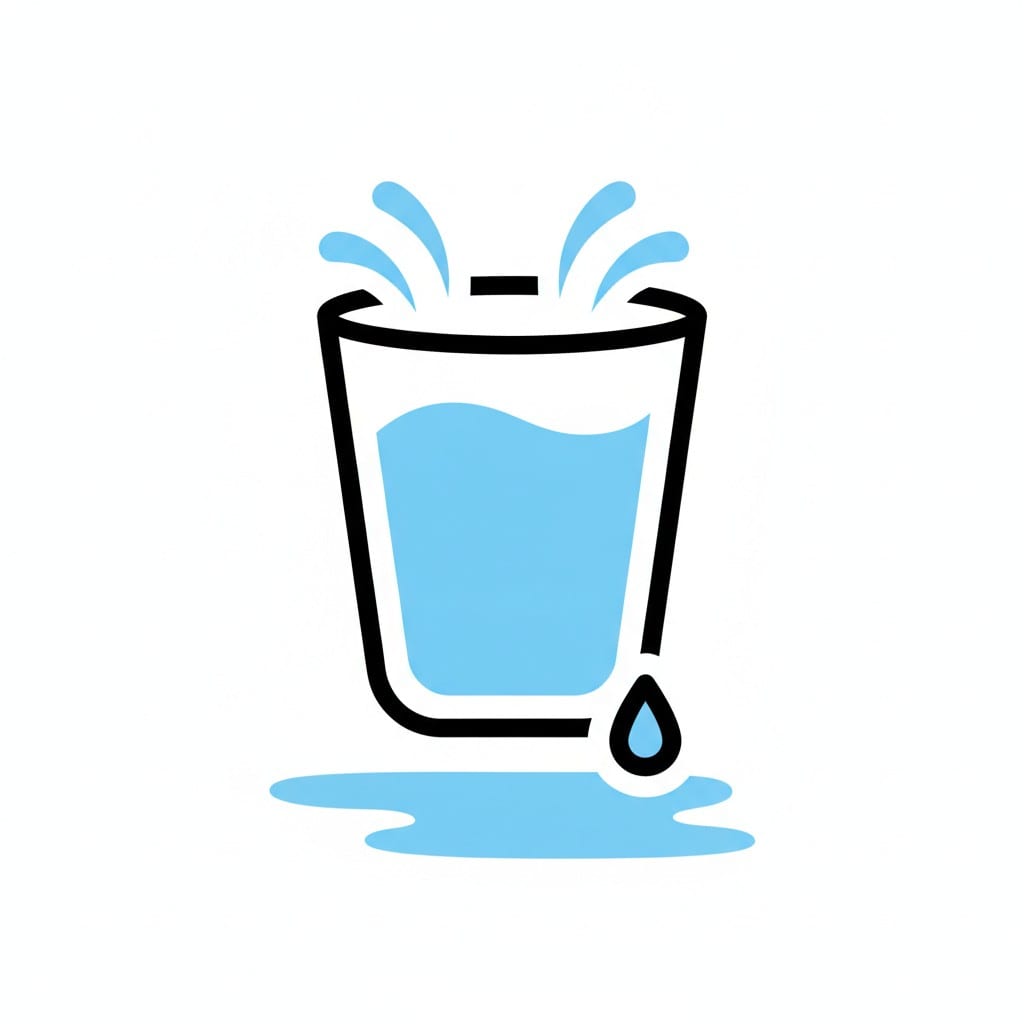
Splashing glass of water
A glass filled with water, with splashes leaping over the rim and a drop running down into a small puddle.
About this visual support
Plain water has a particular disadvantage compared with almost any other food or drink: it offers no reward. The taste is barely a taste, it fills the stomach without sugar, and on top of that, many children have a poorly developed thirst signal. When juice is on the table, the choice is made before awareness catches up.
Visual support for water therefore does something subtle – it places drinking inside the sequence between other activities, so it isn’t competing with a tastier drink but with nothing. After outdoor play, a glass of water. After the snack, a glass of water. The picture sits there, and the moment is already planned before thirst would have shown up on its own.
A concrete trick: pair the picture with one specific cup or bottle – the same object every time. It sounds trivial, but that physical recognition lets the hand reach for it without the brain having to weigh alternatives. Water becomes whatever this vessel holds, not an active choice against juice.
If you want to place water pauses as recurring steps in a day plan, you can do that inside Routined.
Use this image in a schedule
Build your own visual schedule with this image and download it as a print-ready PDF. Completely free.

More similar visual supports
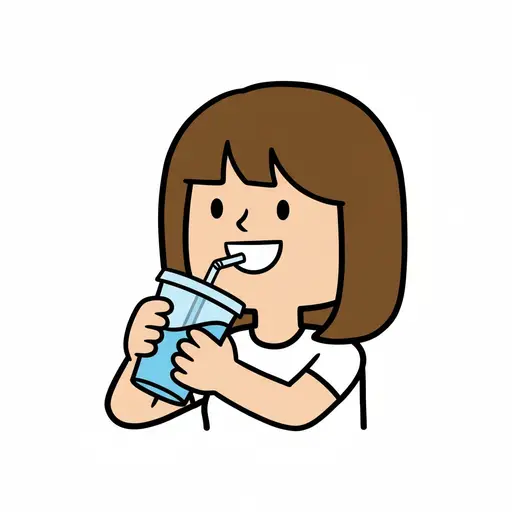
Drink
A person drinks from a cup with a straw.
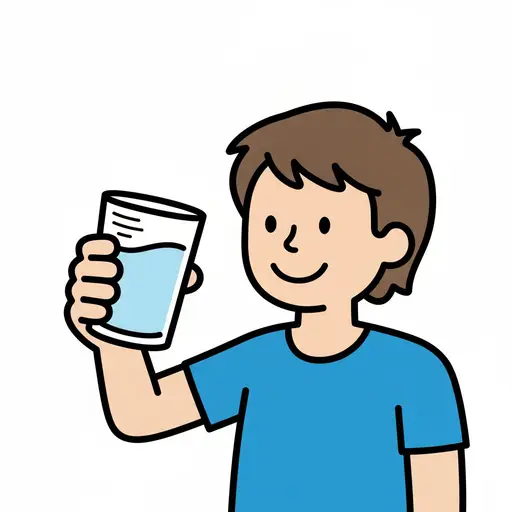
Drink water
A person holds up a glass of water.
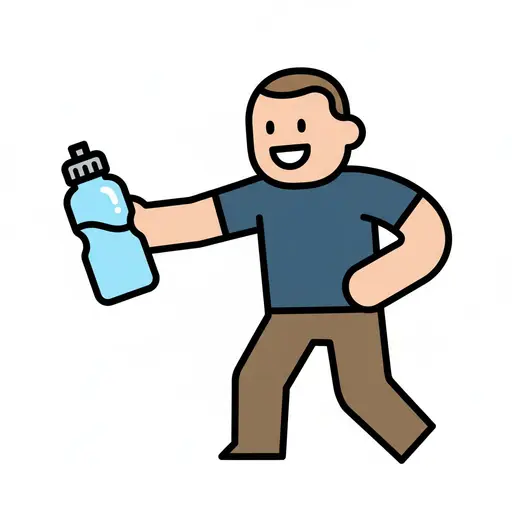
Fetch water bottle
A person is walking and holding a blue water bottle filled with water.
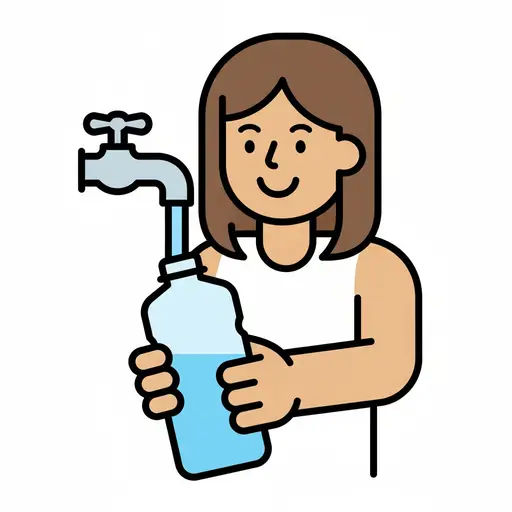
Fill water bottle
A woman filling a water bottle from a tap.
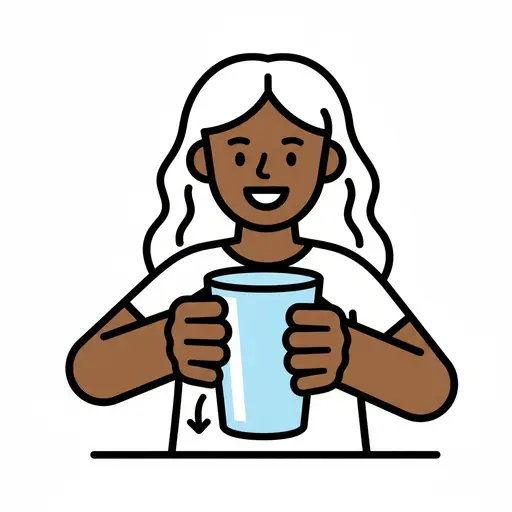
Take glass down
A girl holds a large glass with both hands while an arrow points downward.
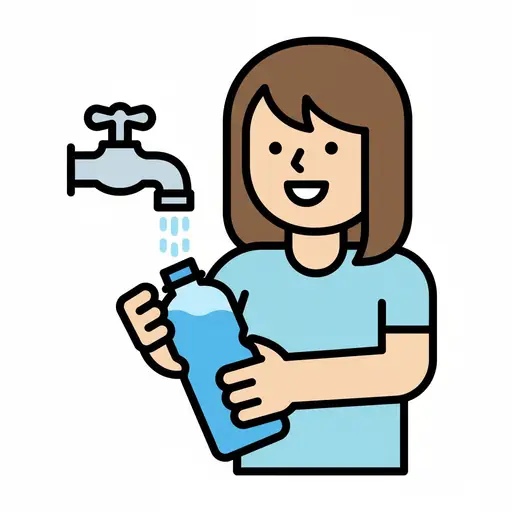
Top up water bottle
A person is holding a water bottle under a running tap.
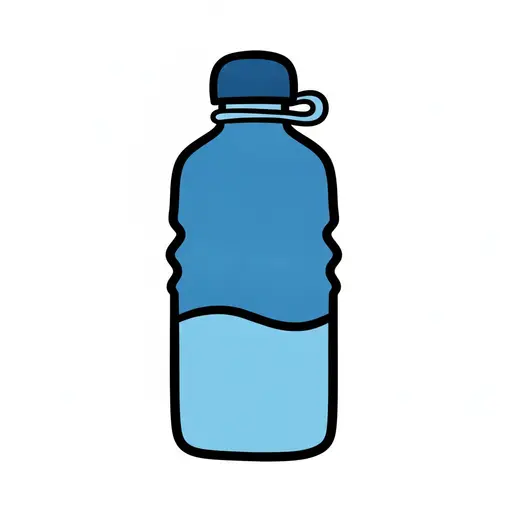
Water bottle
A blue plastic bottle with a screw cap and a small loop, filled halfway with pal...
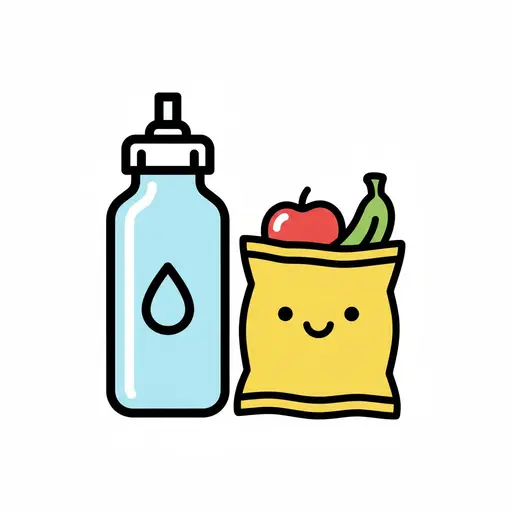
Water bottle and snack
An illustration of a blue water bottle and a yellow snack bag with a happy face,...
Take the visual supports with you
In Routined you build schedules from these pictures, add timers and voice instructions, and your child follows the day on their own.


* 14-day free trial included for new users.