Clear dishes
Carrying glasses and plates is a motor task in the middle of a transition, and that is when things slip. The cards below show exactly how the trip from table to sink can go.
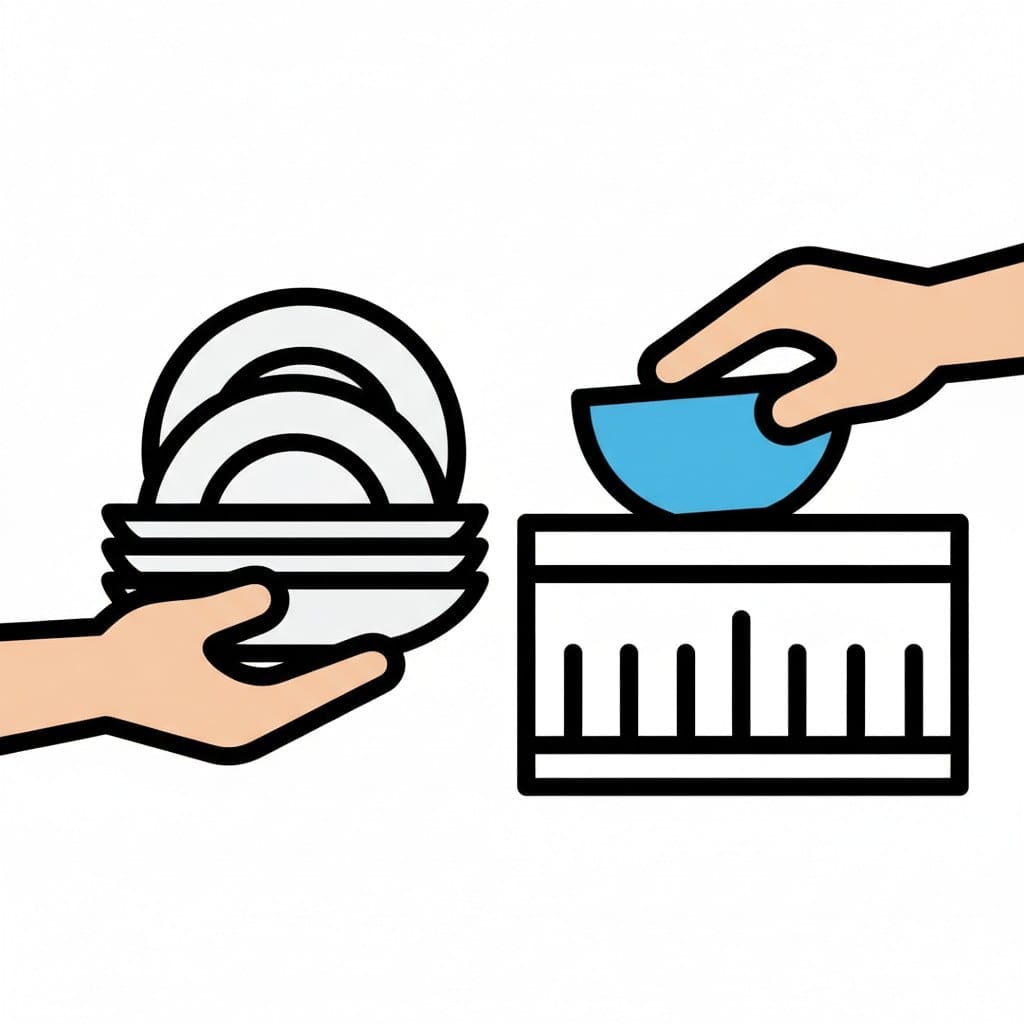 ♂
♂Hands carrying plates and a bowl
Close up of two hands, one holding a stack of white plates and the other setting a blue bowl down on a counter.
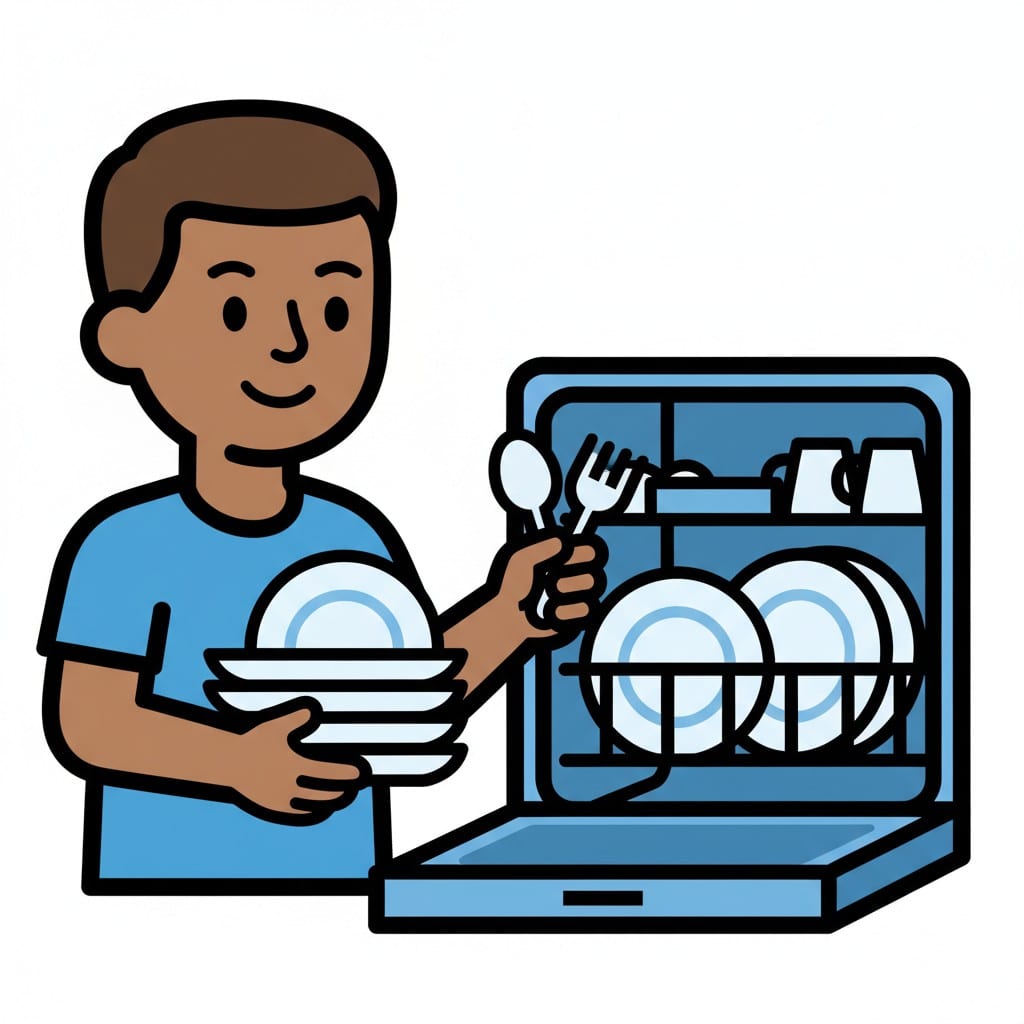 ♂
♂Boy loading the dishwasher
Holding a stack of plates in one arm, a boy in a blue t-shirt places a spoon and fork into an open dishwasher.
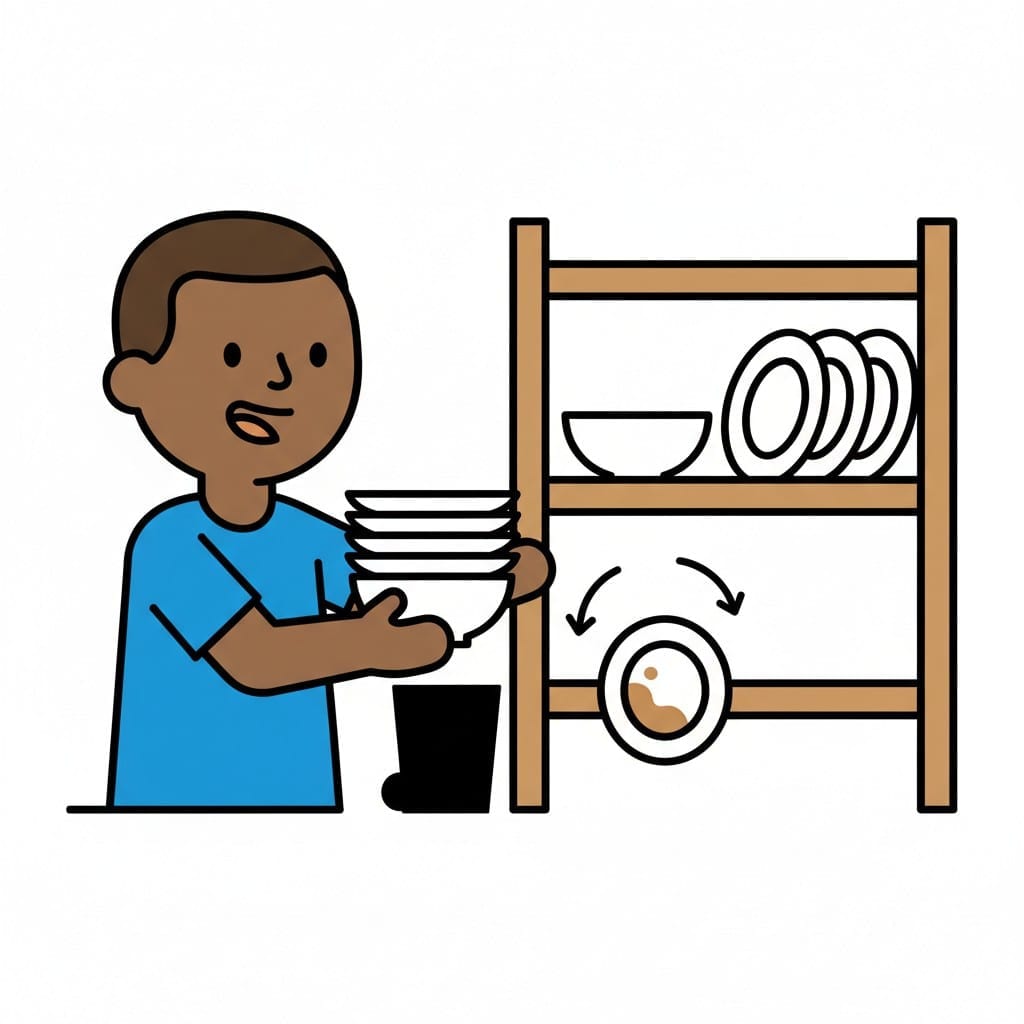 ♂
♂Boy scraping and stacking plates
A boy in a blue t-shirt carries a stack of plates towards a wooden rack while an arrow shows leftovers being tipped into a bin.
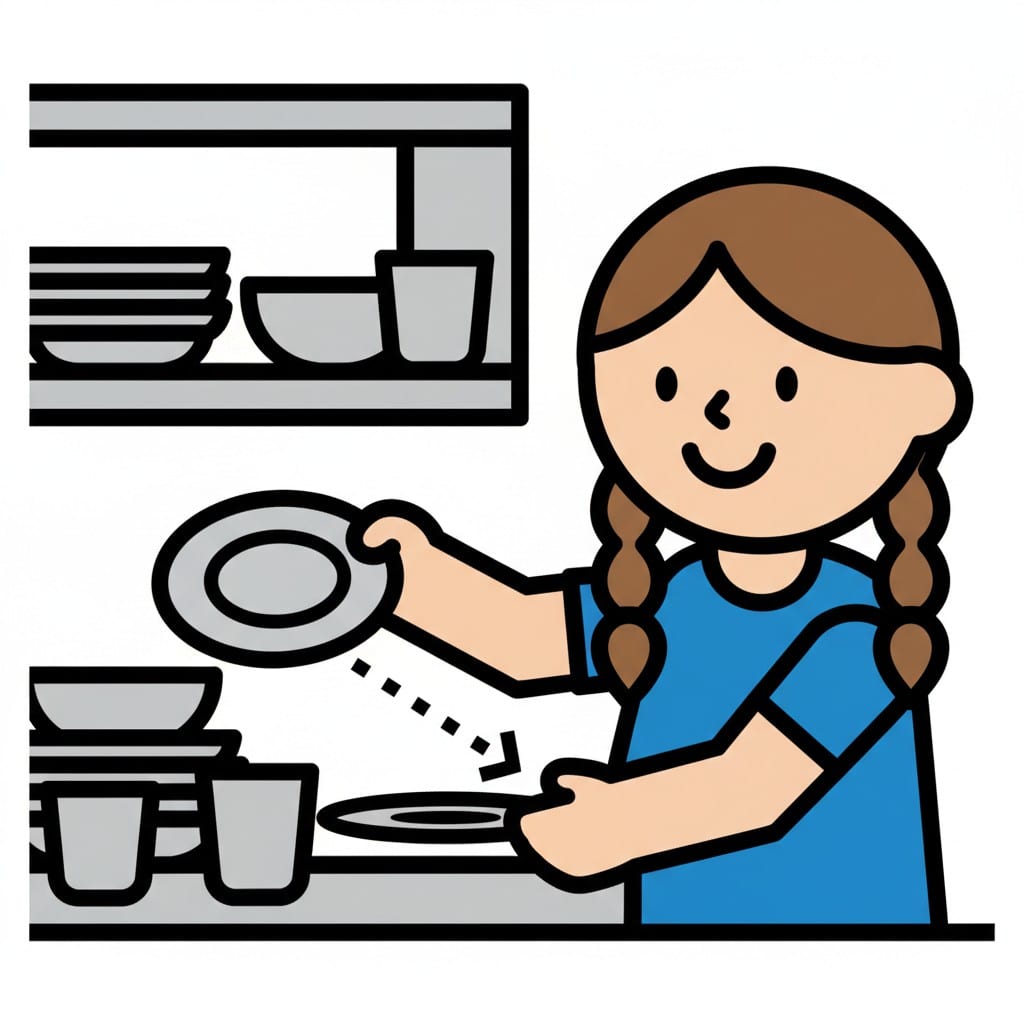 ♀
♀Girl clearing dishes
A girl places a plate onto a stack of dishes on the kitchen counter.
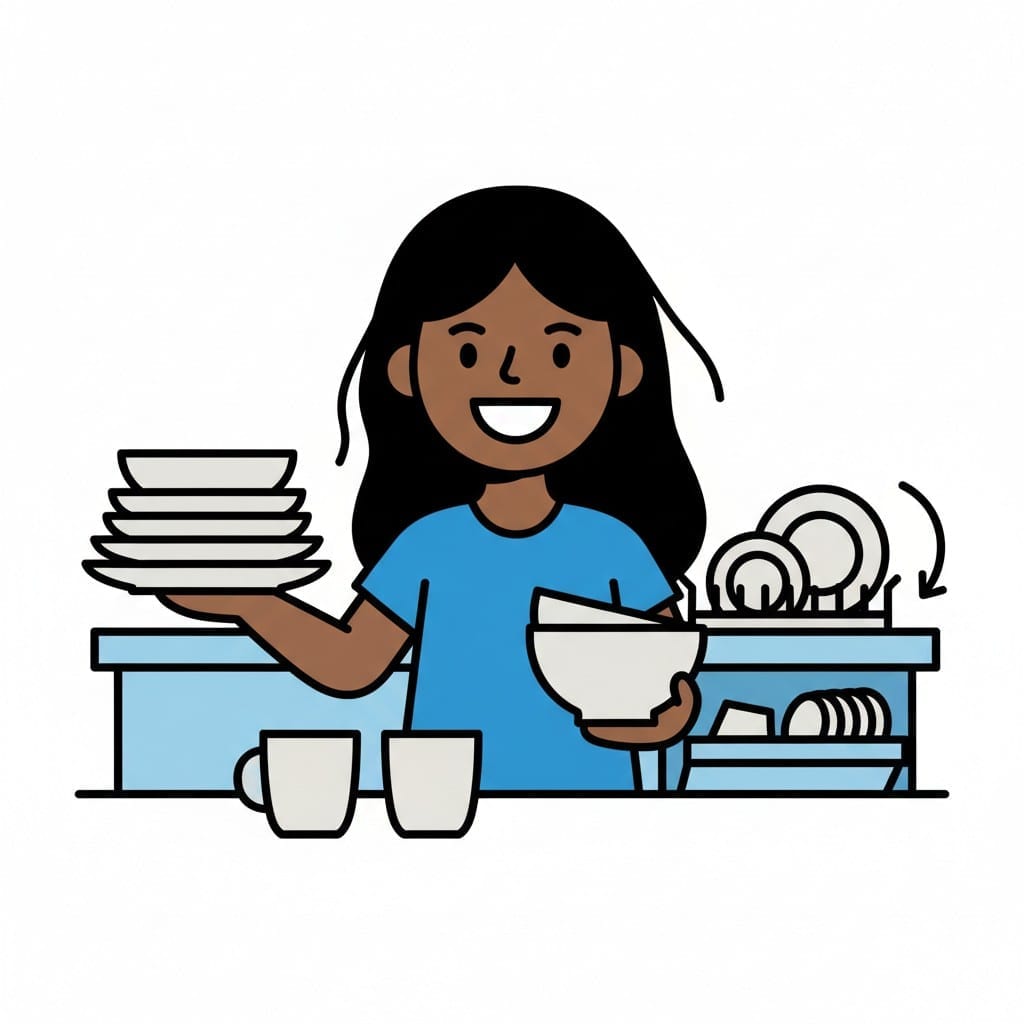 ♀
♀Girl carrying plates to the dish rack
Holding a stack of plates in one hand and a bowl in the other, a girl stands in front of a dish rack filled with plates.
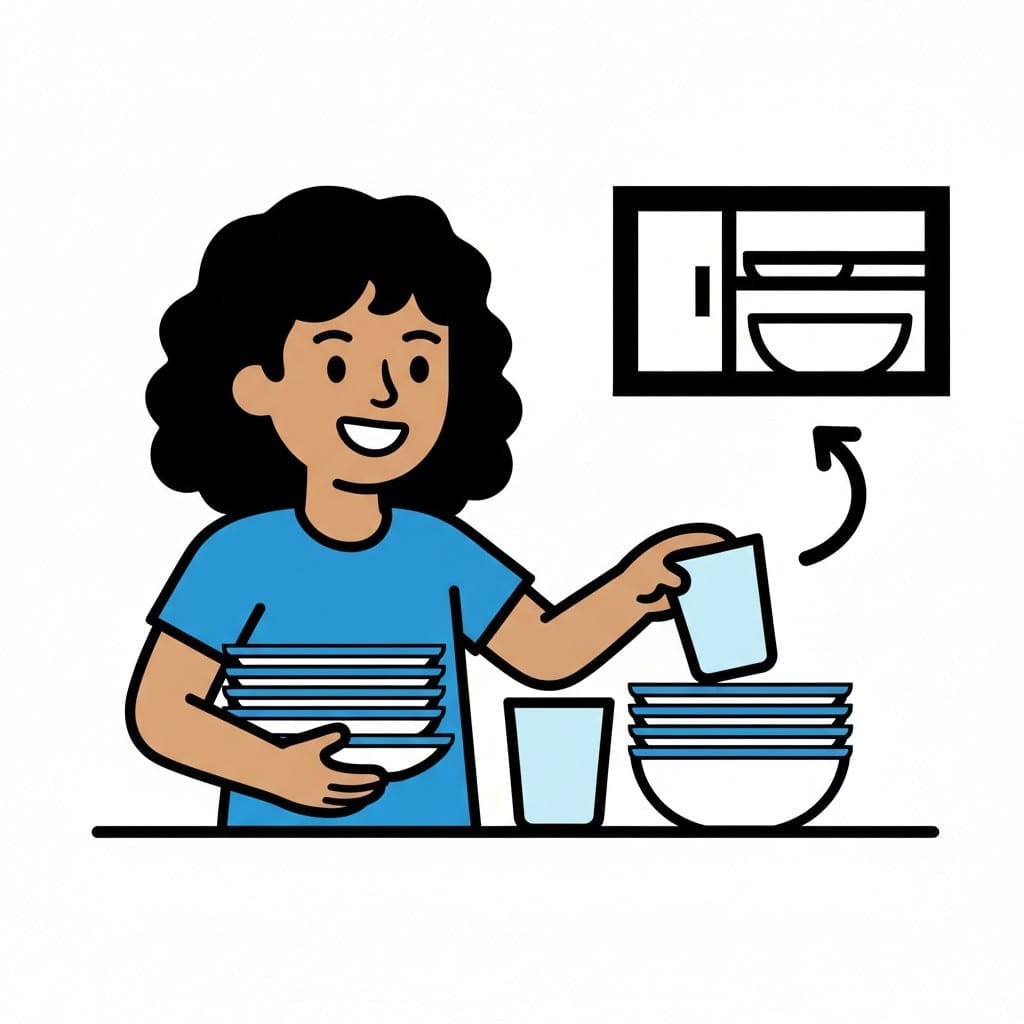 ♀
♀Girl putting a glass in the cupboard
A girl balances a stack of plates against her arm while setting down a glass, and an arrow points up to a kitchen cupboard.
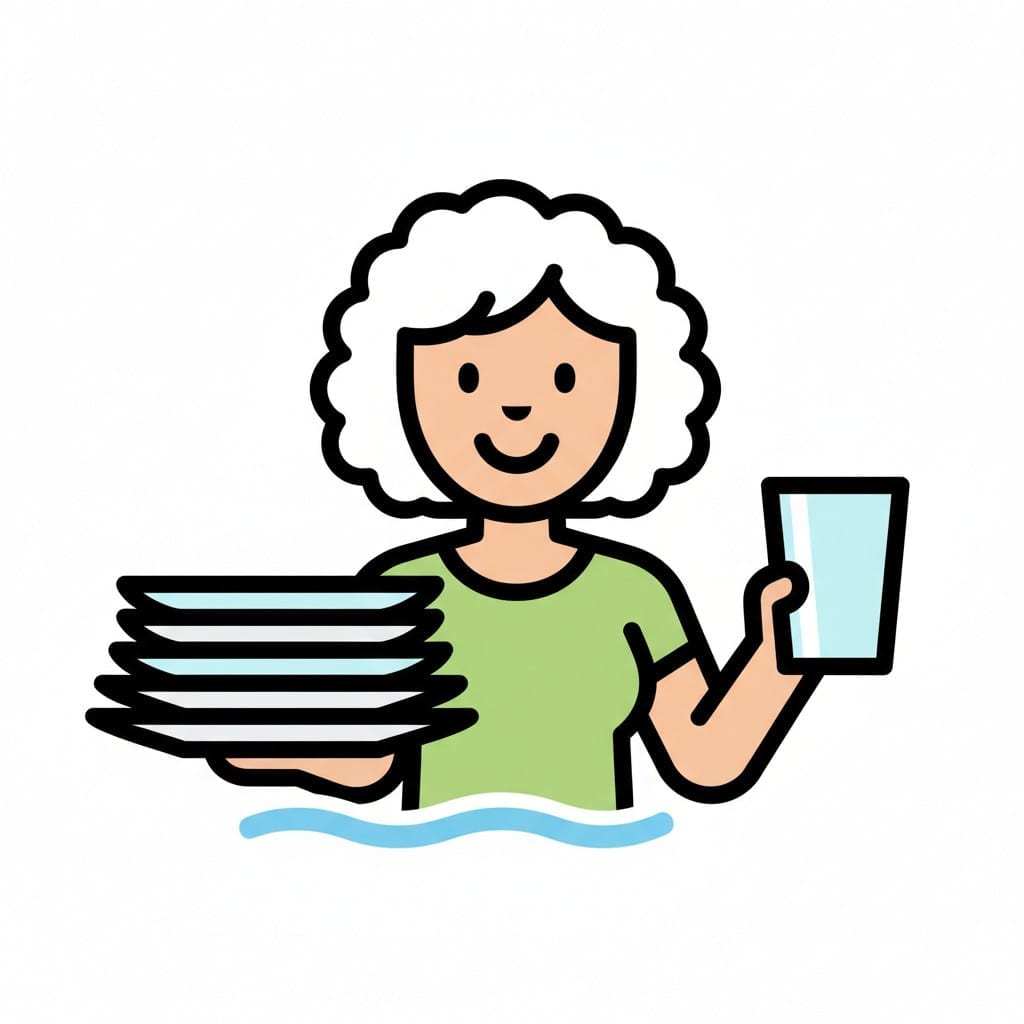 ♀
♀Woman carrying plates and a glass
Smiling in a green top, a woman with curly white hair carries a stack of plates in one hand and a glass in the other.
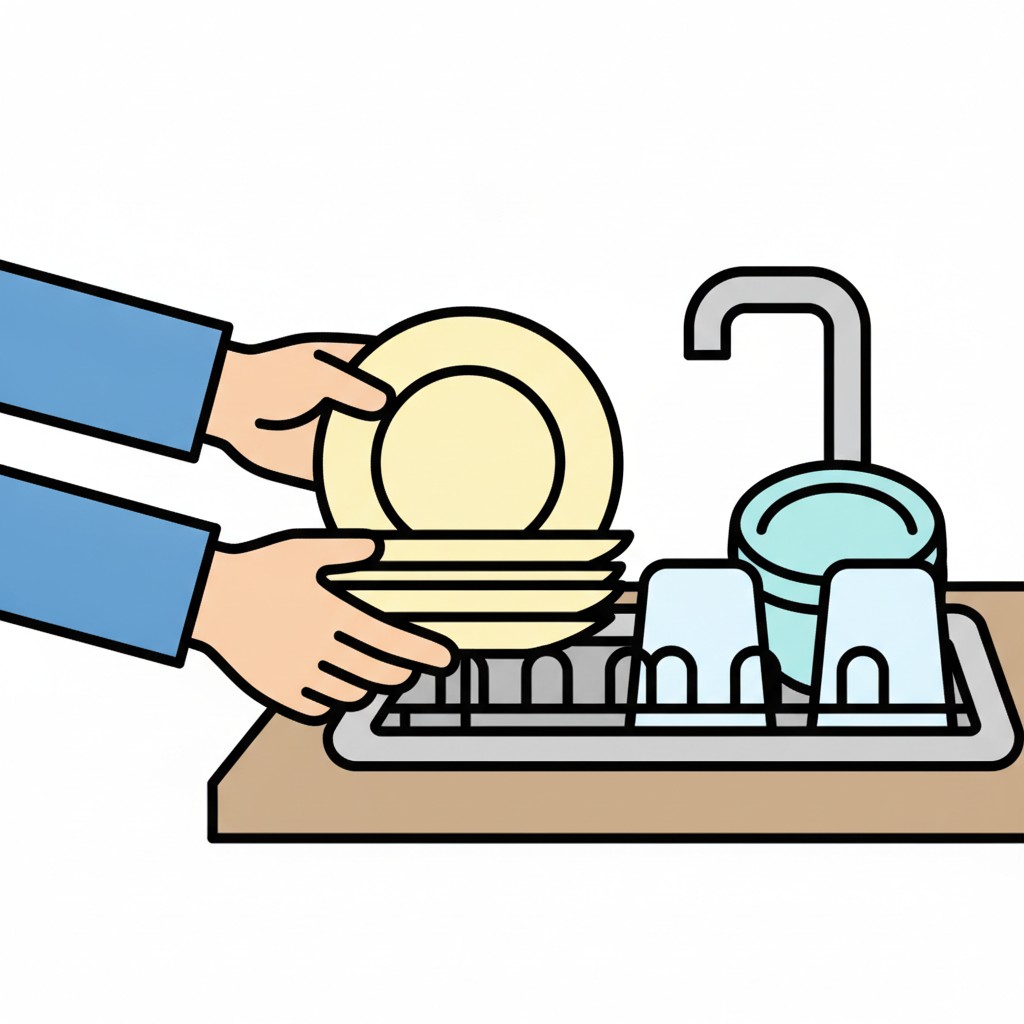
Put the dishes away
Two hands place plates in a dish rack by a sink.
About this visual support
Between the meal and whatever comes next sits a short window where dishes need to travel without glasses clinking and plates tipping. Your child has just been still and is keen to move, while the hands have to manage fragile china. It is a fine motor balancing act, not an obvious task.
With visual support the whole journey gets a visible rhythm. One card for the plate, one for the cutlery, one for the glass, and one for where each item lands. Your child sees where the trip starts and ends, and avoids the temptation to carry everything at once, which is where most spills happen.
One concrete tip: decide in advance which spot on the counter is your child's, a tray, an edge or a marked section. Then the hands know where to go, and you do not need to steer with your voice. When the moment repeats every day, you can build the trip as a routine in Routined so the same order shows up each evening.
Use this image in a schedule
Build your own visual schedule with this image and download it as a print-ready PDF. Completely free.

More similar visual supports
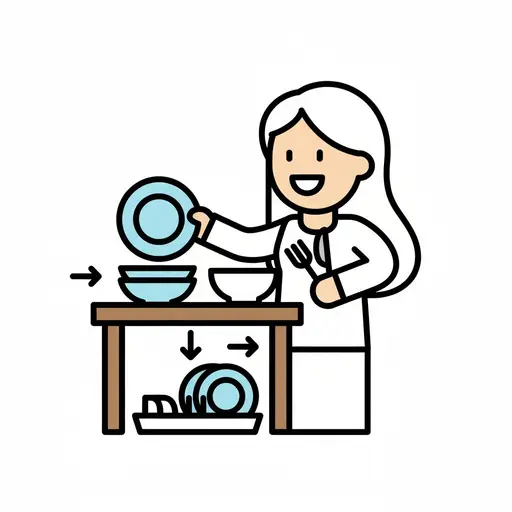
Clear the dishes
A smiling girl removes plates from a table to clear the dishes after a meal.
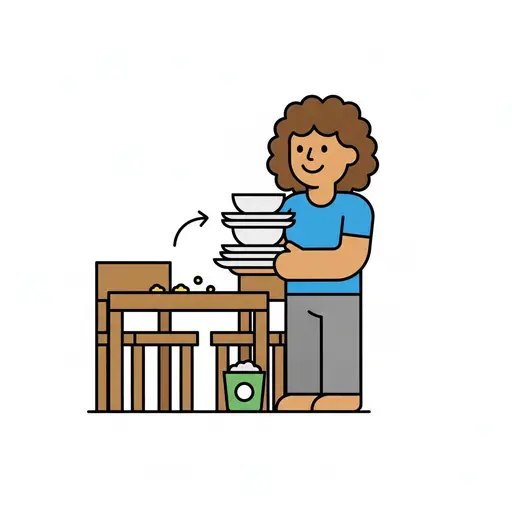
Clear the Table
A smiling person carries a stack of plates and a bowl away from a dining table w...
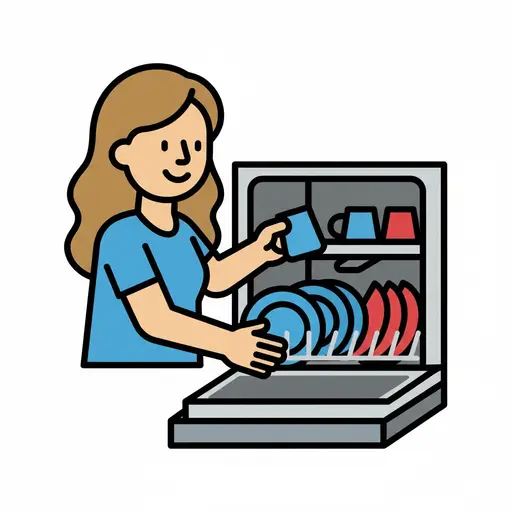
Load the dishes
Illustration of a person loading a dishwasher with plates and cups.
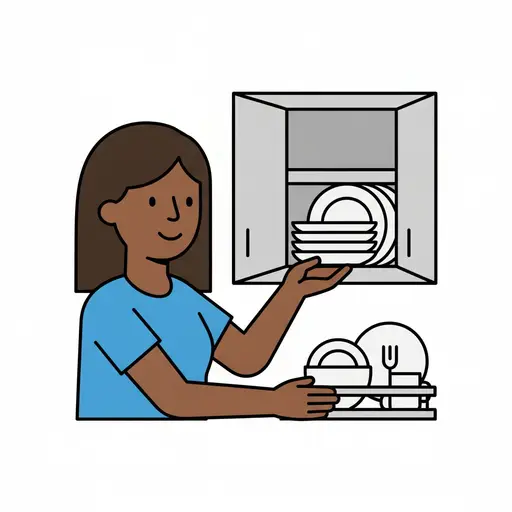
Put away dishes
A woman in a blue t-shirt lifts a stack of white plates from the drying rack up ...
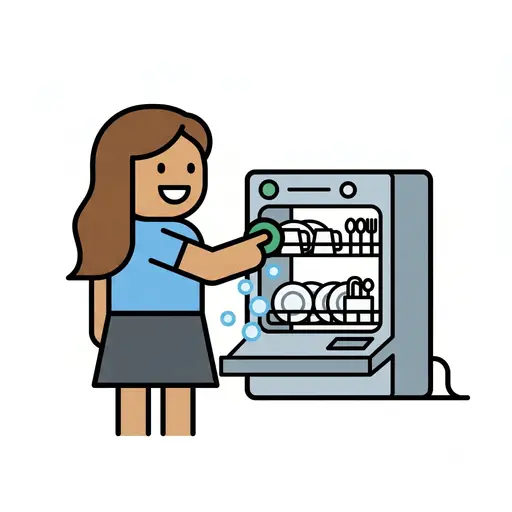
Use the dishwasher
A girl presses the button on an open dishwasher filled with plates and cutlery.
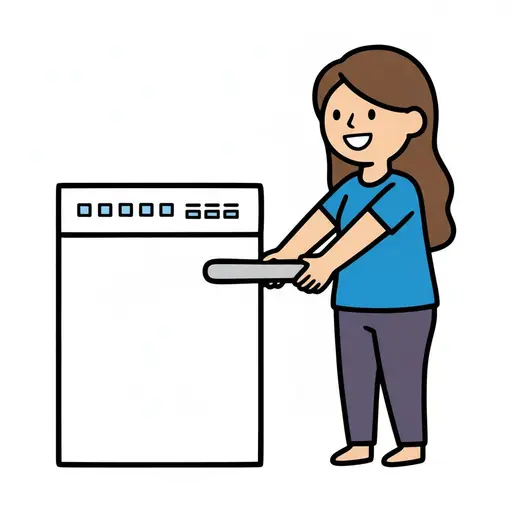
Dishwasher
A smiling person pulls the handle and opens the door of a white dishwasher with ...
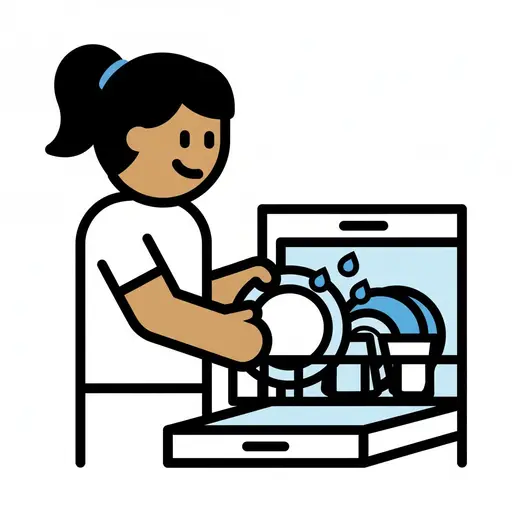
Dishwasher chores
A woman is placing a plate into an open dishwasher, with other dishes already in...
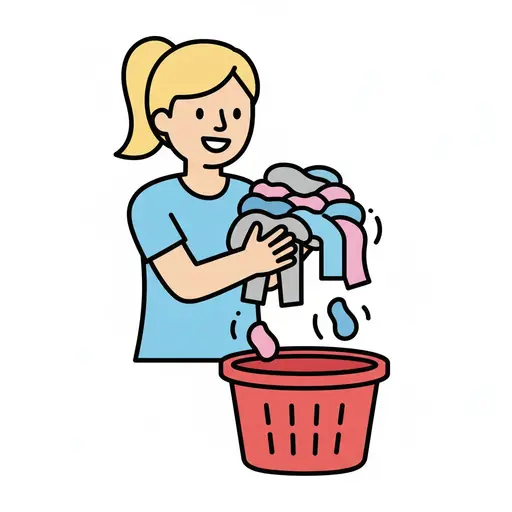
Drop the laundry in the basket
A girl lets an armful of dirty clothes fall into a red laundry basket.
Take the visual supports with you
In Routined you build schedules from these pictures, add timers and voice instructions, and your child follows the day on their own.


* 14-day free trial included for new users.