Put away dishes
Putting dishes away is not a neutral task. Plates are heavy, glasses can break and every item has its shelf. The visual support below shows both the grip and the destination.
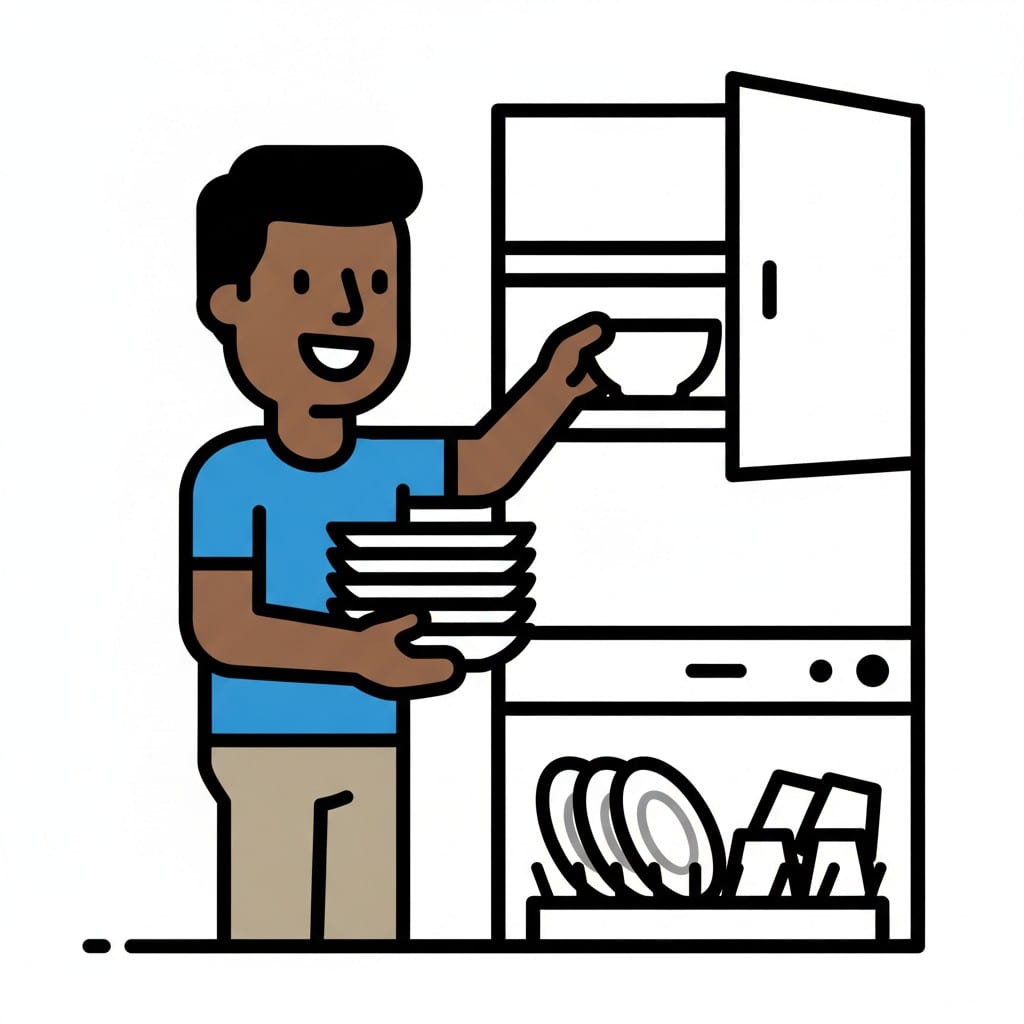 ♂
♂Man putting a bowl into the kitchen cabinet
Holding a stack of plates, a man in a blue t-shirt reaches a bowl into an open wall cabinet while the dishwasher below stands full.
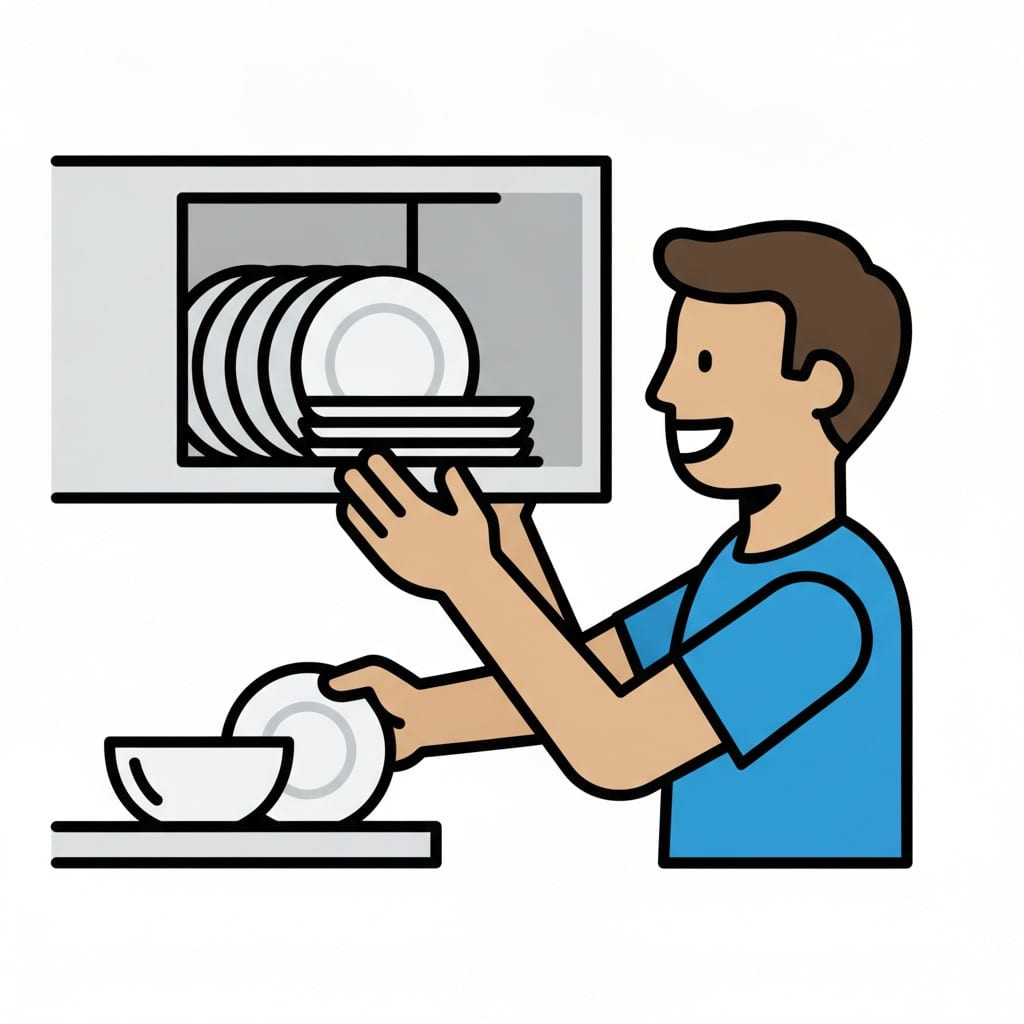 ♂
♂Man lifting plates into a wall cabinet
A man in a blue t-shirt lifts a stack of plates up into a wall cabinet while a bowl and a plate remain on the counter.
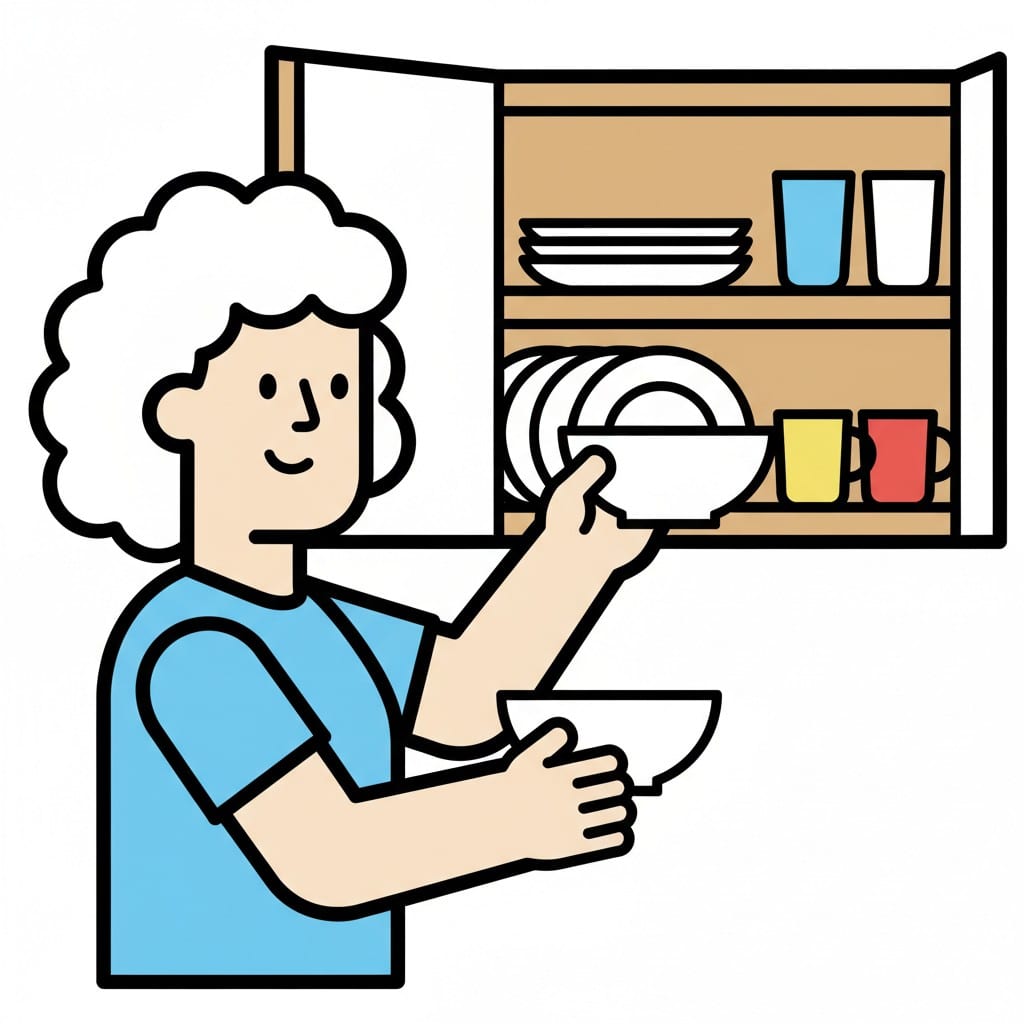 ♀
♀Put away dishes
A person is putting plates and bowls into a kitchen cabinet.
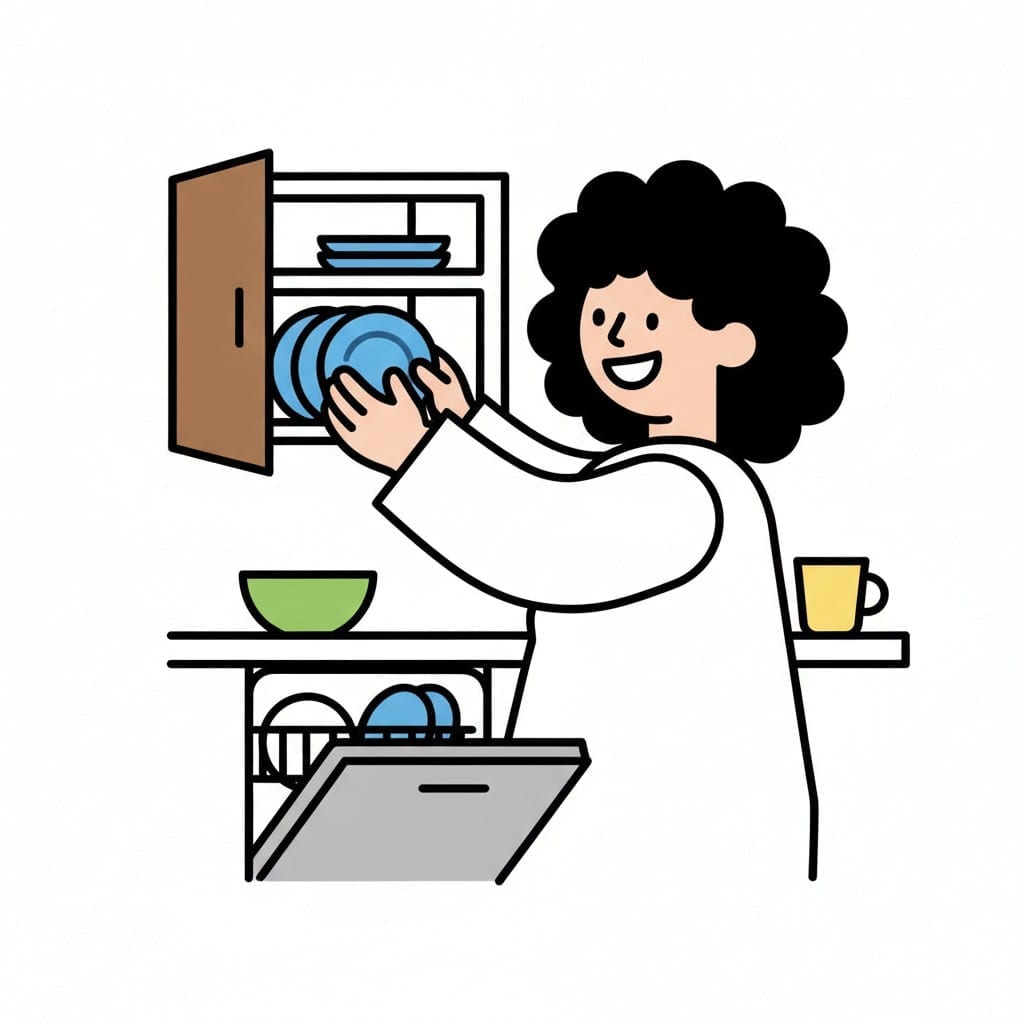 ♀
♀Woman putting plates into the cupboard
A woman with curly hair slides blue plates onto a shelf in an open kitchen cupboard while the dishwasher below stands open.
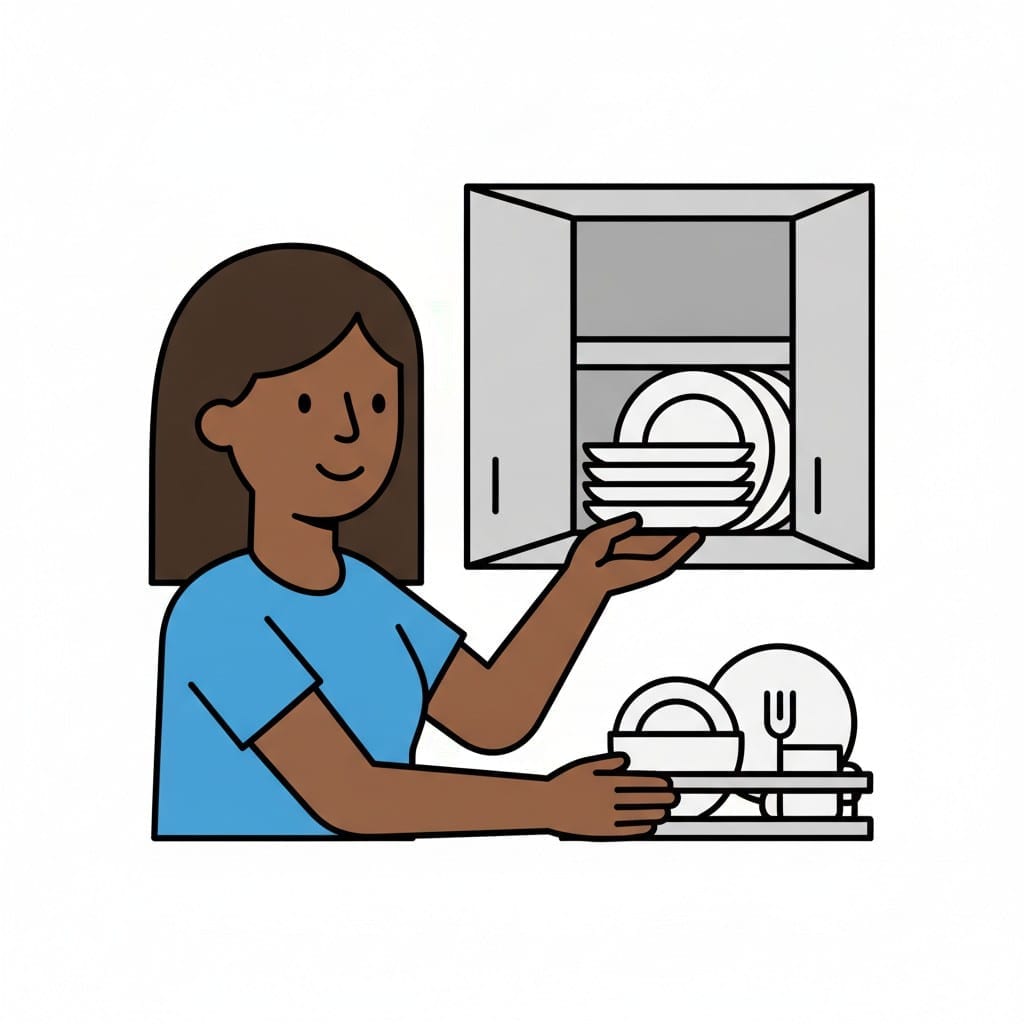 ♀
♀Woman putting plates away from the drying rack
A woman in a blue t-shirt lifts a stack of white plates from the drying rack up into a wall cabinet.
About this visual support
Plates straight out of the dishwasher are warm, glasses are slippery while a little water still clings to the rim, and cutlery clinks in a way that can quickly turn stressful. That is why this particular chore is where motor control and order collide for a child.
Visual support helps by preparing the hand before the plate leaves the counter. When the picture shows a glass, the child slows down. When it shows a plate, the weight is set into both hands before the lift. Between movements sits the picture of the shelf, so the destination is known before the item is even raised.
A tip that works specifically for dishes: always start with the cutlery. It is the easiest, it goes fast, and it gives the child the feeling of the pile shrinking before glasses and plates come into play. That is plain psychology, and it works. If the kitchen has several shelves that easily get mixed up, you can extend the routine with reminders in Routined.
Use this image in a schedule
Build your own visual schedule with this image and download it as a print-ready PDF. Completely free.

More similar visual supports
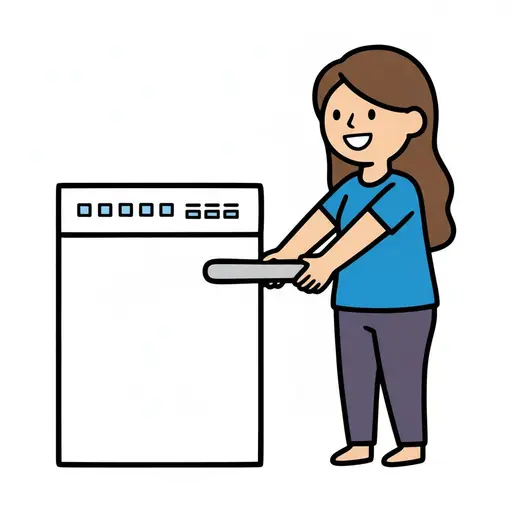
Dishwasher
A smiling person pulls the handle and opens the door of a white dishwasher with ...
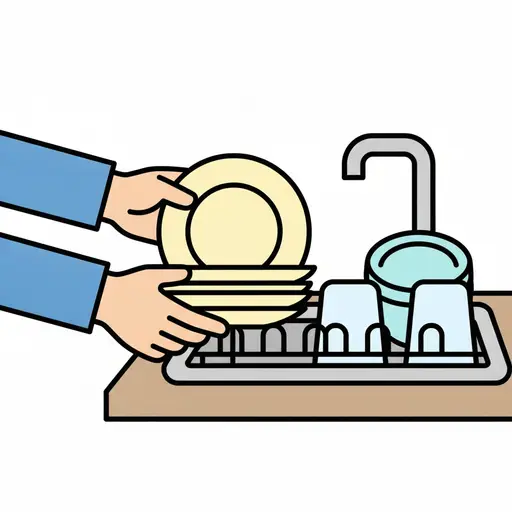
Clear dishes
Two hands place plates in a dish rack by a sink.
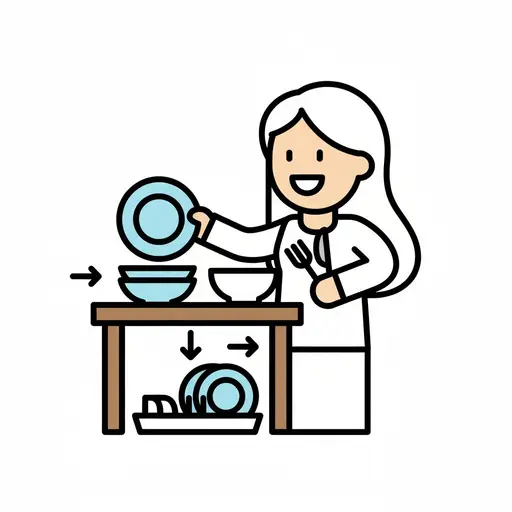
Clear the dishes
A smiling girl removes plates from a table to clear the dishes after a meal.
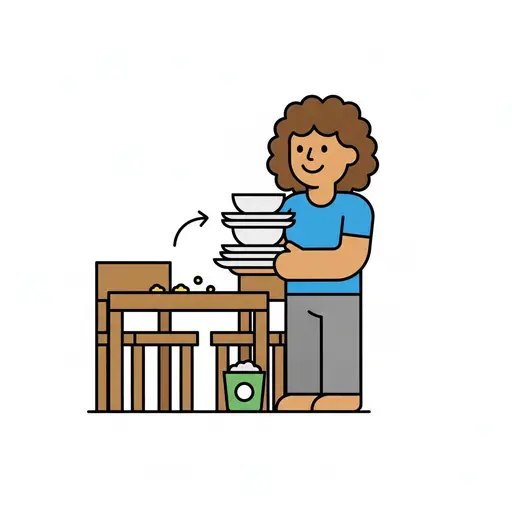
Clear the Table
A smiling person carries a stack of plates and a bowl away from a dining table w...
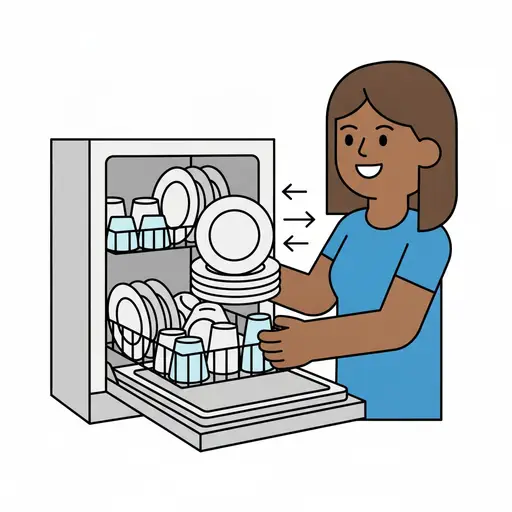
Empty dishwasher
A woman in a blue top lifts a stack of plates and some cups out of the dishwashe...
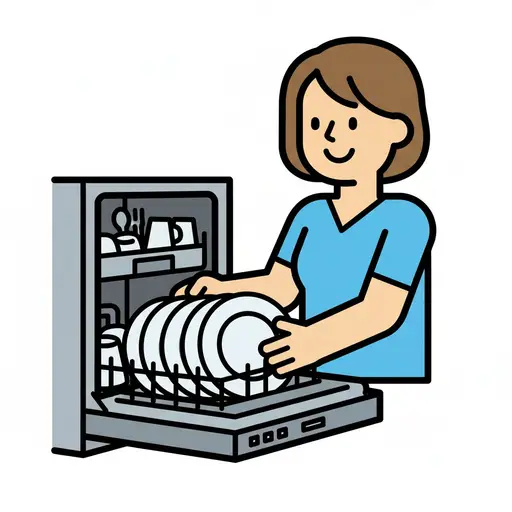
Fill the dishwasher
A person fills the dishwasher with plates and cutlery.
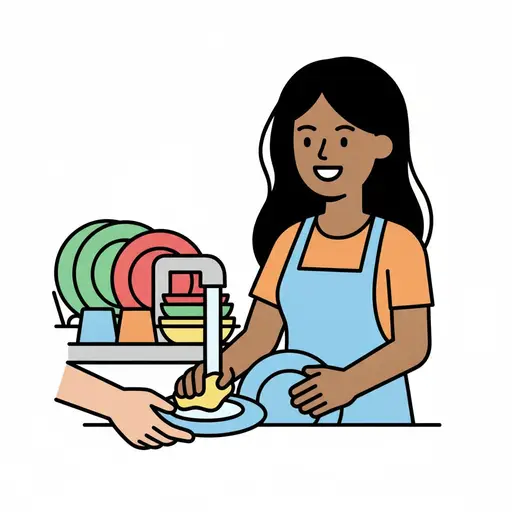
Help with the dishes
A child washes a plate while another hand helps out.
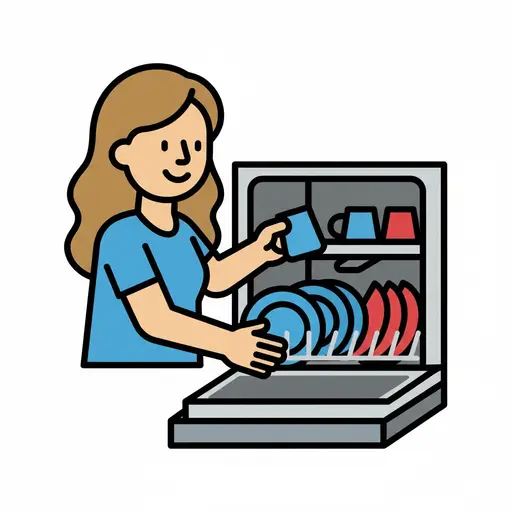
Load the dishes
Illustration of a person loading a dishwasher with plates and cups.
Take the visual supports with you
In Routined you build schedules from these pictures, add timers and voice instructions, and your child follows the day on their own.


* 14-day free trial included for new users.