Fill the dishwasher
Where does the wine glass go, does the spoon face up or down, is there room for another plate up top. Many small decisions stack up and tire the head fast. The visual support below gives every kind of item a fixed spot.
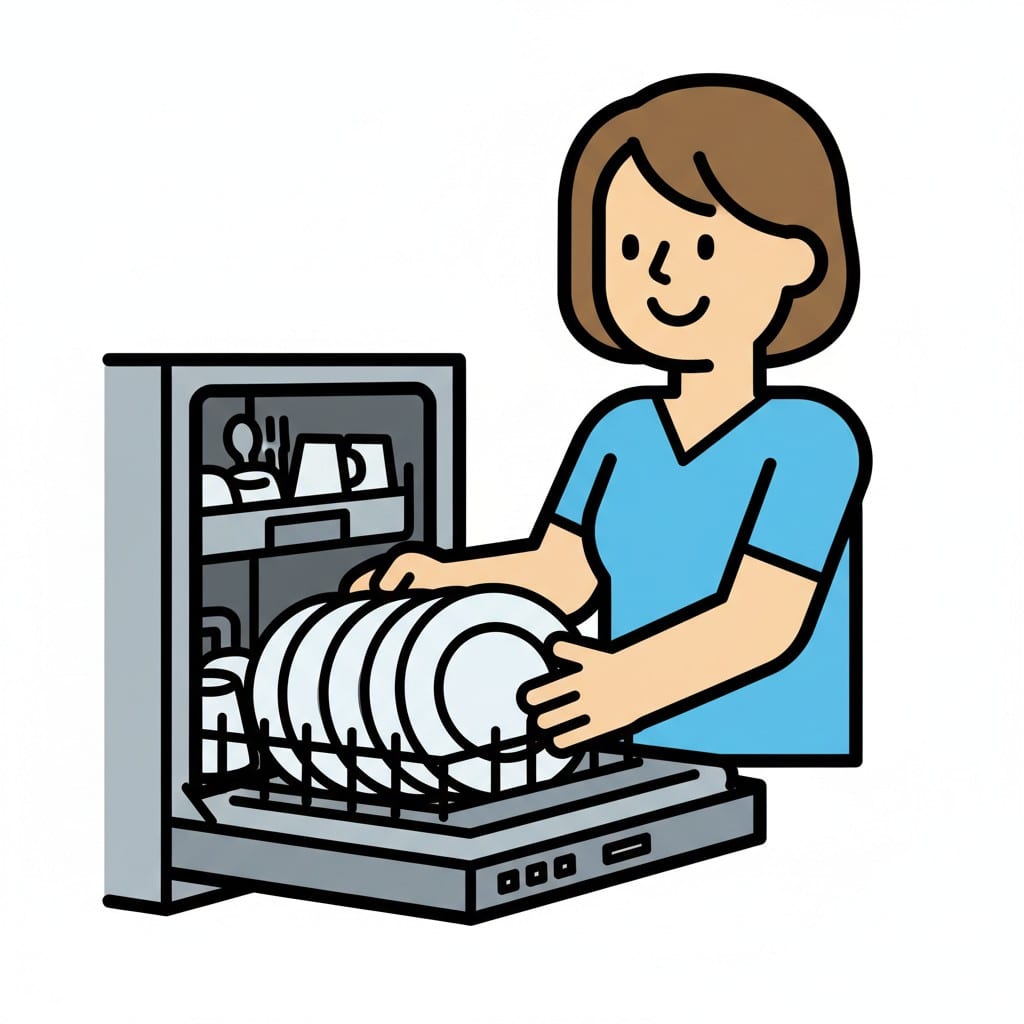 ♀
♀Fill the dishwasher
A person fills the dishwasher with plates and cutlery.
About this visual support
Filling a dishwasher is sorting in disguise. Before a single item is in place, the head has already made ten decisions: does this belong in the machine at all, should it be scraped first, will this material fit on the upper rack, how does the fork sit so it does not snag the knife. For a child learning the task, and for plenty of tired adults too, what wears you out is not the loading itself but the chain of decisions.
With visual support, the decisions are pre-made. The picture shows the glasses tilted in the top corner, the spoons handle-down, the frying pan kept out entirely. That lowers the threshold to begin, because the task no longer feels like a puzzle but a layout to copy. For minds that easily snag on the question of what to do first, this pre-thought visual setup carries the heaviest weight.
One concrete tip: label the dishwasher itself with sticky notes or tape for the first weeks, cutlery here, glasses there. The pictures and labels reinforce each other and can be removed as the routine settles. If you also want a scrape-off timer or have the child tick each rack off digitally, Routined comes with a 14-day trial.
Use this image in a schedule
Build your own visual schedule with this image and download it as a print-ready PDF. Completely free.
More similar visual supports
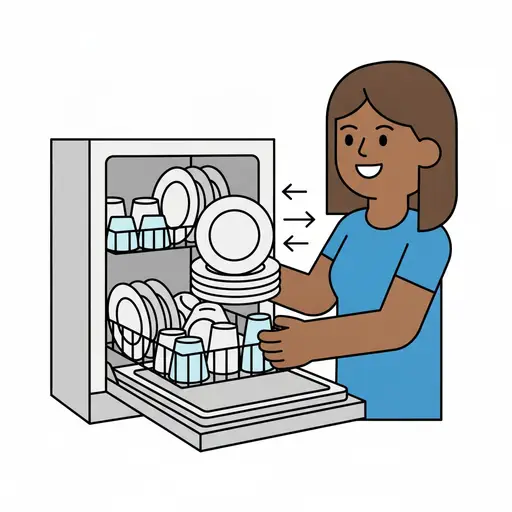
Empty dishwasher
A woman in a blue top lifts a stack of plates and some cups out of the dishwashe...
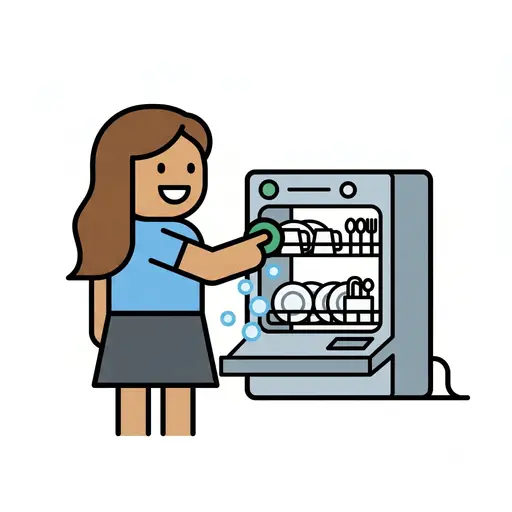
Use the dishwasher
A girl presses the button on an open dishwasher filled with plates and cutlery.
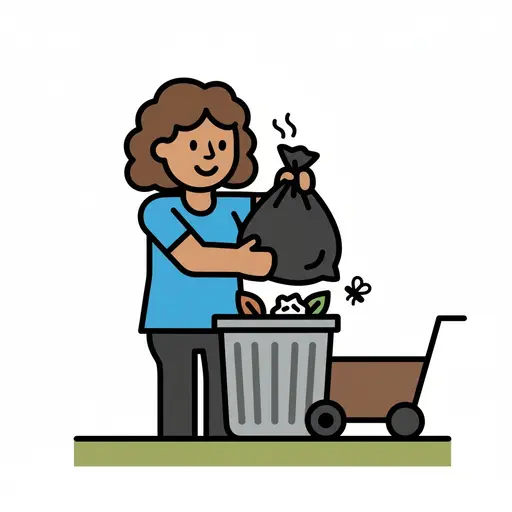
Take out garbage
A girl places a black garbage bag into an outdoor bin.
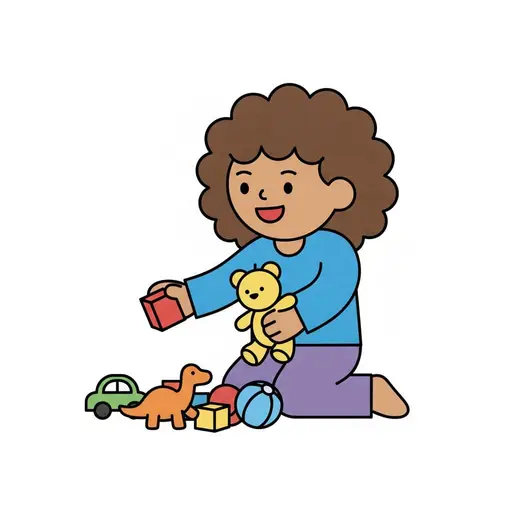
Put away toys
A child kneels holding a yellow teddy and a red block, with toys on the floor.
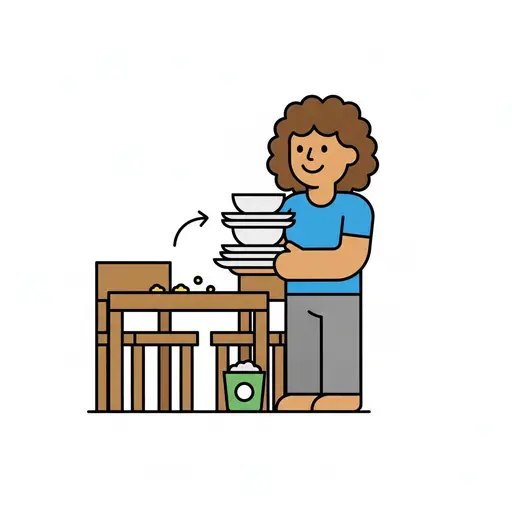
Clear the Table
A smiling person carries a stack of plates and a bowl away from a dining table w...
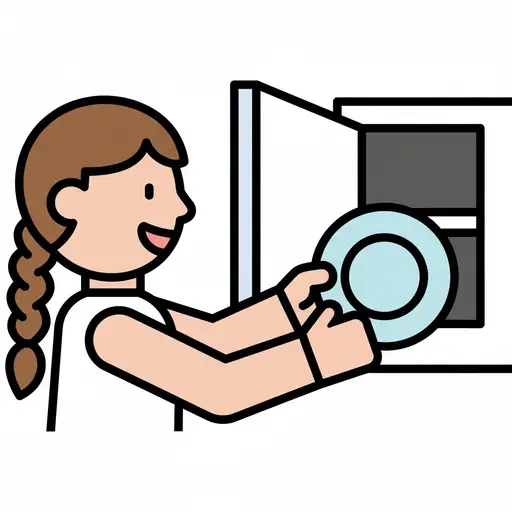
Put away the plate
A girl places a clean plate into an open kitchen cupboard.
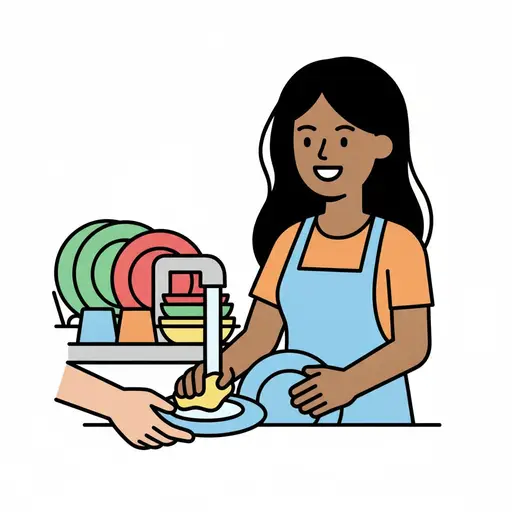
Help with the dishes
A child washes a plate while another hand helps out.
Wash car
A boy washing a red car with a sponge and a bucket of foam.
This visual support in other languages
Take the visual supports with you
In Routined you build schedules from these pictures, add timers and voice instructions, and your child follows the day on their own.


* 14-day free trial, then $2.39 a month or $20.99 a year (US pricing). Cancel anytime.