Hand wash dishes
Dishwater is hot, grease is slippery and food bits hang on in strange textures. Hand-washing is a sensory mix that can make it hard to stay at the sink. The pictures below give the eyes somewhere to rest.
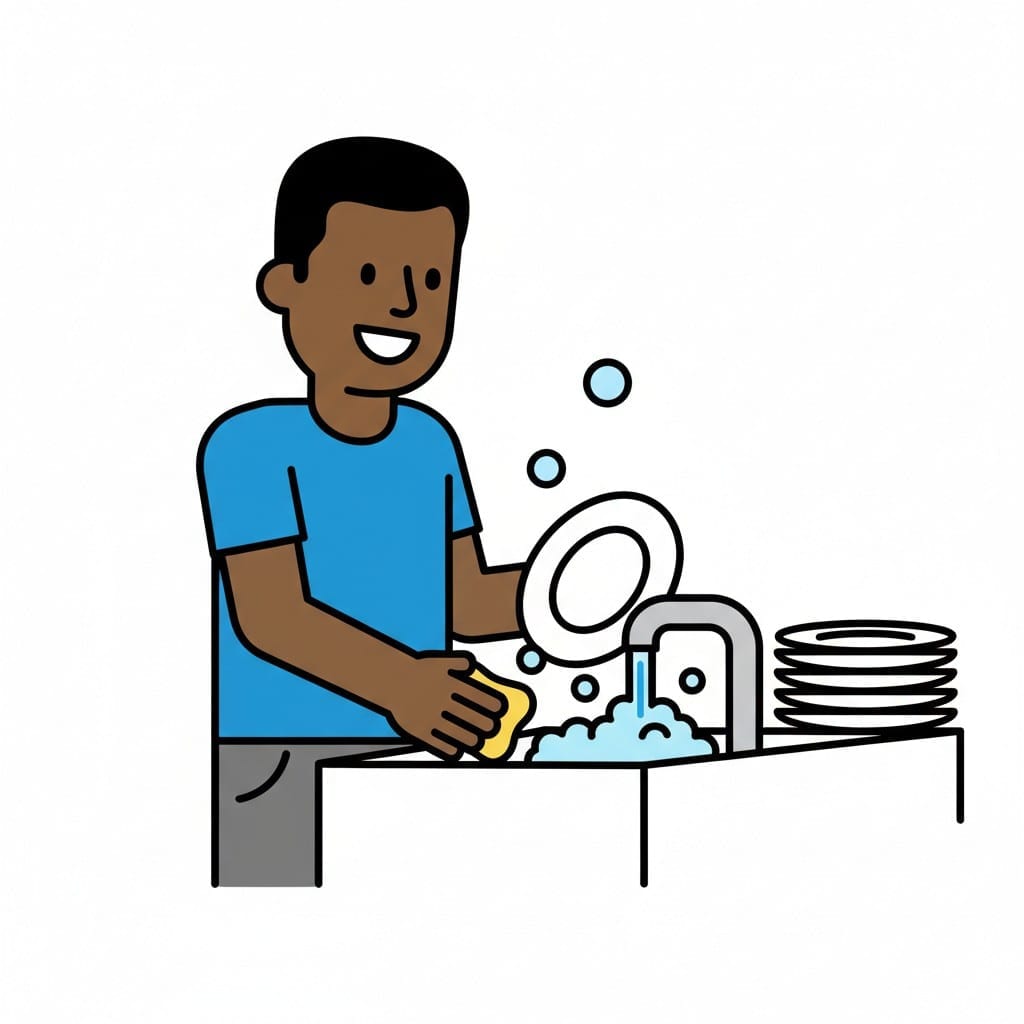 ♂
♂A boy washing dishes
A boy is washing plates in a sink with soapy water and a sponge.
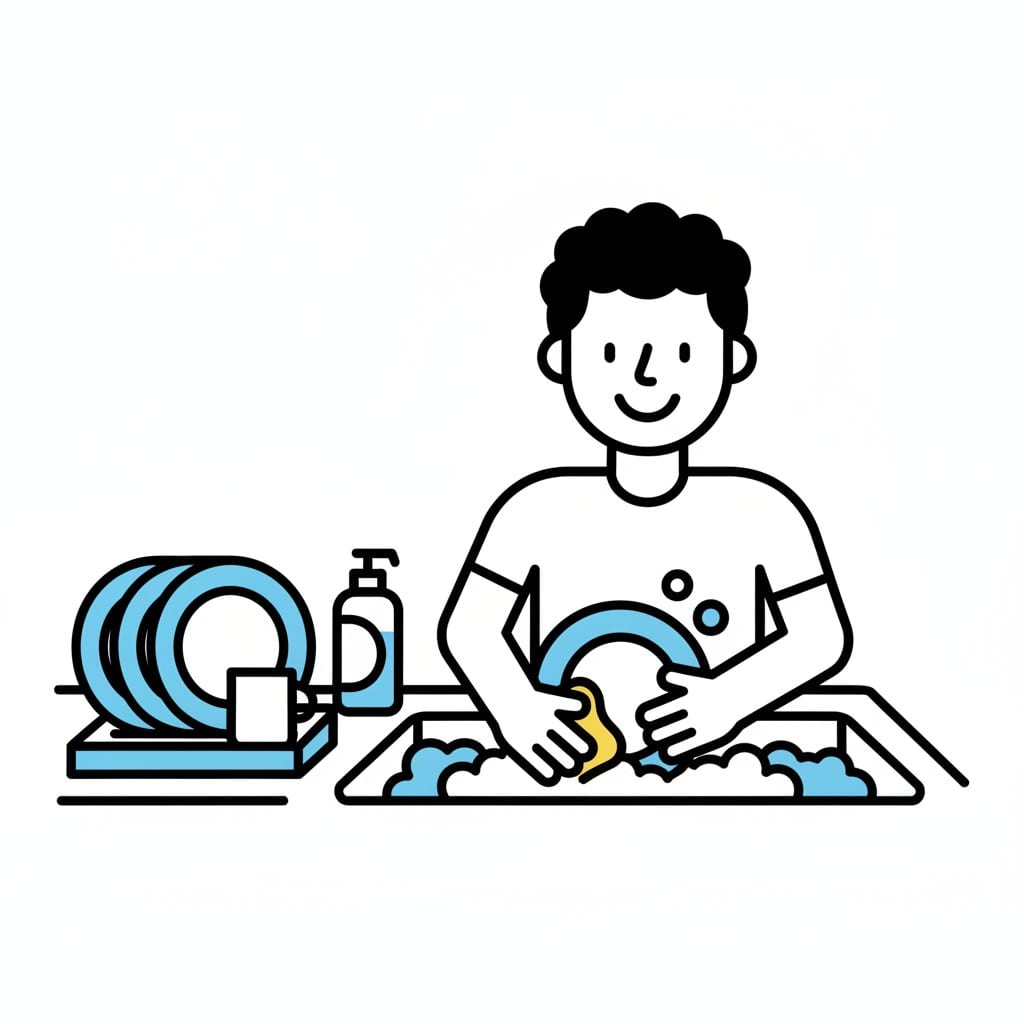 ♂
♂Boy scrubbing a plate with a sponge
At a soapy sink, a boy scrubs a plate with a yellow sponge next to a drying rack and a bottle of dish soap.
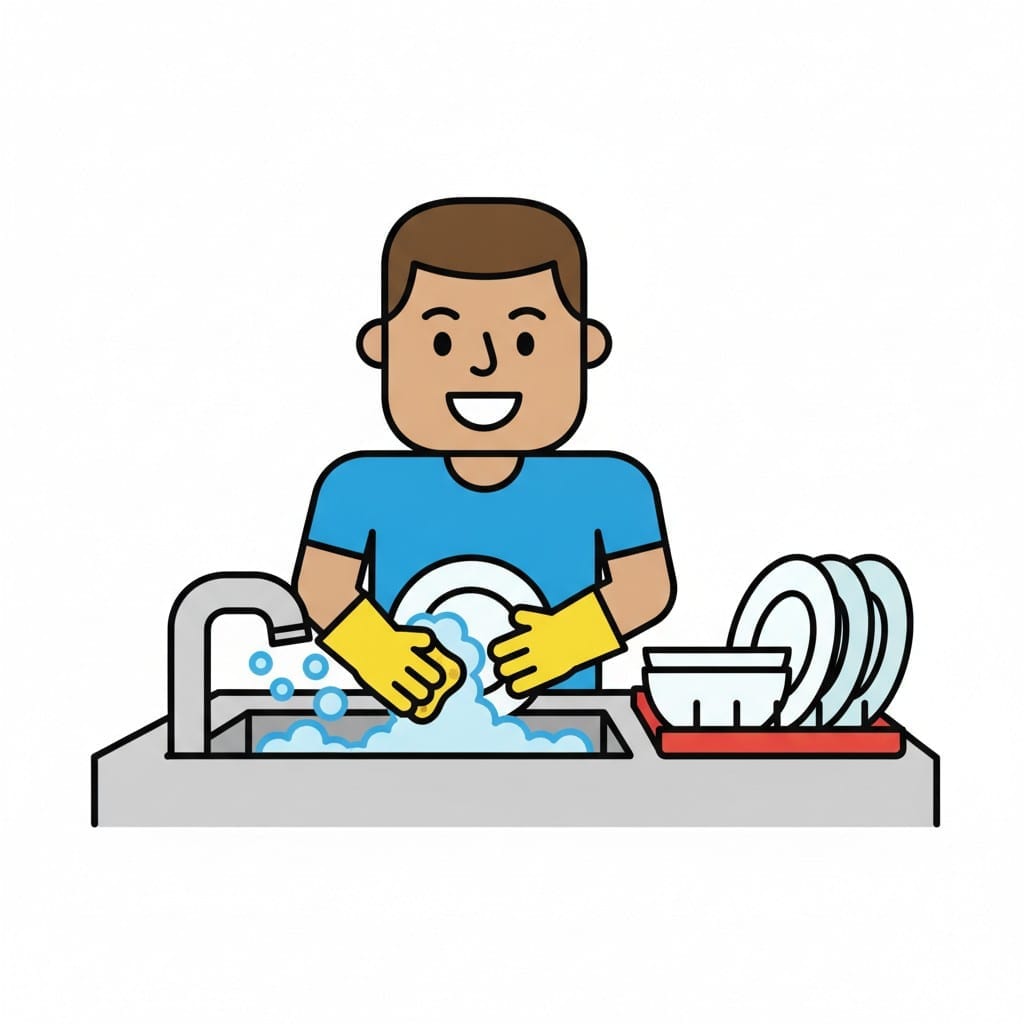 ♂
♂Man washing a plate in yellow gloves
Wearing yellow rubber gloves, a man rinses a white plate over a sink full of suds, with a drying rack of dishes beside him.
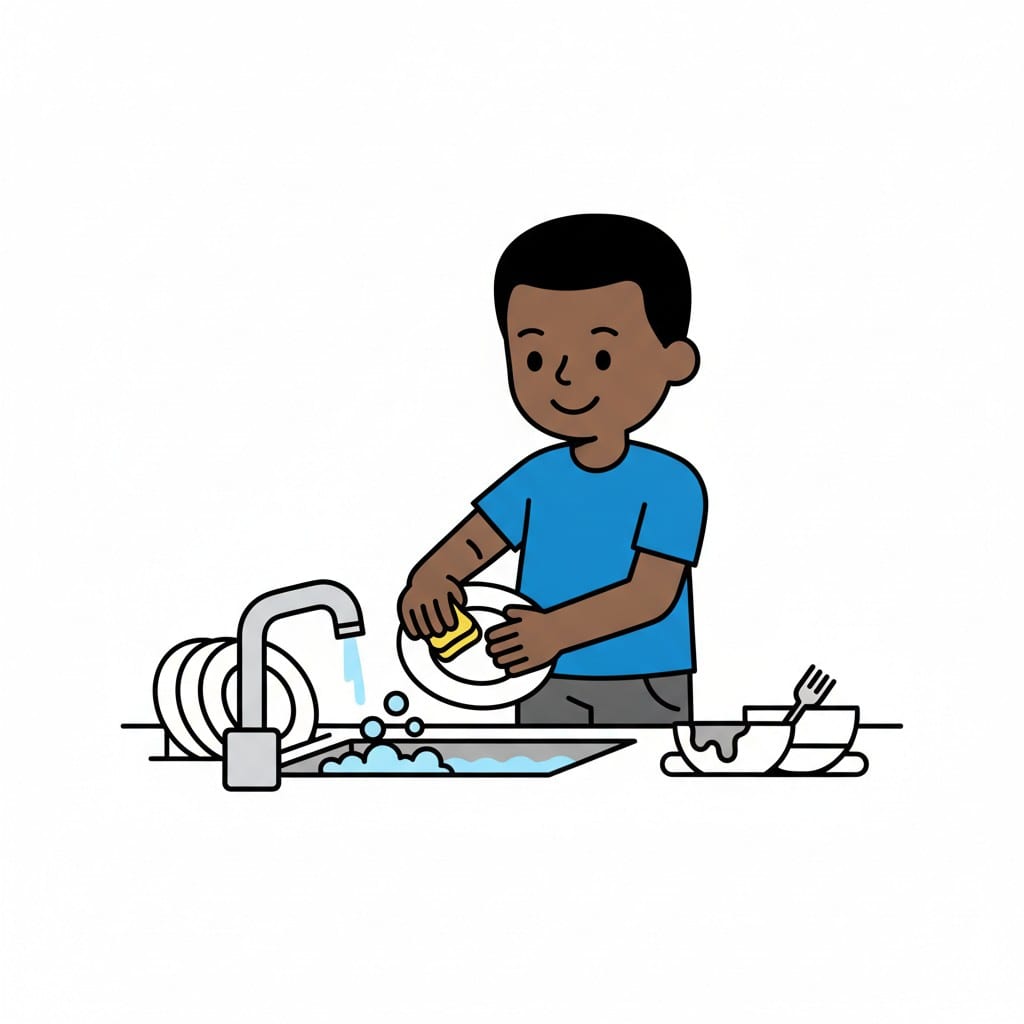 ♂
♂Boy washing dishes
A boy washes a plate at the sink with dishes around him.
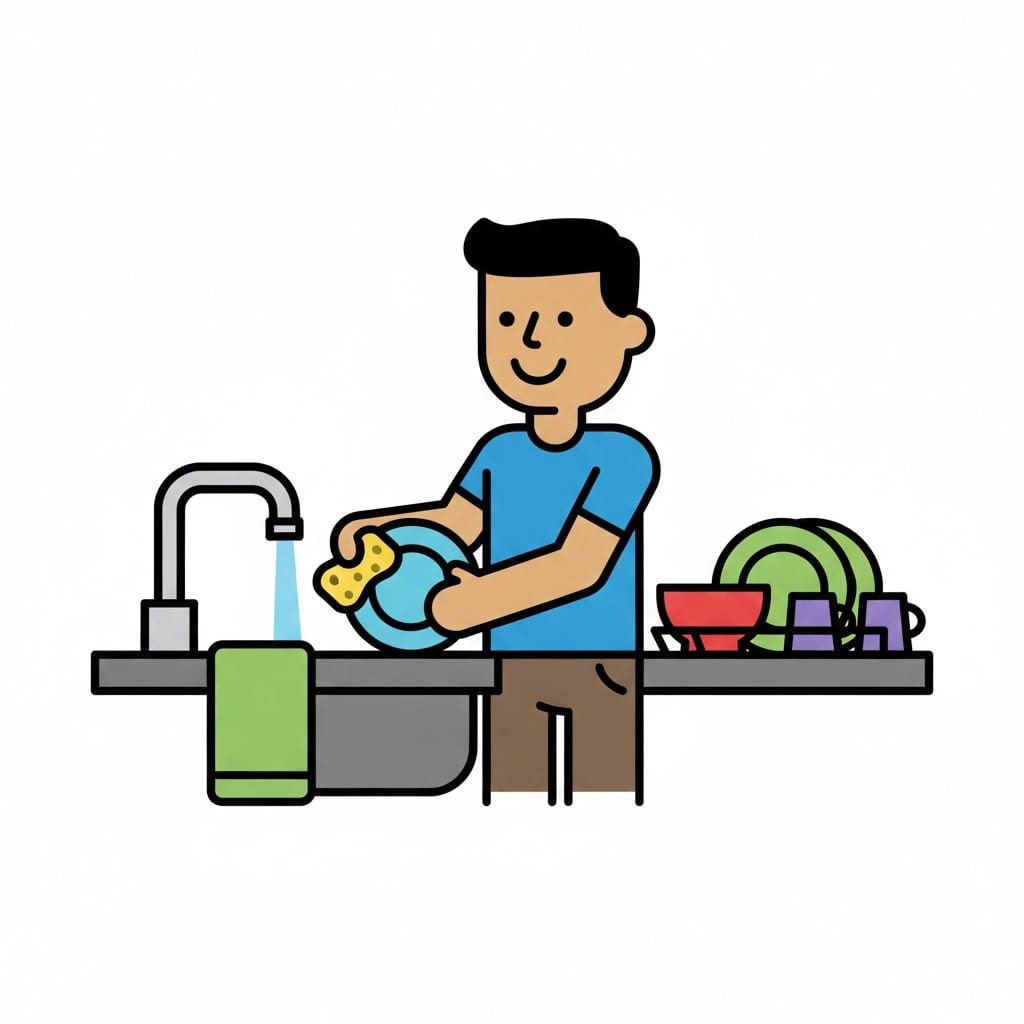 ♂
♂Kitchen tasks
A man washes a plate at the kitchen sink.
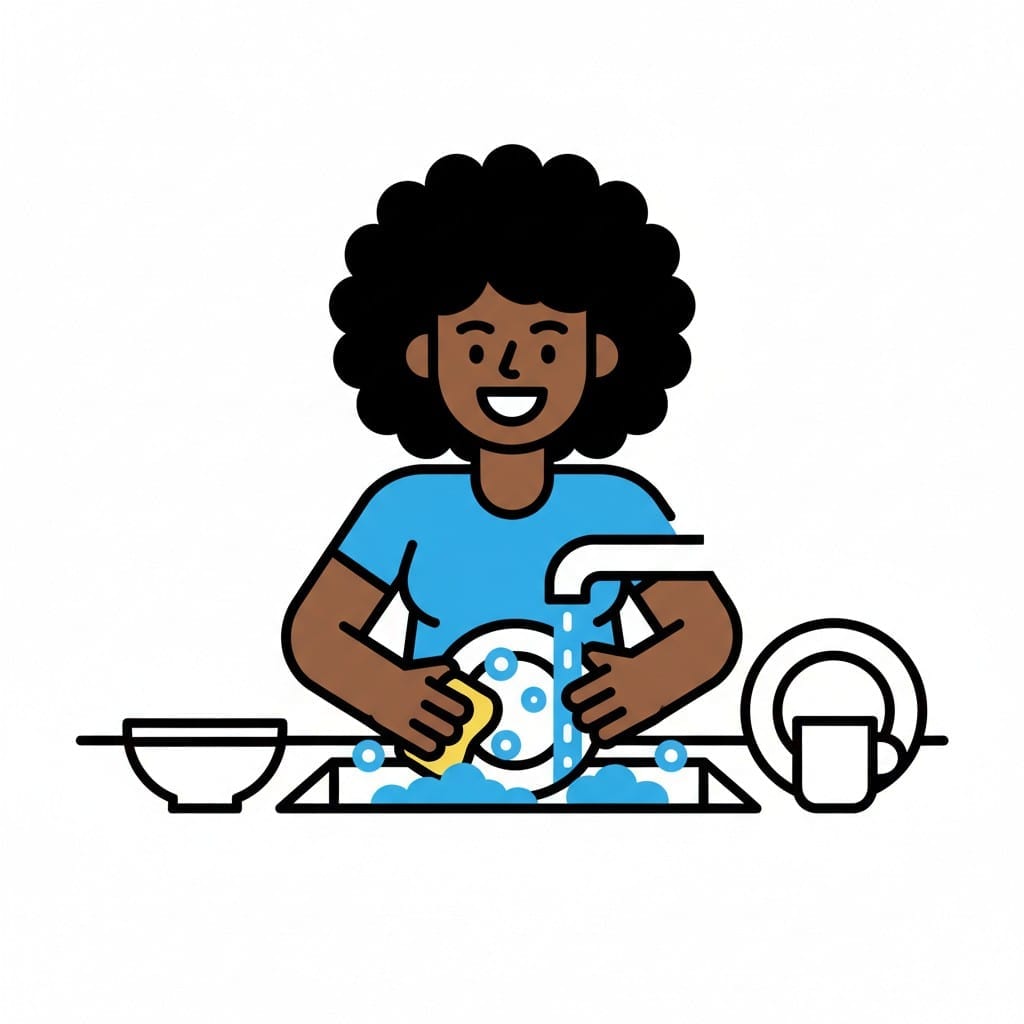 ♀
♀Wash dishes
A woman with curly hair is washing dishes in a sink with soap and water.
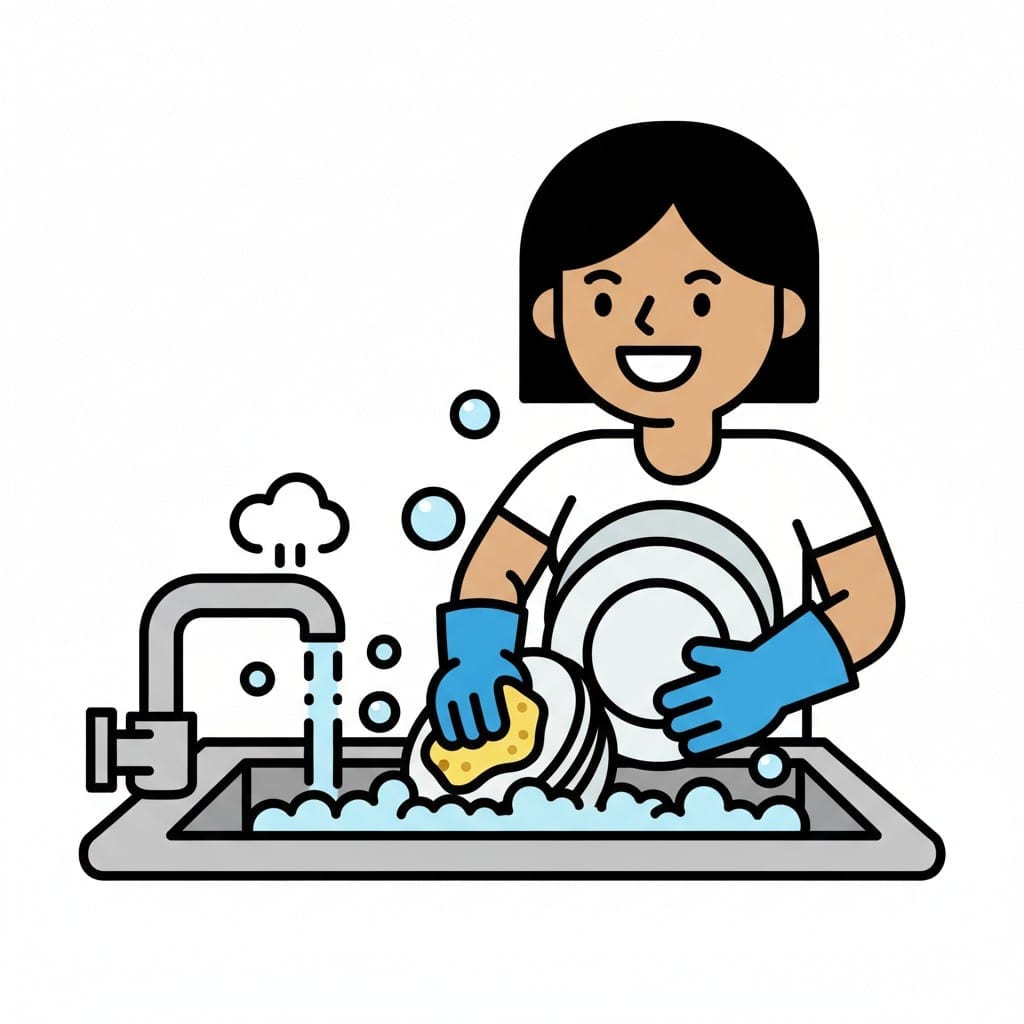 ♀
♀Wash dishes
A woman wearing blue gloves is washing dishes in a sink with soap and water.
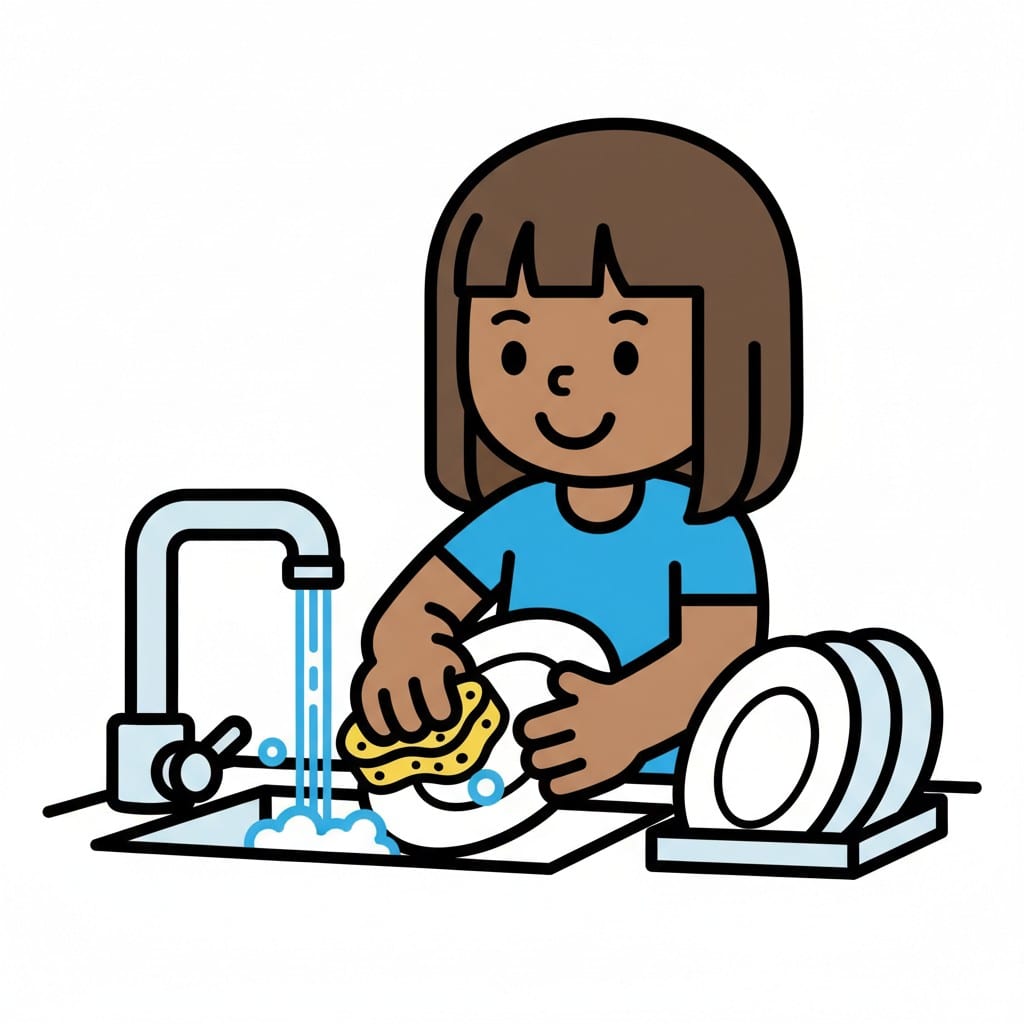 ♀
♀Wash dishes
A child is washing dishes in a sink with soap and water.
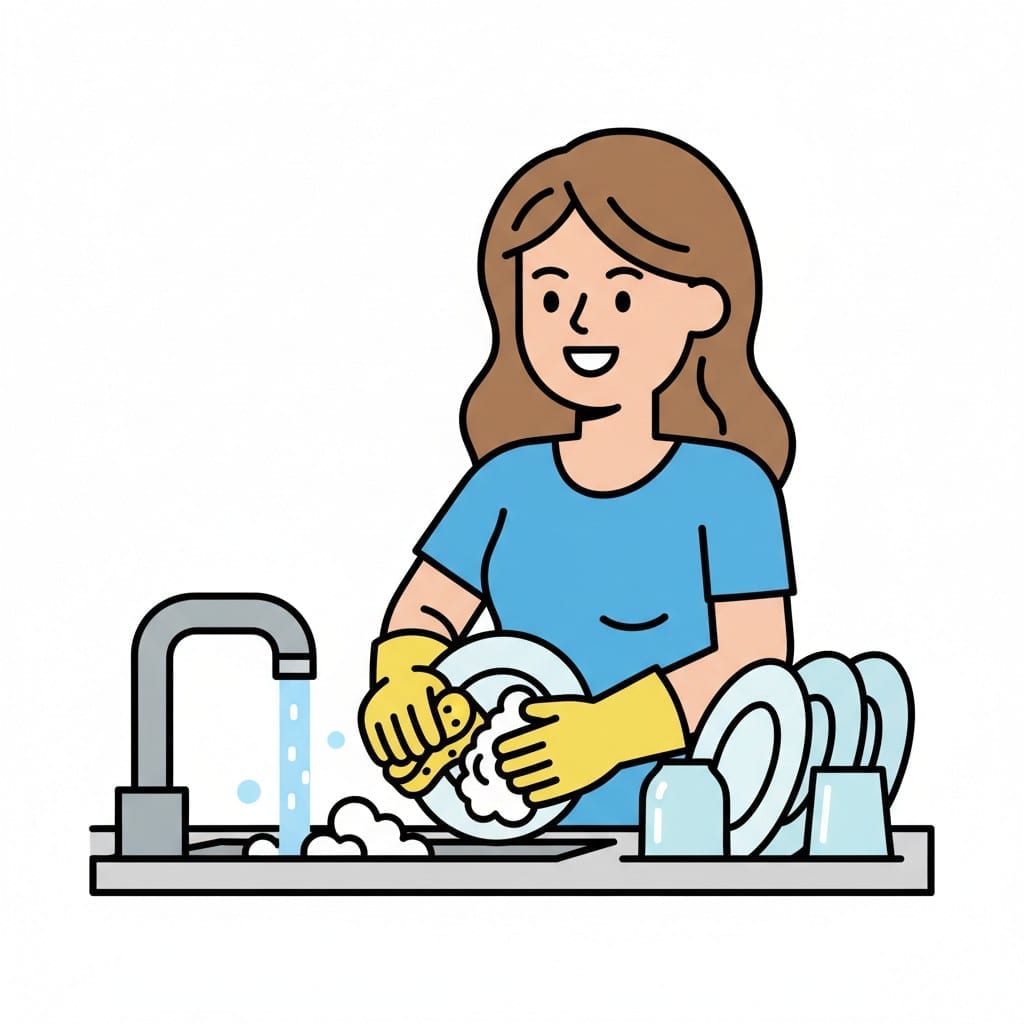 ♀
♀Wash dishes
A woman wearing yellow gloves is washing dishes in a sink with soap and water.
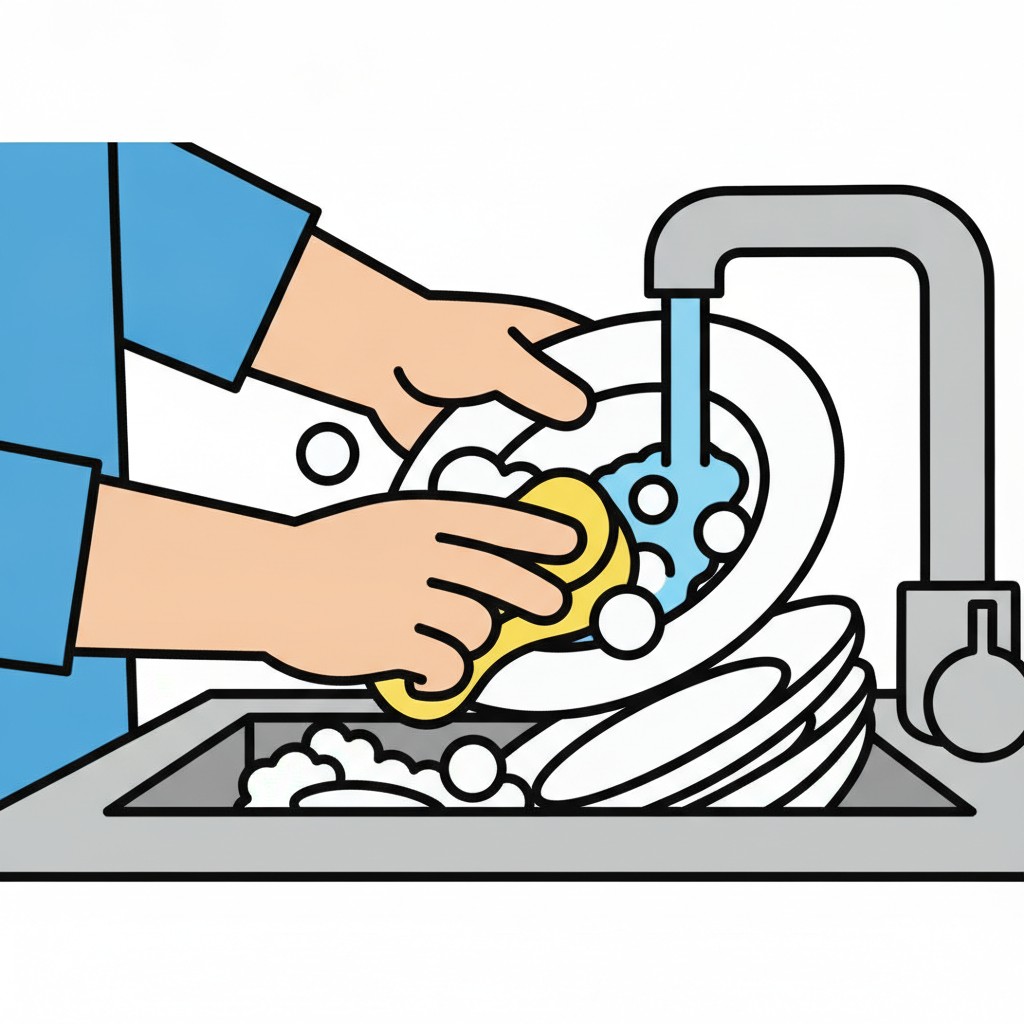
Wash up by hand
Two hands wash a plate with a sponge under a running tap.
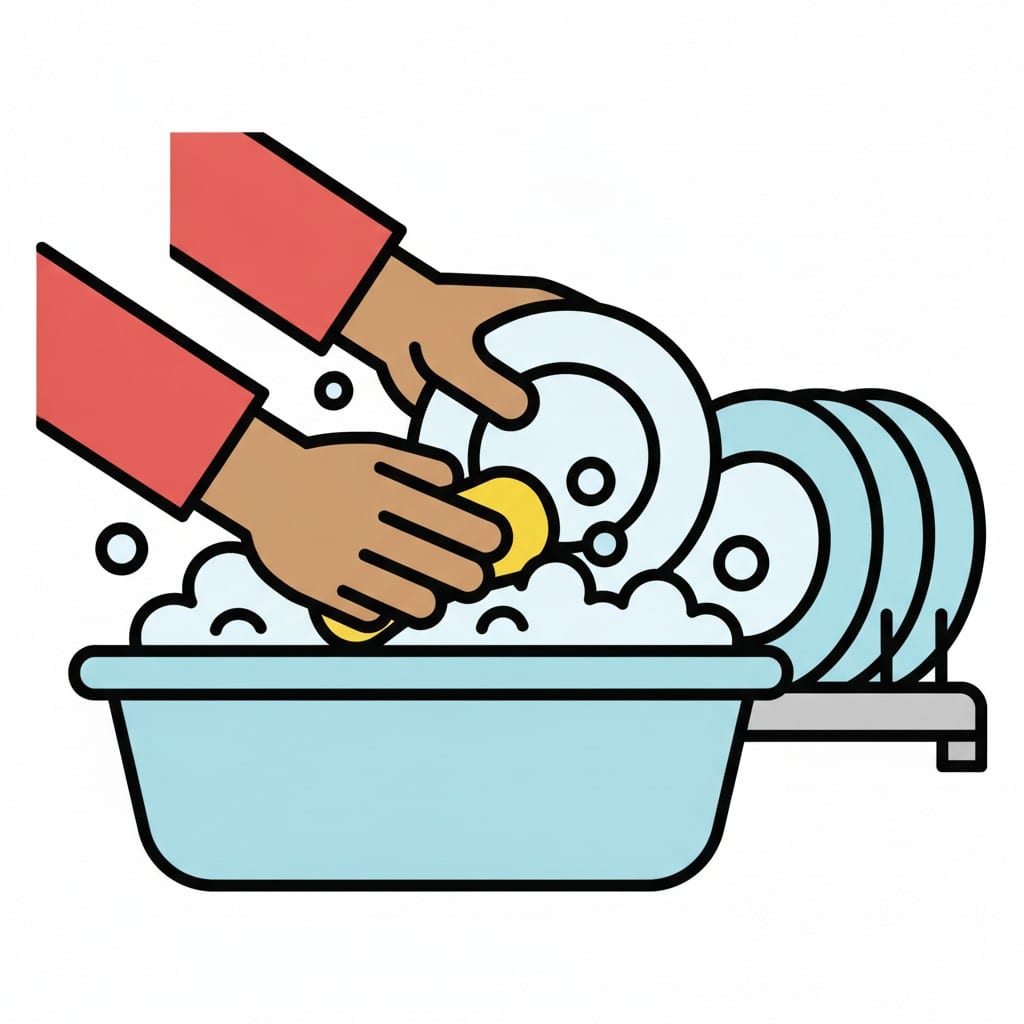 ⚲
⚲Washing up in a basin
Two hands scrub a plate with a yellow sponge over a basin of suds, next to a dish rack full of plates.
About this visual support
Few chores stack so many textures at once as washing dishes by hand. Hot water on the forearm, slippery grease between the fingers, a sticky food bit under a nail, and a sponge that keeps changing feel depending on what it just touched. For a child with a sensitive tactile world, that's enough to end the help after two plates.
A visual schedule lowers the threshold by moving the weight from touch to sight. When the child can see the order — scrape, soak, soap, rinse, set to drain — there's something to lean on when the hands don't know where to go. The picture of glasses before plates also matters: the right order saves both water and patience.
A concrete tip for dishwashing specifically: keep a small separate card for "rinse off the worst" before the soap goes on. Many children jump straight into the basin with a pot full of sauce, and then both water and sponge are useless in seconds. Once you find your order, you can build the cards into a reusable dish routine in Routined and let the child follow the same sequence every evening.
Use this image in a schedule
Build your own visual schedule with this image and download it as a print-ready PDF. Completely free.
More similar visual supports
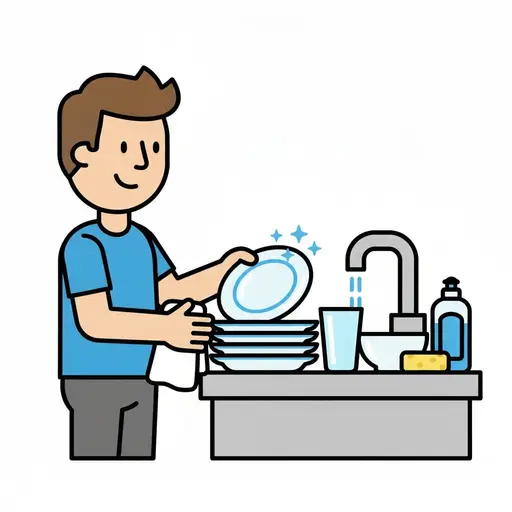
Clean dishes
A man washes a plate at the sink with a stack of clean plates, a glass and washi...
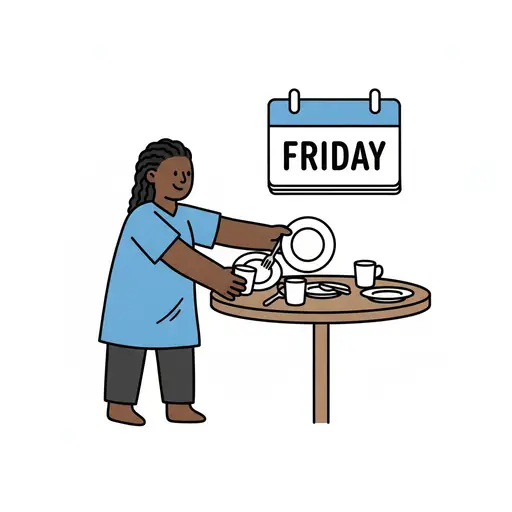
Clear the table on Friday
A woman gathers plates and mugs from a round table next to a calendar showing Fr...
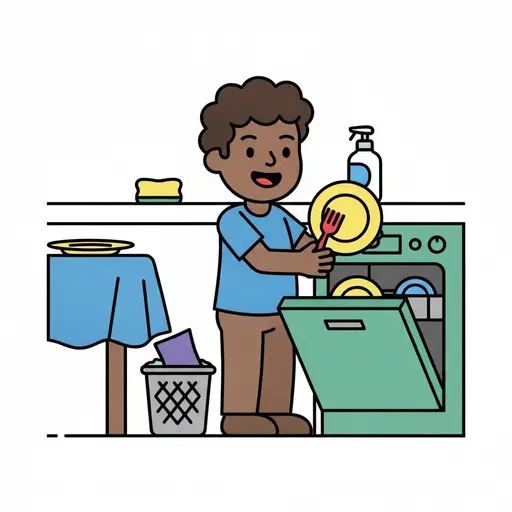
Dinner cleanup
A smiling person holds a yellow plate with a fork in front of an open green dish...
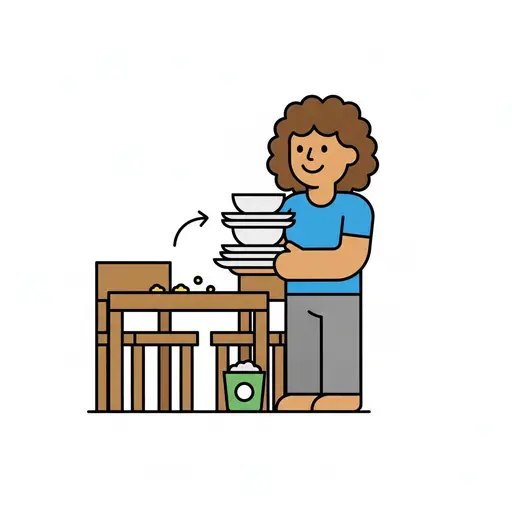
Clear the Table
A smiling person carries a stack of plates and a bowl away from a dining table w...
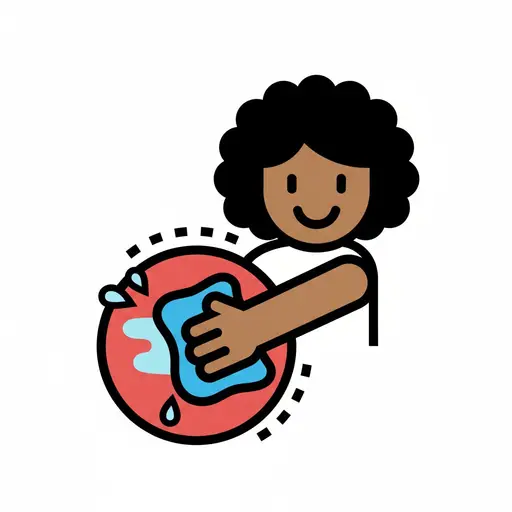
Wipe off
A smiling person wipes a round surface with a blue cloth.
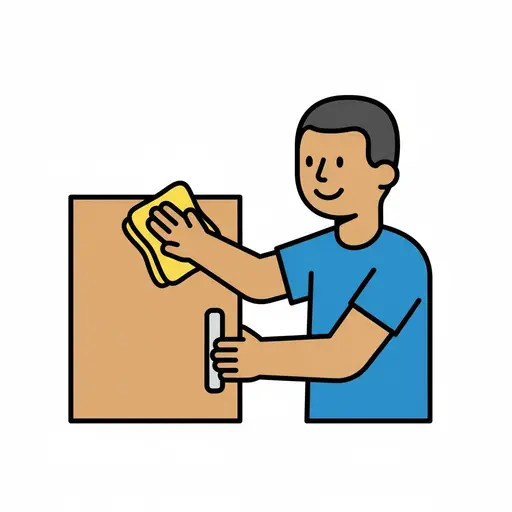
Wipe cabinets
A person wiping a cabinet with a yellow cloth.
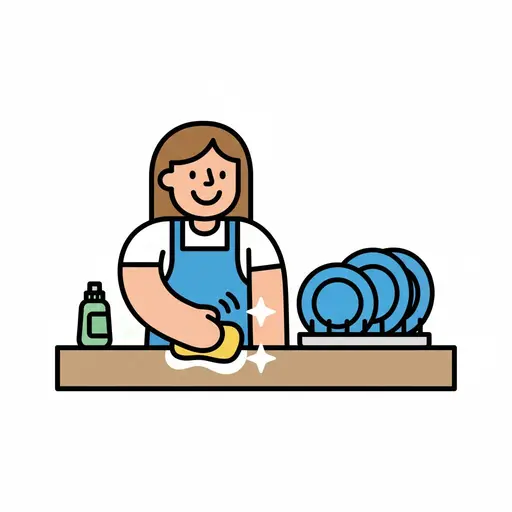
Clean the kitchen
A woman in a blue apron wipes the kitchen counter with a yellow sponge, with was...
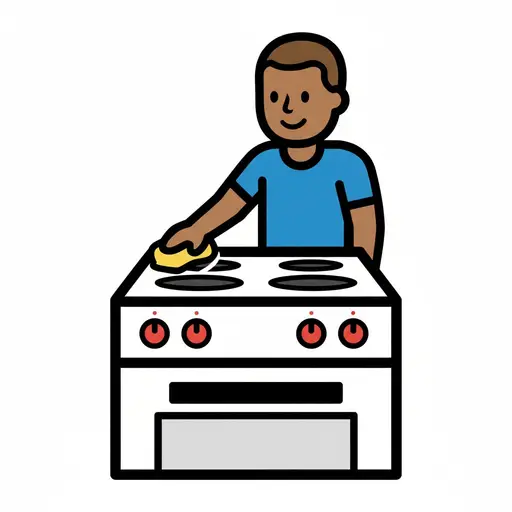
Wipe stove
A boy wiping a stove with a yellow sponge.
This visual support in other languages
Take the visual supports with you
In Routined you build schedules from these pictures, add timers and voice instructions, and your child follows the day on their own.


* 14-day free trial, then $2.39 a month or $20.99 a year (US pricing). Cancel anytime.