Feel good
Pain has a place in the body and a word that fits. Feeling well has neither, so the answer often stays at fine with nothing more. The pictures below offer more alternatives, so that feeling good gets a shape that can be pointed at.
 ♀
♀Feel good
A girl stands with her arms raised, smiling, with a heart on her shirt.
About this visual support
We train children to describe problems far more than to describe when something works. A stomach ache has a word, a place and a remedy, while feeling good often gets no more than a shrug. As a result, a child who feels well has no language for it, and what works rarely gets noticed or repeated.
Visual support helps by offering nuance. When calm, happy, energetic and content exist as separate pictures, it becomes possible to point at the difference between them. It also gives adults something to build on: a child who points at calm can be asked what made it calm.
A concrete tip is to dwell on the good days as long as on the hard ones. A short conversation about what worked yields more information than a long one about what went wrong. In Routined a brief check-in can sit in the evening routine, and the app can be tried for fourteen days at no cost.
Use this image in a schedule
Build your own visual schedule with this image and download it as a print-ready PDF. Completely free.
More similar visual supports

Wash front and back
A girl washes her front with one hand and holds a sponge behind her with the oth...

Put on diaper
A person is putting a clean diaper on a baby lying down.
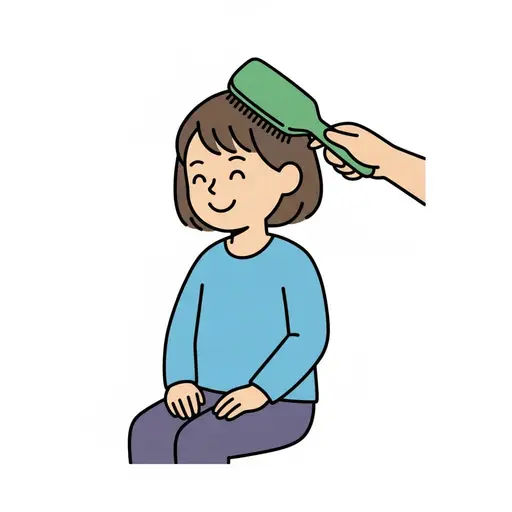
Help with hair
An adult hand brushes the hair of a seated girl with a green brush.

moisturize face
A cartoon woman with curly brown hair holding a jar of face cream and applying i...
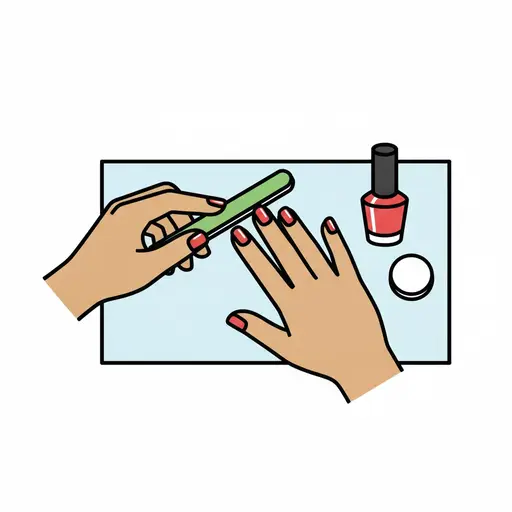
Nail care
One hand files the nails of the other, with a bottle of nail polish beside them.

Cap
A red and blue baseball cap with the letter A on the front.
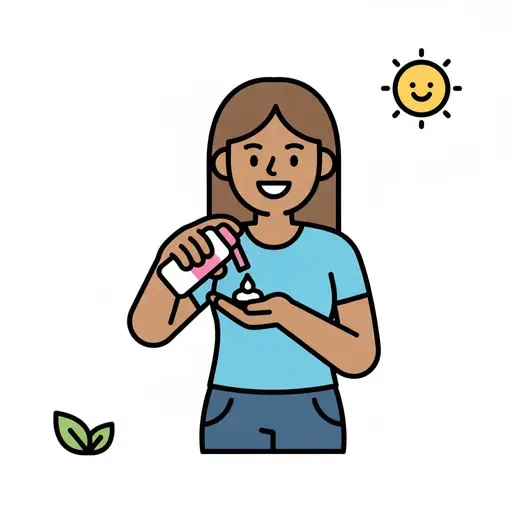
Skin care
A girl squeezes skin lotion into her hand, with a sun and a leaf around her.

Apply cream
A smiling woman holds a tube and rubs cream onto her arm.
This visual support in other languages
Take the visual supports with you
In Routined you build schedules from these pictures, add timers and voice instructions, and your child follows the day on their own.


* 14-day free trial, then $2.39 a month or $20.99 a year (US pricing). Cancel anytime.